When people think of moths, they usually picture those boring brown things that flutter around lights at night.
However, the UK is home to some absolutely stunning moths that are just as colourful and beautiful as any butterfly. These aren’t dull creatures hiding in the shadows, they’re vibrant, bold, and genuinely eye-catching. You’ve probably never noticed them because they’re mostly nocturnal, but once you know what to look for, you’ll be amazed at what’s been flying around your garden all along.
1. Elephant Hawk-moth
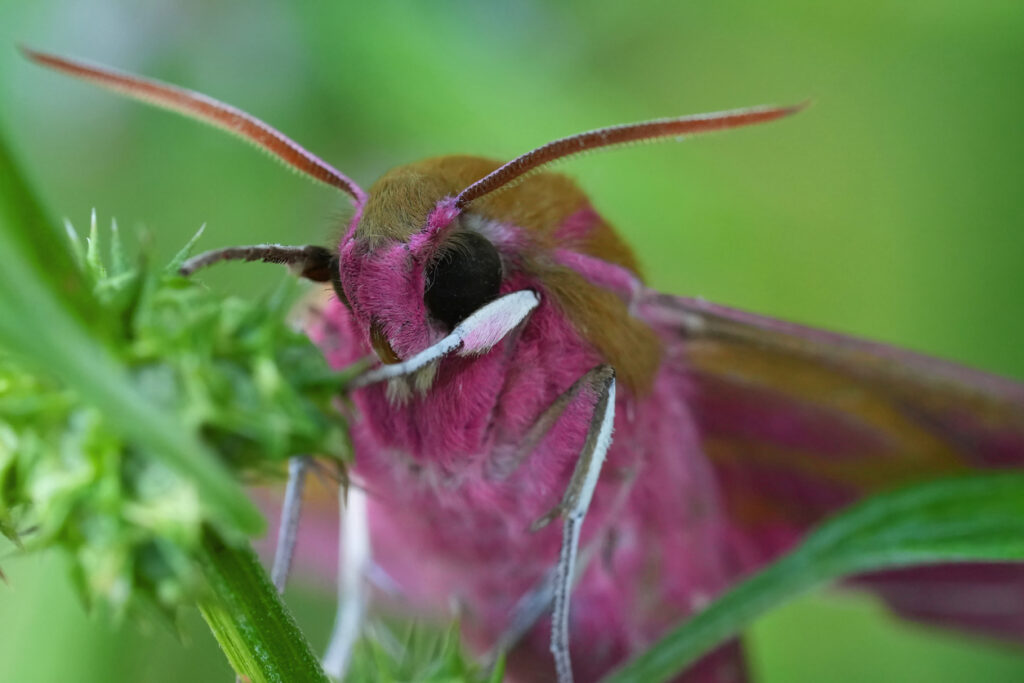
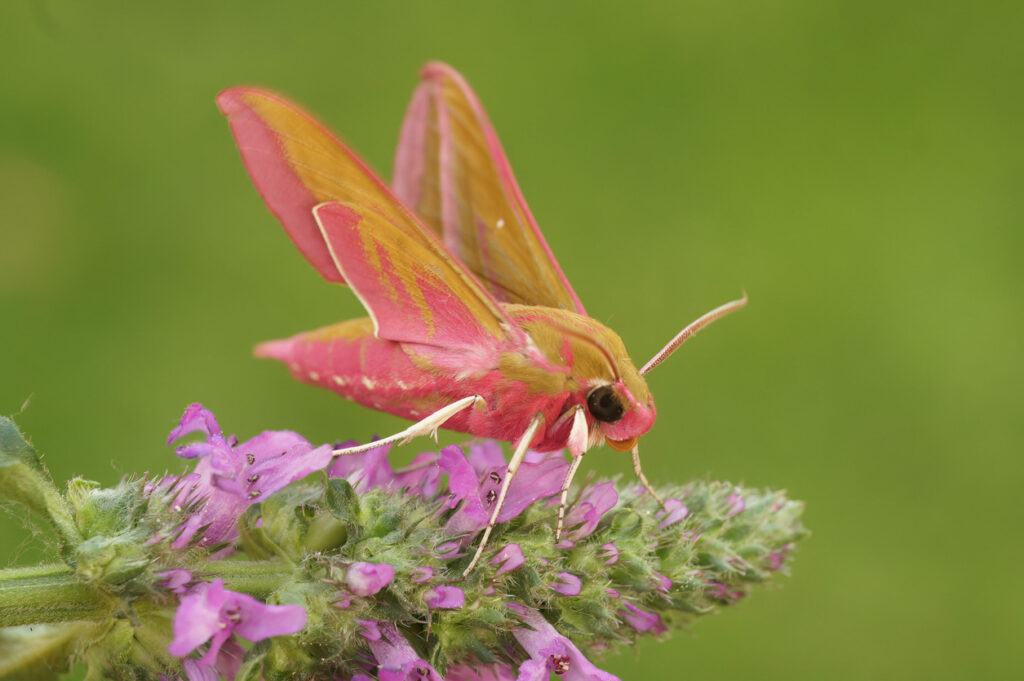
This moth is bright pink and olive green, looking more like something from a tropical rainforest than a British garden. It’s absolutely massive, too, with a wingspan that can reach nearly three inches. The caterpillars are even more bizarre, they look like tiny elephant trunks, which is how the moth got its name.
You’ll find these beauties from May to July, usually near gardens with fuchsias or willowherb, which is what the caterpillars eat. They’re attracted to lights at night, so if you spot something shockingly pink flying around your porch light in summer, it’s probably one of these. They’re surprisingly common, but still feel special every time you see one.
2. Garden Tiger Moth
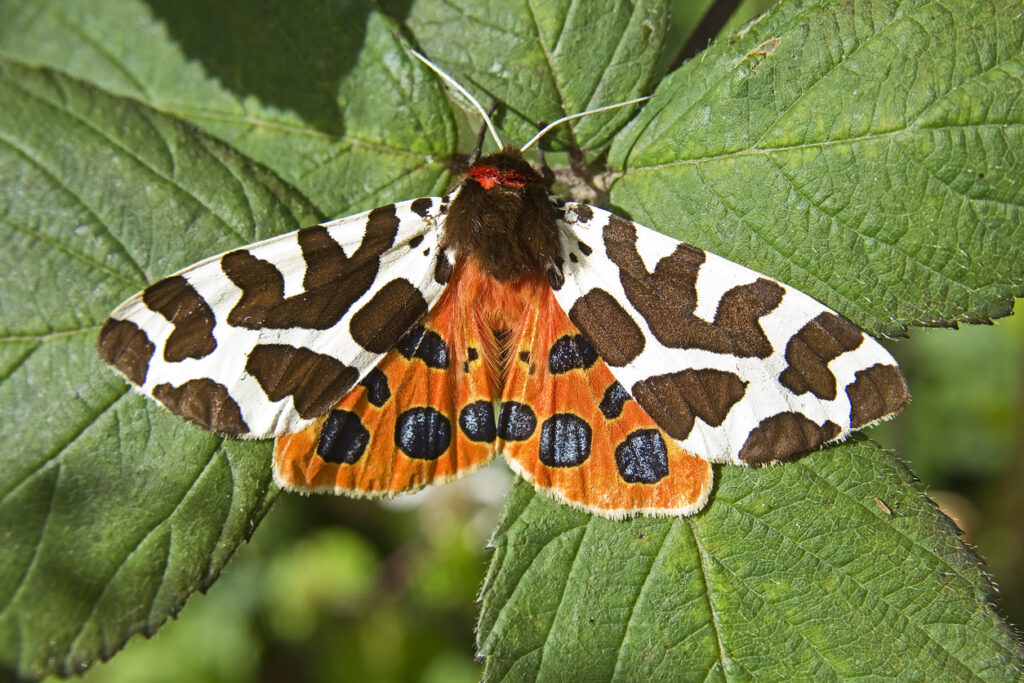
The garden tiger has chocolate brown and cream patterned front wings, but the real show happens when it opens them to reveal bright orange or red hind wings with blue-black spots. It’s like it’s wearing a fancy waistcoat under a boring coat. When threatened, it flashes those colourful wings to scare off predators.
Sadly, these moths have declined massively in recent years, down about 90% since the 1960s. If you see one, you’re quite lucky. They fly in July and August and are attracted to light. The caterpillars are called woolly bears because they’re extremely fuzzy and cute.
3. Cinnabar Moth
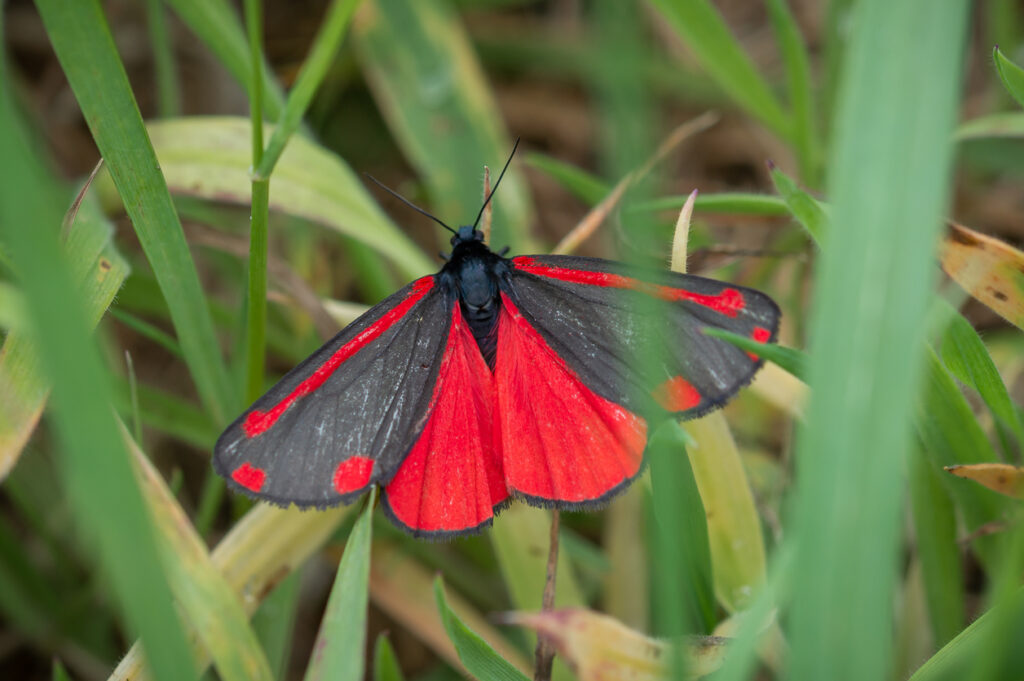
These moths are impossible to miss with their black wings decorated with bright red or pink stripes and spots. They look almost artificial, like someone’s painted them. Unlike most moths, cinnabar moths fly during the day, so you’ve got a better chance of actually seeing them.
The caterpillars are just as striking, bright orange and black striped, and they feed on ragwort in big groups. Both the caterpillars and adults are poisonous, which is why they’re so brightly coloured. They’re basically advertising that eating them is a bad idea. You’ll see them from May to August in meadows and wasteland where ragwort grows.
4. Peppered Moth
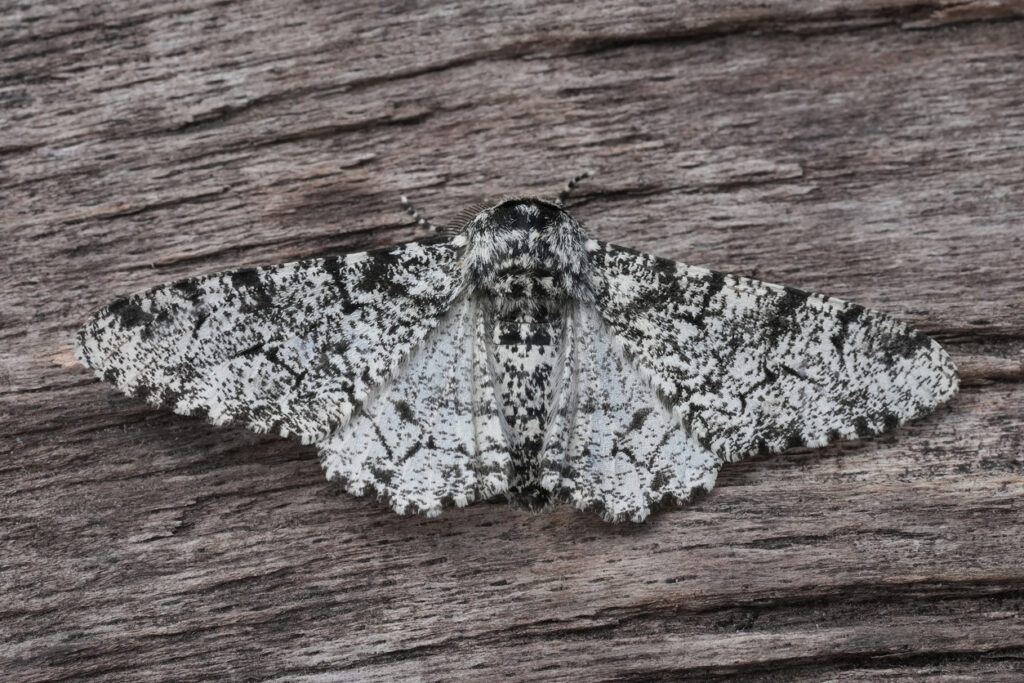
Okay, this one might seem like a weird choice because most peppered moths are actually quite dull, speckled white and black. But here’s what makes them fascinating. During the Industrial Revolution, a black version became common in polluted areas because it was better camouflaged against soot-covered trees. Now that pollution’s reduced, the pale form is becoming common again.
This moth is literally a real-time example of evolution happening, which makes it one of the most studied insects in the world. You can find both colour forms still, and seeing them together shows you natural selection in action. They’re common throughout the UK from May to August.
5. Magpie Moth

The magpie moth looks exactly like its name suggests, bold white wings covered in black spots and splodges with a bit of yellow or orange. It’s striking and easy to identify. Like the cinnabar, this one flies during the day, so you might actually spot it fluttering around your garden.
These moths are quite common and the caterpillars feed on blackthorn, hawthorn and various fruit trees. They’re out from June to August. The bold patterning warns predators that they’re distasteful, though not actually poisonous. They’re one of those moths that make you do a double-take because they just don’t look like what you expect a moth to be.
6. Hummingbird Hawk-moth
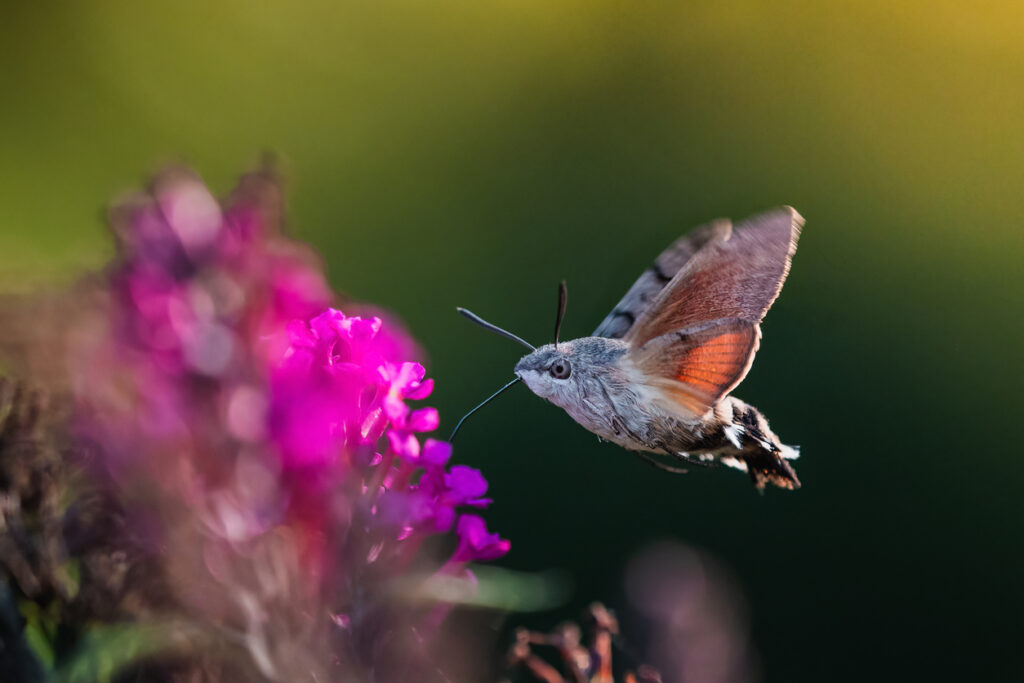
This moth genuinely looks and behaves like a tiny hummingbird. It hovers in front of flowers, feeding on nectar with its long tongue while buzzing its wings so fast they’re just a blur. It’s got orange hind wings and a grey-brown body, and watching one feed is absolutely mesmerising.
They’re day-flying moths that visit gardens throughout summer, especially loving buddleia and honeysuckle. They’re migrants that come over from southern Europe, so seeing one feels quite special. People often mistake them for actual hummingbirds even though we don’t have those in the UK. Once you’ve seen one, you’ll never forget it.
7. Scarlet Tiger Moth
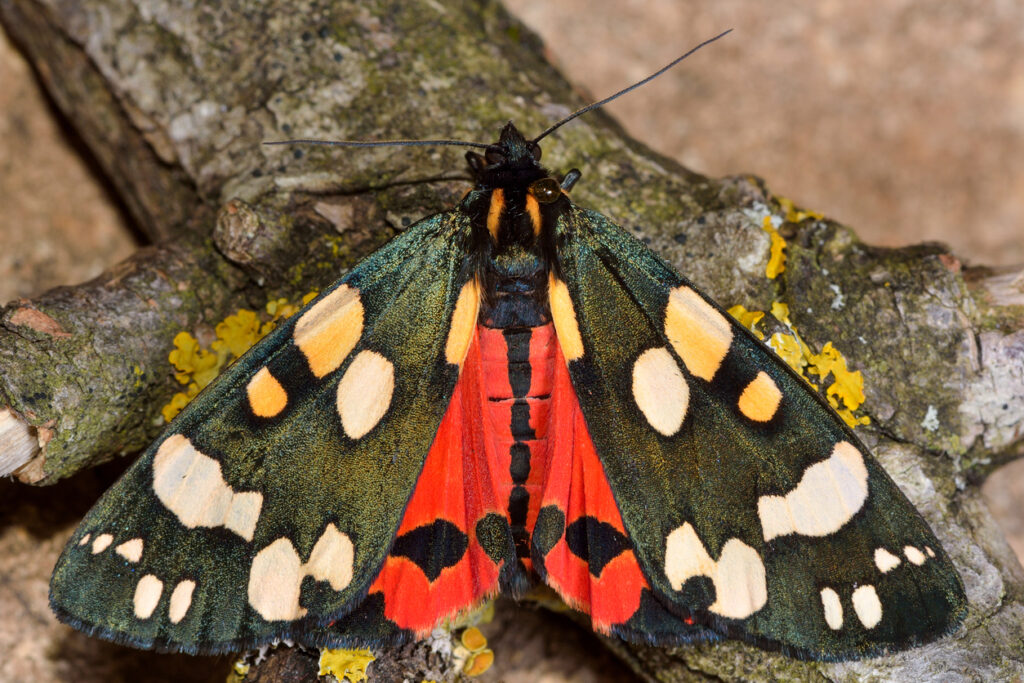
The scarlet tiger has metallic green-black front wings with white and yellow spots, and when it opens them, you get a flash of bright red hind wings with black spots. It’s absolutely stunning, and the colours don’t fade even on museum specimens, which is unusual for insects.
These moths are found mainly in southern England and Wales, flying in June and July in damp areas near rivers or marshes. They fly during the day, so you’ve actually got a chance of seeing them if you’re in the right habitat. They’re not common, but they’re not rare either, just in specific places.
8. Emperor Moth
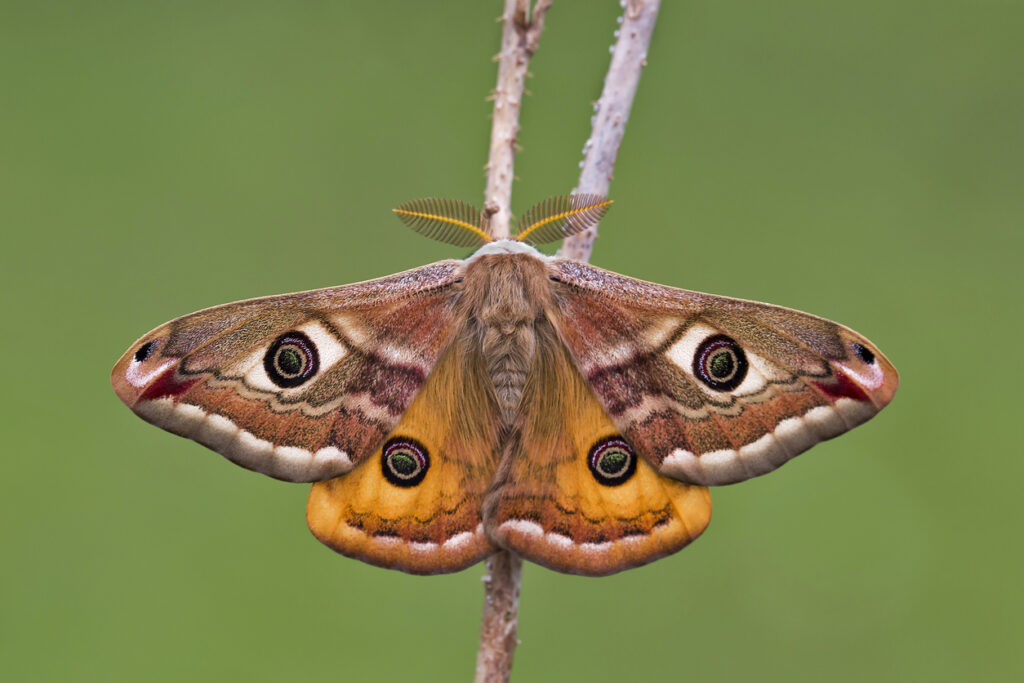
The emperor moth is the UK’s only resident silk moth, and it’s gorgeous. Males are bright orange with grey and white bands and massive eye spots on all four wings. Females are bigger and more subtle in grey and white, but still beautiful. The eye spots are meant to scare predators by looking like the eyes of something much bigger.
Males fly during the day in April and May, actively searching for females using their massive feathery antennae to detect pheromones from miles away. You’ll find them on moorland and heathland. The caterpillars are bright green with black bands and pink or yellow spots, looking almost too pretty to be real.
9. Buff-tip Moth
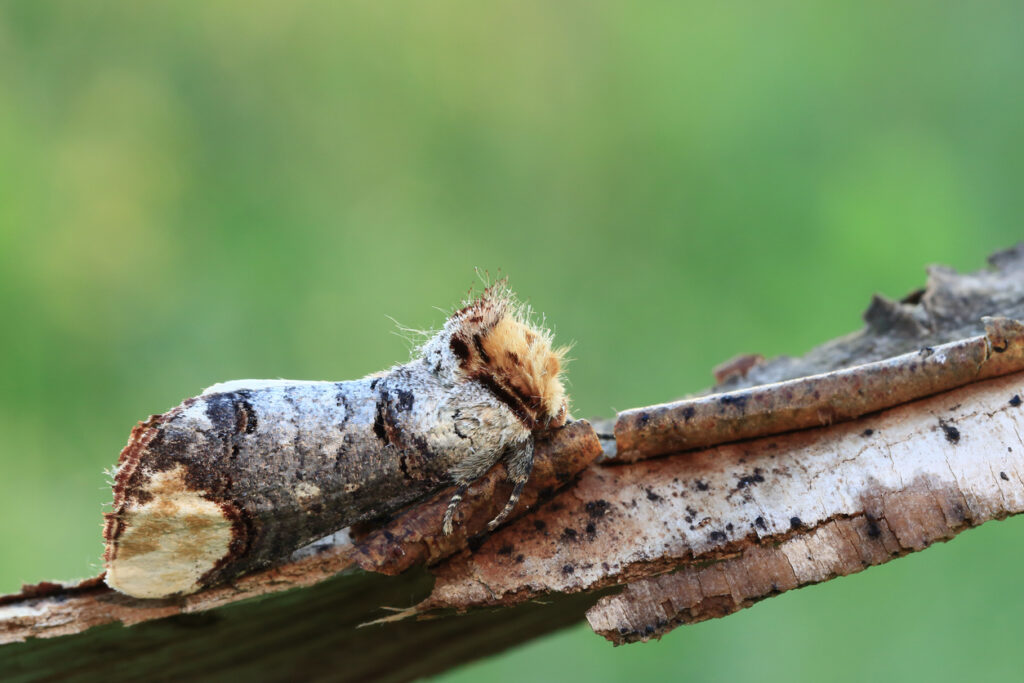
This moth has an amazing disguise. When it’s resting with its wings folded, it looks exactly like a broken birch twig. The wings are silvery grey with a pale yellow or buff tip at the end, mimicking the pale wood of a snapped branch. The camouflage is so good, you can look right at one and not see it.
But when you do spot one up close, the detail is beautiful. The furry body and the subtle colours are really quite striking. They’re common throughout the UK from May to July. Finding one feels like discovering a magic trick because you can’t believe you nearly missed something so obvious once you know what you’re looking at.
10. Jersey Tiger Moth
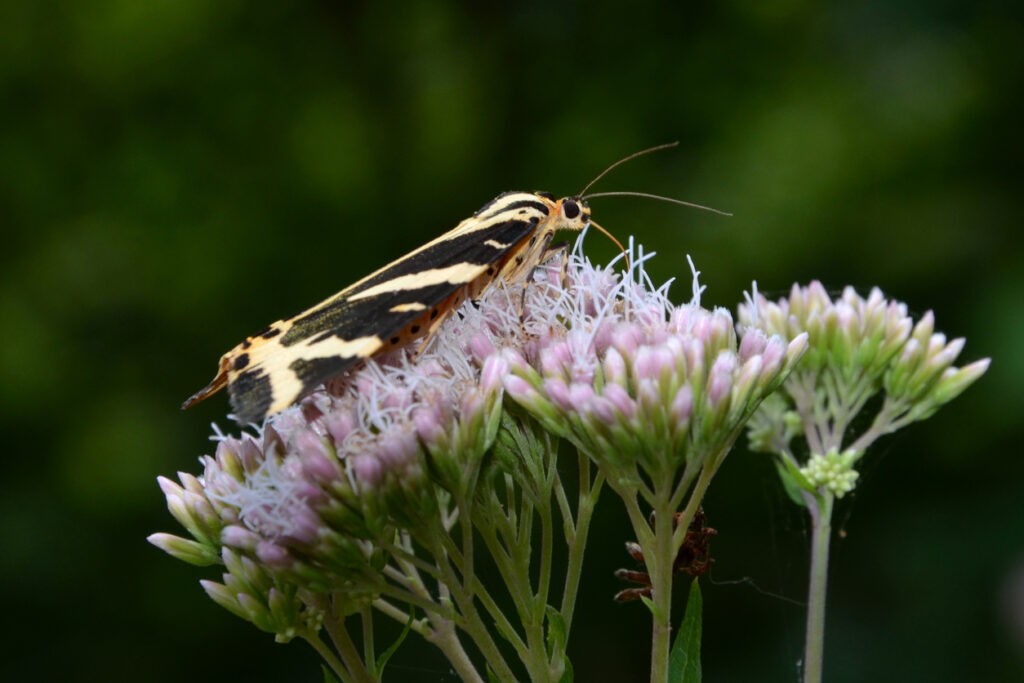
The Jersey tiger is a relatively new addition to the UK, spreading north from Devon over the last few decades, probably due to climate change. The front wings are bold cream and chocolate brown stripes, and underneath are bright orange or red hind wings with black spots. It’s a really handsome moth.
These moths fly from July to September and are often active during the day, especially on warm afternoons. They’ve colonised London really successfully, and you can now find them in parks and gardens across the south of England. They’re becoming more common each year, so your chances of seeing one are actually quite good. Look for them on buddleia or hemp-agrimony flowers, where they feed on nectar. Seeing a Jersey tiger feels special because they’re proof that our wildlife is changing and adapting, and sometimes that means gaining beautiful new species rather than just losing them.