For decades, astronomers have searched the skies for proof that we’re not alone. Every new telescope, signal, and sample brings us closer to that possibility. However, behind the excitement, there’s a growing unease about what might actually happen if we succeed. Some forms of alien life could answer our biggest questions, while others might create problems we can’t control. Here’s why scientists are nervous about finding the wrong kind of life beyond Earth.
It might not care that we exist.
The most unsettling idea isn’t that aliens might hate us, but that they might not notice us at all. If we ever encountered a civilisation far more advanced than ours, it might see humans as irrelevant, the way we overlook insects or bacteria. That level of indifference would change how we think about ourselves in the universe. The fear isn’t conflict, it’s being completely insignificant to something far greater.
Curiosity could lead to danger.
If astronomers ever received a signal from another world, every scientist on Earth would rush to study it. The worry is that the signal could contain information or technology that we don’t understand. Even decoding a message or recreating an alien material could have unpredictable effects. Curiosity has driven most of humanity’s progress, but it can also open doors we aren’t ready to walk through.
Microbes could cause more harm than monsters.
The smallest forms of alien life might actually be the most dangerous. A microscopic organism from another planet could behave in ways our immune systems or ecosystems can’t handle. That’s why space agencies treat returning samples with extreme care. A single unfamiliar cell could survive conditions that kill every organism on Earth, and we wouldn’t realise the risk until it was too late.
Discovery might shatter our self-image.
Finding life elsewhere would prove that Earth isn’t unique. It would also make us confront how fragile we are in comparison to whatever else exists out there. That realisation could be as frightening as it is inspiring. It would force humanity to see itself as just one small part of a much larger picture, which not everyone would handle easily.
The news could cause panic.
If word of alien life reached the public before scientists confirmed the details, the reaction could be chaotic. Misinformation would spread faster than facts, and people might assume the worst before anyone had time to explain. That fear is why space agencies have protocols for communication. Controlling the narrative would be as important as the discovery itself.
We might not recognise alien life when we see it, anyway.
Life elsewhere could be built on chemistry completely unlike our own. It might not need DNA, oxygen, or even water, which means we could easily overlook it. That’s one of the biggest concerns among researchers. We could walk right past proof of alien life simply because it doesn’t fit what we expect living things to look like.
It could start political conflict.
Any discovery this big would immediately raise questions about ownership and access. Governments would argue over who gets to control the information, who studies the samples, and who decides what happens next. That kind of competition could divide nations rather than unite them. Astronomers worry that the search for life might turn into a struggle for power before we even understand what we’ve found.
It might prove that someone has already found us.
For more than a century, Earth has been sending radio waves into space. If intelligent life exists, it’s possible that it has already detected us and simply chosen not to respond. That silence makes astronomers uneasy. It suggests that other civilisations might be watching or listening without making contact, and we have no idea what their reasons might be.
We could lose confidence in our own progress.
Meeting a civilisation more advanced than ours would highlight how far behind we really are. Every scientific achievement might suddenly seem small compared to what they’ve already mastered. For some scientists, that’s the real fear. The discovery could humble us so deeply that it damages our pride in human progress altogether.
It might end the mystery that drives exploration.
Part of what keeps people looking to the stars is the sense of wonder. If we find definitive proof of life elsewhere, that mystery would be gone forever, replaced by knowledge that might feel less magical. Some researchers worry that certainty could take the excitement out of discovery. Once we know the truth, we can’t go back to the curiosity that pushed us to search in the first place.
We might uncover evidence of failure.
The most haunting discovery of all would be ruins instead of life. Finding traces of civilisations that no longer exist would suggest that intelligence doesn’t last long in the universe. It would raise uncomfortable questions about our own future. If others didn’t survive their technological growth, what makes us think we’ll do any better?
The truth could change everything we believe.
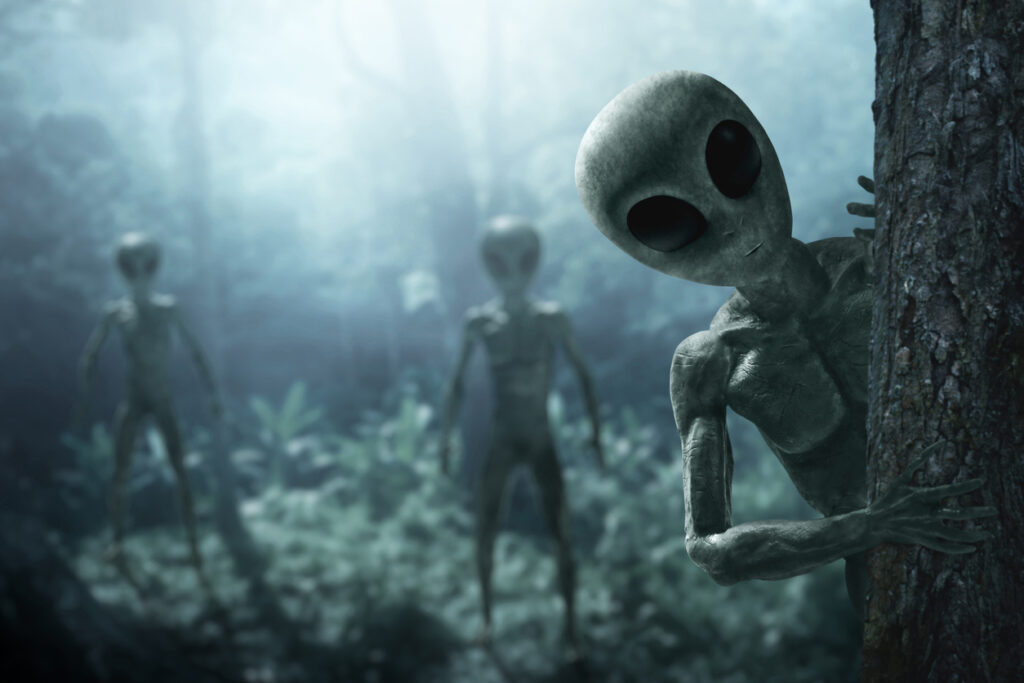
Finding alien life would shake the foundations of religion, philosophy, and science all at once. Every system of meaning we’ve built would need to adapt to a reality that’s suddenly much bigger than we imagined. Even if the discovery wasn’t dangerous, the cultural shock could last for generations. It’s one thing to look up at the stars, and another to realise someone might be looking back.
Scientists are already being cautious.
Some astronomers have quietly pulled back from active searches or stopped sending signals into deep space altogether. They’re not being paranoid; they’re being careful. The more we learn about the universe, the clearer it becomes that not every discovery is one we’re ready to make. For now, caution feels like the most responsible kind of curiosity.