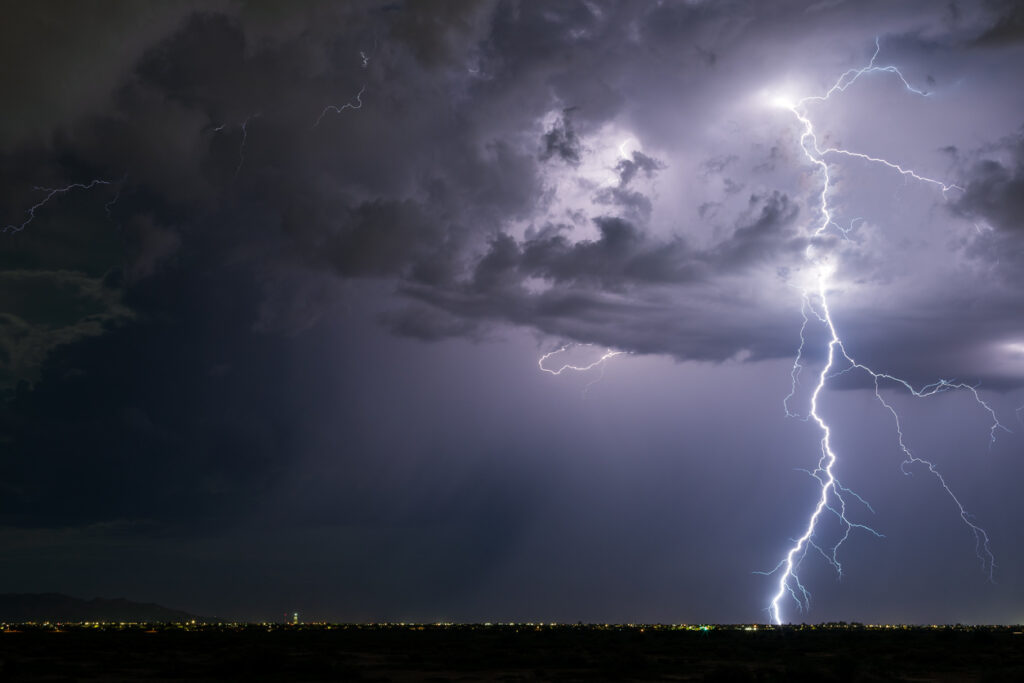
When lightning strikes, it looks chaotic. After all, it’s jagged, unpredictable, and seems to tear through the sky at random. However, there’s a hidden logic to the way it moves. Each bolt follows the path of least resistance, weaving through the air toward whatever offers the easiest route to the ground.
That split-second decision is shaped by invisible factors: air pressure, temperature, moisture, even tiny dust particles. What seems wild and impulsive is actually guided by physics, not chance, and it’s a perfect example of how nature’s most dramatic moments are often ruled by some incredibly precise laws.
It’s looking for the easiest route to the ground.
Lightning isn’t just randomly zapping about, it’s searching for the path of least resistance from cloud to earth. That’s why it zigzags all over the place rather than going in a straight line like you’d expect. The air around it has different levels of resistance depending on moisture, temperature, and particles floating about. So it’s constantly course-correcting, finding the easiest way down through all that complicated air.
It starts with an invisible leader moving downward.
Before you see the actual lightning bolt, there’s this invisible thing called a stepped leader creeping down from the cloud in stages. It’s testing different routes, branching out in multiple directions like it’s mapping options. You can’t see this bit happening, but it’s basically lightning doing reconnaissance work before committing to the full dramatic flash that lights up the sky.
The ground actually reaches up to meet it.
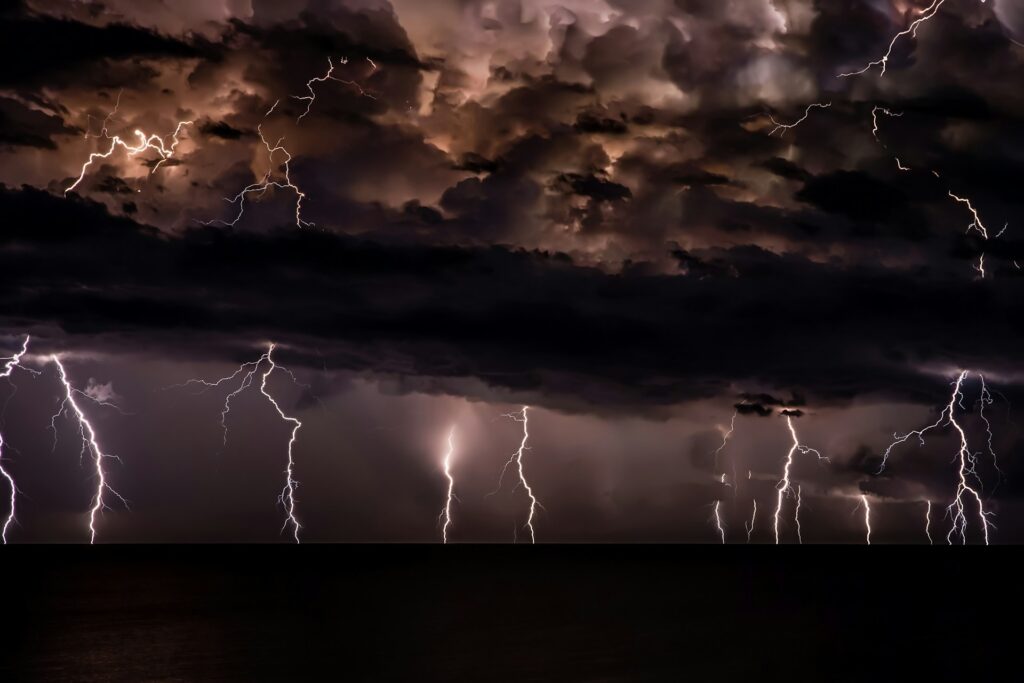
When that leader gets close enough to earth, the ground sends up its own little streamers of positive charge, especially from tall objects like trees or buildings. They’re literally reaching up, trying to connect with the lightning coming down. Whichever streamer makes contact first completes the circuit, and that’s the path the lightning takes. So the ground’s actively involved in deciding where lightning hits, which is quite mad when you think about it.
The actual flash you see goes upward.
This is the weird bit. When you see lightning strike, what you’re actually seeing is the return stroke going up from the ground, not down from the cloud. It happens so fast your brain can’t tell the difference. Once the connection’s made, a massive surge of electricity shoots back up that pathway at about a third the speed of light. That’s the bright flash that makes you jump, even though the groundwork was already done.
It follows ionised paths in the air.
Air normally doesn’t conduct electricity well, but when it gets ionised by heat or radiation, it becomes a much better conductor. Lightning sniffs out these ionised channels because they’re easier to travel through than regular air. That’s why the path looks so jagged and branchy. It’s hopping between pockets of ionised air rather than forcing its way through normal air that would resist more.
Tall objects give it a head start.

Lightning often hits tall things not because it’s attracted to them exactly, but because they reduce the distance it has to travel. A tree or building brings the ground closer to the descending leader, making it easier to complete the connection. That’s why you’re told not to stand under trees in storms. You’re basically making yourself a convenient shortcut for lightning that’s already looking for the quickest way down.
It can strike the same place multiple times.
That “lightning never strikes twice” thing is complete rubbish. Once a path’s been established and the air’s been ionised, it’s actually easier for subsequent strikes to follow the same route because it’s already been broken in. The Empire State Building gets hit about 25 times a year, and some tall structures get struck hundreds of times. Lightning’s quite happy to reuse a good path it’s already found.
Water and metal make excellent pathways.
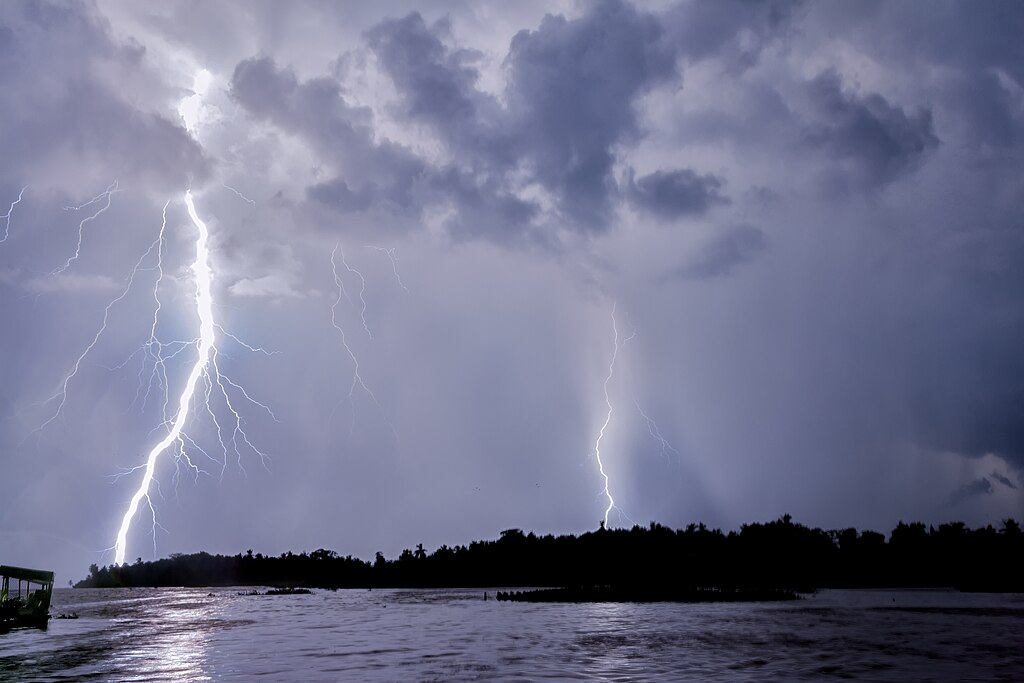
Both conduct electricity brilliantly, so lightning will absolutely take routes that involve them if they’re available. That’s why you’re not meant to be in water or holding metal objects during storms. You’re basically offering it an express lane. The lightning isn’t targeting you specifically, you’ve just made yourself the easiest option by being the most conductive thing around. It’s not personal, you’re just convenient.
It branches because it’s testing multiple routes simultaneously.
Those branches you see aren’t mistakes or inefficiency, they’re the lightning exploring different possible paths at the same time. Most of those branches will fizzle out when one main route succeeds in making contact. It’s like the lightning’s hedging its bets, sending out feelers in multiple directions to see which one connects first. The failed branches just didn’t make it to ground before the winning path did.
The whole thing happens in under a second.
From the leader starting its journey to the return stroke lighting up the sky, the entire process takes less than a second, often just milliseconds. Your brain can’t process it fast enough to see all the steps, so you just see one dramatic flash.
All that complex path-finding, testing, branching, and connecting happens almost instantaneously. Lightning’s basically solving a massive physics problem faster than you can blink, which is pretty impressive for something that looks like it’s just randomly cracking across the sky.