If you’ve only ever seen moose in photos or on TV, you probably don’t realise quite how enormous they are in real life.
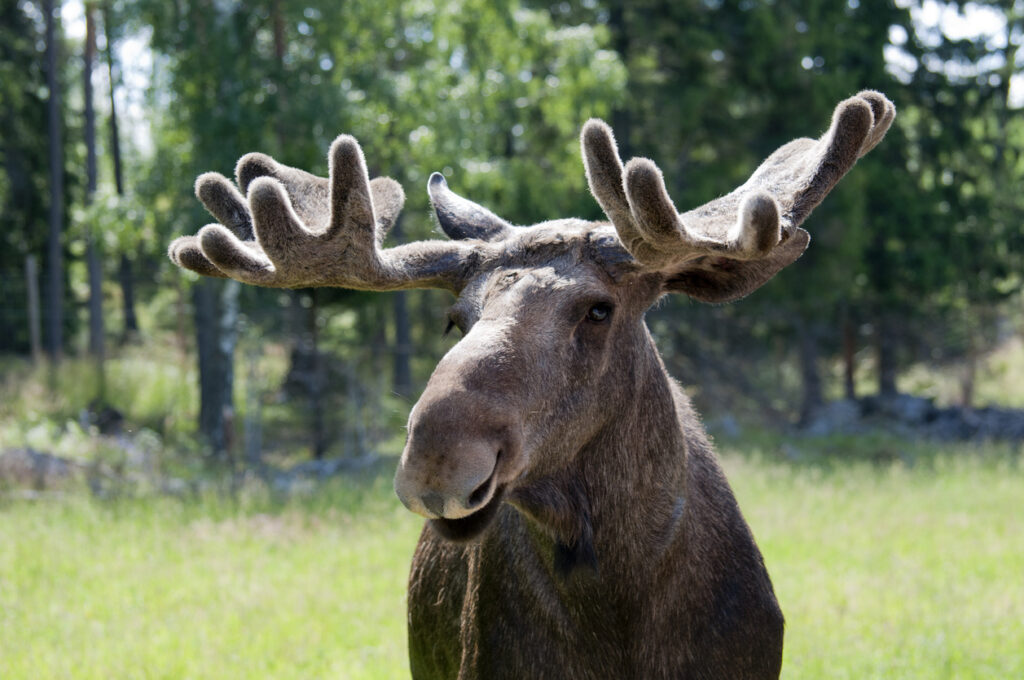
They don’t just tower over deer, they make them look miniature. Standing next to one is less like seeing an animal and more like coming face to face with something that belongs in prehistory. With their huge antlers, long legs, and thick, muscular frames, moose are built to survive cold climates and cover massive distances, but their size still manages to surprise even seasoned wildlife watchers.
However, despite their bulk, they’re remarkably graceful movers, able to swim for miles, sprint through forests, and navigate deep snow without losing balance. Their sheer scale isn’t just impressive; it’s a masterclass in adaptation. Everything about a moose’s build serves a purpose, from its towering height to its oversized nose. So, if you’ve ever wondered how big these giants really get, the answer is simple: far bigger than you probably imagined.
Bull moose can weigh as much as a small car.
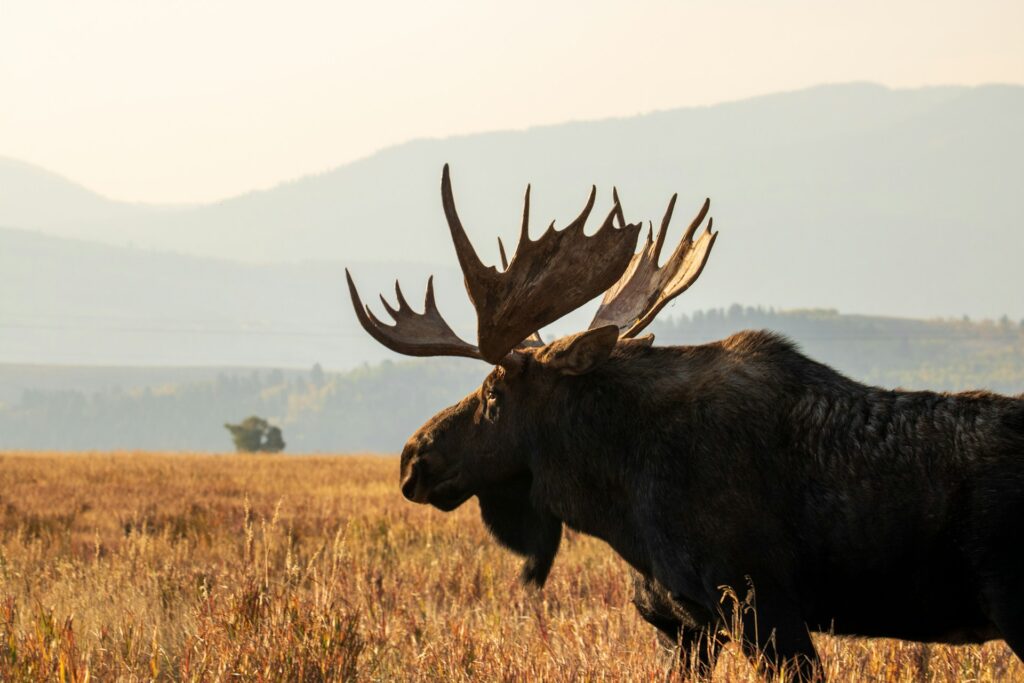
The largest Alaskan moose can weigh over 700 kilograms, with some exceptional bulls reaching 800 kilograms. That’s heavier than most horses and comparable to the weight of a Smart car sitting in your driveway.
People massively underestimate moose size because they look gangly and awkward in photos. But when you’re standing next to one, the sheer bulk becomes obvious. They’re not just tall, they’re absolutely packed with muscle and mass.
They stand taller than most basketball players.
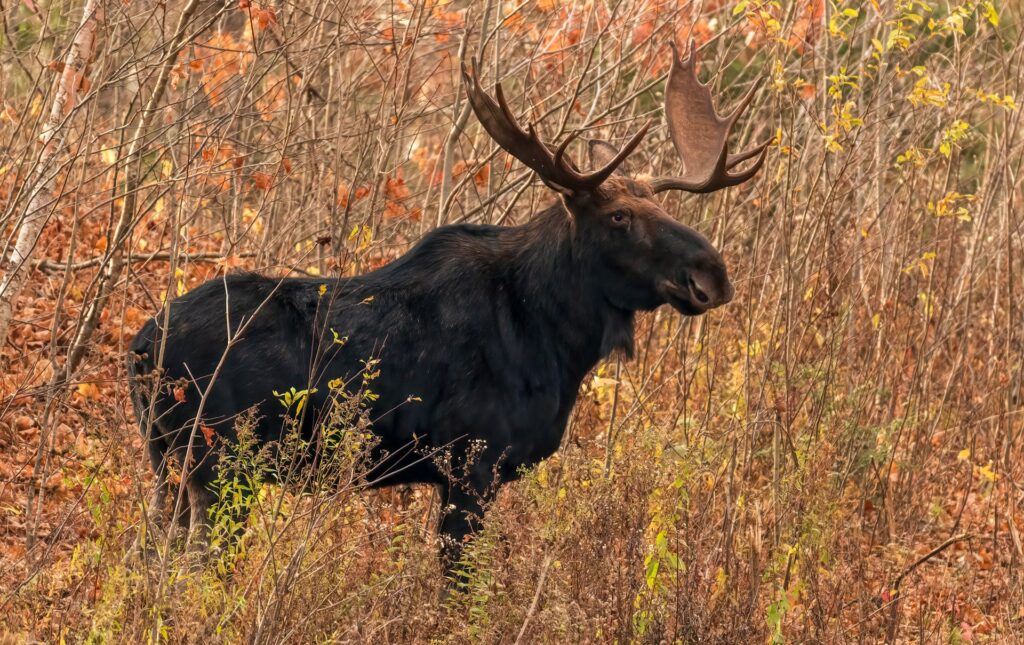
A fully grown bull moose can stand over 2 metres tall at the shoulder, and that’s before you count the head. Add another 60 centimetres for the head and antlers, and you’re looking at nearly 2.7 metres total.
That means a moose could look through a second storey window without stretching. Most adult humans would barely reach the moose’s shoulder, and its head would tower above yours by a considerable margin when standing close.
Their antlers alone can weigh 30 kilograms.
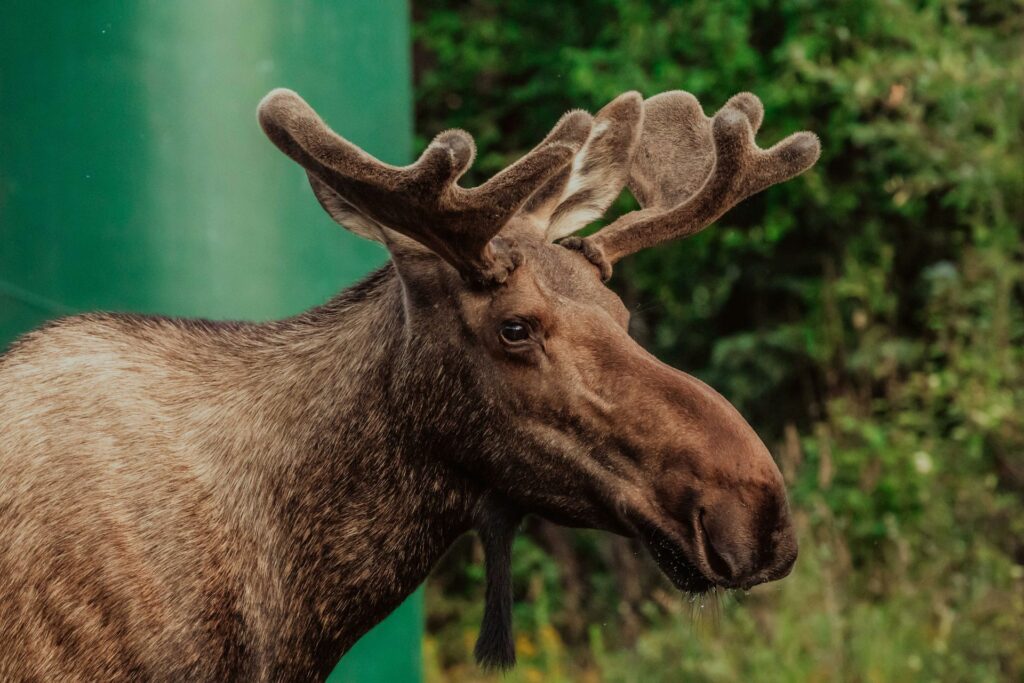
Bull moose grow and shed massive antlers every year, and the largest sets can span nearly 2 metres across and weighing up to 30 kilograms. That’s like carrying a small child on your head permanently.
Moose grow these enormous antlers in just four to five months each year, which requires incredible amounts of energy and nutrients. Then they drop them in winter and start growing a new set come spring, which is exhausting just to think about.
A moose is taller than most SUVs.
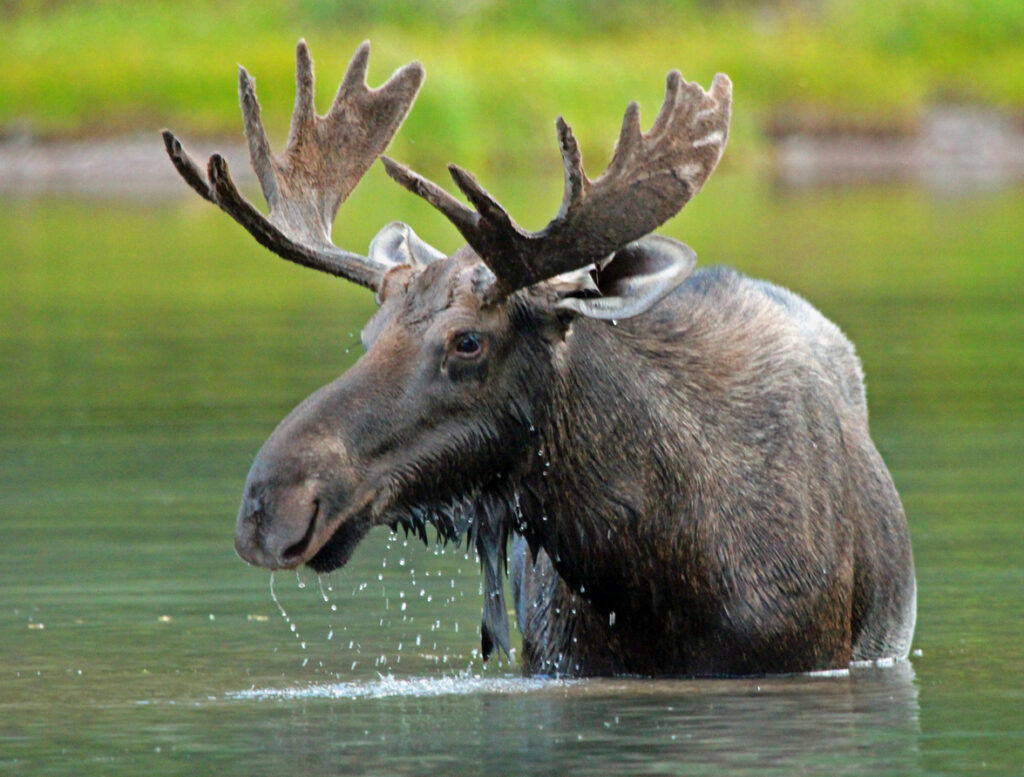
When a moose crosses the road, it’s genuinely taller than many four-wheel drive vehicles. Their long legs put their body mass at windscreen height, which is why moose collisions are so catastrophic for drivers.
Hitting a moose doesn’t send it rolling over the bonnet like hitting a deer would. Instead, the vehicle takes out the legs and the entire body comes crashing through the windscreen into the passenger compartment at speed.
Calves are born bigger than most adult dogs.
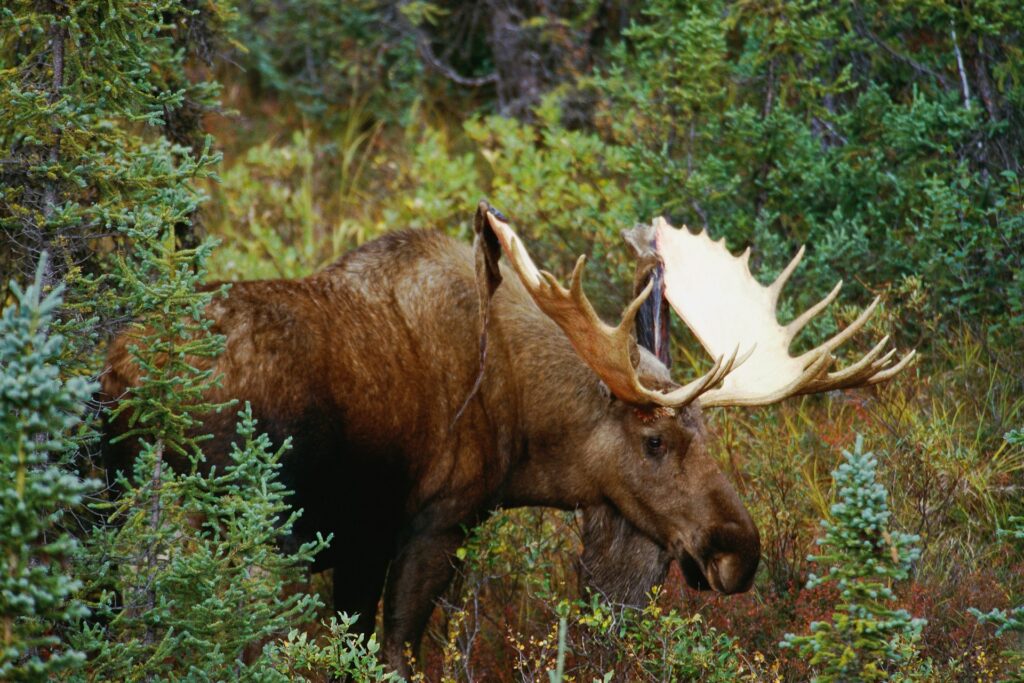
Newborn moose calves weigh between 11 and 16 kilograms at birth, making them heavier than many fully grown terriers or spaniels. Within days, they’re standing nearly a metre tall and keeping pace with their mothers.
That rapid growth continues throughout their first year, with calves putting on about a kilogram per day during their first few months. By their first winter, they’ll already weigh over 200 kilograms and tower over adult humans.
They can run faster than Usain Bolt.
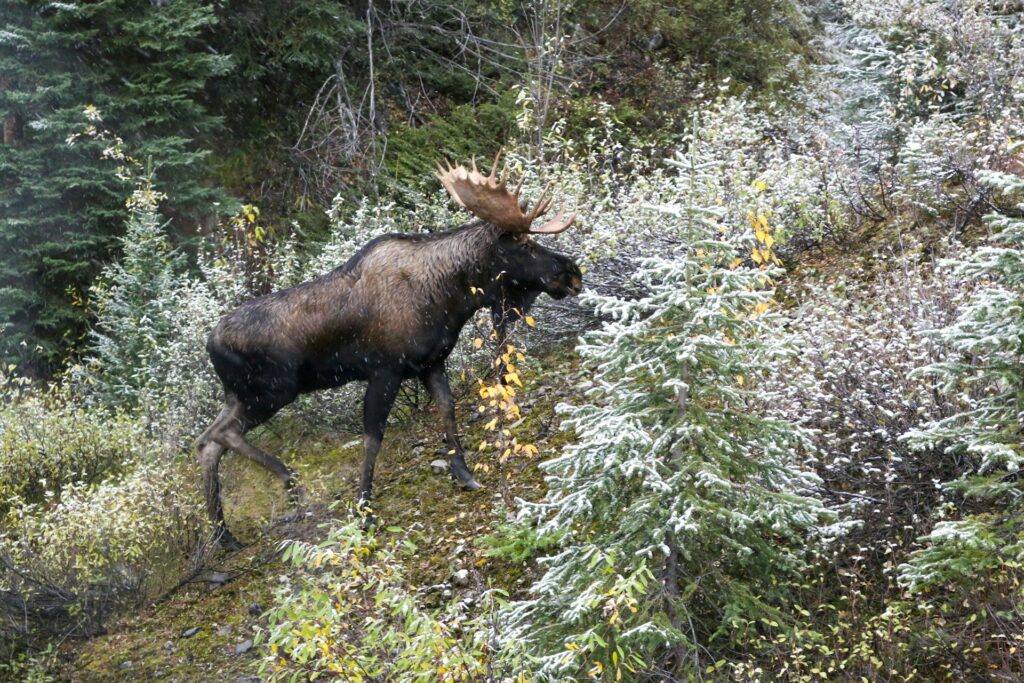
Despite their awkward appearance and enormous size, moose can sprint at speeds up to 56 kilometres per hour through forest terrain. That’s faster than the fastest human ever recorded, and they’re doing it at the same time as dodging trees.
Those long gangly legs that look ridiculous are actually perfectly designed for covering rough ground quickly. They can maintain that pace while crashing through dense undergrowth that would completely stop a human runner dead.
Alaskan moose are the largest subspecies.
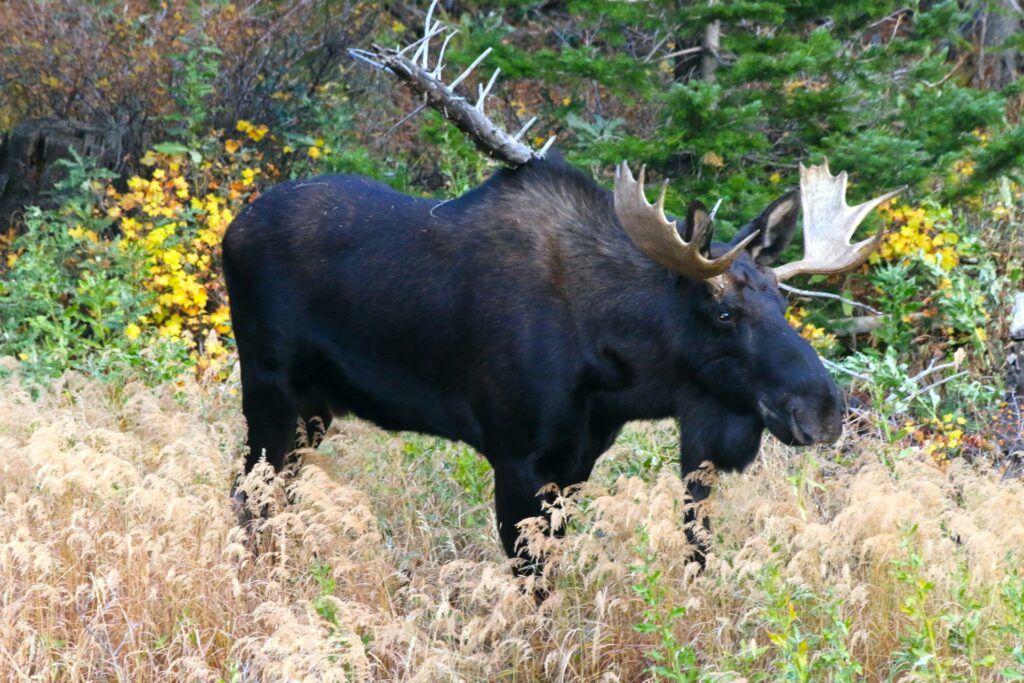
While all moose are massive, Alaskan moose are the absolute giants of the species. They’re significantly larger than their European cousins, with bulls regularly exceeding 650 kg, compared to European moose around 500 kilograms.
The colder climate and abundant food sources in Alaska allow moose to grow to their maximum potential size. European moose are still enormous by any reasonable standard, but Alaskan bulls are properly monstrous in comparison.
A moose needs 23 kilograms of food daily.
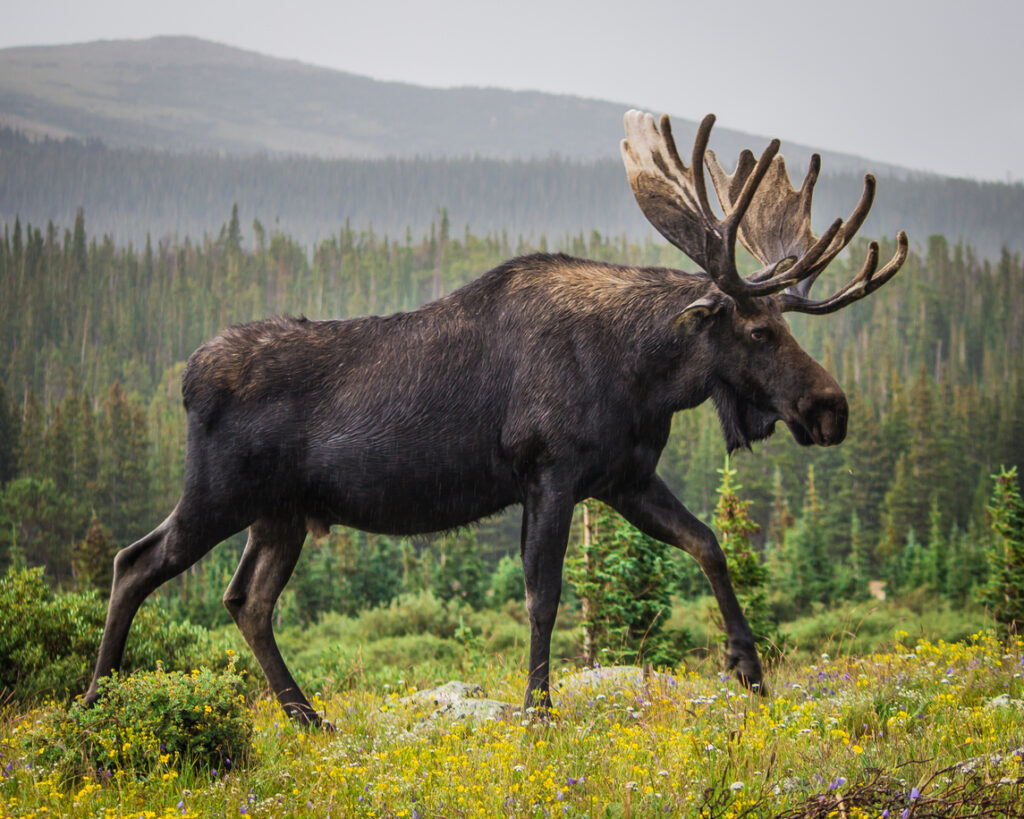
To maintain that enormous body mass, moose need to consume roughly 23 kilograms of vegetation every single day during summer. That’s like eating 92 bags of salad greens daily just to stay alive and functional.
They spend most of their waking hours eating because processing that much plant matter takes ages. Moose aren’t lazy, they’re just constantly feeding to fuel their ridiculous size, which explains why they’re so grumpy when interrupted.
Their legs alone are taller than most people.
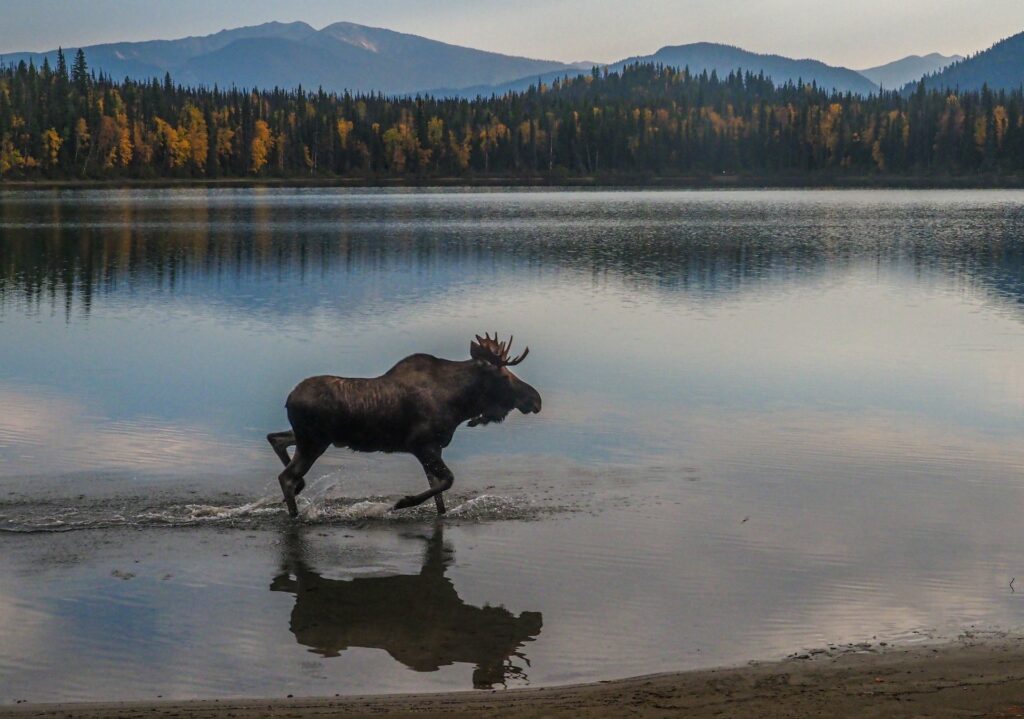
A moose’s legs can be 1.8 metres long from hoof to shoulder, which is taller than the average adult human. Those absurdly long legs let them wade through deep snow and water that would be impassable for shorter animals.
Those legs also mean moose can step over obstacles that would block other animals completely. They can clear fallen logs and fences that would stop a horse, just by lifting their legs normally while walking through the forest.
Bulls can be 40% heavier than cows.
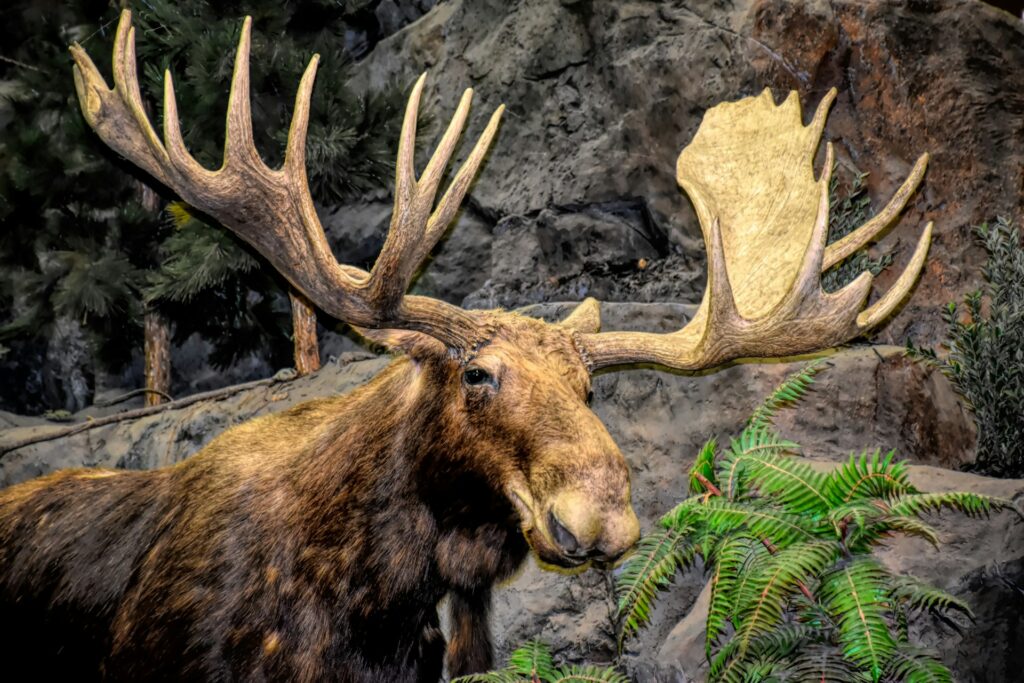
Male moose absolutely dwarf the females, often weighing 40% more than cows from the same population. A massive bull might weigh 700 kilograms, while a large cow peaks around 500 kilograms, which is still enormous.
This size difference exists because bulls compete violently for mating rights during the rut, and bigger bulls win more fights. Cows don’t need that extra bulk because they’re not fighting, just raising calves and surviving winter.
They’re the tallest living deer species.

Moose are the largest members of the deer family by a considerable margin, standing significantly taller than elk, red deer, or any other deer species. They’re basically the absolute pinnacle of what deer can evolve into.
That size comes with trade-offs, though, as moose struggle more in warm weather than smaller deer do. Their enormous bulk generates massive amounts of heat, which is why they’re found in cold northern climates and not further south.
They can dive 6 metres underwater for food.
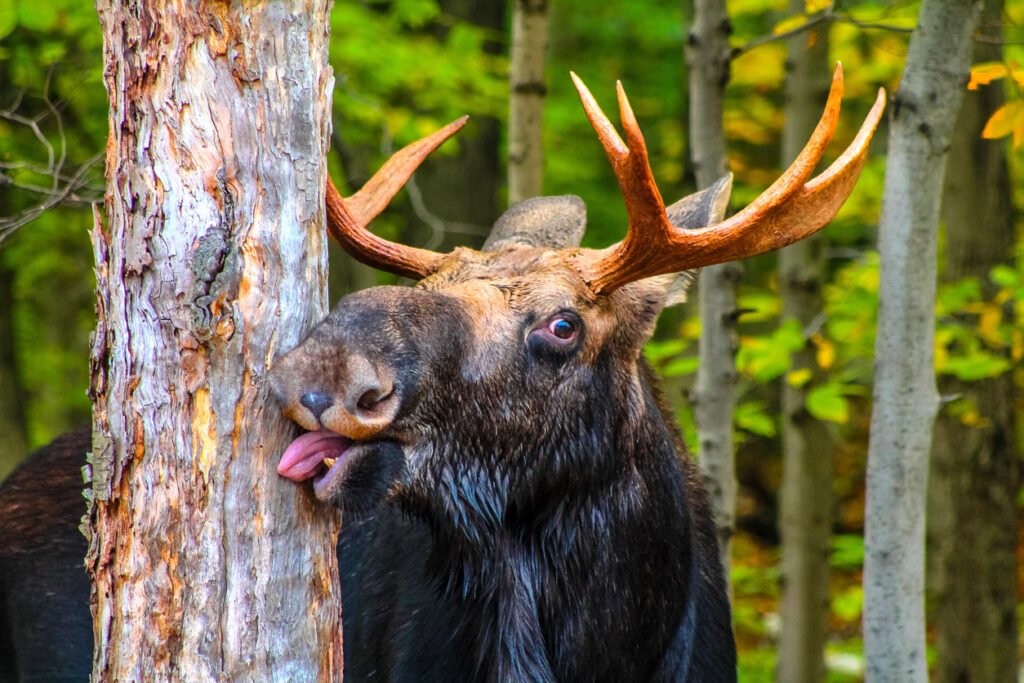
Moose are surprisingly aquatic and can dive down 6 metres to reach underwater plants growing on lake and river bottoms. They’ll completely submerge themselves, staying under for up to a minute while feeding on aquatic vegetation.
Watching a creature that size casually disappear underwater is properly surreal. They paddle around like they’re built for swimming, which they basically are, with those long legs working as surprisingly effective oars beneath the surface.
A charging moose generates immense force.

When a moose charges at full speed, it’s like being hit by a small truck moving at 50 kilometres per hour. That combination of mass and velocity generates enough force to easily kill a person or total a vehicle.
Moose kill more people annually than bears do in North America, mostly because people underestimate how dangerous they are. They look dopey and awkward until they decide you’re a threat, then that enormous size becomes absolutely terrifying very quickly.