Of all the creatures gliding through the ocean, few are as breathtaking as manta rays.
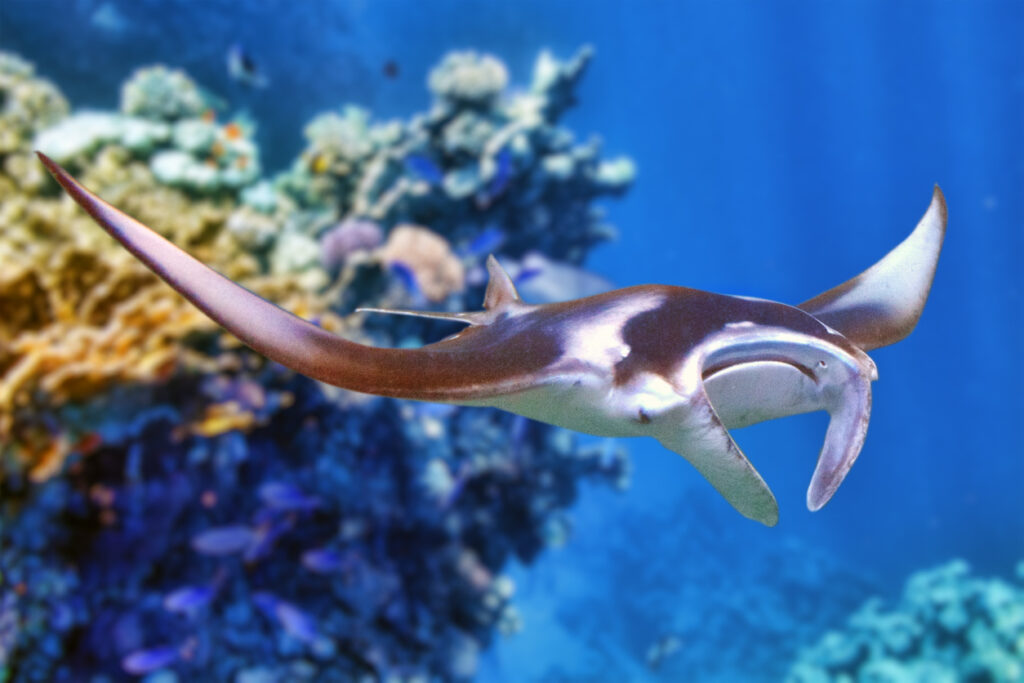
With wingspans that can stretch over seven metres, they move through the water with an effortless grace that makes them look almost unreal. Despite their size, manta rays aren’t predators; they’re gentle filter feeders, living mostly on tiny plankton and drifting calmly through warm tropical seas.
They’re often called “the giants of the ocean,” but what makes them so fascinating isn’t just their size. Instead, it’s their intelligence, curiosity, and surprisingly social nature. Divers who’ve encountered them describe a calm awareness, as if the mantas are just as intrigued by us as we are by them. Here’s a closer look at the ocean’s largest rays, how they live, and why protecting them is so vital.
They’re the biggest rays in the ocean.
Manta rays can have wingspans up to 7 metres across and weigh over 2,000 kilograms. That’s bigger than most cars, which is proper huge for something that looks like it’s just casually flying through water. There are two species, reef mantas and giant oceanic mantas. The giant ones are the real monsters, while reef mantas are slightly smaller but still absolutely massive compared to most sea creatures.
They’re completely harmless despite their size.
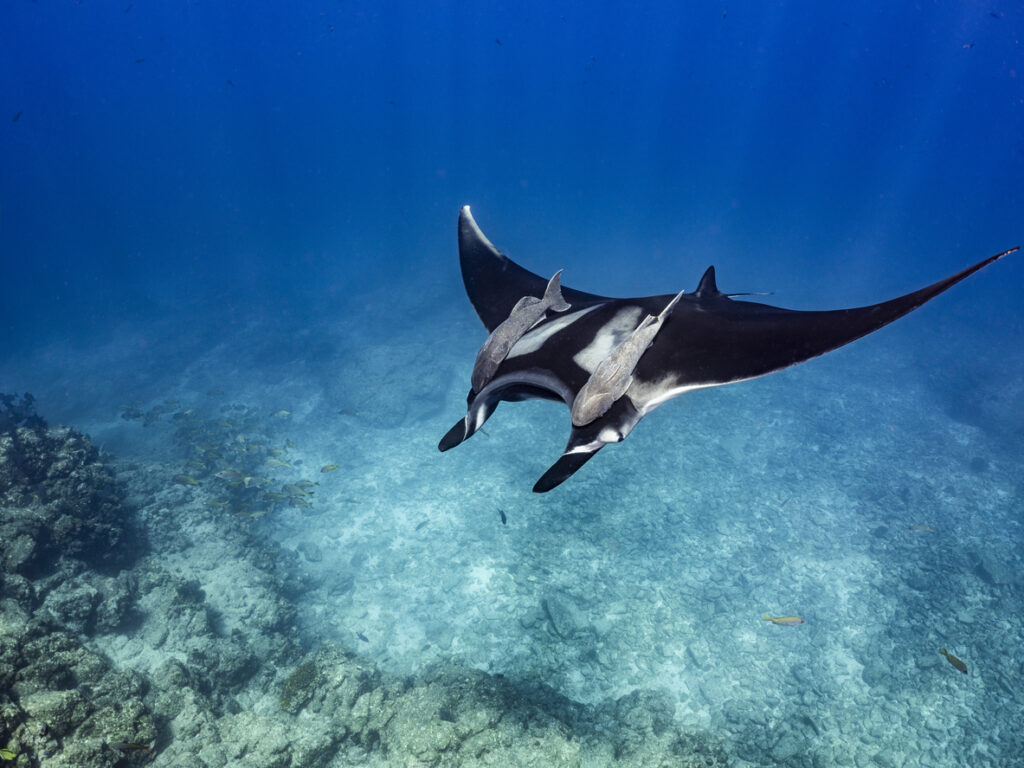
Unlike stingrays, mantas don’t have venomous barbs on their tails. They’re filter feeders that eat tiny plankton and small fish, meaning they’ve got no weapons and no interest in anything bigger than microscopic. You could swim right up to one, and the worst that’ll happen is it might accidentally bump you. They’re basically enormous underwater butterflies with no ability or desire to hurt anything.
They’re surprisingly intelligent.
Manta rays have the largest brain to body ratio of any fish. They can recognise themselves in mirrors, which is a sign of self awareness that most animals don’t have. They’ve been observed playing, learning, and even appearing to plan ahead. For a fish, they’re shockingly smart, more like marine mammals in terms of cognitive ability than typical fish.
Each one has unique spot patterns like fingerprints.
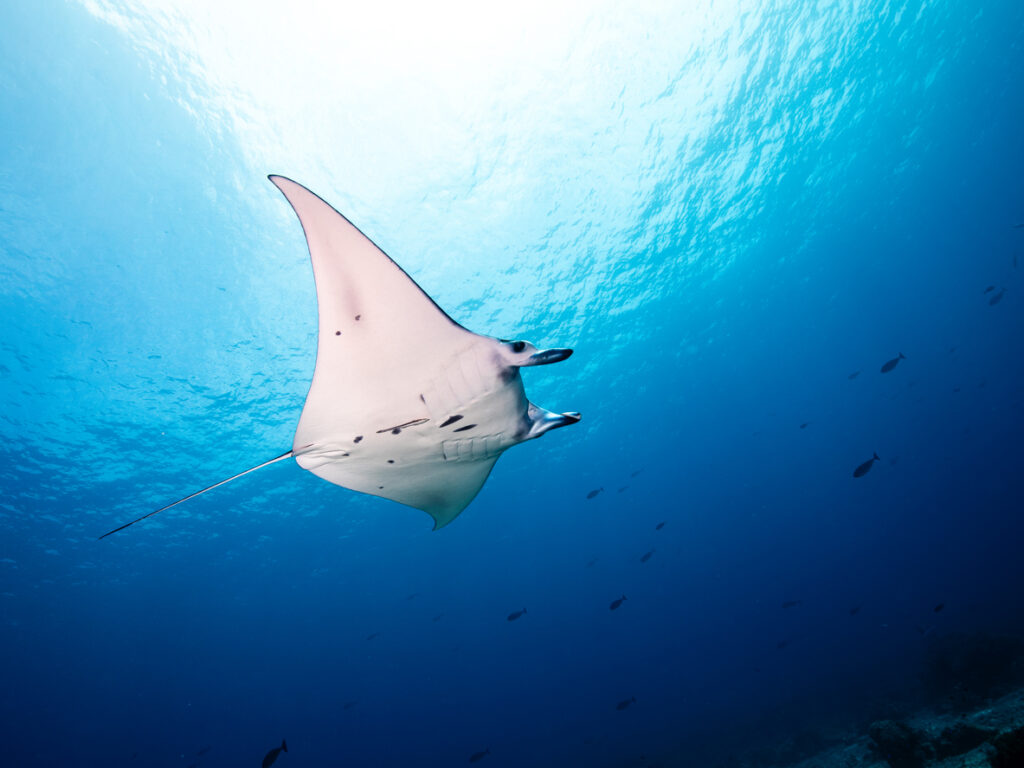
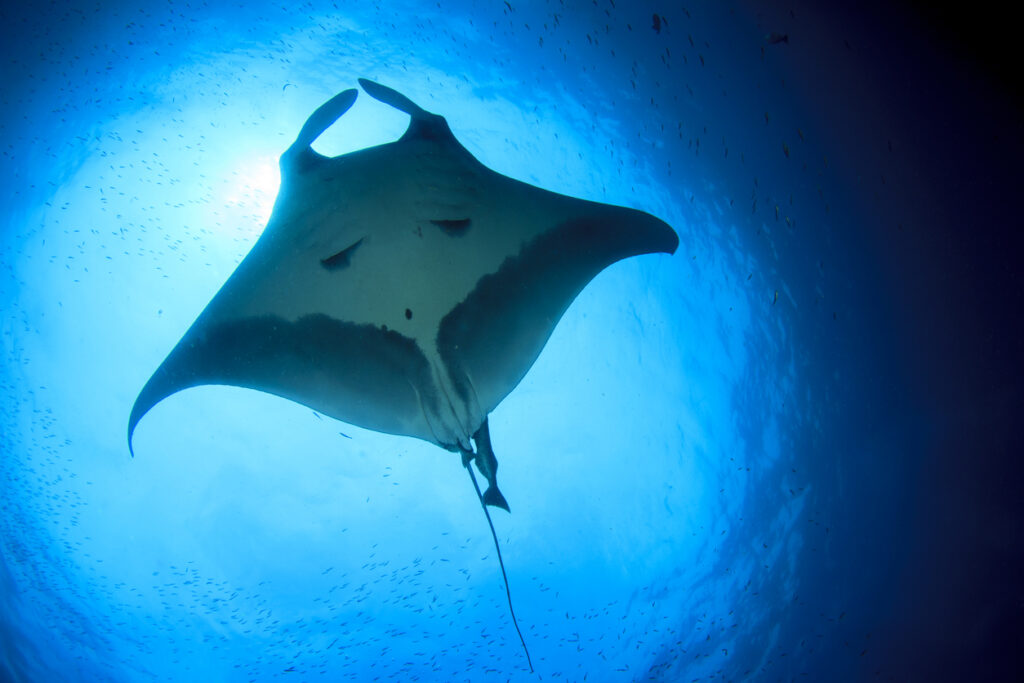
The spots on a manta’s underside are unique to each individual, letting researchers identify and track specific rays over years. It’s like they’ve all got their own personal ID written on their bellies. This has helped scientists discover that mantas have regular migration routes and preferred feeding spots they return to. They’re not just randomly drifting, they know exactly where they’re going.
They do somersaults while feeding.
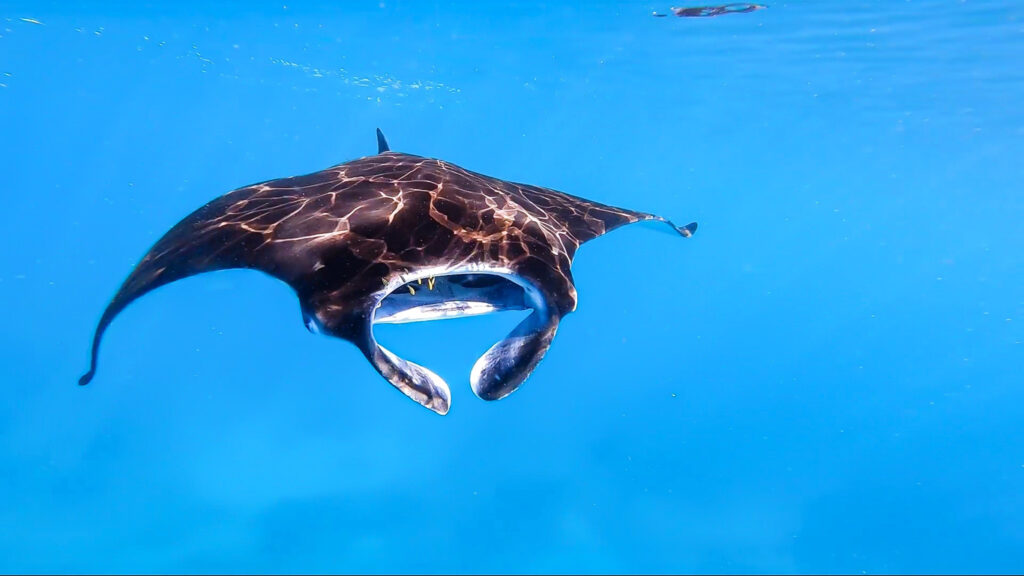
Mantas perform barrel rolls and loops to corral plankton into their mouths, creating this bizarre underwater acrobatics show. Their huge wings make them incredibly agile despite their size. Watching a creature the size of a car doing backflips is genuinely surreal. They move with this effortless grace that makes you forget they weigh as much as a small vehicle.
They visit cleaning stations regularly.
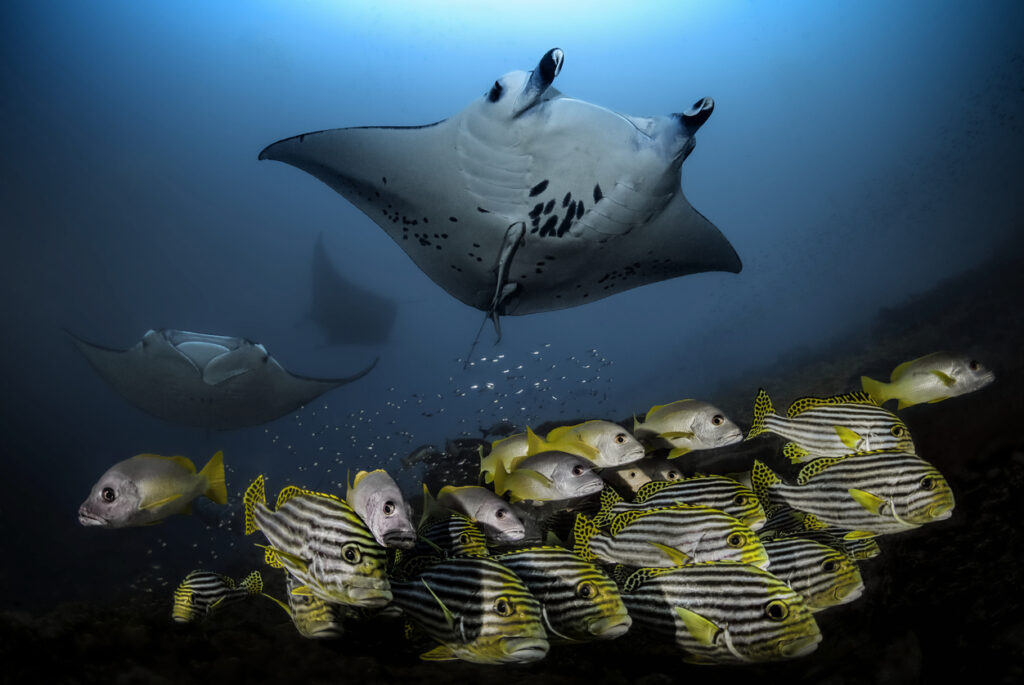
Mantas return to specific reef spots where small fish clean parasites off them. They’ll queue up and wait their turn, hovering patiently while cleaner fish pick them over. These cleaning stations are like underwater car washes where mantas know they can get serviced. The same individuals return to the same spots, suggesting they remember and plan these visits.
They can live for 50 years or more.

Mantas are long-lived creatures that take years to reach maturity and only have one pup at a time. This slow reproduction makes them vulnerable to population decline. A 50-year lifespan means mantas born now could still be gliding around in 2075. They’re not just passing through, they’re investing decades in the same ocean territories.
Baby mantas are born fully formed and huge.
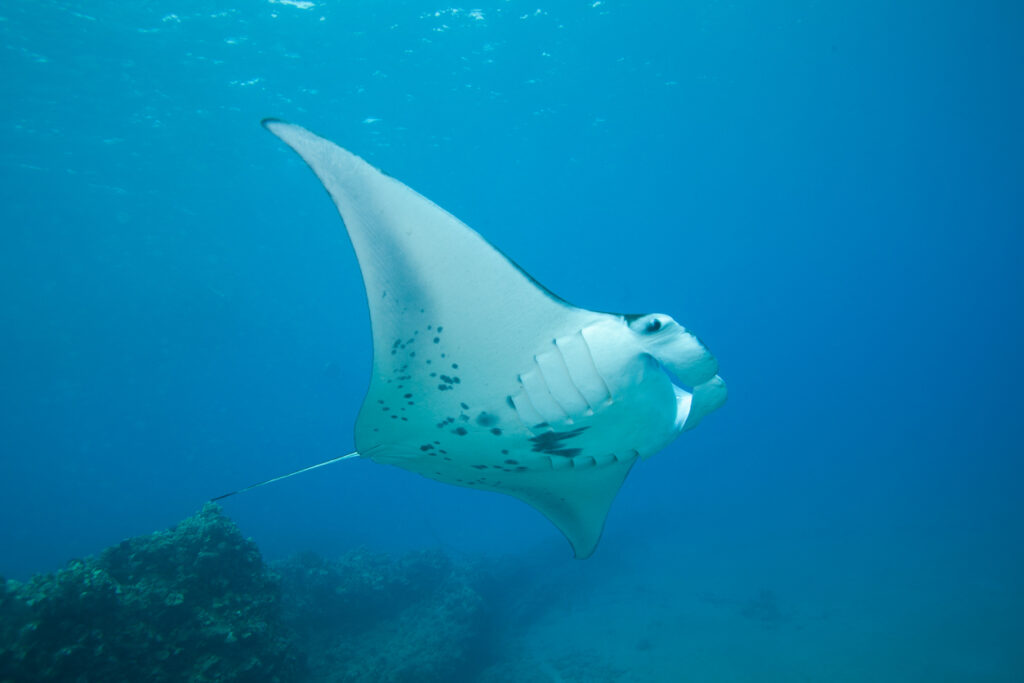
A newborn manta pup emerges rolled up like a burrito, then unfurls to reveal a wingspan already over a metre wide. They’re immediately capable of swimming and don’t need parental care. Being born that large and independent is necessary in an ocean full of predators. Manta pups hit the water ready to go, which is just as well since mum isn’t sticking around to help.
They breach out of the water like whales.
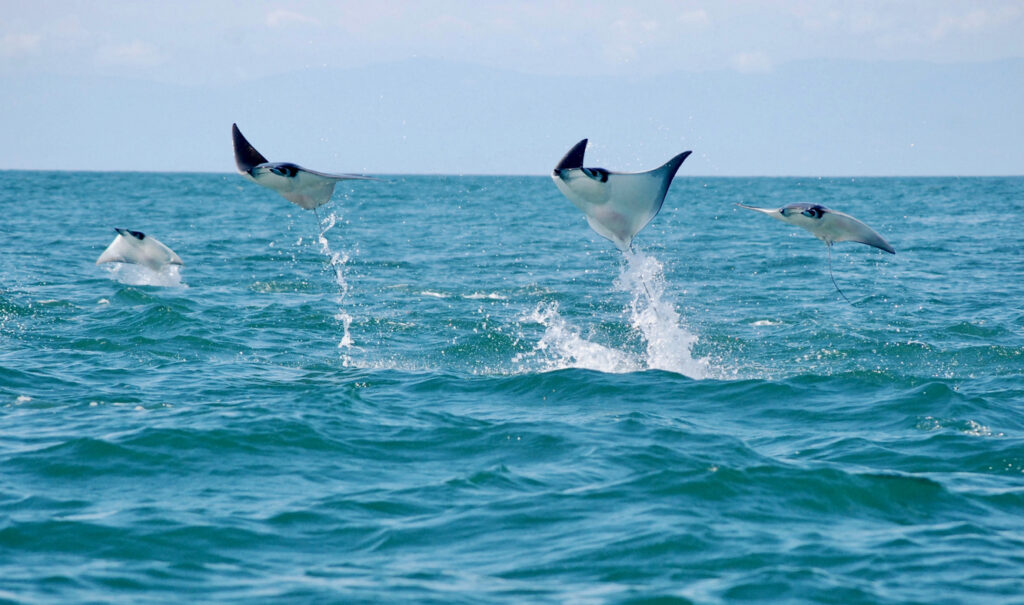
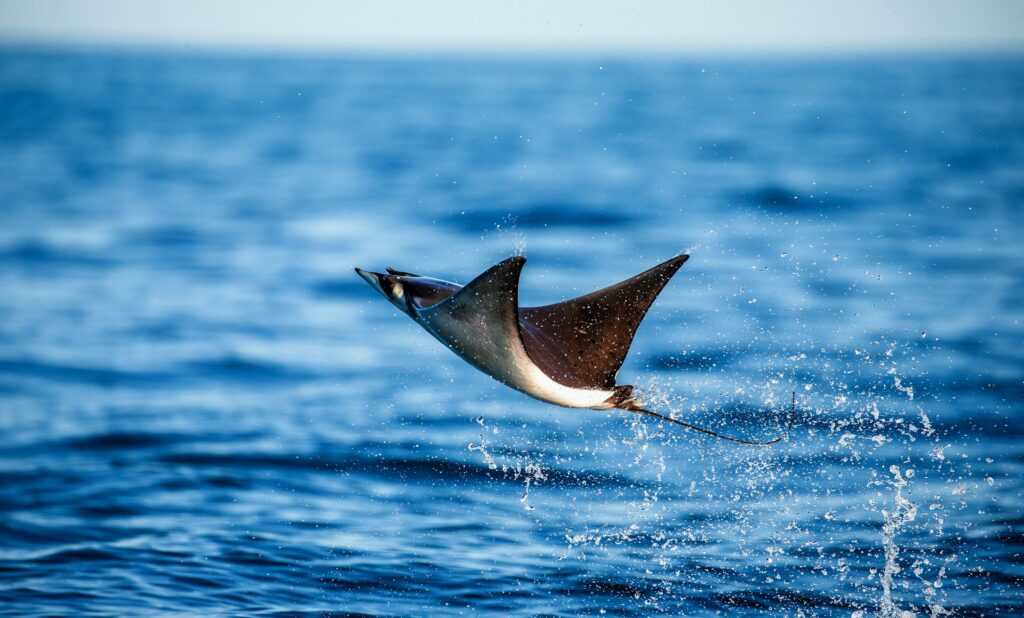
Mantas will launch themselves completely out of the ocean and belly flop back down, though nobody’s entirely sure why. Theories include parasite removal, communication, or just playing. Seeing something that massive leap out of the water is spectacular. They can jump over a metre into the air despite weighing a tonne, which seems physically impossible but happens regularly.
Their mouths are on the front, not underneath.
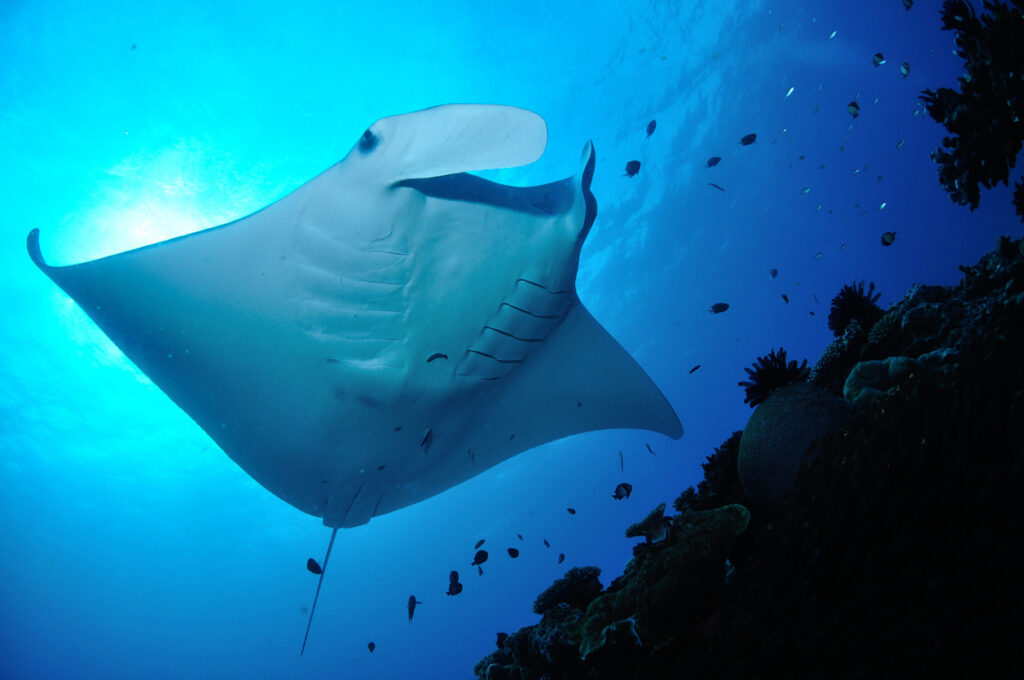
Unlike other rays that feed on the bottom with downward facing mouths, mantas evolved forward facing mouths for filter feeding in open water. This changed their entire body shape and behaviour. They look more like they’re flying than swimming because of this adaptation. The front facing mouth and wing like fins make them the most un-fish-like fish in the ocean.
They’re threatened by fishing and pollution.
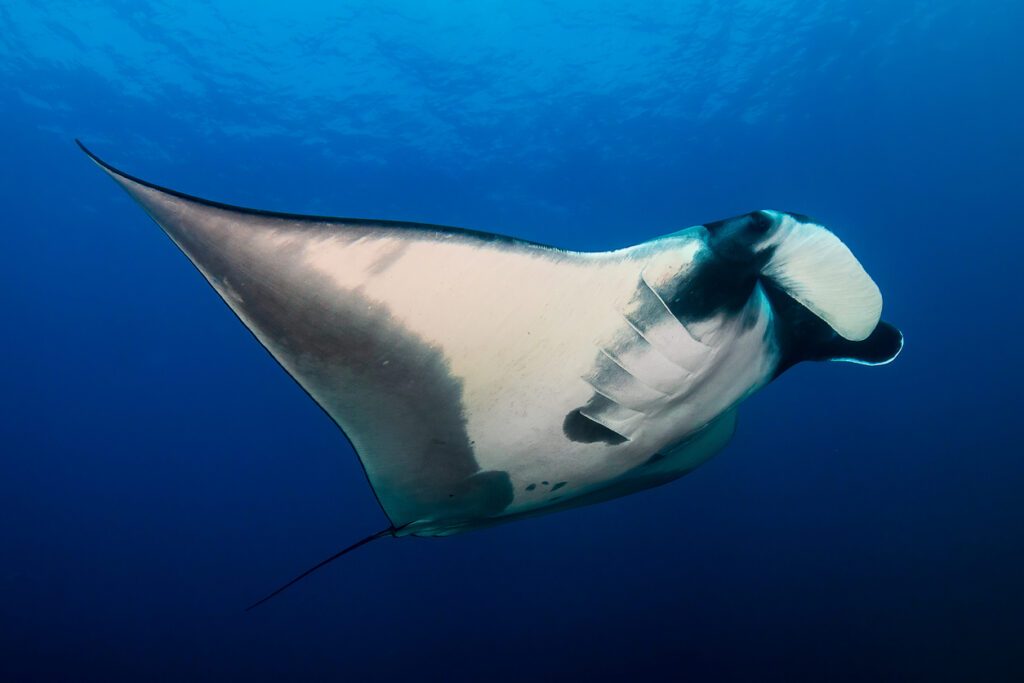
Manta gill plates are used in traditional medicine despite having no proven benefits, leading to targeted fishing. Their slow reproduction means populations can’t recover quickly from overfishing. Ocean pollution and boat strikes also kill mantas. Something that lives 50 years and only has a pup every few years can’t withstand much human pressure before populations collapse.
Divers seek them out specifically.
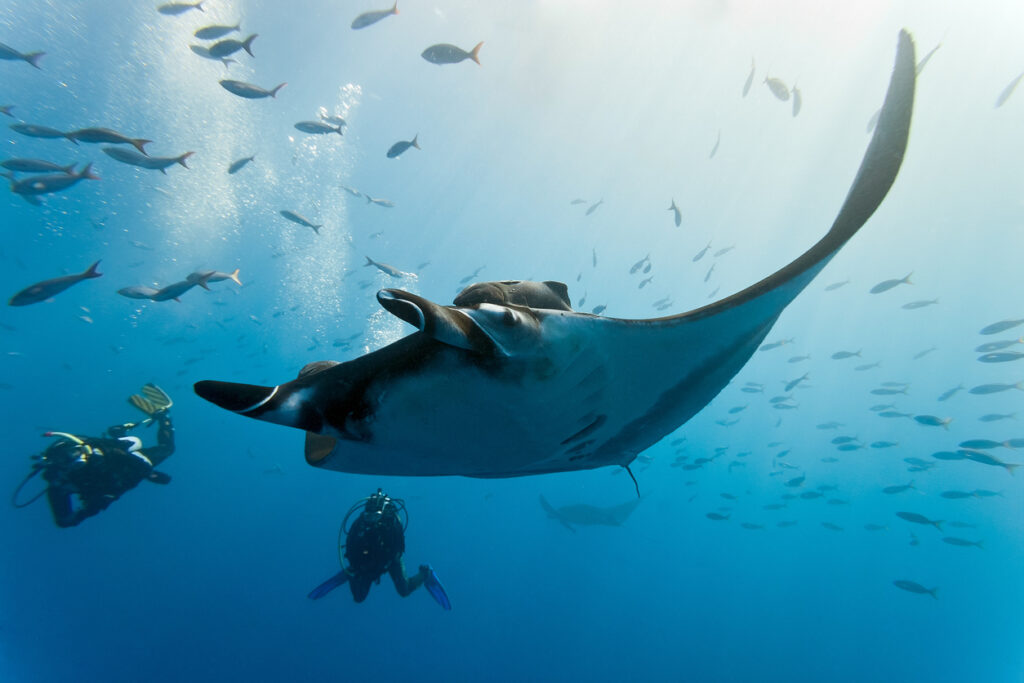
Manta ray encounters are considered bucket list experiences for divers. The rays often seem curious about humans and will circle back to investigate divers repeatedly. There are famous manta dive sites where specific individuals are known by name and have been visiting for decades. Some mantas seem to actively enjoy interacting with humans, which is rare for wild animals.
They’re filter feeders with no teeth.
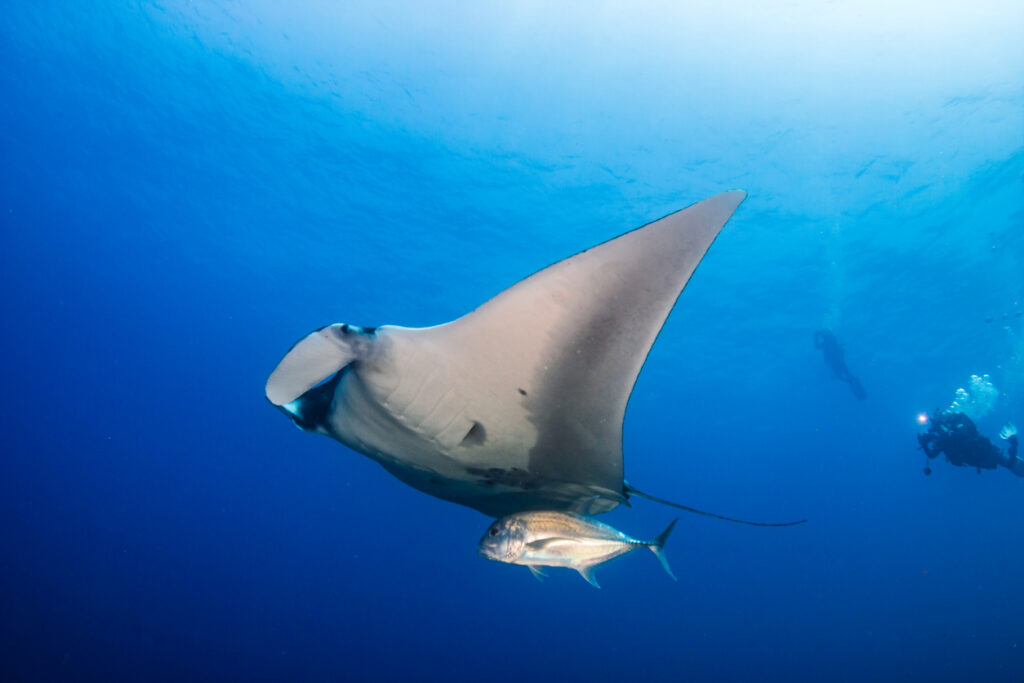
Mantas swim with their mouths open, filtering thousands of litres of water through specialised feeding structures. They’re eating constantly, but only catching things smaller than rice grains. No teeth means no biting, which adds to their harmless nature. They’re basically enormous swimming pool filters with fins, completely dependent on tiny drifting food they strain from the water.