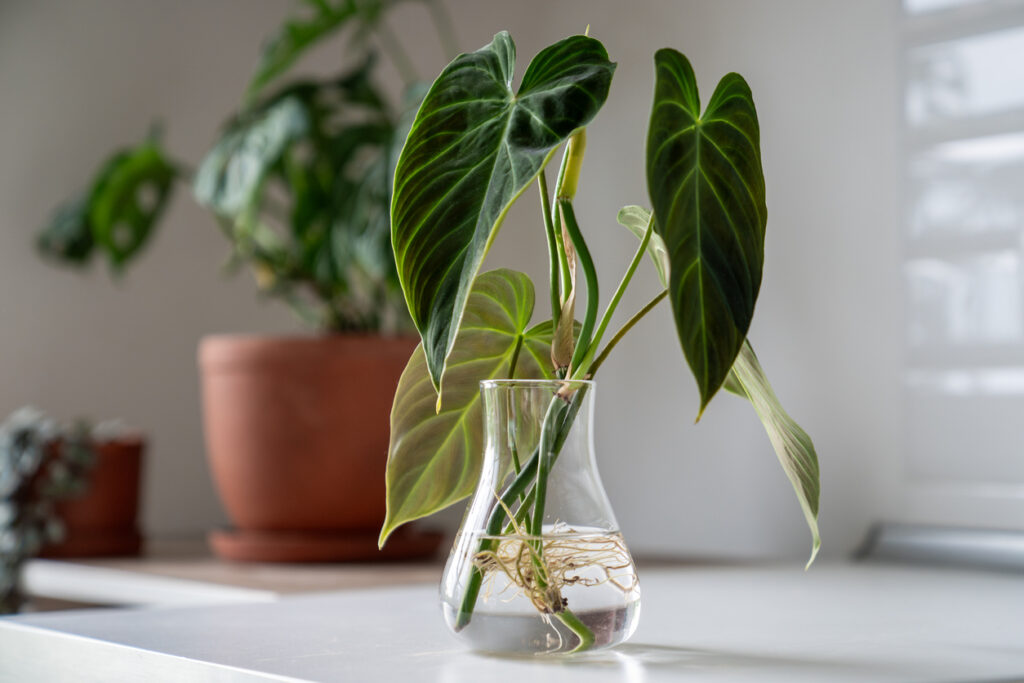
Propagating houseplants might sound like something that requires a greenhouse and a degree in horticulture, but it’s really just a fancy way of saying “make more plants for free.” And honestly, once you’ve done it a couple of times, you’ll wonder why you ever bought so many in the first place. It’s simple, satisfying, and ridiculously rewarding watching a little cutting grow into a full plant you can pot up, gift, or keep proudly on your windowsill.
Here’s how to do it properly (and the easy way!), and what to expect as your home slowly turns into a mini jungle of your own making.
1. Most plants root easily in just water.
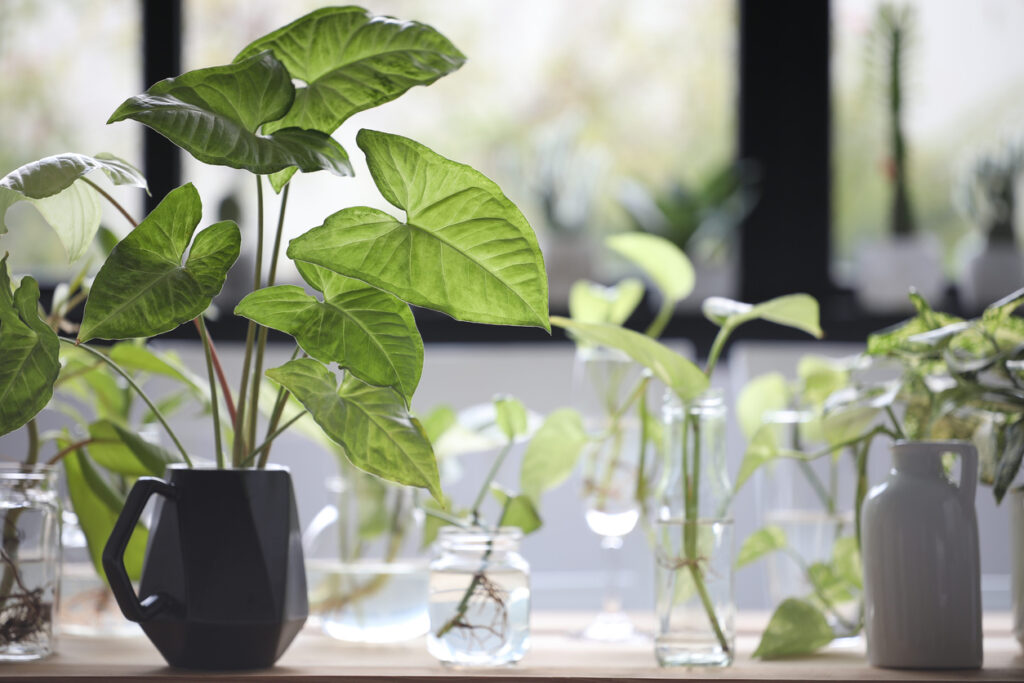
For loads of common houseplants, water is all you need to get started. Take a clean pair of scissors or snips, cut a healthy stem just below a node (that’s the bumpy bit where leaves grow from), and pop it in a jar or glass of water. Then, genuinely, just wait. Pothos, philodendrons, monsteras, and tradescantias are all brilliant for this because they practically root themselves.
Change the water every few days so it doesn’t go cloudy, and after a couple of weeks you’ll start to see delicate white roots appear. Once those roots are a few centimetres long, you can transfer your cutting into soil or just leave it in water permanently. Some people even keep “water gardens” this way. It looks beautiful and requires next to no effort.
2. Nodes are where the magic happens.
If you only remember one thing about propagating, make it this: no node, no roots. The node is where all the action happens. It’s that slightly swollen part of the stem where leaves attach and, when submerged, it’s where new roots will form.
Cut just below one of these nodes so it’s included in your cutting, and remove any leaves that would sit underwater (they’ll just rot). It feels a bit brutal snipping your plant up, but as long as you’ve got a node, you’re giving it everything it needs to grow again.
3. Some plants need soil propagation instead.
Not every plant likes sitting in water; succulents, cacti, and snake plants will sulk or rot if you try. These prefer soil propagation, which means sticking the cutting straight into damp compost instead. But before you do that, let the cut end dry out for a day or two so it forms a protective callus.
Once it’s ready, pop it into a small pot of slightly moist soil and leave it somewhere bright but not in direct sun. The biggest mistake here is overwatering. These plants store moisture in their leaves, so a little restraint goes a long way.
4. Leaf propagation works for certain species.
Some plants are even cleverer in that they can grow entirely new babies from a single leaf. Begonias, African violets, and certain succulents are famous for this. You can either stick the stem of the leaf into compost or simply lay it flat on top of the soil and wait.
If it’s going to work, you’ll see tiny new plants forming at the edges or base after a few weeks. It feels like magic, watching a single leaf quietly create life. Honestly, the first time it happens, you’ll check twice to make sure you’re not imagining it.
5. Division is easiest for clumping plants.
If your plant grows in clumps, such as spider plants, peace lilies, ferns, or calatheas, division is by far the easiest method. Take the plant out of its pot, gently shake or tease apart the roots, and split it into two or three smaller sections.
Each piece already has roots, so it’s like instant propagation. Pop each section into its own pot with fresh compost and give them a good water. You’ll have fully grown plants straight away, instead of waiting months for cuttings to catch up.
6. Timing matters more than you’d think.
You can technically propagate any time, but spring and early summer are when you’ll have the most success. Plants are actively growing then, so they root faster and stronger. Do it in winter, and they might just sit there sulking for weeks, doing absolutely nothing.
If you’re impatient, wait for the days to warm up before starting. Bright light and warmth are the magic ingredients because they tell the plant it’s safe to grow. Propagating during the growing season just means fewer failures and a lot more satisfaction.
7. Rooting hormone helps, but isn’t essential.
Rooting hormone, usually a powder or gel, helps plants develop roots faster. It’s great if you’re working with something tricky or expensive that you really don’t want to lose. But honestly, for everyday houseplants like pothos or tradescantias, you don’t need it.
If you’ve got some in the cupboard, sure, use it. Dip the cut end before putting it in water or soil. But don’t stress if you haven’t. Most plants will happily do their thing without any chemical encouragement.
8. Not every cutting will make it.
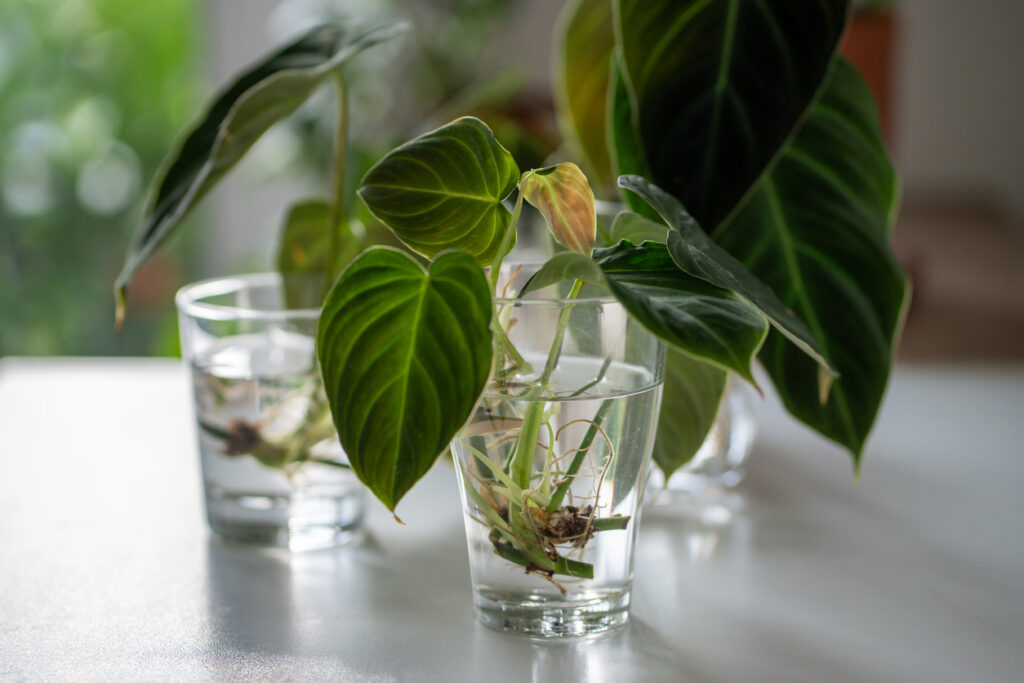
Even when you do everything by the book, some cuttings just don’t take. That’s normal. Maybe it was too soft, too woody, or just unlucky. Eh, it happens. The best approach is to take a few cuttings at once to boost your chances.
Don’t get too attached until you see proper new growth. A few might rot, others might stall, but if even one thrives, that’s a win. Propagation is meant to be fun, not stressful. Think of it as plant roulette: sometimes you strike gold.
9. Succulents propagate from fallen leaves.
If you’ve ever had a succulent drop its leaves, don’t throw them away. Just lay them on top of dry soil and leave them alone. You don’t even need to bury them. Seriously, resist the urge.
Over a few weeks, tiny roots and a baby rosette will start to grow from the end of the leaf. Eventually, the original leaf will shrivel up, having given all its energy to the new plant. It’s slow, but it’s oddly satisfying. It’s one of those “nature’s magic” moments.
10. Patience is the hardest part.
Propagation teaches you patience, whether you like it or not. You’ll be tempted to keep checking on your cuttings, moving them around, or tugging gently to see if they’ve rooted yet, but don’t. Every time you disturb them, you slow down the process.
Set them up somewhere warm, bright, and out of the way, then forget about them for a bit. It’s a waiting game, but when you finally see those new roots or fresh shoots, it’s worth every day of it. Watching a plant you grew yourself from nothing is one of the simplest, most satisfying joys of having a home full of green life.