If someone showed you a saiga antelope without context, you’d probably assume it was a creature from a sci-fi film.

With that bizarre inflatable nose and odd body proportions, they look like something designed by special effects artists, not evolution. They’re incredibly cute, though, and they also have some pretty special characteristics and talents that make them a creature well worth knowing about.
That nose is absolutely mental.
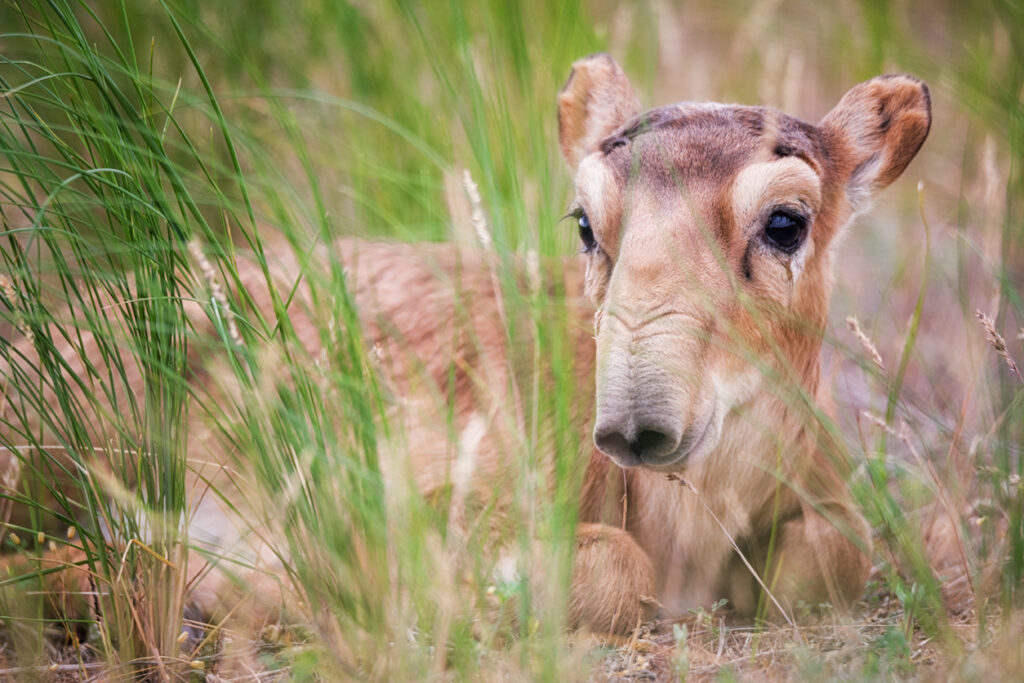
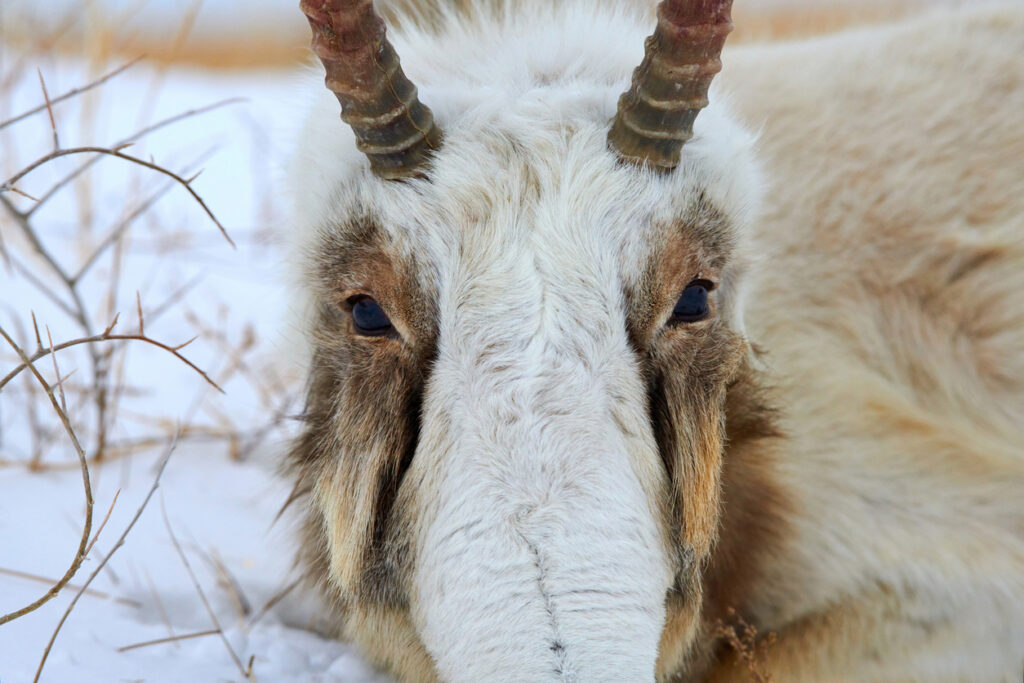
The saiga’s most striking feature is its massive, bulbous nose that hangs down over its mouth like a trunk. It’s flexible, inflatable, and looks completely out of place on what’s otherwise a fairly normal-looking antelope. Honestly, it’s the kind of nose you’d draw as a joke.
The nose isn’t just for show, though. It’s packed with mucous glands and hairs that filter out dust during summer migrations and warm up freezing air in brutal winters. It’s a brilliant adaptation, but the result looks like someone stuck a Muppet nose on a perfectly normal animal.
They’re living fossils from the Ice Age.
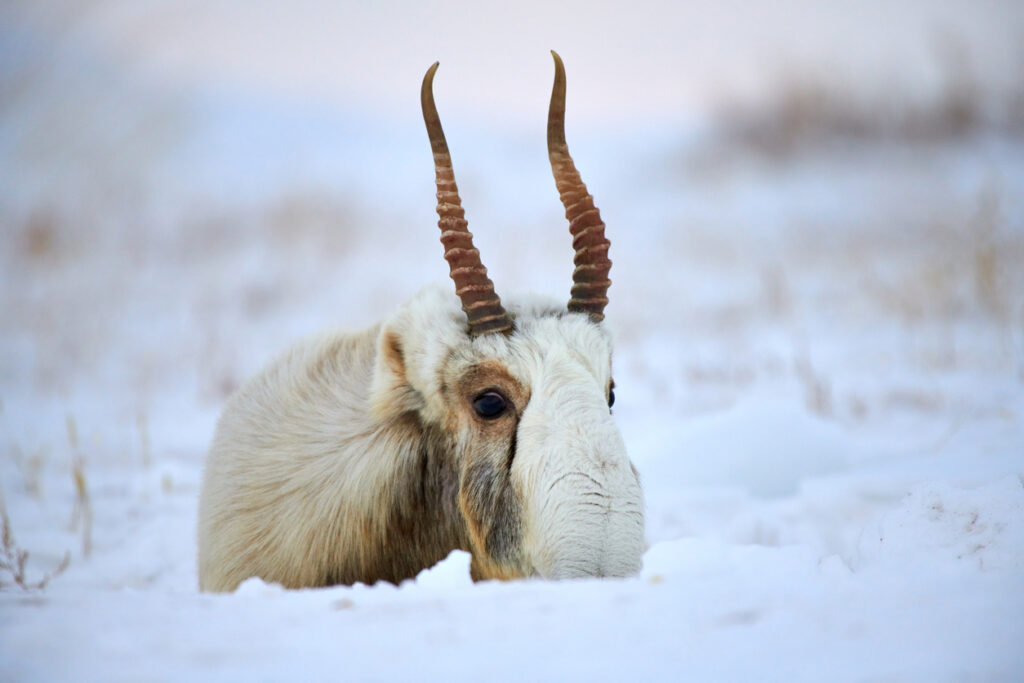
Saigas roamed alongside woolly mammoths and sabre-toothed cats during the last Ice Age. Most of their contemporaries became extinct, but these weird nosed antelopes somehow survived into the modern era. They’re basically time travellers from a world that doesn’t exist anymore.
Seeing them in photos feels surreal because they look prehistoric, which they basically are. They’ve barely changed in thousands of years, which makes their current critically endangered status even more tragic. They survived ice ages, but might not survive us.
Males’ noses get even bigger during mating season.
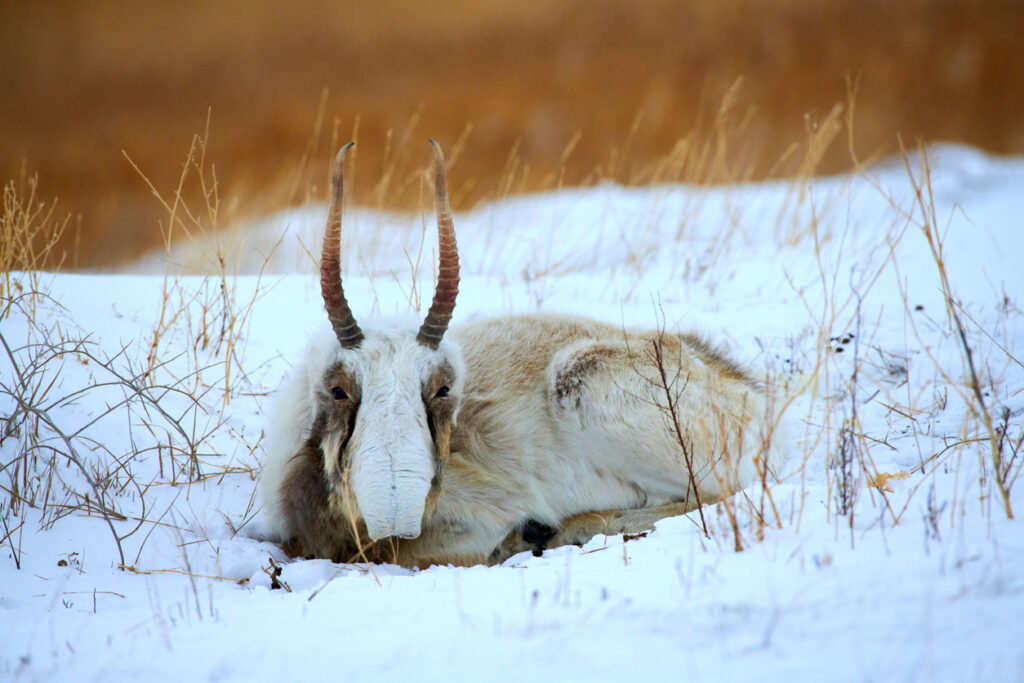
If you thought the nose couldn’t get more ridiculous, male saigas’ noses actually swell up even larger during rutting season. The enlarged nose helps them make deeper, more resonant calls to attract females and intimidate rival males, which works but looks absolutely wild.
The swollen nose combined with their generally exhausted appearance during rut makes males look properly rough. They’re fighting constantly, barely eating, and walking around with these massive inflated noses. It’s not a dignified look, but apparently the females are into it somehow.
They can run at 80 kilometres per hour.
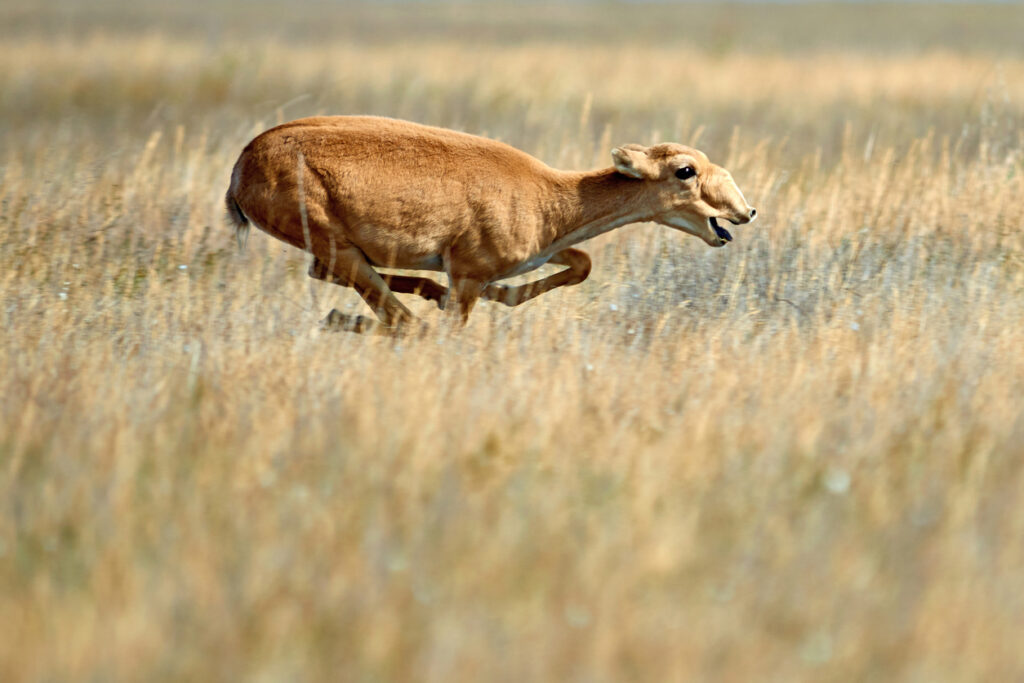
Despite looking awkward and ungainly, saigas are incredibly fast runners who can hit speeds of 80 kph when escaping predators. Those skinny legs are deceptively powerful, and they can maintain high speeds for surprisingly long distances across the open steppe they call home.
Watching them run is surreal because that nose bounces around wildly while they’re sprinting. You’d think it would slow them down or get in the way, but they move with surprising grace. It’s like watching something from a cartoon come to life and absolutely leg it.
Their eyes are positioned really weirdly.
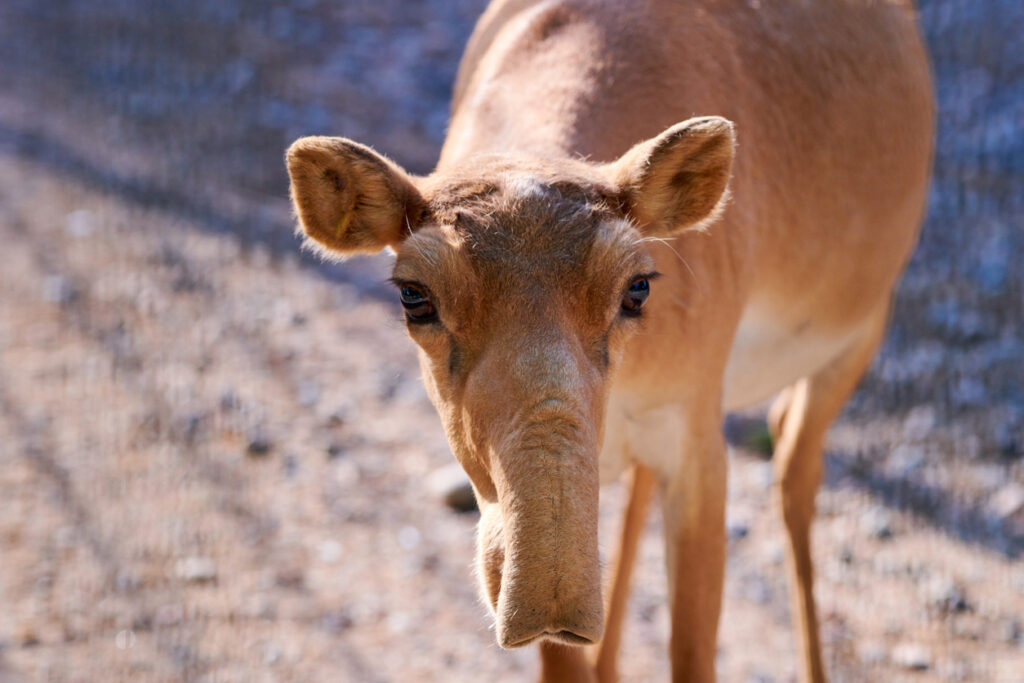
Saigas have large, bulging eyes set quite far apart and low on their heads. Combined with that nose, it gives them this perpetually startled, slightly alien expression. They always look shocked about something, which adds to their overall strange appearance that just doesn’t look quite right.
The eye placement gives them excellent peripheral vision for spotting predators across flat grasslands. It’s functional, but the result is they look like they’re constantly surprised by their own existence. Every photo looks as if you’ve caught them off guard, which is oddly endearing, really.
They migrate in absolutely massive herds.

Saigas gather in enormous herds that can number in the thousands during seasonal migrations. Seeing that many of these weird looking animals moving together across the steppe is genuinely spectacular. It’s like watching a Star Wars creature feature, but it’s real life on the Kazakhstan grasslands.
These mass migrations are crucial for their survival, moving between summer and winter pastures. But huge herds also make them vulnerable to disease outbreaks. In 2015, over 200,000 saigas died in just three weeks from a bacterial infection, which was absolutely devastating for the species.
Females all give birth within a few days of each other.
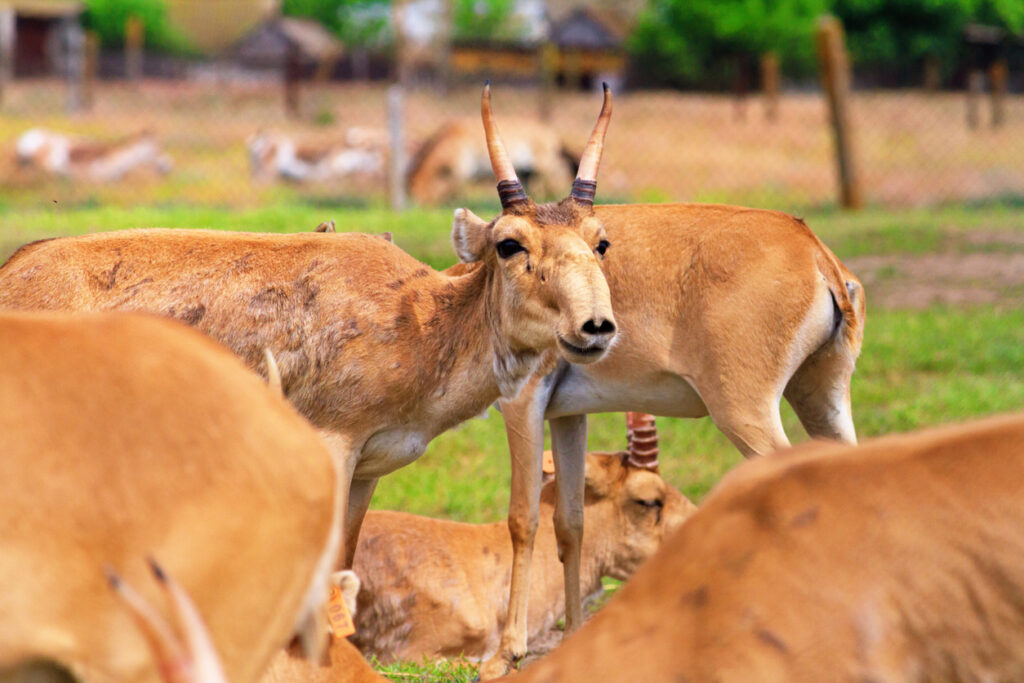
The entire population synchronises breeding so that all females give birth within about a week. This saturation strategy means predators can’t possibly eat all the calves, so more survive. It’s clever, but it also means you get thousands of newborn saigas appearing almost simultaneously.
The calving period turns the steppe into this chaotic nursery, with baby saigas everywhere. Mothers have to find their own calves among thousands of others using scent, which seems impossible but somehow works. The sheer scale of it is mind-blowing to witness in person.
They’re critically endangered and declining fast.
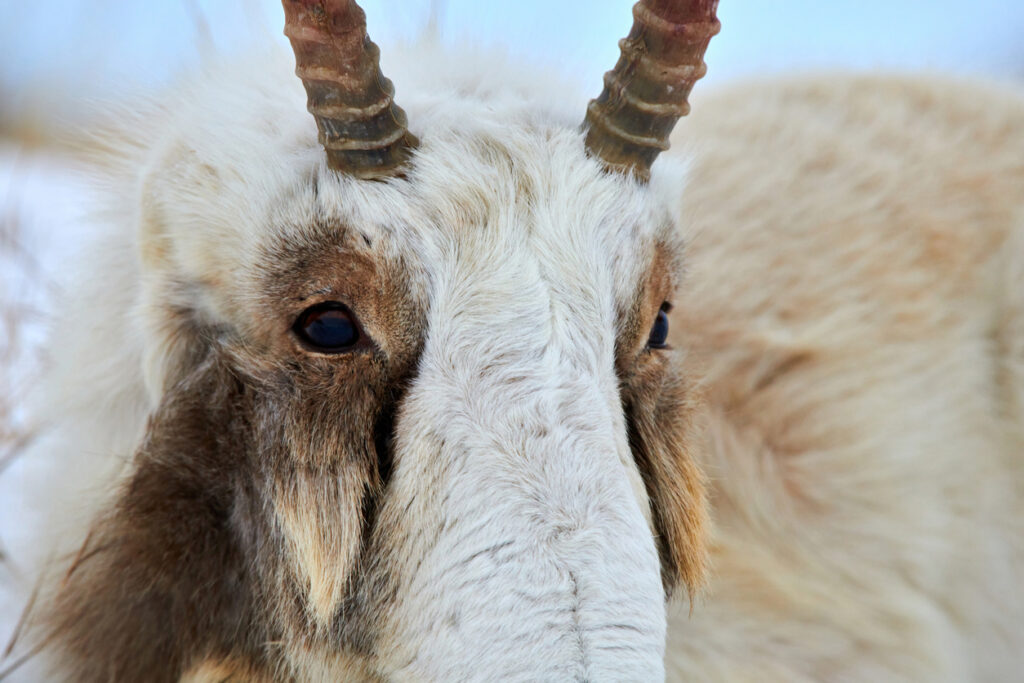
Saiga populations have crashed by over 95% in recent decades due to poaching, habitat loss, and disease. Their horns are valued in traditional Chinese medicine, making males particularly targeted. They went from millions to barely 100,000 in just a few decades, which is catastrophic.
Losing these odd Ice Age survivors would be tragic. They’re ecologically important for steppe grasslands and culturally significant to Central Asian peoples. Plus, the world would be objectively less weird and wonderful without these inflatable nosed time travellers running around Kazakhstan.
Baby saigas look even stranger than adults.
If you thought adult saigas looked odd, the babies are somehow weirder. They’re born with proportionally even larger noses, skinnier legs, and oversized eyes. They look as though they haven’t quite grown into their features yet, stumbling around on legs that barely work.
Newborns lie flat and motionless for their first few days, which is their main defence against predators. So you get these tiny, bonkers-looking animals just sprawled out on the grass looking dead. Then they suddenly spring up and start running, which is quite startling to witness.
Their horns are weirdly translucent.
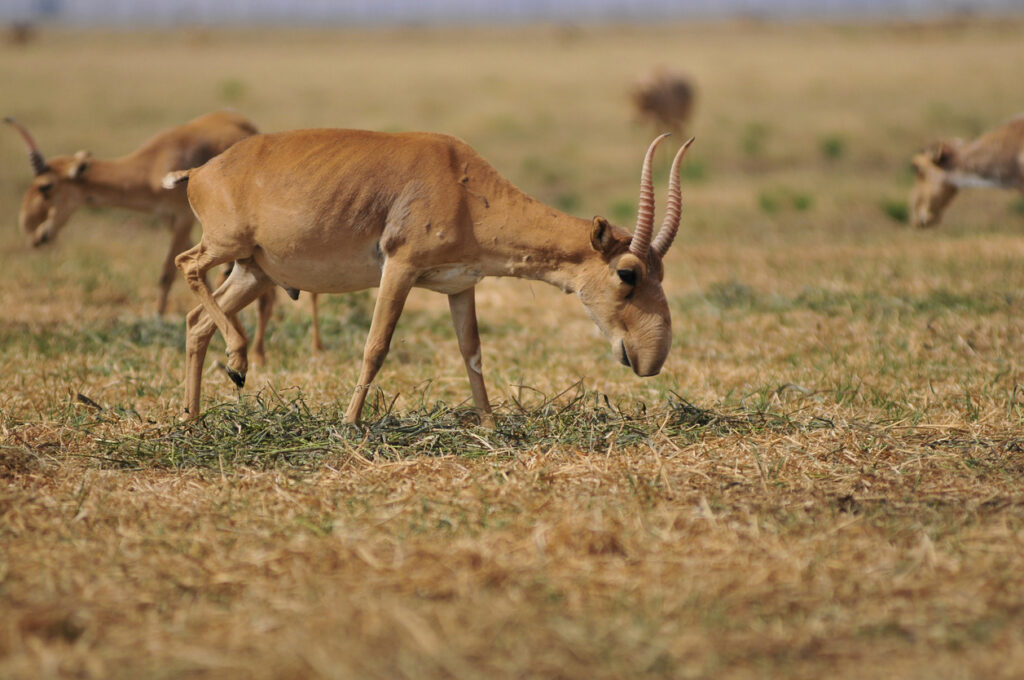
Male saigas have pale, slightly translucent horns that look almost amber coloured. They’re not massive, only about 25 to 30 centimetres long, but they’ve got this odd waxy appearance that doesn’t look like typical antelope horns. They’re ringed with these subtle ridges that catch the light strangely.
These horns are unfortunately why males get poached heavily. They’re ground up for traditional medicine, despite zero evidence they do anything medically. The demand for horns has absolutely decimated male populations, leaving harems with hardly any males to breed with.
They’re built for extreme temperature swings.
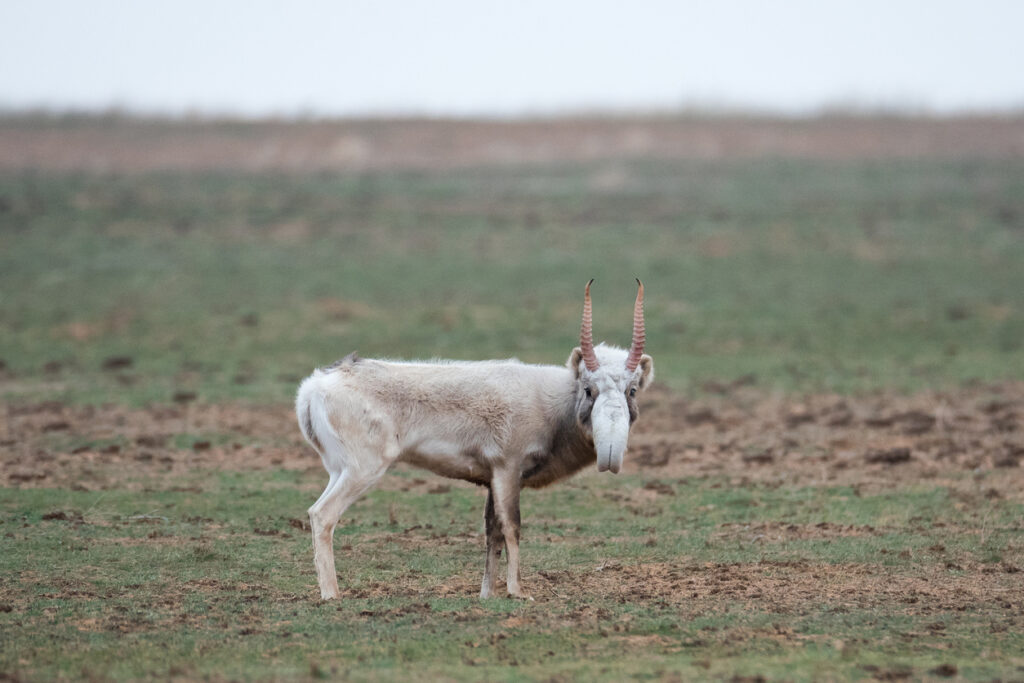
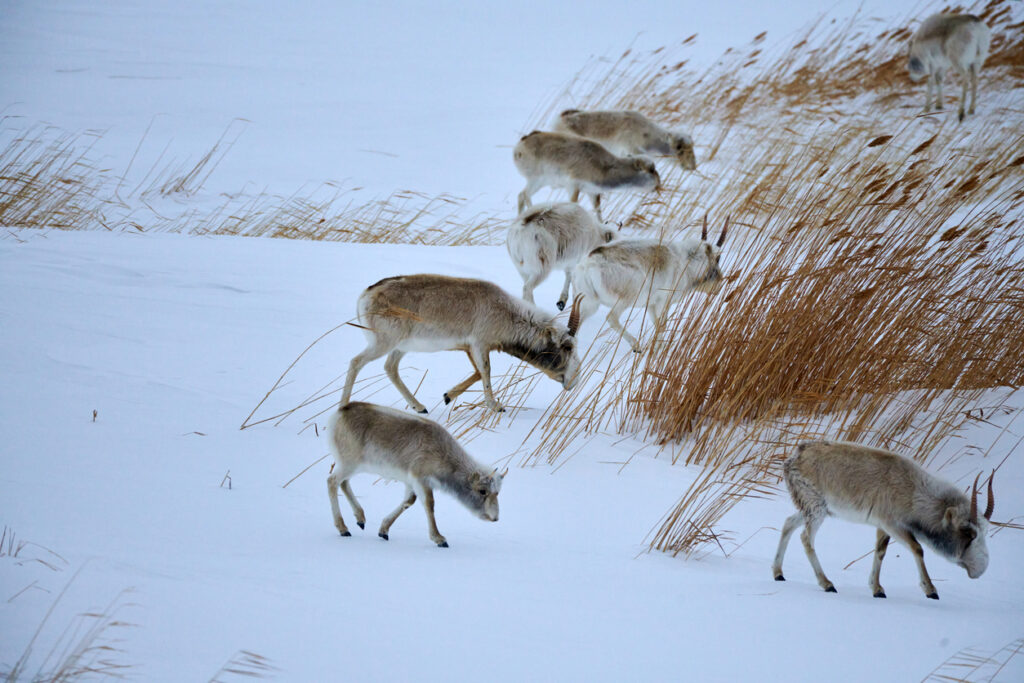
The Central Asian steppe has brutal winters and scorching summers, with temperature differences of over 80 degrees Celsius between seasons. Saigas cope with this through that remarkable nose, thick winter coats that they shed in summer, and the ability to simply tolerate conditions that would kill most animals.
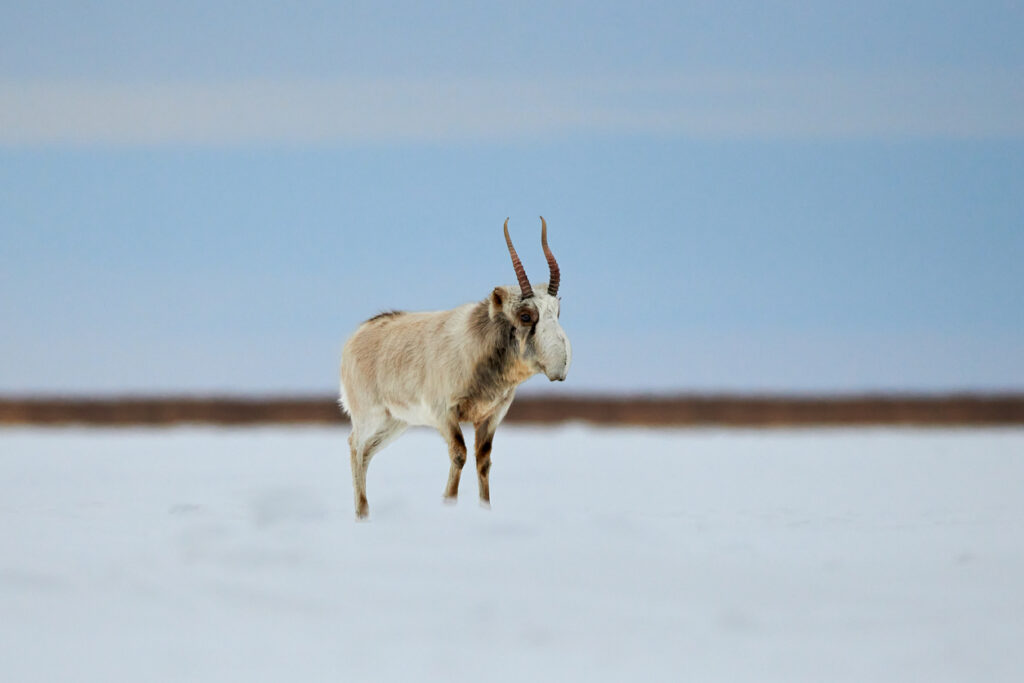
Seeing them in winter is surreal because they puff up with thick wool and look even stockier than usual. That nose works overtime warming freezing air before it hits their lungs. They’re tough little survivors in one of Earth’s harshest environments, which makes their decline even sadder.
They make really odd vocalisations.
You’d expect antelopes to make typical bleating sounds, but saigas produce these strange whistling and humming noises through their oversized noses. Males make particularly disconcerting sounds during rut, combining whistles with grunts that echo across the steppe. It sounds utterly alien, matching their appearance perfectly.
The nose works like a resonance chamber, amplifying and modifying their calls in ways that sound mechanical rather than biological. Hearing a herd of saigas calling together is genuinely eerie. It doesn’t sound like something mammals should make, more like instruments or strange machinery somehow.
Scientists still don’t fully understand that nose.
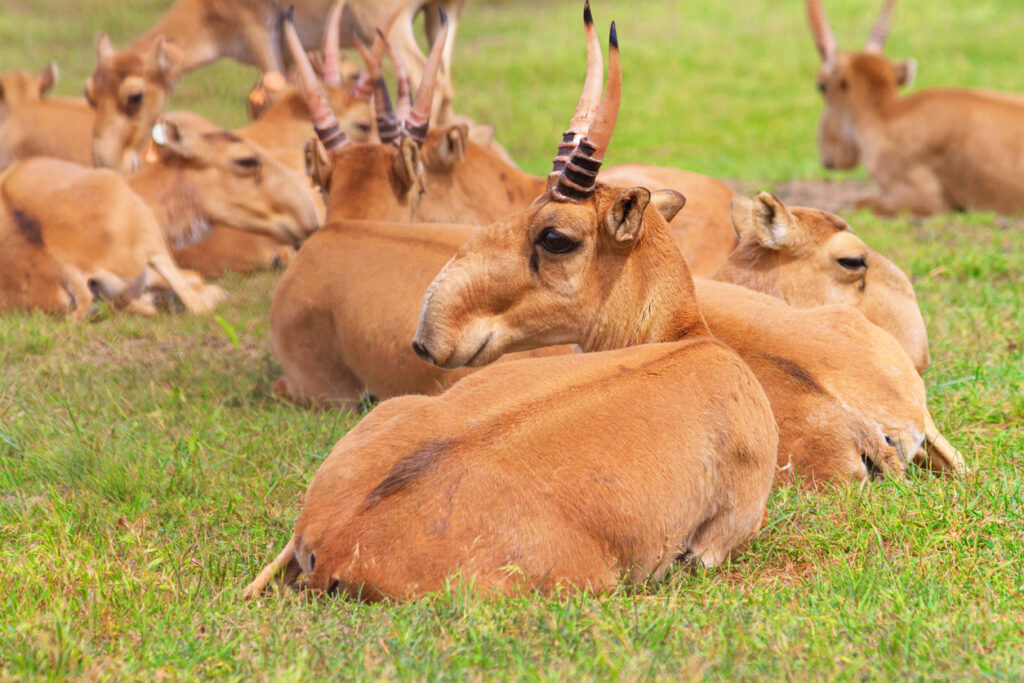
Despite being their most obvious feature, researchers are still figuring out exactly how the saiga’s nose works and all the functions it serves. They know the basics about filtering and warming air, but the full complexity of how it operates is still being studied and debated among biologists.
The nose structure is incredibly complex internally, with chambers and passages that aren’t fully mapped yet. It’s frustrating that such a visible, bizarre feature is still partly mysterious. But that’s part of what makes saigas fascinating, they’re weird in ways we’re still trying to understand completely.
They’ve become a symbol of conservation challenges.
Saigas represent everything difficult about wildlife conservation. They cross international borders, need vast intact grasslands, face multiple threats simultaneously, and crashed before anyone really noticed. Saving them requires cooperation between countries that don’t always get along and resources that aren’t readily available currently.
But there’s hope. Conservation efforts are showing some success, with populations slowly recovering in protected areas. These amazing antelopes might just survive if we actually commit to protecting them. Losing such a weird and wonderful creature would make the world significantly less interesting and strange forever.