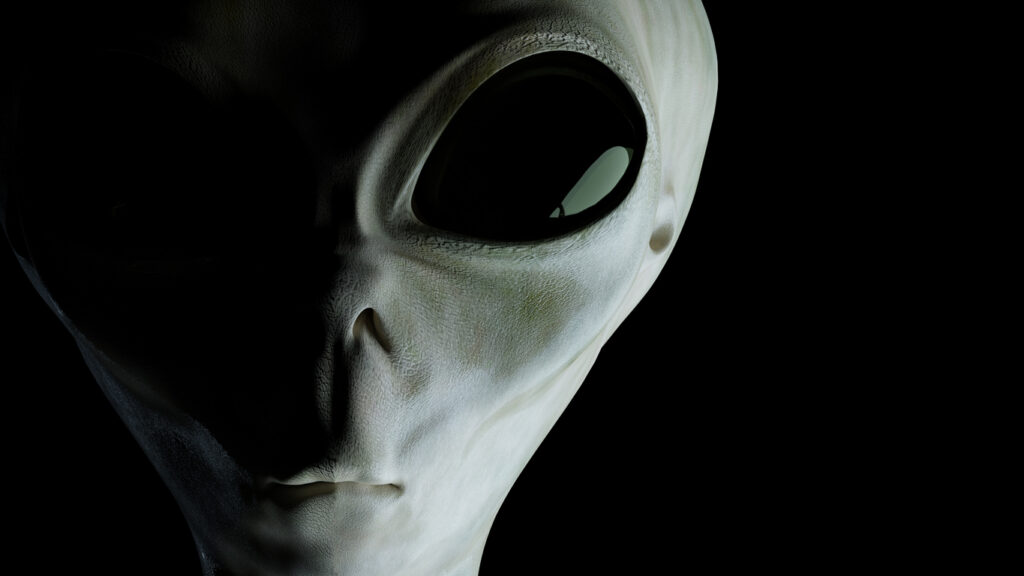
For centuries, people have wondered whether we’re alone in the universe. No one’s shaken hands with aliens yet, but scientists have uncovered more and more tantalising hints that maybe, just maybe, life could exist beyond Earth. Each clue doesn’t prove anything on its own, obviously, but together, they nudge the possibility into a realm where it feels less like fantasy and more like a frontier we might eventually cross.
Here are the clues that keep astronomers, astrobiologists, and daydreamers awake at night, and what makes them credible (or shaky).
1. Planets in the habitable zone
Probably the most famous clue: a planet orbiting its star at just the right distance so liquid water can exist: not too hot, not too cold. We call that the “Goldilocks zone.” It’s one of the first things scientists look for when hunting for life-friendly worlds. Dozens of exoplanets (planets around other stars) fall into this zone, raising the odds that at least some of them could host life.
Still, being in the right zone doesn’t guarantee life. Atmosphere, planetary history, radiation, and geology all matter, too. Still, given how many such planets we’re finding, you begin to think Earth isn’t the only one with the “just right” settings.
2. Water on Mars
Mars used to be wetter. We have evidence that it once had rivers and lakes. Today, scientists have detected frozen water at the poles and suspected salty liquid water beneath its surface. That’s huge because water is the universal solvent. Almost every life form we know needs it.
If we find microbial life on Mars, it won’t be the grand “aliens among us” kind. Likely, it’ll be more like very small, hardy survivors. However, even that would be monumental. Future missions, like the NASA rover and subsurface‐probes, are aiming to explore those hidden water zones more closely.
3. Mysterious signals from space
Telescopes sometimes register odd radio bursts or signals that don’t immediately match known natural sources. While most end up being explained by stuff like pulsars, quasars, or cosmic events, a few remain puzzling. Plus, because every assumption is up for debate, some scientists ask: Could any be artificial?
Caution is key. We’re not talking alien cell phones beaming messages. But if a signal clearly doesn’t align with what’s physically plausible in nature, it stirs the imagination. It keeps SETI (Search for Extraterrestrial Intelligence) projects funded and curious.
4. Extremophiles on Earth

This is one of the more powerful clues. Life on Earth hasn’t just survived in “nice” climates; it actually thrives in extremes. Deep sea hydrothermal vents (scalding, pressurised), acidic lakes, boiling springs, with no sunlight. Organisms live in places once thought impossible.
That tells us two things: life is resilient and versatile, and the universe might have niches we would otherwise dismiss. A moon with a rocky core and geothermal activity? Suddenly, that’s not crazy territory.
5. Organic molecules in space
Scientists have detected organic molecules like carbon compounds and simple amino acids in comets, meteorites, and interstellar clouds. These are the “building blocks of life.” If the raw ingredients are scattered widely, it raises the chances that life could assemble elsewhere.
Of course, molecules are not life. But having the ingredients is a necessary step. Think of it like having flour and sugar in the cupboard: good to bake a cake, but the cake still needs something extra (heat, water, mixing) to happen.
6. The atmosphere of exoplanets
One of the hottest areas (pun intended): studying exoplanet atmospheres via spectroscopy. Scientists look at how starlight filters through or reflects off a planet’s air. Some have spotted molecules like methane or water vapour, which, in the right ratios, could hint at biological activity.
A recent headline example: in 2025, researchers detected dimethyl sulphide (DMS) and dimethyl disulphide (DMDS) in the atmosphere of K2-18b, molecules associated on Earth with biological processes. The discovery got headlines as a “strongest hint yet” of extraterrestrial life.
7. Icy moons with oceans underneath
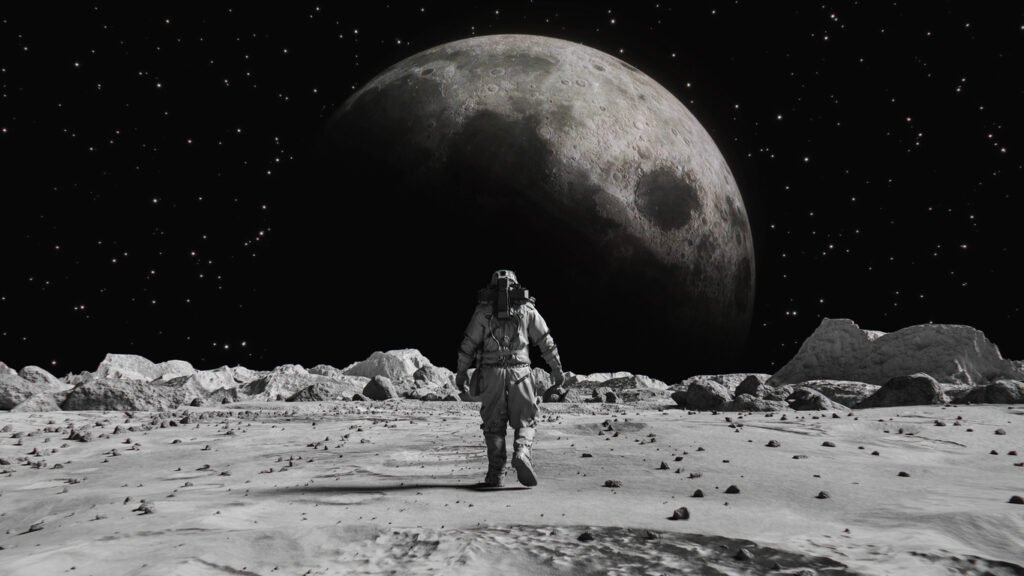
Moons like Europa (Jupiter) and Enceladus (Saturn) are among the biggest hopes in our backyard. Beneath thick ice shells lurk vast oceans warmed by tidal forces, not sunlight. That internal heat can create conditions favourable to life.
On Europa, studies suggest its ocean has twice as much water as all of Earth’s oceans combined. That’s a lot of potential habitat. Some models even propose microbial ecosystems in Europa’s oceans, powered not by photosynthesis but chemical energy from its rocky core. Missions like Europa Clipper (launched in the coming years) aim to probe these depths and test habitability.
8. The Drake Equation
The Drake Equation is more a framework than proof: it multiplies factors, such as number of stars, planets per star, fraction with life, fraction with intelligence, etc. Even with cautious estimates, many versions of it suggest the galaxy could host multiple intelligences.
It doesn’t give a definitive answer, but it frames the question. It forces us to confront uncertainties and think probabilistically. In a galaxy with billions of stars, concluding we’re alone feels harder to defend than it used to.
9. Fossil-like shapes on Mars rocks
Some rocks on Mars have tiny structures that, under microscope, resemble microbial fossils due to ring shapes, chains, or nodules. NASA’s rovers have photographed these, though the interpretations are contested. It could be mineral processes instead, for instance.
Still, the possibility of ancient life on Mars remains open. Even if all life on Mars is dead now, finding traces would rewrite our understanding of how life starts and survives.
10. Saturn’s moon Titan
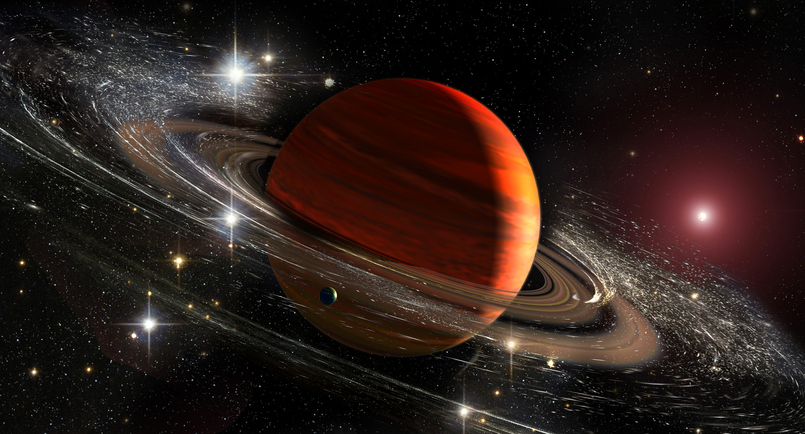
Titan, a moon of Saturn, is weird by Earth standards: rivers and lakes of liquid methane and ethane instead of water. It’s cold and hazy, but it’s rich in organic chemistry. Some scientists speculate life there might be built on different chemistry than ours.
It stretches us to imagine alternatives. If life doesn’t have to be carbon-and-water-based (though even that is speculative), then the universe’s palette is bigger than we thought. Titan challenges assumptions and widens our search.
11. Fast radio bursts and weird signals
Fast radio bursts are millisecond‐long blasts of energy from distant galaxies. Most are attributed to natural cosmic events (neutron stars, magnetars), but their intensity and mystery leave some curious about artificial origins.
A single confirmed artificial source would reshape everything. Meanwhile, the unknowns push science to refine its antennae and assumptions. Even if alien life isn’t behind them, FRBs expand what we know about universe weirdness.
12. Ancient Earth chemistry
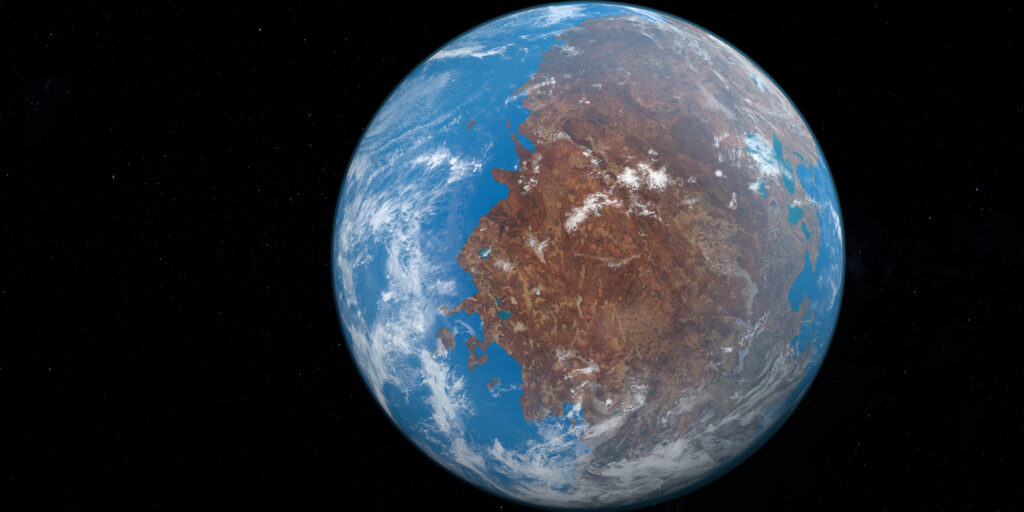
On Earth, life appears relatively early in geologic history. Compared to the age of the planet, life started quickly. That suggests that given the right conditions, life can emerge.
If Earth isn’t an outlier, and if it’s not exceedingly rare for life to start, then similar processes might be unfolding elsewhere. This idea strengthens the hypothesis that life isn’t unique to our little blue dot.
13. The sheer number of stars and planets
Just in our Milky Way galaxy, there are hundreds of billions of stars, and most of them have planets. The more planets we discover in habitability zones, the harder it is to think Earth is alone.
Every new exoplanet discovery shifts the odds. Many of them are weird, yes, like super-Earths, mini-Neptunes, gas giants close to their stars, but the diversity alone suggests we’ve hardly begun to scratch the surface of what’s possible.
14. The possibility of microbes on Venus
Venus used to be Earth-like, with water and moderate temperatures long ago. More recently, scientists detected phosphine gas in its upper atmosphere, a gas on Earth often linked to microbial life. The finding is controversial and still under debate, but it reopened the idea that even a hostile planet might host niches where life clings on.
If microbes can survive in the more temperate clouds of Venus, it shows life can hang on in places we once thought utterly inhospitable. It challenges Earth-first ideas about habitability and asks us to think broader.