The Moon often appears dazzling in the night sky, but it produces no light of its own.

Its brightness comes from a mix of science and perception, rather than any true glow of its own. While we’re certainly glad it’s there and would be lost without it, it’s crazy to realise how little light it actually offers us here on Earth. Here are the real reasons the Moon seems as if it’s shining so brightly, even when it’s really just a big ol’ hunk of grey rock in the sky.
1. It reflects sunlight efficiently.

Again, the Moon doesn’t glow on its own. Its surface reflects light from the Sun, which makes it visible to us. Even though it reflects only a fraction of sunlight, that fraction is enough to dominate the night sky. Because the Sun is so powerful, the light bouncing off the Moon seems intense. Our eyes interpret this reflected light as brightness, especially against the dark backdrop of space.
2. Its proximity makes it look brighter.

The Moon is much closer to us than any star or planet. At just over 380,000 kilometres away, it is near enough that the light it reflects reaches our eyes far more strongly. Objects farther away may give off more light but appear dimmer because of the vast distance. The Moon’s nearness makes its reflected glow stand out more dramatically.
3. The lunar surface is highly reflective.

The Moon’s surface is covered with dust and rock that scatter light. While it is not as reflective as snow or ice, it has a property called “albedo” that allows it to bounce back enough light to shine brightly. Cratered areas and lighter highlands reflect more, while darker plains reflect less. Together, they create the silvery appearance that makes the Moon glow with such intensity.
4. The contrast with the night sky enhances it.
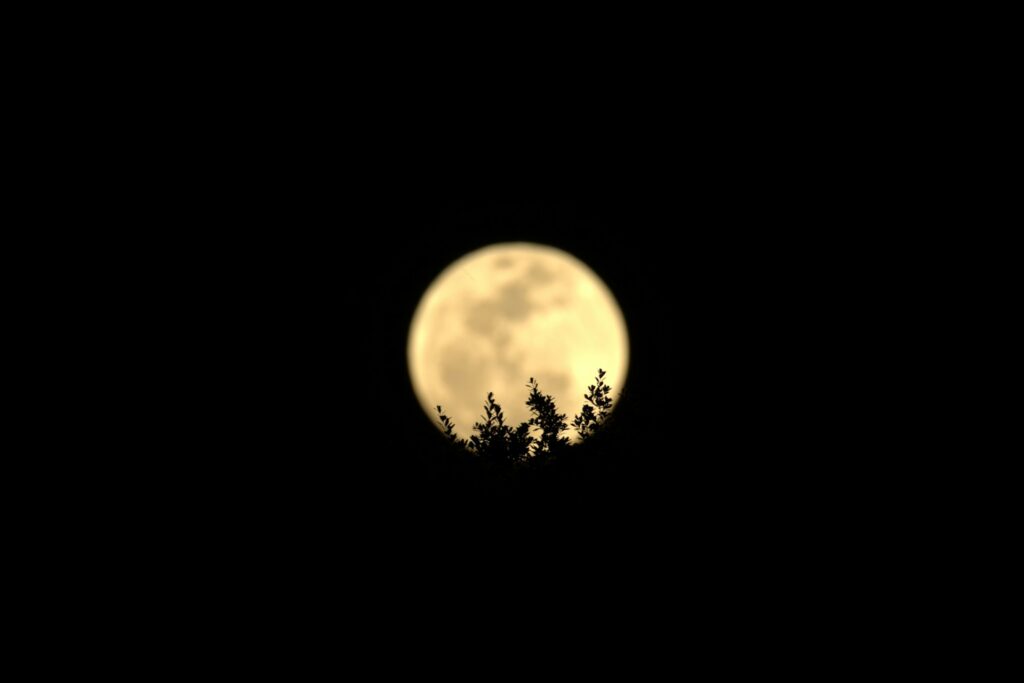
The Moon looks bright largely because it is set against a dark, star-filled sky. Our eyes adjust to the lack of light, so when the Moon appears, it seems especially luminous by comparison. That contrast is a trick of perception. Even though the Moon is not an especially strong reflector, the surrounding darkness makes its light appear almost blinding at times.
5. Phases affect its apparent brightness.
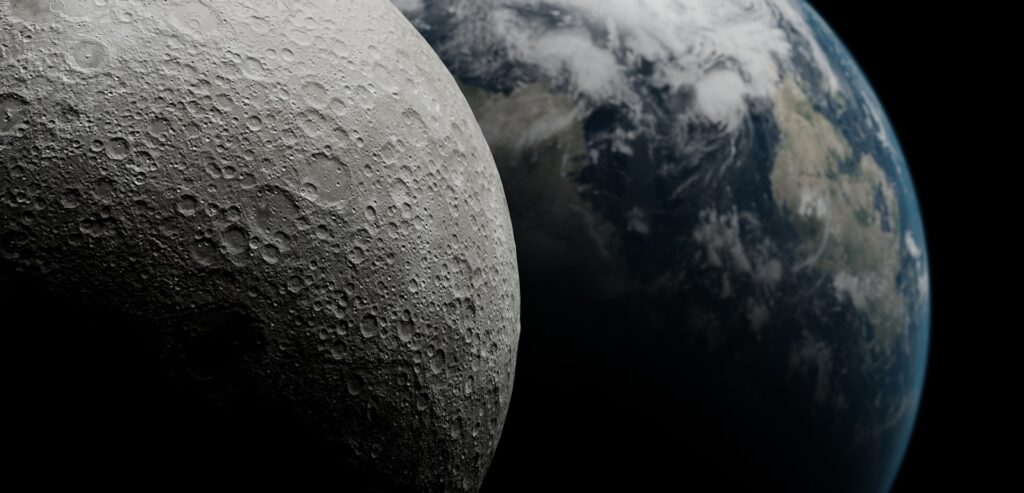
The Moon appears brightest during the full phase, when the Sun illuminates the entire side facing Earth. At this point, its reflected light is at maximum, and it dominates the night sky. In crescent or gibbous phases, less of its surface is lit, so the Moon appears dimmer. Its changing phases remind us that brightness depends on angle as much as distance.
6. The atmosphere plays a role.

Earth’s atmosphere can scatter light and make the Moon appear hazy or larger near the horizon. At times, it even magnifies brightness by focusing more reflected light towards us. While this effect isn’t constant, it often makes the Moon seem particularly striking. Atmospheric conditions can exaggerate its glow in ways that make it look almost unreal.
7. Our eyes adapt to low light.
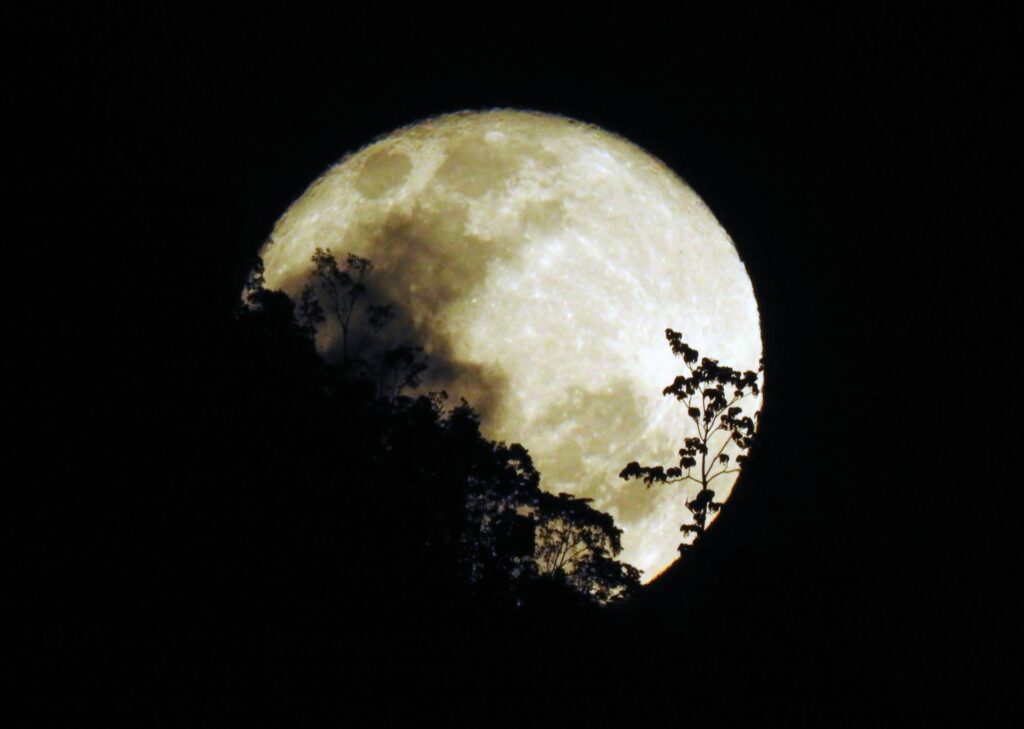
When it’s dark, our eyes become more sensitive to light. That adaptation means that even a small amount of reflected sunlight feels strong to us when we are outside at night. That heightened sensitivity explains why the Moon can seem almost dazzling. Our night vision exaggerates its glow, making it look brighter than it truly is in physical terms.
8. The full Moon can reflect enough light to cast shadows.
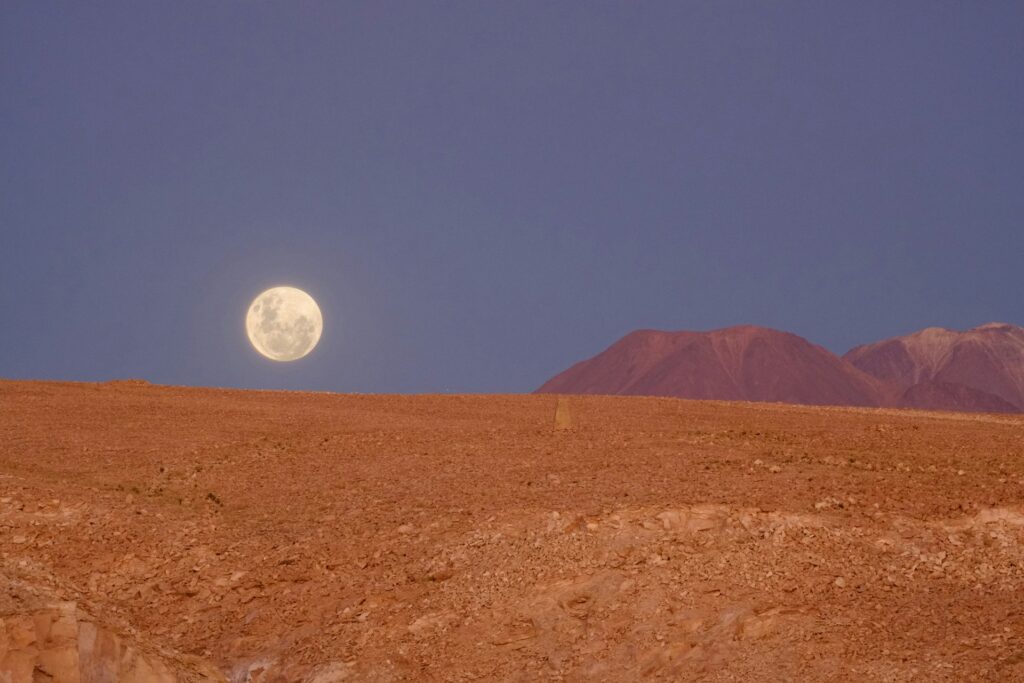
On clear nights, the full Moon reflects enough sunlight to create visible shadows on the ground. This shows just how effective it is at bouncing light across such a large distance. Having the ability to light up landscapes adds to its reputation for brightness. It is one of the few celestial bodies that can affect our environment so visibly at night.
9. Its size in the sky adds to the effect.

The Moon is large compared to stars and planets, so it covers more of our vision. This size, combined with reflected sunlight, makes it appear more radiant than smaller points of light in the sky. The apparent size creates a psychological effect. We experience it as more powerful because it dominates the view, even though it is simply reflecting sunlight like other objects.
10. Brightness changes with distance.

The Moon’s orbit is not perfectly circular, so it sometimes comes closer to Earth. During these times, often called “supermoons,” it appears bigger and brighter because the reflected light reaches us more directly. That variation shows that brightness is not fixed. The Moon’s distance from us changes how intense it looks, proving how much our perception depends on position and perspective.