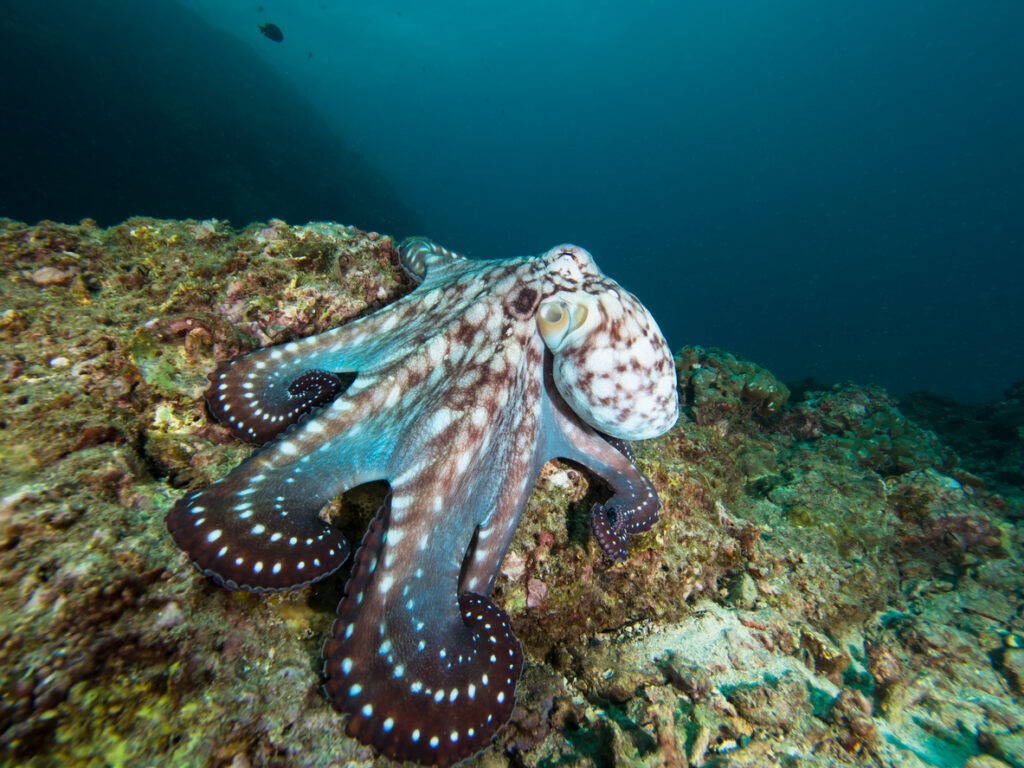
Octopuses and squids are like the misfit cousins of the sea that everyone confuses at family reunions, but once you know what to look for, the differences are pretty obvious. Both are cephalopods that look like they escaped from a sci-fi movie, but they’ve evolved completely different approaches to underwater life that make them surprisingly easy to tell apart.
Octopuses have eight arms, while squids have eight arms plus two tentacles.
This is the big giveaway that settles most identification debates. Octopuses stick to a neat eight-arm setup, while squids decided eight wasn’t enough and added two extra feeding tentacles that are longer and have clubs at the end for grabbing prey.
Count the appendages when you see one in an aquarium or documentary. If you count to eight, it’s an octopus. If you get to ten, you’re looking at a squid showing off its extra equipment.
Squids are built for speed, while octopuses prefer stealth.
Squids have streamlined, torpedo-shaped bodies designed for fast swimming and chasing down prey in open water. Octopuses are more blob-shaped and flexible, perfect for squeezing into tight spaces and ambushing prey from rocky hiding spots.
Think of squids as the sports cars of the cephalopod world: sleek and fast. Octopuses are more like shapeshifting ninjas that prioritise hiding and surprise over outright speed.
Octopuses are basically underwater contortionists.
An octopus can squeeze through any opening larger than its beak, which is about the only hard part of its body. They’re like living liquid that can pour themselves through incredibly small spaces and completely change their body shape.
Squids are much more rigid and can’t pull off the same disappearing acts. They’re stuck with their basic torpedo shape and can’t transform into a puddle like their eight-armed relatives.
Squids have an internal shell, but octopuses don’t.

Most squids have a thin, transparent structure called a pen inside their body that gives them some structure and support. Octopuses completely gave up on internal shells and went full soft-body, which is why they’re so incredibly flexible.
This internal difference explains why squids maintain their shape better, while octopuses can contort themselves into seemingly impossible positions. The pen keeps squids somewhat rigid, but octopuses are free to become whatever shape suits them.
Octopuses are master problem solvers; squids are pack hunters.
Octopuses are notorious for their intelligence and problem-solving abilities. They can open jars, navigate mazes, and use tools. Squids are smart too, but they rely more on group hunting strategies and speed than individual cleverness.
If you see a cephalopod using a tool or solving a puzzle, it’s almost certainly an octopus. Squids prefer the direct approach of overwhelming prey with speed and numbers rather than outsmarting it.
Their eyes are positioned completely differently.
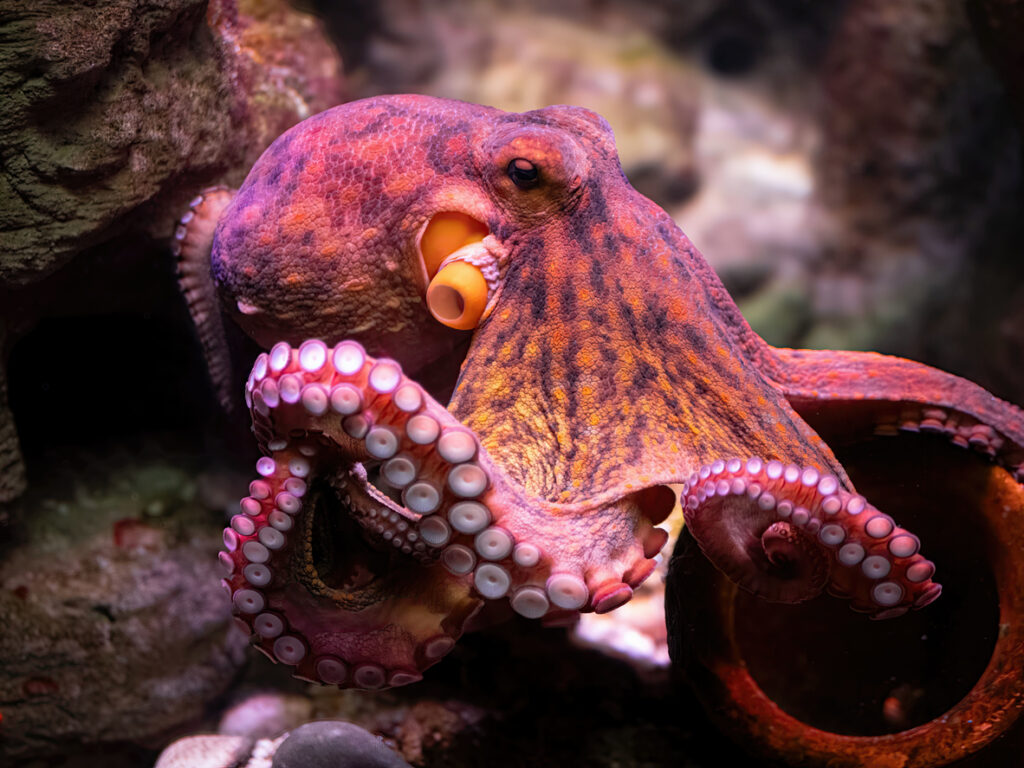
Octopus eyes are on the sides of their head and can move independently, giving them excellent peripheral vision for spotting predators as they’re hiding. Squid eyes are positioned more forward-facing for tracking prey during high-speed chases.
The eye positioning reflects their different lifestyles. Octopuses need to watch for danger from all directions when they’re hiding, but squids need focused forward vision for pursuit hunting.
Squids often hang out in groups, but octopuses are loners.
Most squid species are social and travel in schools, working together to hunt and avoid predators. Octopuses are typically solitary creatures that only come together to mate, preferring to live and hunt alone.
If you see multiple cephalopods swimming together, they’re probably squids. A single cephalopod hiding in a cave or crevice is more likely to be an octopus enjoying some alone time.
Their hunting strategies are completely opposite.
Squids are active predators that chase down fish and other prey in open water using their speed and tentacles. Octopuses are ambush predators that hide and wait for prey to come close before striking with lightning-fast attacks.
Think of squids as pursuit predators like cheetahs, and octopuses more like trapdoor spiders that rely on camouflage and surprise rather than chase scenes.
Octopuses are camouflage champions.
Both can change colour, but octopuses are the undisputed masters of camouflage, able to match not just colour but also texture and pattern of their surroundings. They can look like rocks, coral, or seaweed with incredible accuracy.
Squids can change colour too, but they’re more likely to use it for communication or basic camouflage rather than the Hollywood-level special effects that octopuses are famous for.
Their life cycles tell different stories.
Most octopuses die after mating and laying eggs, with mothers guarding their eggs until they hatch and then dying shortly after. Many squid species live longer and can mate multiple times throughout their lives.
This difference reflects their overall life strategies: octopuses put everything into one reproductive effort, but squids often spread their reproductive investment across multiple seasons.
Squids rule the open ocean, while octopuses dominate the seafloor.
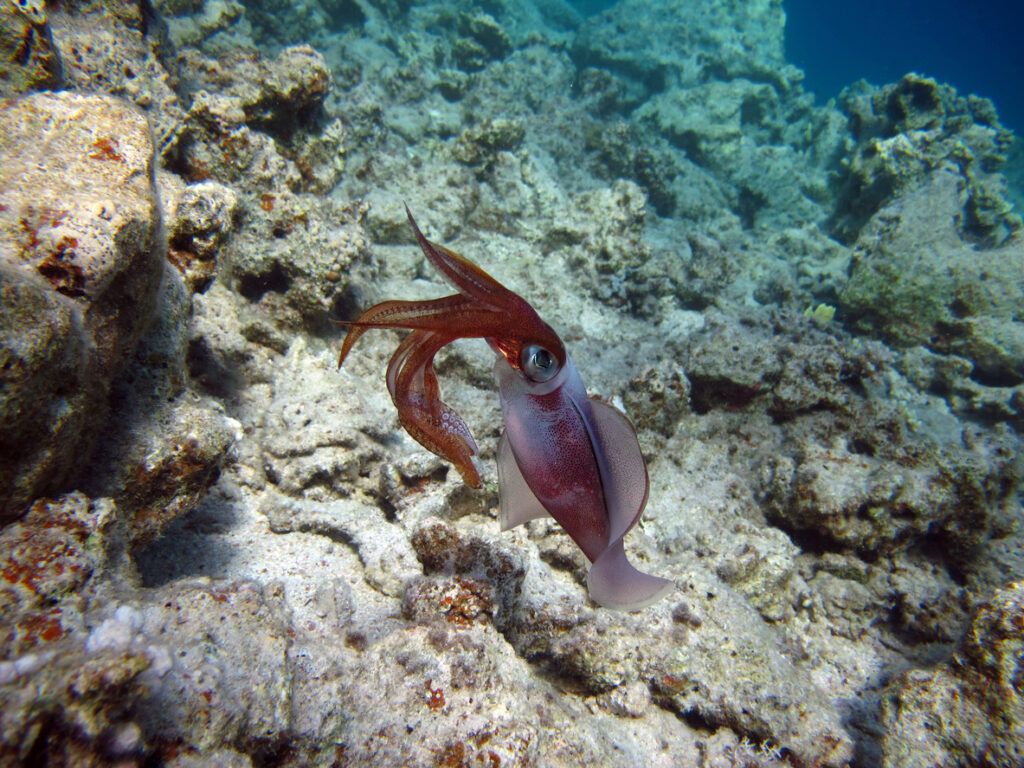
Squids are pelagic creatures that spend most of their time swimming in open water columns, but octopuses are benthic animals that live on or near the ocean floor among rocks, reefs, and caves.
Their preferred habitats match their body designs and hunting strategies. Squids need open space for speed, while octopuses need hiding spots for ambush tactics.
Their defence mechanisms reflect their different lifestyles.
When threatened, squids typically rely on speed and ink clouds to escape, using their jet propulsion to zoom away from danger. Octopuses prefer to hide, camouflage, or squeeze into spaces too small for predators to follow.
Both can shoot ink, but squids use it as a smokescreen for quick getaways, while octopuses use it more as a last resort when their hiding and camouflage tactics have failed.