
Socotra Island has been called the most alien-looking place on Earth, and with good reason. Sitting off the coast of Yemen in the Arabian Sea, it’s home to plants and landscapes found nowhere else. Here is what makes it so extraordinary.
The dragon blood tree dominates the landscape.
The dragon blood tree is Socotra’s most famous resident. Its umbrella-shaped crown and thick trunk make it look like something from a science fiction film, standing stark against the rocky landscape. Its red sap, known as “dragon’s blood,” has been used for medicine, dyes, and incense for centuries. Today, it’s a symbol of the island’s uniqueness and one of its biggest conservation priorities.
Many species exist only here.
Socotra has an extraordinary level of endemism, meaning many species are found nowhere else on Earth. Over a third of its plant life is unique to the island. Its isolation has allowed nature to evolve in unusual ways. Visiting Socotra is like stepping into a living laboratory of evolution, with species that can’t be found in any other habitat.
The bottle tree looks like a living sculpture.
The bottle tree is another of Socotra’s iconic plants. Its swollen trunk stores water, making it look like a giant pink bottle with sparse branches and delicate flowers sprouting from the top. During blooming season, its pink blossoms cover the desert landscape, creating a scene that looks almost unreal. Locals often compare it to something both beautiful and slightly eerie.
Its landscapes are wildly diverse.
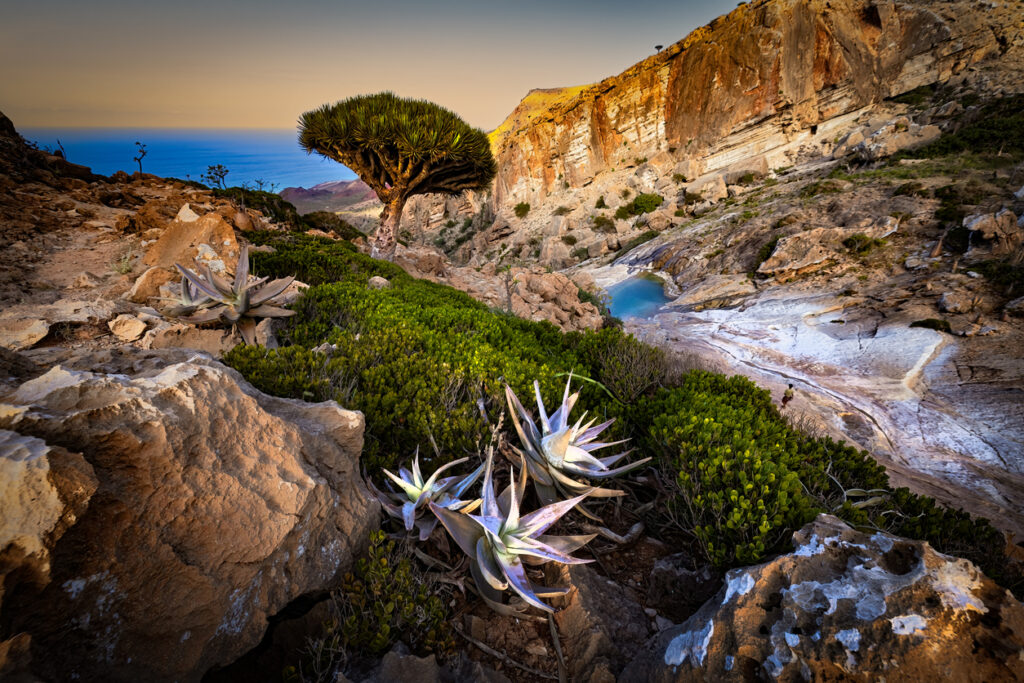
Despite being a relatively small island, Socotra offers deserts, limestone caves, high mountains, and lush valleys. Each area supports a different set of unique species and ecosystems. That range of landscapes makes it a haven for biodiversity. Within a short journey, you can travel from barren rocky plateaus to green, shaded oases filled with freshwater streams.
Socotra has been isolated for millions of years.
The island broke away from mainland Africa around six million years ago, leaving its plants and animals to evolve independently. That isolation is what explains its bizarre and alien-like biodiversity today. While the rest of the world changed, Socotra’s species adapted to its harsh, dry climate, giving it flora and fauna that feel both ancient and otherworldly.
The island has a rich human history too.
Socotra isn’t just about plants and landscapes. It has been inhabited for thousands of years and sits at a historical crossroads of trade routes in the Arabian Sea. Its people speak Socotri, a language that has no written form and is considered one of the oldest Semitic tongues still spoken. Their traditions are as unique as the island’s wildlife.
It’s a UNESCO World Heritage Site, and for good reason.
Recognising its extraordinary biodiversity, Socotra was designated a UNESCO World Heritage Site in 2008. This status highlights the island’s importance and the need to protect its fragile ecosystems. Despite this, threats like climate change and limited resources for conservation remain challenges. The UNESCO listing helps attract attention and support to safeguard its natural treasures.
Tourism is rare but growing.
For years, political instability in Yemen made visiting Socotra difficult, which kept tourism to a minimum. As a result, the island has avoided the mass development seen in other destinations. Now, small-scale ecotourism is emerging. Visitors are often adventurous travellers seeking untouched landscapes, making the island a rare example of a place still largely unspoiled by modern tourism.
Its wildlife is just as unusual as its plants.
While plants get most of the attention, Socotra also has unique animal life. Many reptiles are endemic, including geckos and skinks with patterns and colours not found elsewhere. Even the birds stand out, with species like the Socotra sunbird flashing iridescent feathers. These creatures thrive in ecosystems that seem perfectly adapted to their isolated home.
Conservation is critical for its future.
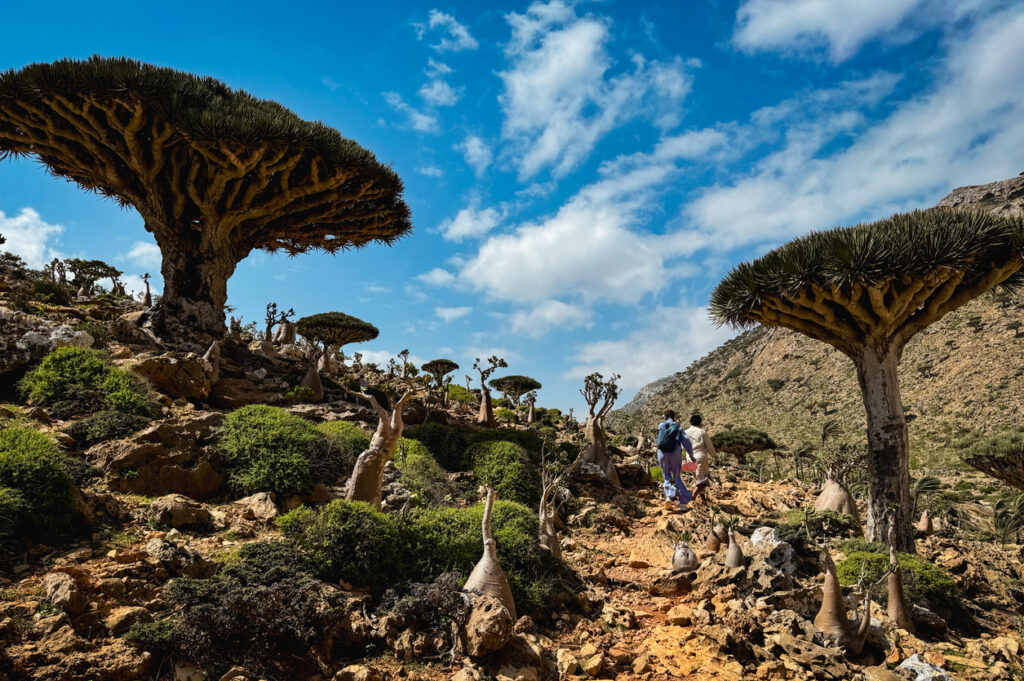
Deforestation, overgrazing by goats, and climate change are putting pressure on Socotra’s ecosystems. Iconic trees like the dragon blood face a real risk of decline if these threats aren’t managed carefully. Conservation efforts focus on balancing human needs with environmental protection. Without action, some of the island’s most extraordinary species could be lost within a few generations.
It remains one of Earth’s most surreal places.
Even with all its science and history, Socotra still feels surreal. Visitors often describe it as stepping onto another planet, with landscapes that defy expectations and plants that seem to belong in dreams. That otherworldly quality is what makes it so treasured. Socotra stands as a reminder that Earth still has places of wonder left, if we choose to protect them.