The axolotl, often called the “Mexican walking fish,” isn’t a fish at all, but a salamander that never quite grows up.
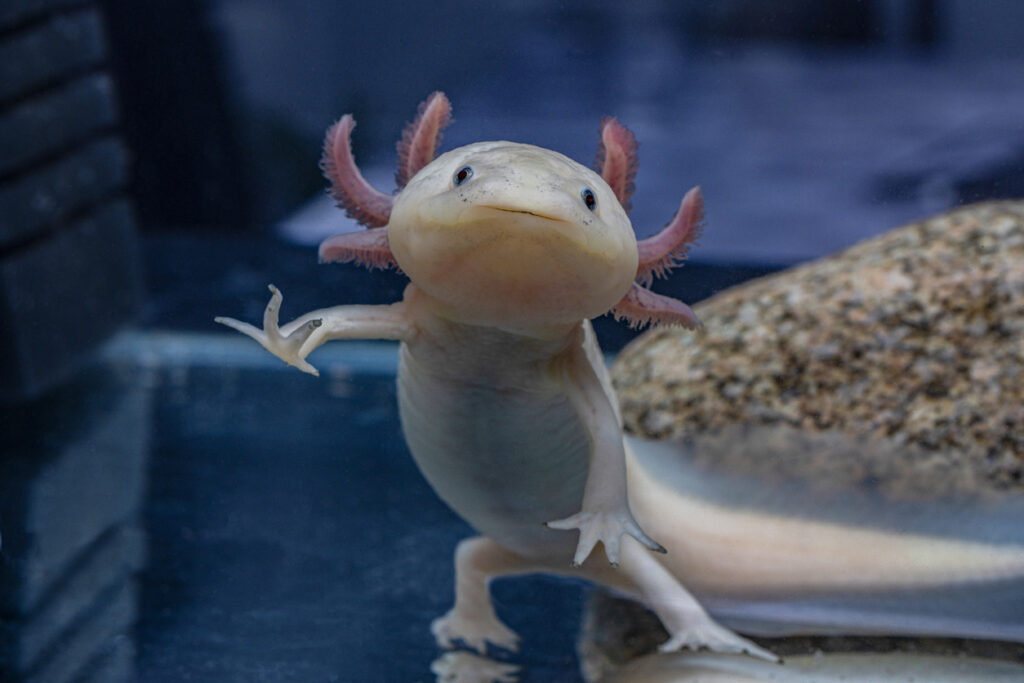
Famous for its strange appearance and astonishing regenerative powers, it’s one of those creatures that continues to puzzle scientists and fascinate everyone who learns about it. Here’s why it’s one of the most extraordinary animals alive today (and it’s pretty cute, to boot).
1. It stays young forever (well, nearly).
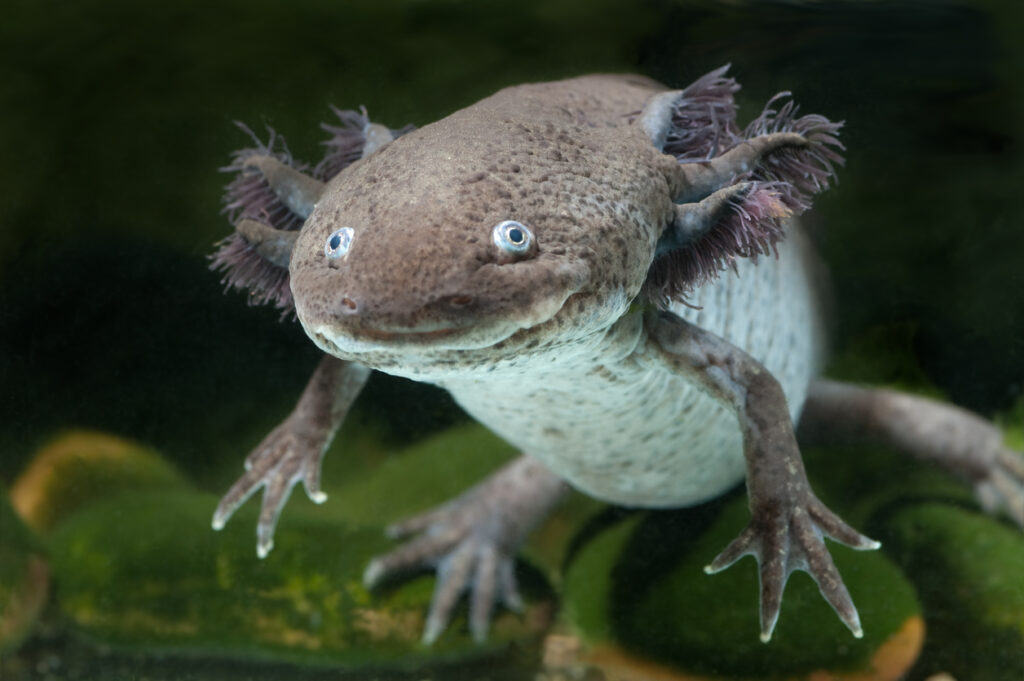
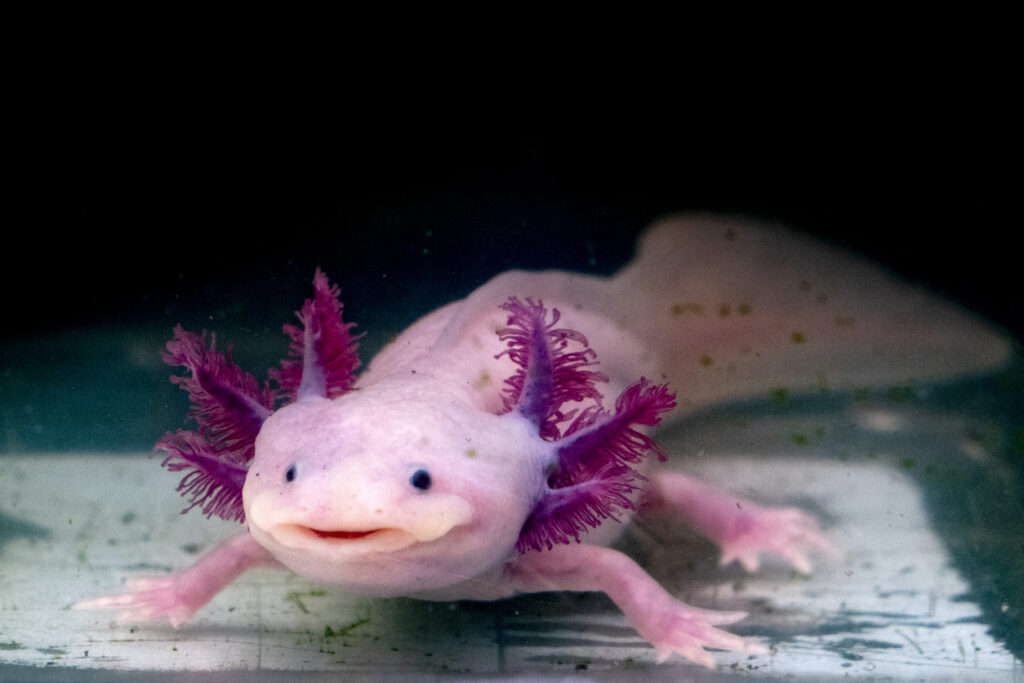
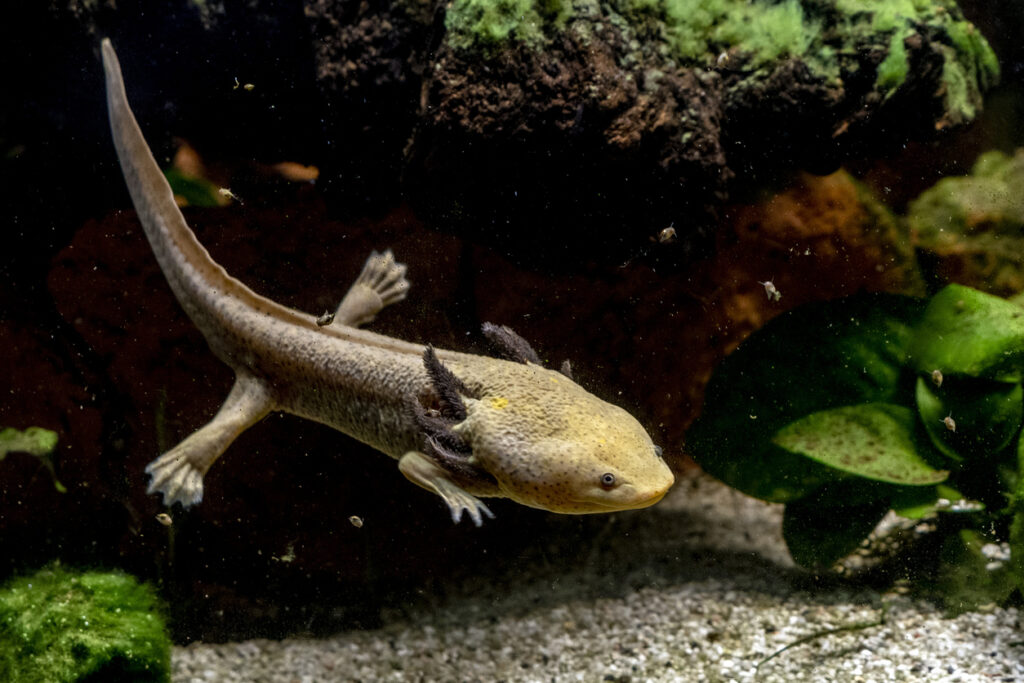
Most amphibians change dramatically as they move from juvenile to adult, shedding their gills, developing lungs, and leaving the water. The axolotl is different in that it retains its larval features even once it reaches maturity, a quirk known as neoteny. That’s why it keeps its external gills and finned tail while still being able to reproduce.
This gives it a permanently youthful appearance that has captured people’s imagination for centuries. To scientists, it’s a rare evolutionary strategy that raises questions about why some species keep juvenile traits while others don’t.
2. It can regrow entire limbs.
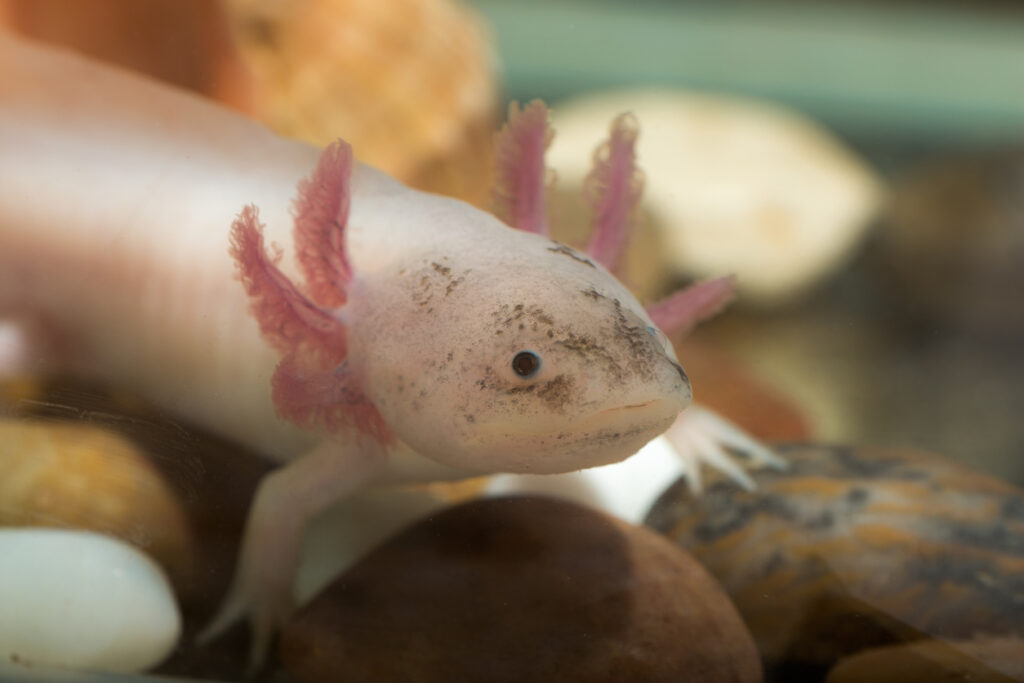
If an axolotl loses a leg, tail, or even a piece of its jaw, it can regrow it with astonishing precision. Within days, a bud of new cells begins forming at the injury site, eventually shaping into the missing part. Unlike in most animals, the regenerated limb functions just as well as the original, right down to bones, nerves, and skin.
This process can repeat again and again, which makes axolotls a cornerstone of regeneration research. Scientists hope that by unravelling how they do this, we might one day apply the knowledge to human medicine.
3. Its brain can repair itself.
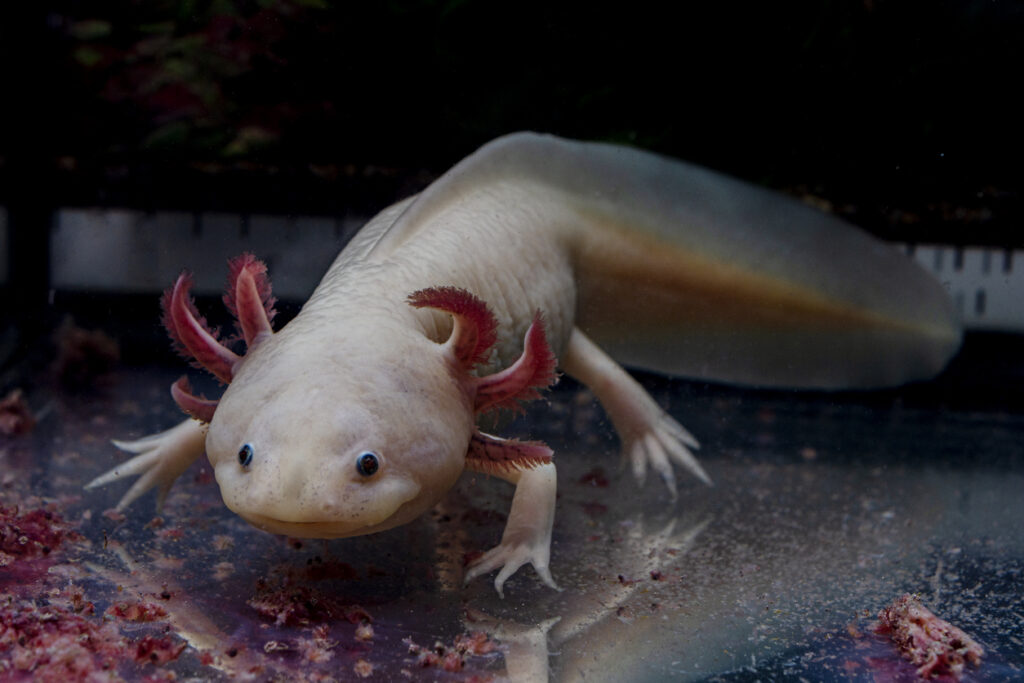
Brain damage in most animals is permanent, but axolotls are able to repair injuries to their central nervous system. They can generate new neurons, reconnect severed pathways, and restore lost functions in ways that seem almost impossible. This ability extends to parts of the spinal cord as well, meaning they can recover from injuries that would leave other species paralysed.
Researchers believe this makes them one of the most valuable models for studying neurological repair. If we could understand and replicate this, it could transform how we treat strokes and spinal injuries.
4. It looks adorable for its entire life.
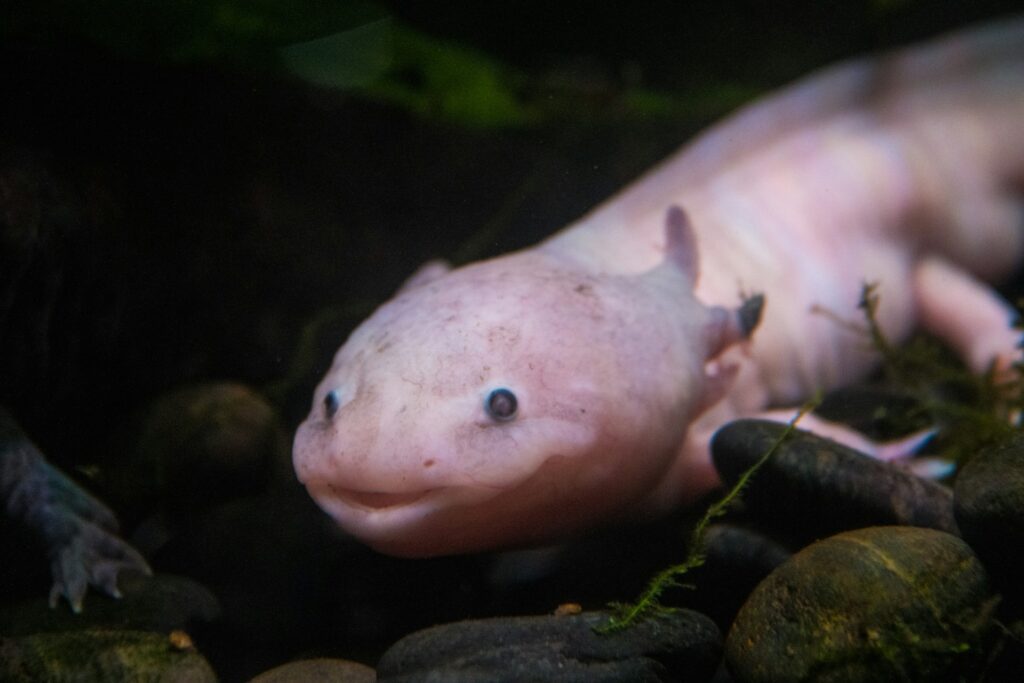
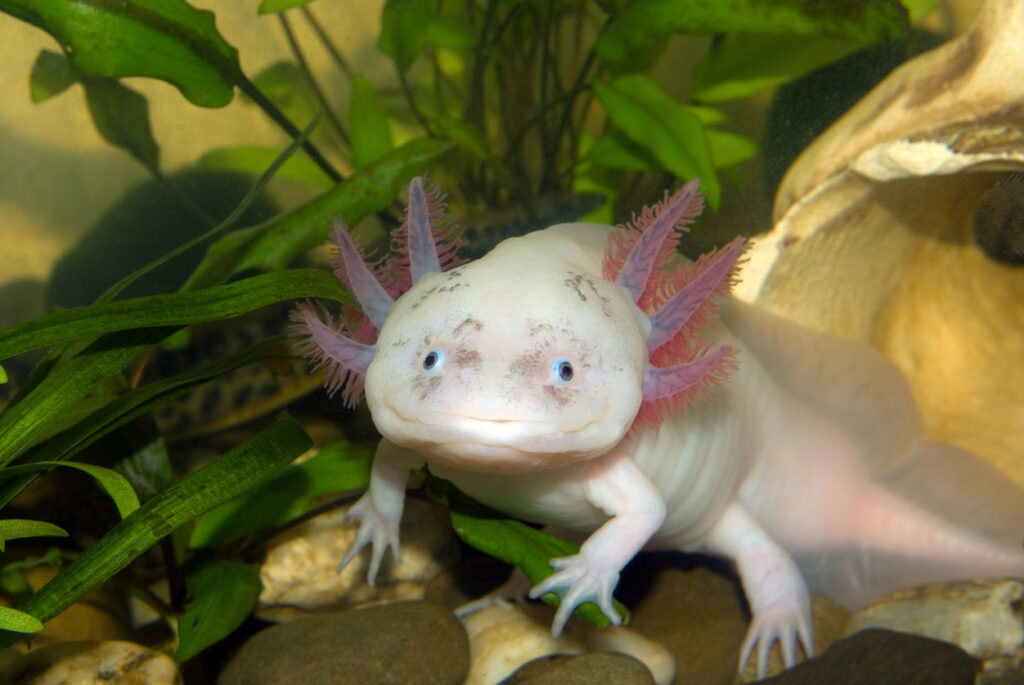
With its feathery gills and wide, almost smiling face, the axolotl looks more like a cartoon character than a typical salamander. However, the childlike appearance isn’t just aesthetic; it’s tied to the way its body functions. Because it never undergoes a full metamorphosis, it keeps many larval traits, which allow it to live permanently in water.
On rare occasions, under stress or with hormone treatment, an axolotl can be forced into metamorphosis, developing lungs and moving onto land, but most live and die in their youthful aquatic form, making them a striking example of arrested development in nature.
5. Its genome is enormous.

When scientists sequenced the axolotl genome, they discovered it was around ten times larger than the human genome. That’s an astonishing amount of genetic material packed into one animal, and much of it is still a mystery. Hidden within this vast code are likely the keys to its extraordinary healing powers.
Unfortunately, working through such an immense genome is slow, and progress has been challenging. The sheer size of its DNA raises big questions about why some species carry so much genetic information and how it shapes their biology.
6. It avoids scarring entirely.
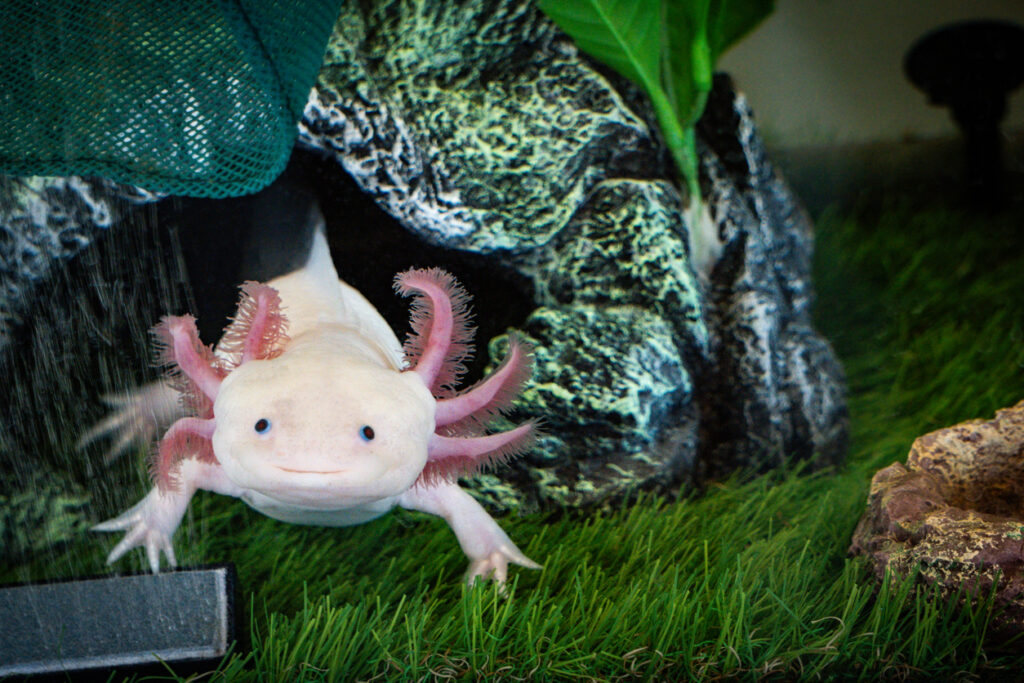
When humans heal from wounds, scar tissue forms to patch the damage quickly, but it often reduces function. Axolotls take a completely different route: they regenerate the tissue so perfectly that there’s no trace of the injury. Whether it’s muscle, bone, or even part of an organ, the new growth is fully functional and indistinguishable from the original.
Needless to say, this kind of scar-free healing is extremely rare in nature. It suggests that their cells follow a set of instructions we still don’t fully understand, which is why they’re studied so intensively in medical labs.
7. It can regenerate indefinitely.
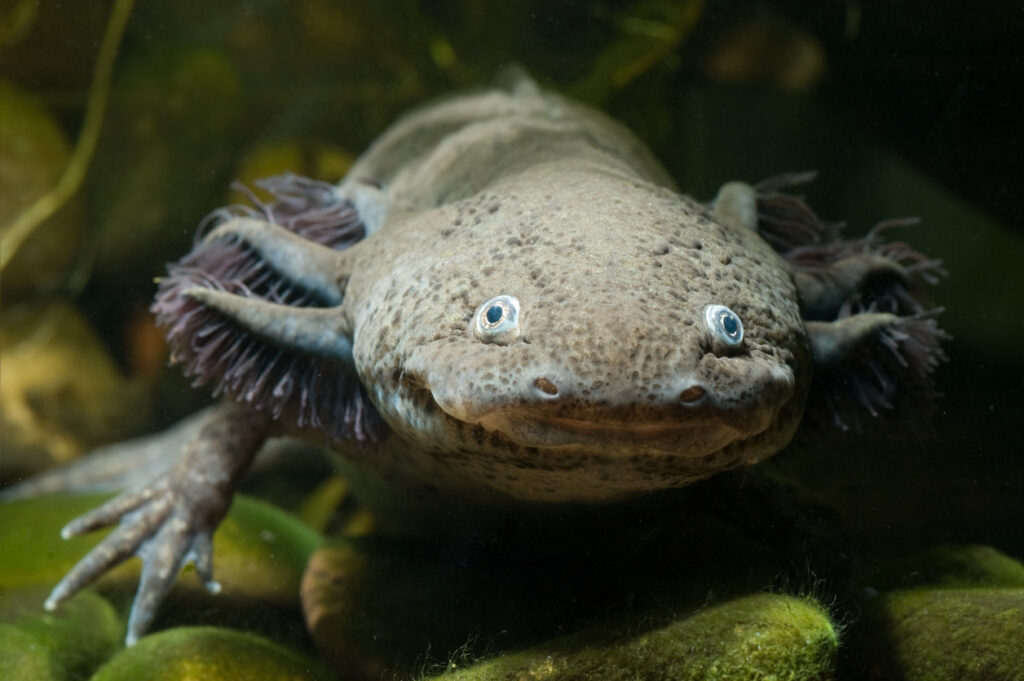
One of the most surprising things about axolotl regeneration is that there doesn’t seem to be a limit. Whether it’s the first time or the tenth, the new limb grows back just as well as the last. Other species with some regenerative ability, like certain lizards, usually lose precision and function after repeated regrowth.
Axolotls, however, show no such decline, which makes them all the more unusual. The mechanisms that allow such endless regeneration remain one of the biggest unanswered questions in biology.
8. It thrives in water, but rarely on land.
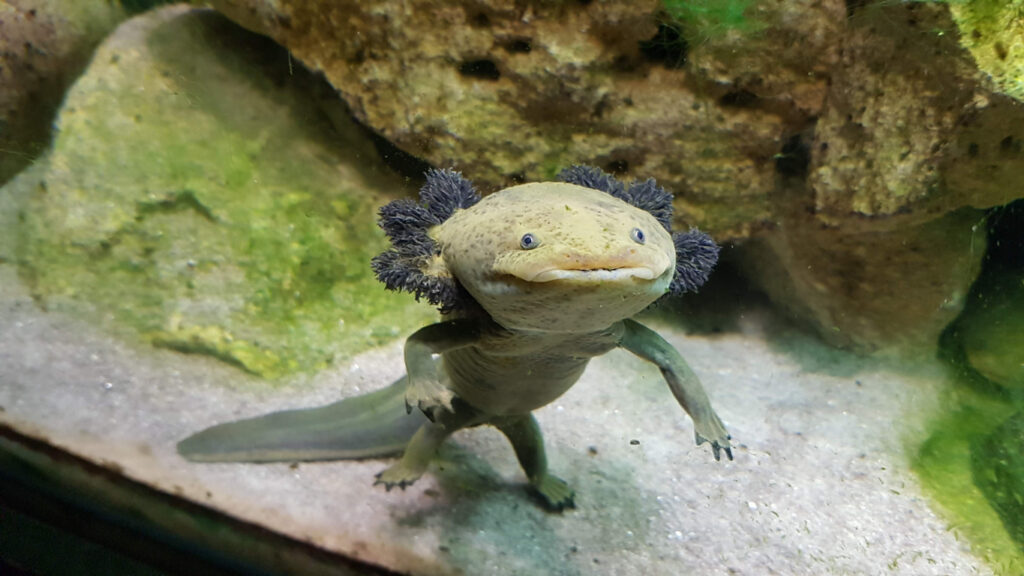
Despite being related to salamanders that live on land, axolotls almost always remain aquatic. Their external gills and flat tails make them perfectly suited for swimming, but poor at surviving in dry environments. In rare cases, when forced into metamorphosis, they can live on land, but this is extremely stressful and often shortens their lifespan.
In the wild, they’re perfectly adapted to lake life, gliding through canals and shallow water. Their preference for staying in a larval state makes them one of the few amphibians that never truly “grow up.”
9. Age-related decline just never affect it.
Axolotls may not live forever, but they age differently from many animals. Their regenerative abilities mean they can repair the damage that usually builds up as cells wear down. This doesn’t make them immortal, but it does give them a kind of biological resilience that most species lack.
Their average lifespan in captivity is 10 to 15 years, though with good care, some live longer. Scientists are keen to understand whether their unusual biology protects them from the kind of cellular breakdown humans experience with ageing.
10. It’s become an icon in science labs.
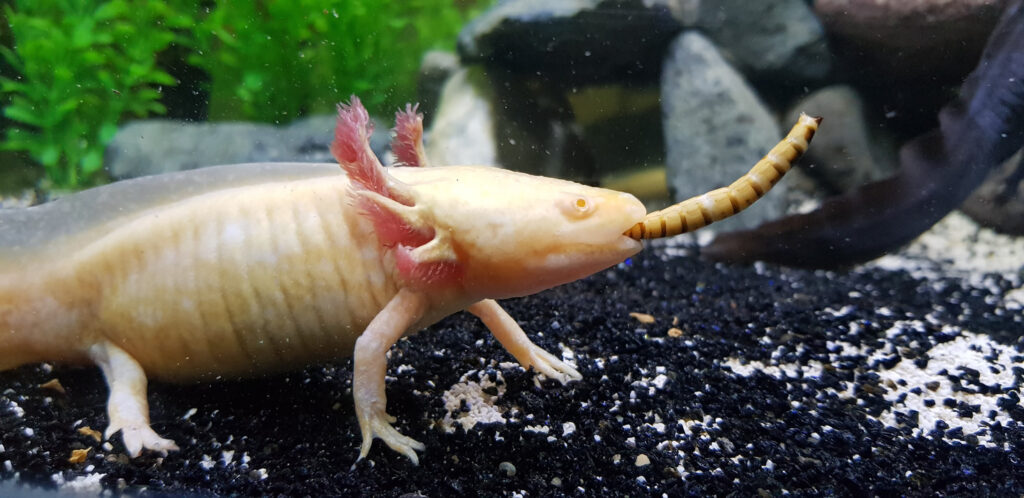
Because of their extraordinary biology, axolotls have been kept in labs for more than a century. Entire breeding colonies exist in universities and research centres, providing scientists with a steady supply of specimens to study. They’ve helped advance our understanding of genetics, regeneration, and developmental biology more than almost any other amphibian.
Ironically, while they’re thriving in laboratories, their wild counterparts are under severe threat. This strange balance or being endangered in nature but abundant in science adds another layer to their story.
11. It raises questions about cancer resistance.
Despite their constant cell growth during regeneration, axolotls rarely develop tumours. This is striking because, in most species, rapid cell division increases the risk of cancer. Something in their biology prevents those errors from spiralling out of control, though the exact mechanism is still unclear.
If scientists can uncover how they suppress cancer while regenerating tissue, it could change how we approach human treatments. The axolotl’s balance between endless repair and cancer resistance remains one of its greatest mysteries.
12. It’s critically endangered in the wild.
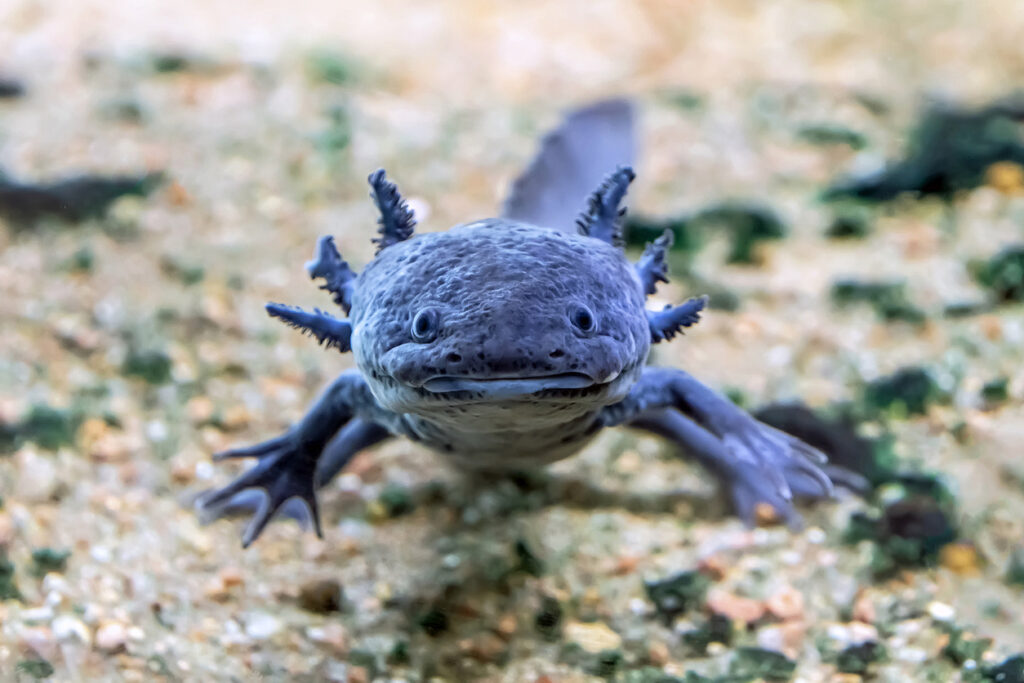
Once abundant in the lakes around Mexico City, wild axolotls have been pushed to the brink of extinction. Habitat loss, pollution, and invasive fish have all taken a devastating toll on their numbers. Today, spotting one in the wild is almost unheard of, and conservationists are working urgently to protect what’s left of their habitat.
Captive populations may keep the species alive, but without lake restoration, wild axolotls could disappear altogether. Their endangered status is a stark reminder of how human activity threatens even the most remarkable creatures.
13. It’s a symbol of resistance.
For centuries, the axolotl has held a special place in Mexican culture, even appearing in Aztec mythology as a symbol of survival and transformation. Its real-life biology seems to echo that legend, as it regrows what’s lost and clings to its youthful form. This cultural significance has helped raise awareness about its plight, turning it into a symbol of both resilience and vulnerability.
In many ways, the axolotl represents the fragility of nature and the possibility of renewal. That mix of science, myth, and conservation makes it one of the most fascinating creatures on the planet.