Ostriches are basically the dinosaurs that never got the memo about extinction.

Standing up to 2.7 metres tall and weighing as much as two grown men whilst running faster than most people can drive through a residential area, these magnificent birds are living proof that evolution sometimes decides to go completely mental and create something that looks like it belongs in a fantasy novel rather than wandering around the African savanna.
They’re absolutely massive, and surprisingly fast.
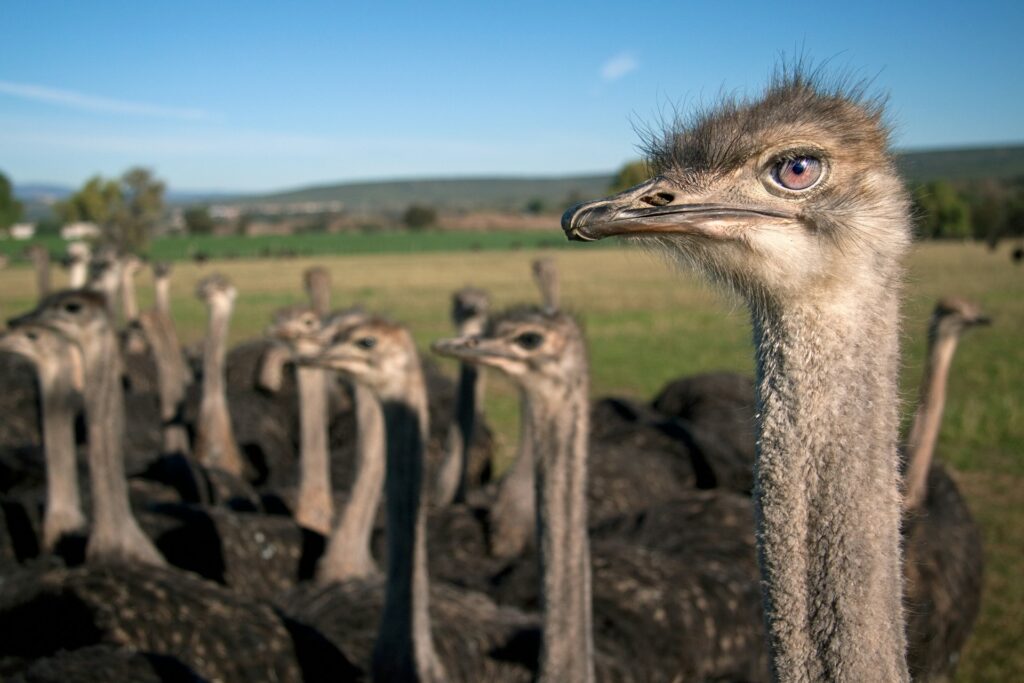
Ostriches are the largest living birds on Earth, with males reaching heights of nearly 3 metres and weighing up to 160 kilograms, making them taller than most basketball players and heavier than many motorcycles. Despite their size, they can sprint at speeds of up to 70 kilometres per hour, making them faster than most cars driving through town centres.
Their incredible speed comes from their powerful legs, which can cover up to 5 metres in a single stride when they’re really moving. Those legs aren’t just for running either, they can deliver kicks powerful enough to kill lions, with a force of around 2,000 pounds per square inch.
Their eyes are bigger than their brains.
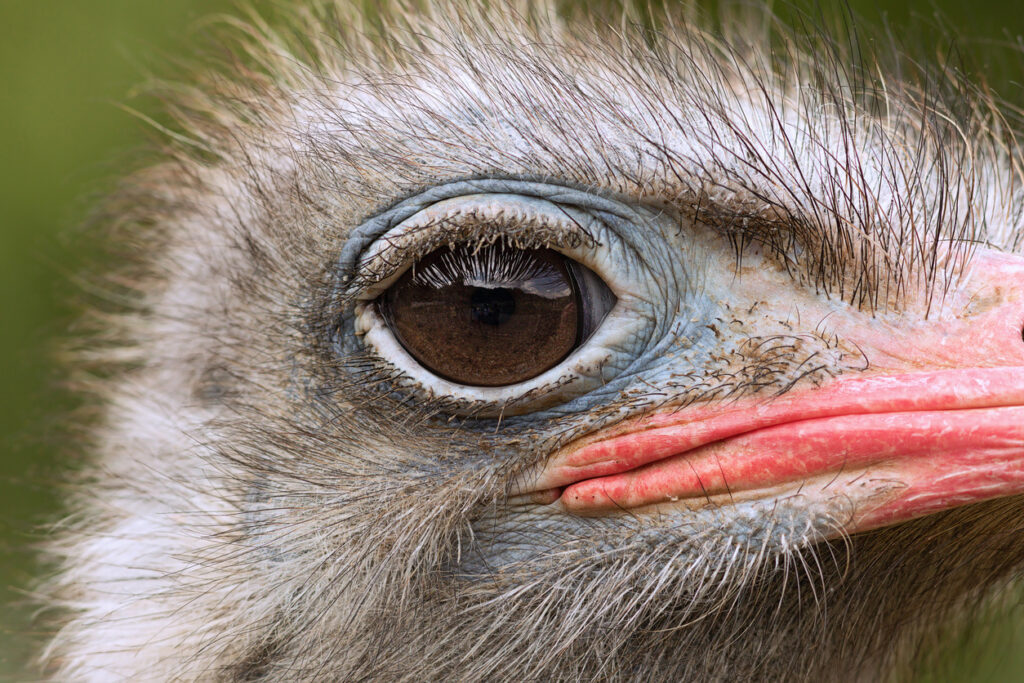
Each ostrich eye is about the size of a billiard ball, measuring roughly 5 centimetres across, which makes them the largest eyes of any land animal. These massive peepers give them incredible eyesight that can spot predators from several kilometres away, which is pretty handy when you’re a giant bird living in lion territory.
Ironically, despite having these enormous eyes, an ostrich’s brain is only about the size of a walnut, smaller than their eyeballs. This might explain some of their more questionable decision-making, though they’re actually quite intelligent when it comes to survival skills and social behaviour.
They don’t actually bury their heads in sand.
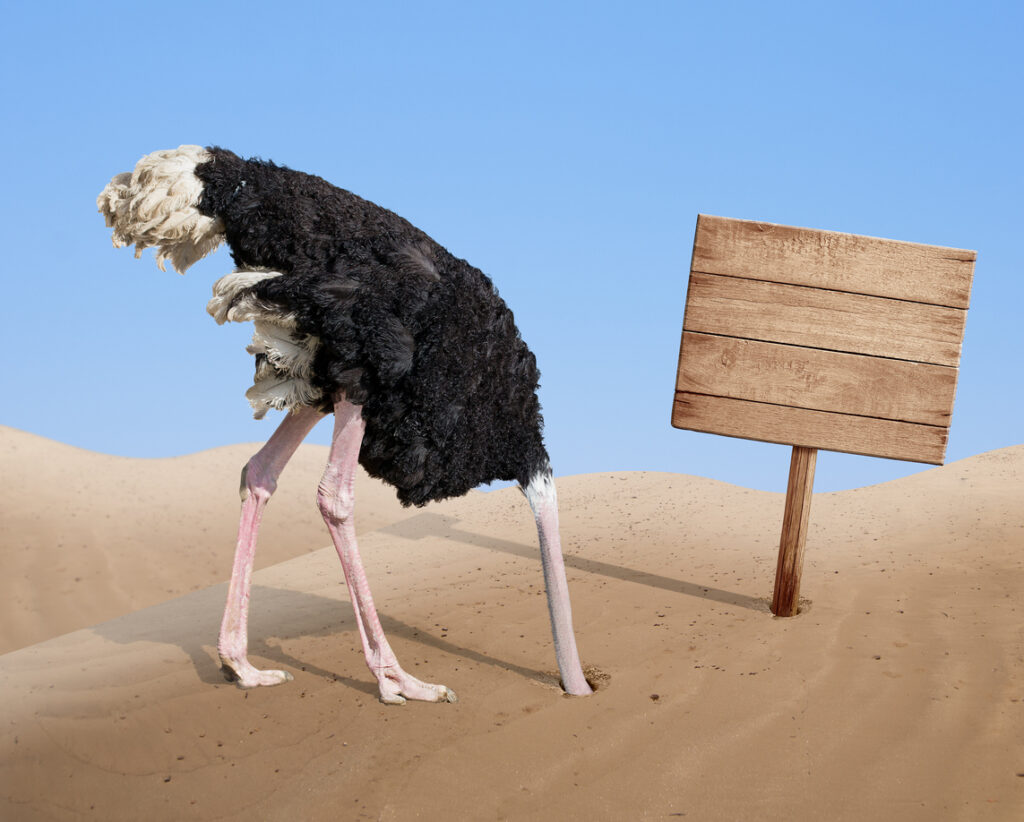
The famous myth about ostriches burying their heads in sand when scared is complete nonsense, though it’s easy to see how it started. When ostriches are tending to their ground-level nests, they lower their heads to turn their eggs or check on their chicks, creating the illusion from a distance that their heads have disappeared.
In reality, ostriches are far from cowards and will aggressively defend themselves and their young using their powerful legs. If they can’t fight off a threat, they’re much more likely to run away at high speed rather than pretend they can’t see the problem.
Their eggs are absolutely enormous.

A single ostrich egg weighs about 1.4 kilograms and measures roughly 15 centimetres long, making it equivalent to about 24 chicken eggs in volume. The shell is so thick and strong that it can support the weight of a grown human without breaking, though you probably shouldn’t test this at home.
These massive eggs take about 42 days to hatch, with both parents taking turns sitting on them during the incubation period. The chicks that emerge are already about 25 centimetres tall and can run almost immediately, which is pretty impressive considering most human babies can barely hold their own heads up.
Males are surprisingly good fathers.

Male ostriches are responsible for most of the childcare duties, including incubating eggs and raising the chicks after they hatch. The male will mate with several females who all lay their eggs in the same communal nest, which can contain up to 60 eggs, though typically holds around 20.
The dominant male does most of the nighttime incubation whilst the dominant female takes day shifts, and after hatching, the male leads the chicks around, teaches them what to eat, and fiercely protects them from predators. It’s quite progressive for the bird world, really.
They have some very odd eating habits.

Ostriches are omnivores with rather indiscriminate tastes, eating everything from plants and insects to small mammals and reptiles, but they also regularly swallow stones, keys, coins, and other random objects they find lying around. These items help grind up food in their muscular gizzards, since they don’t have teeth.
They can go without water for several days, getting most of their moisture from the plants they eat, which is pretty handy in the African climate. When they do drink, they can consume several litres at once, storing water in their bodies for lean times.
Their wings aren’t completely useless.
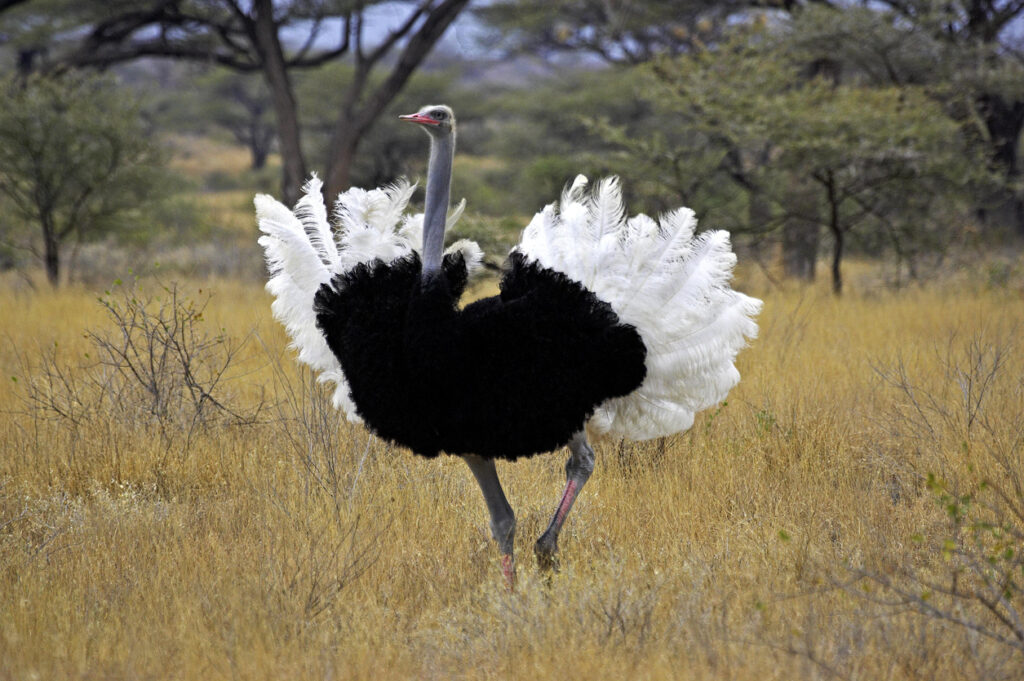
Whilst ostriches obviously can’t fly, their wings serve several important purposes, including helping them balance whilst running at high speeds, much like a tightrope walker uses a pole. They also use their wings for courtship displays, with males spreading their black and white feathers to attract females.
The wings also help with temperature regulation, providing shade and allowing air circulation to keep the birds cool in the African heat. During aggressive encounters, ostriches will spread their wings to make themselves look larger and more intimidating to rivals or predators.
They live in complex social groups.
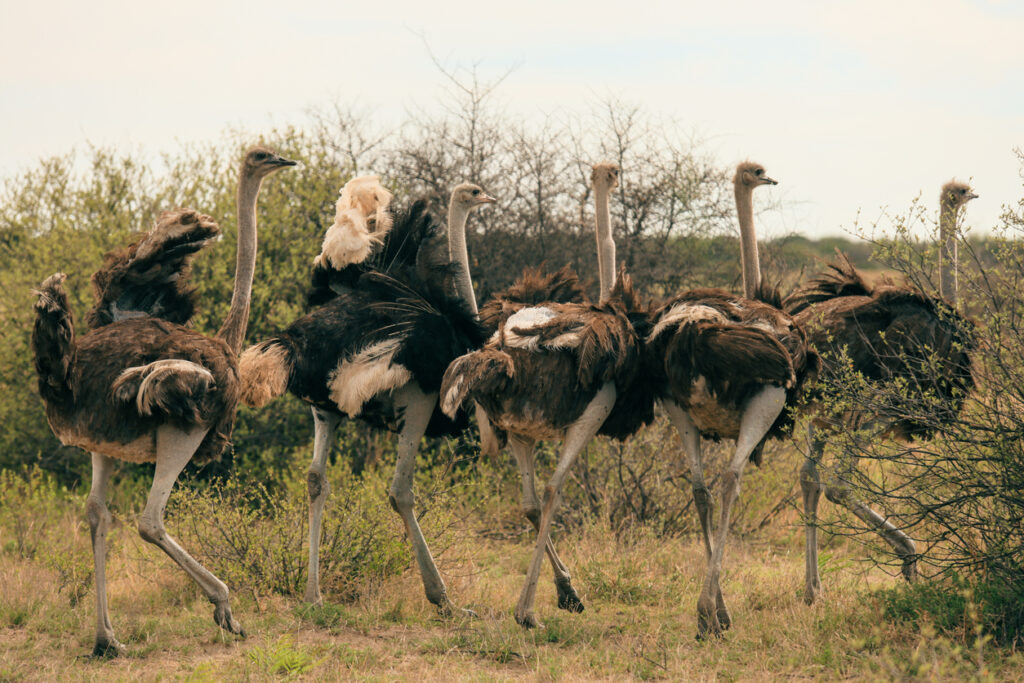
Ostriches aren’t the simple-minded creatures that popular culture makes them out to be, they live in sophisticated social groups with complex hierarchies and communication systems. Flocks can contain anywhere from 5 to 50 individuals, with a dominant male and female leading the group.
They communicate through a variety of sounds including booms, hisses, and snorts, with males producing deep booming calls that can be heard from several kilometres away. They also use body language extensively, with different postures and movements conveying various messages to other ostriches.
They’re surprisingly long-lived.

In the wild, ostriches typically live 30 to 40 years, which is quite impressive for birds, though some individuals in captivity have lived even longer. This longevity, combined with their size and distinctive appearance, has made them culturally significant throughout human history.
Ancient Egyptians, Greeks, and Romans all prized ostrich feathers and eggs, with the feathers becoming symbols of truth and justice. The birds were so valued that they were often kept in royal menageries and their plumes used to decorate the helmets and clothing of nobility.
They’re making a comeback as farm animals.

Ostrich farming has become increasingly popular in recent decades, with the birds raised for their meat, leather, and feathers. Ostrich meat is lean, high in protein, and tastes similar to beef but with lower cholesterol and fat content, making it attractive to health-conscious consumers.
The leather made from ostrich skin is extremely durable and distinctive, with a characteristic bumpy texture where the feather follicles were located. It’s considered one of the finest exotic leathers and is used to make luxury handbags, boots, and other high-end goods.
Climate change is affecting their wild populations.

Wild ostrich populations face increasing pressure from habitat loss and climate change, with their traditional ranges in Africa shrinking due to human development and changing weather patterns. Prolonged droughts can devastate their food sources and make breeding more difficult.
However, their adaptability and the success of farming operations mean that ostriches aren’t in immediate danger of extinction. Conservation efforts in several African countries are working to protect wild populations, whilst sustainable farming provides an alternative source of ostrich products.
They’re living reminders of prehistoric times.

Ostriches belong to an ancient group of flightless birds called ratites, which also includes emus, cassowaries, and the extinct moa. These birds represent an evolutionary path that diverged from other birds millions of years ago, making them living links to a time when giants roamed the Earth.
Their prehistoric appearance and impressive size make ostriches some of the most fascinating birds on the planet, perfectly adapted to their environment despite looking like they stepped out of a time machine. They’re proof that sometimes evolution’s most successful experiments are also its most spectacular ones.