Living by the British coast is brilliant until you try to grow anything and realise salt spray basically murders most plants.
That being said, there are some absolute champions that not only survive but properly thrive whilst being constantly blasted with salty wind. These tough plants have figured out how to deal with conditions that would kill your average garden centre favourite in about a week. If you’re looking to level up your gardening game but want plants that will actually thrive, here are some suggestions.
1. Sea thrift turns clifftops pink.

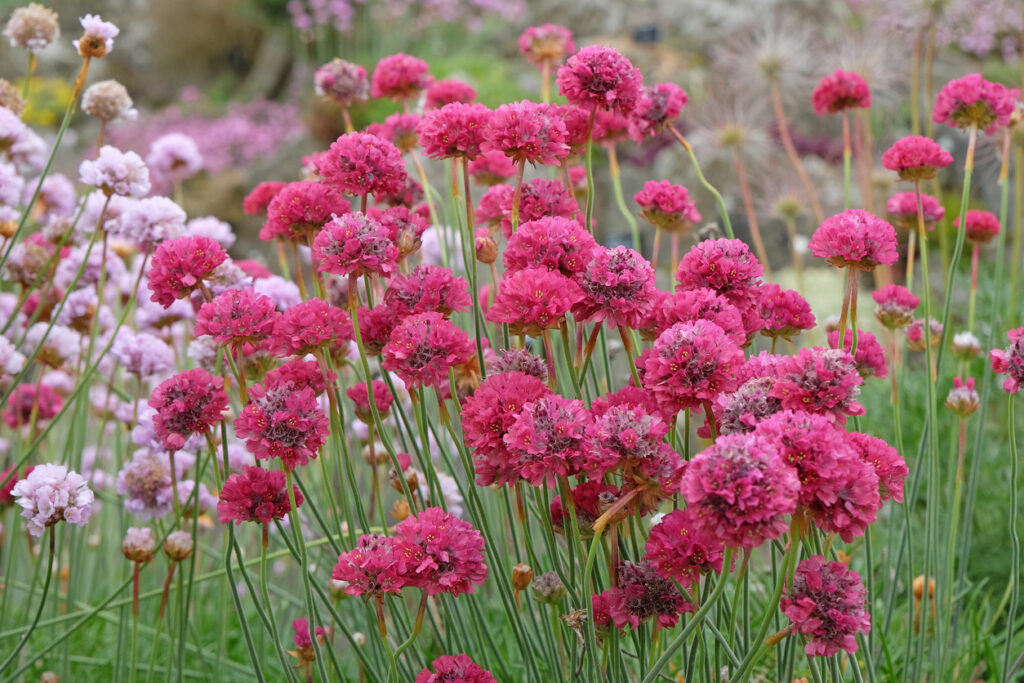
Sea thrift, or armeria maritima if you’re being fancy, is basically designed for coastal abuse. It forms these tight cushions of grass-like leaves that shrug off salt spray like it’s nothing, then produces masses of pink pompom flowers from spring through summer. You’ll see it growing wild on clifftops, so you know it can handle whatever your garden throws at it.
The clever bit is how it deals with salt. Instead of trying to keep it out, sea thrift actually absorbs salt through its leaves and then secretes it back out through special glands. It’s literally sweating out the salt whilst looking gorgeous. Plant it at the front of borders or in rock gardens where it’ll form neat mounds about 20 cm tall and spread slowly without being thuggish.
2. Tamarisk creates windproof screens.

Tamarisk is what you want if you need a proper windbreak that doesn’t mind being sandblasted daily. It’s got these feathery, scale-like leaves that barely give wind any surface area to damage, and in late summer it covers itself in fluffy pink flowers that look like candy floss. It can grow into a small tree, but most people keep it as a shrub, around three to four metres.
This thing is so salt-tolerant it’s actually used to stabilise sand dunes. The salt that kills other shrubs just makes tamarisk shrug and carry on growing. It’s deciduous but even the bare branches in winter help filter wind. Just give it a hard prune every few years to keep it bushy; otherwise it gets a bit leggy and sparse.
3. Griselinia makes glossy green hedges.

If you want a hedge that looks properly lush and green despite coastal conditions, griselinia is your answer. Those thick, glossy apple-green leaves aren’t just for show, they’re covered in a waxy coating that makes salt spray just slide right off. It’s evergreen too, so you get year-round screening and wind protection.
Griselinia littoralis grows fairly quickly, putting on about 30-45 cm a year once established. It takes pruning really well so you can keep it as a neat formal hedge or let it go more natural. The only thing to watch is it’s not massively hardy inland, but near the coast where temperatures stay milder, it’s absolutely bulletproof. Some varieties have cream-edged leaves if you want something fancier.
4. Elaeagnus thrives on neglect.
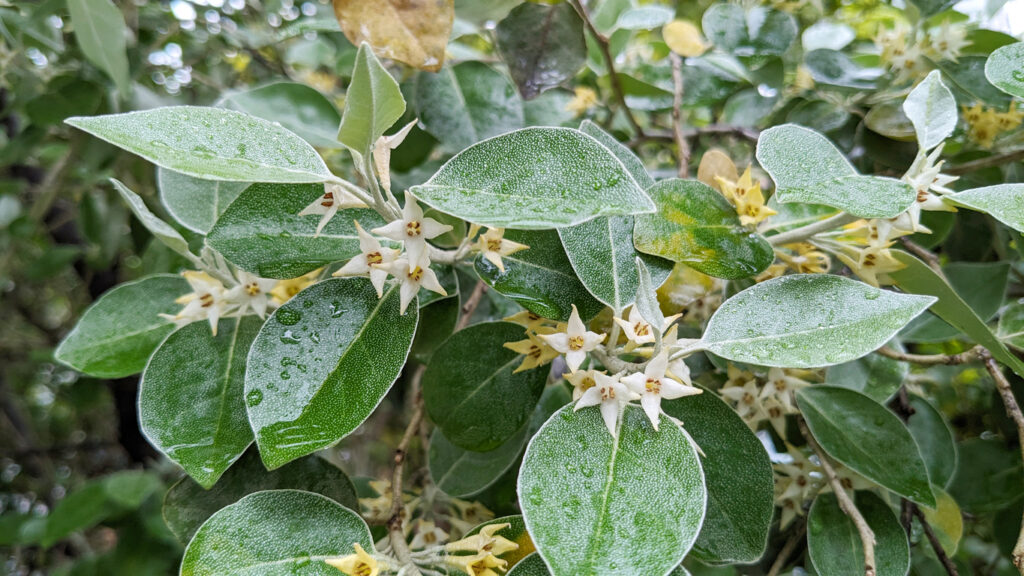
Elaeagnus is one of those plants that actually seems to prefer harsh conditions. The tougher things get, the better it performs. Most varieties have silvery leaves that reflect light and help protect against salt damage, and some produce tiny fragrant flowers in autumn that smell incredible, though you’d walk right past them if you didn’t know to sniff.
Elaeagnus x ebbingei is the classic coastal variety, growing to about four metres with minimal fuss. The leaves have this silvery-bronze underside that catches the light beautifully. It fixes nitrogen in its roots too, so it literally improves your soil whilst growing in conditions that would knacker most plants. Perfect for mixed hedges or as a standalone shrub.
5. Escallonia flowers all summer long.

Escallonia is an absolute workhorse for coastal gardens, producing masses of small tubular flowers from June right through to October. The pink and red varieties are most common, but you can get white ones too. The leaves are small, glossy, and slightly sticky, which helps trap salt before it can do damage.
‘Apple Blossom’ is a brilliant variety with pink and white flowers, whilst ‘Red Elf’ stays more compact if you’ve got limited space. They’re evergreen in milder coastal areas, though might drop leaves in a harsh winter. Bees absolutely love them, and they bounce back from hard pruning if they get too big. They make brilliant informal hedges or specimen shrubs.
6. Pines designed for coastal exposure.
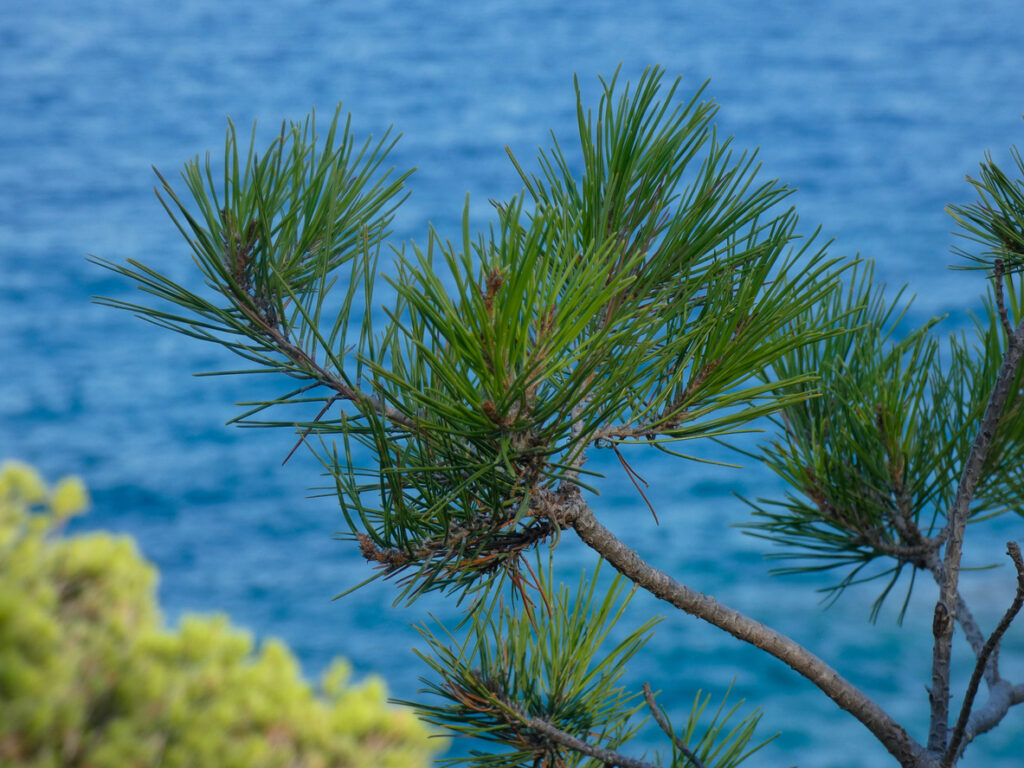
Forget those tall, straight pines you see inland. Coastal pines like Pinus mugo and Pinus pinaster develop incredible sculptural shapes from constant wind exposure. They start off looking fairly normal, then gradually become these amazing bonsai-like specimens that look like they’ve been professionally trained.
Monterey pine grows surprisingly fast considering the conditions it tolerates, though it can get massive so it’s not for small gardens. For something more manageable, mountain pine stays relatively compact and forms dense mounds. The needles are adapted to minimise water loss from salt exposure, and mature trees develop thick, protective bark. They’re particularly good for providing upper-storey shelter for less tolerant plants.
7. Cordyline adds tropical drama.
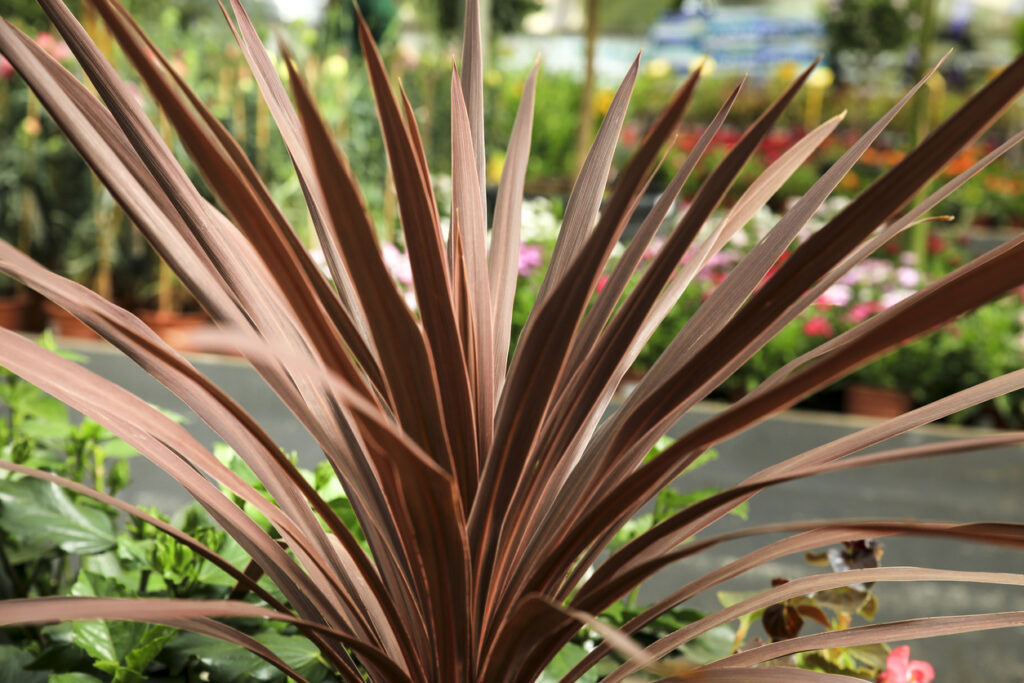
You wouldn’t think something that looks this tropical could handle British coastal weather, but cordylines are proper tough. Those sword-like leaves might look delicate, but they’re actually designed to flex without breaking in strong winds. Cordyline australis is the standard green one, but you can get purple, red, and striped varieties too.
They develop a trunk over time and can reach several metres tall, creating a brilliant focal point. The growing point at the top is the only bit that’s slightly vulnerable to extreme cold, but coastal gardens rarely get cold enough to kill established plants. If the top does get damaged, they usually sprout multiple heads and end up looking even better.
8. Hebes flower for months.
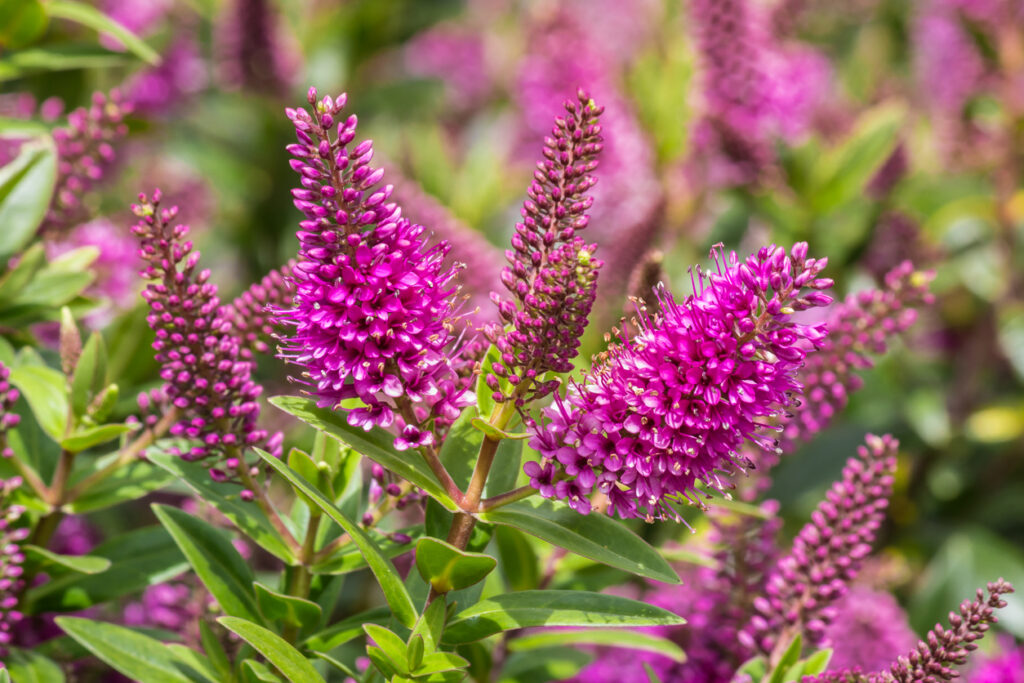
Hebes are New Zealand natives that feel right at home in British coastal gardens. They’ve got these neat, often glossy leaves and produce spikes of flowers in white, purple, pink, or blue that last for months. Some varieties are compact little mounds whilst others grow into proper shrubs.
‘Great Orme’ is particularly good for exposed spots, with pink flowers that fade to white. The whipcord hebes look like miniature conifers and are incredibly wind-resistant. Most hebes are evergreen, providing structure year-round. They don’t need much maintenance beyond deadheading and the occasional trim to keep them shapely.
9. Euonymus stays colourful year-round.

Euonymus japonicus varieties are basically indestructible in coastal conditions. The variegated forms with gold or silver edges brighten up gardens even in winter, and they’re so tolerant of salt and wind it’s almost ridiculous. They’ll grow in pretty much any soil and don’t mind being pruned hard if needed.
‘Bravo’ has leaves with broad cream edges, whilst ‘Aureus’ has golden-centred leaves that properly glow in sunlight. They’re perfect for low hedges, ground cover, or just filling difficult spots where nothing else will grow. Scale insect can be a problem inland, but coastal breezes seem to keep them at bay.
10. Olearia brings daisies to the seaside.
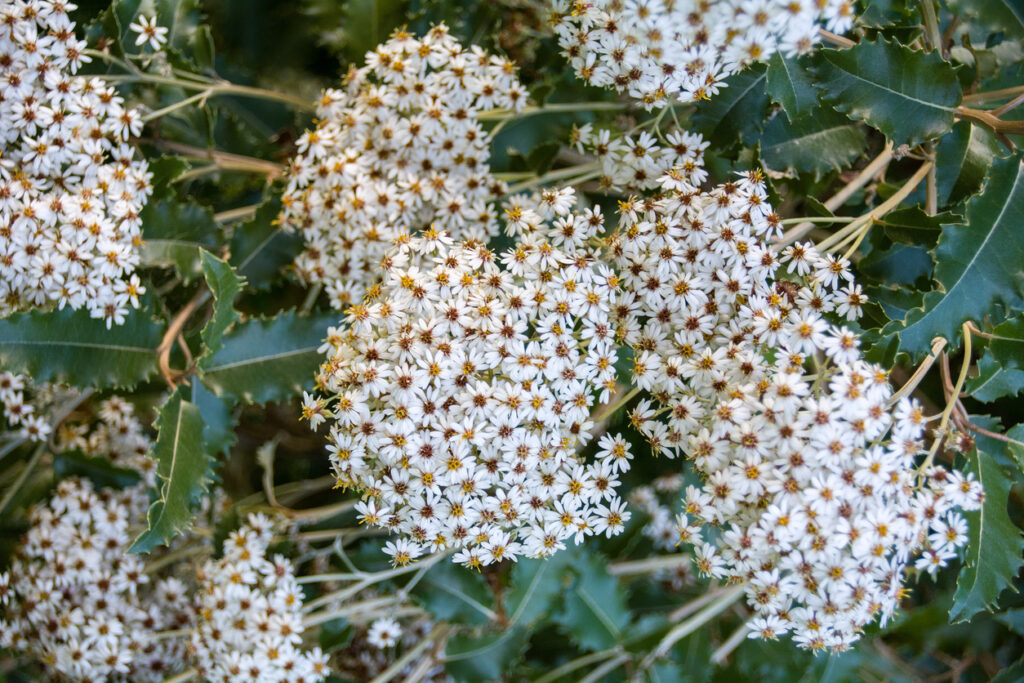
Olearia, or daisy bush, is another New Zealand plant that laughs at salt spray. Most varieties have grey-green leaves with white undersides that are perfectly adapted to coastal conditions. In summer, they absolutely cover themselves in daisy flowers, usually white but sometimes pink or purple.
Olearia x haastii is the toughest, forming a rounded shrub about two metres tall and wide. It’s got small oval leaves and produces masses of fragrant white daisies in July and August. Olearia macrodonta has larger, holly-like leaves and is brilliant for shelter belts. They respond well to pruning after flowering and make excellent informal hedges or windbreaks.