Black holes used to be this theoretical concept that physicists argued about over coffee.
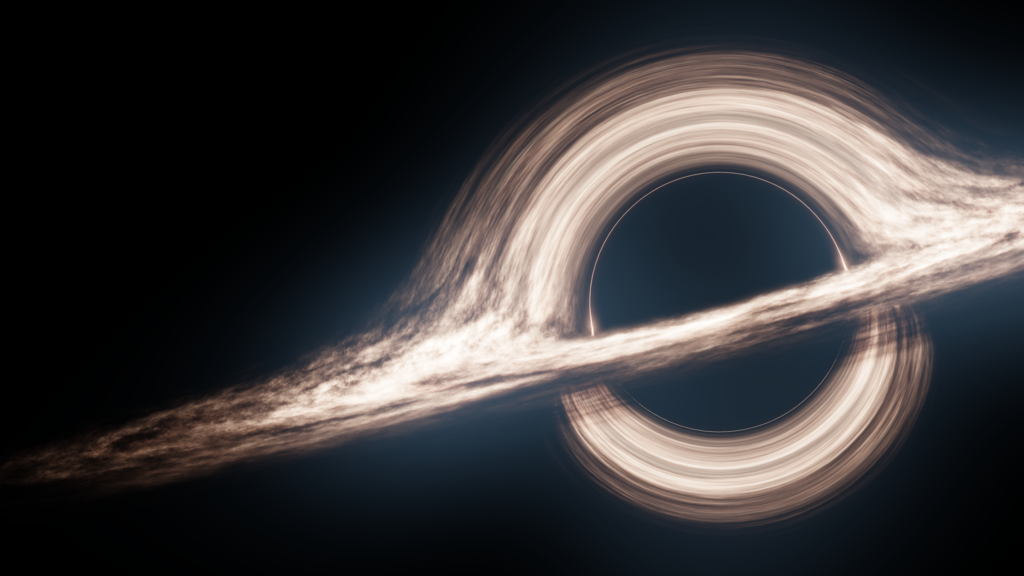
However, more recent discoveries have completely flipped our understanding of these cosmic monsters, and made them much more fascinating to the average person. From actually photographing one to finding them in places they shouldn’t exist, we’re basically rewriting the textbook on how the universe works. The cool thing is that the more we learn about them, the more we realise just how incredible the cosmos truly are.
We actually took a picture of one.
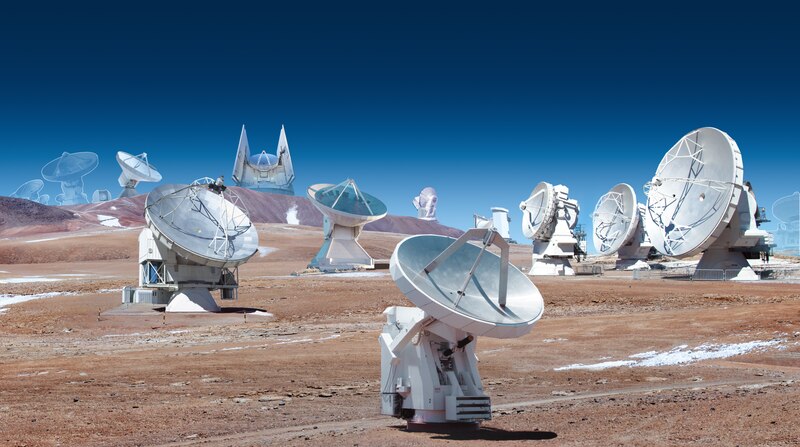
In 2019, scientists did what everyone said was impossible and took an actual photo of a black hole’s event horizon. The Event Horizon Telescope basically turned the entire Earth into one massive telescope to capture M87*, a supermassive black hole 55 million light-years away. That glowing orange doughnut image you’ve probably seen everywhere wasn’t just cool, it was proof that Einstein’s predictions from over a century ago were spot on.
What really shocked everyone was how perfectly it matched our theoretical models. We’d been basically guessing what black holes looked like based on maths, and then boom! The photo shows exactly what we predicted. That glowing ring is actually light bending around the black hole’s massive gravity, and the dark shadow in the middle is where light can’t escape. It’s wild that something so far away confirmed physics we worked out on blackboards.
They can merge and create ripples in spacetime.
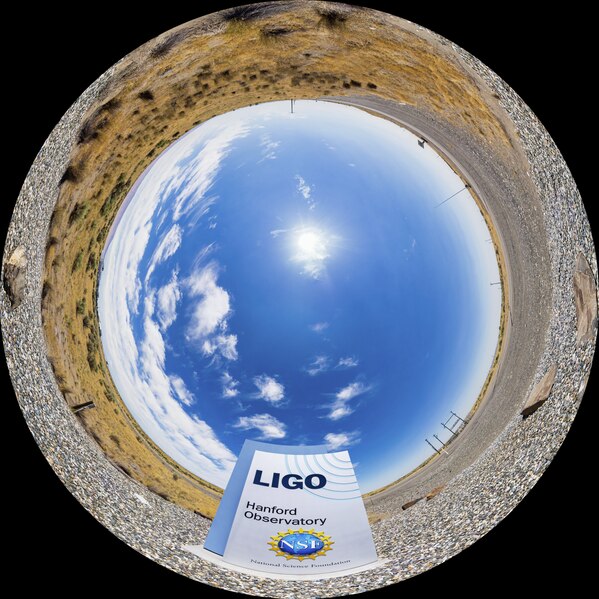
When LIGO detected gravitational waves in 2015, it wasn’t just finding them that was mental, it was what caused them. Two black holes, each about 30 times the mass of our sun, spiralled into each other and merged 1.3 billion years ago. The collision was so violent it sent ripples through the actual fabric of space and time that we detected here on Earth.
These mergers release more energy than all the stars in the universe combined, but it’s not light or heat, it’s pure gravitational energy warping reality itself. We’ve now detected dozens of these mergers, and each one tells us something new about how black holes form, how many are out there, and how they’ve shaped the universe. It’s like we discovered an entirely new way to see the cosmos.
Supermassive black holes shouldn’t exist so early.
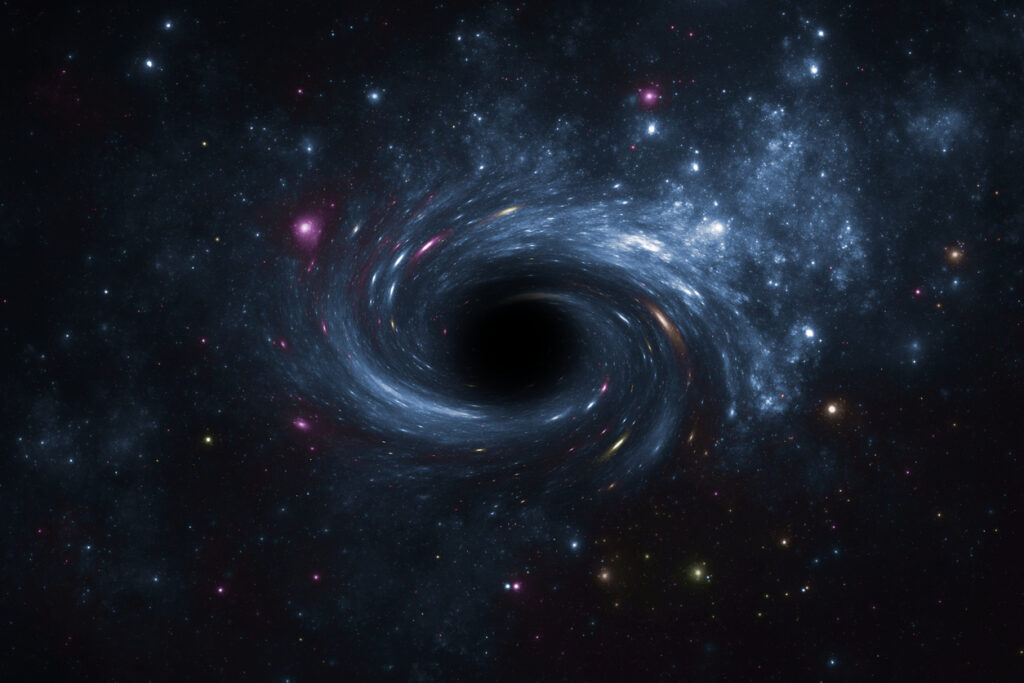
We’re finding supermassive black holes that existed when the universe was only 700 million years old, which makes absolutely no sense with our current models. These things are billions of times the mass of our sun, but the universe wasn’t old enough for them to grow that big through normal means. It’s like finding a fully grown oak tree that’s supposedly only been planted last week.
Scientists reckon these early monsters might have formed from massive gas clouds collapsing directly into black holes, skipping the whole star phase entirely. Or maybe the first stars were absolutely enormous, hundreds of times bigger than anything we see today, and created massive seed black holes when they died. Either way, it’s forced us to completely rethink how the early universe worked.
There are way more black holes than we thought.
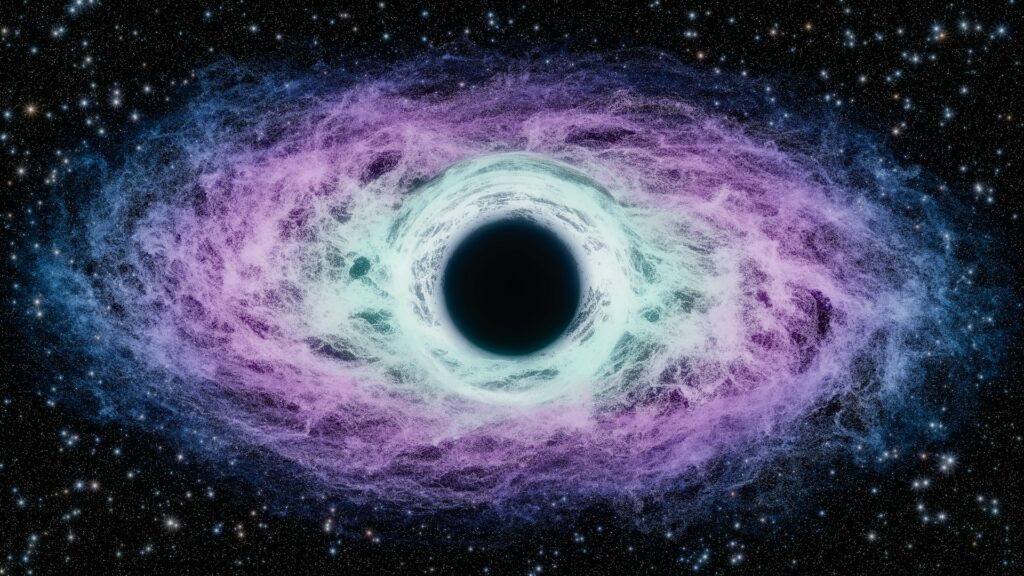
Recent surveys suggest there are about 40 billion billion stellar-mass black holes in the observable universe. That’s 40,000,000,000,000,000,000 black holes just chilling out there. About one percent of all the normal matter in the universe is locked up in stellar-mass black holes, which is absolutely mental when you think about it.
We’re also finding them in unexpected places. There’s probably a black hole just 1,500 light-years from Earth, which in cosmic terms is basically next door. Some scientists think there might be hundreds of millions of black holes just wandering through our galaxy alone, not attached to any star system. Space is way more full of these things than we ever imagined.
They’re not the cosmic vacuum cleaners we thought.
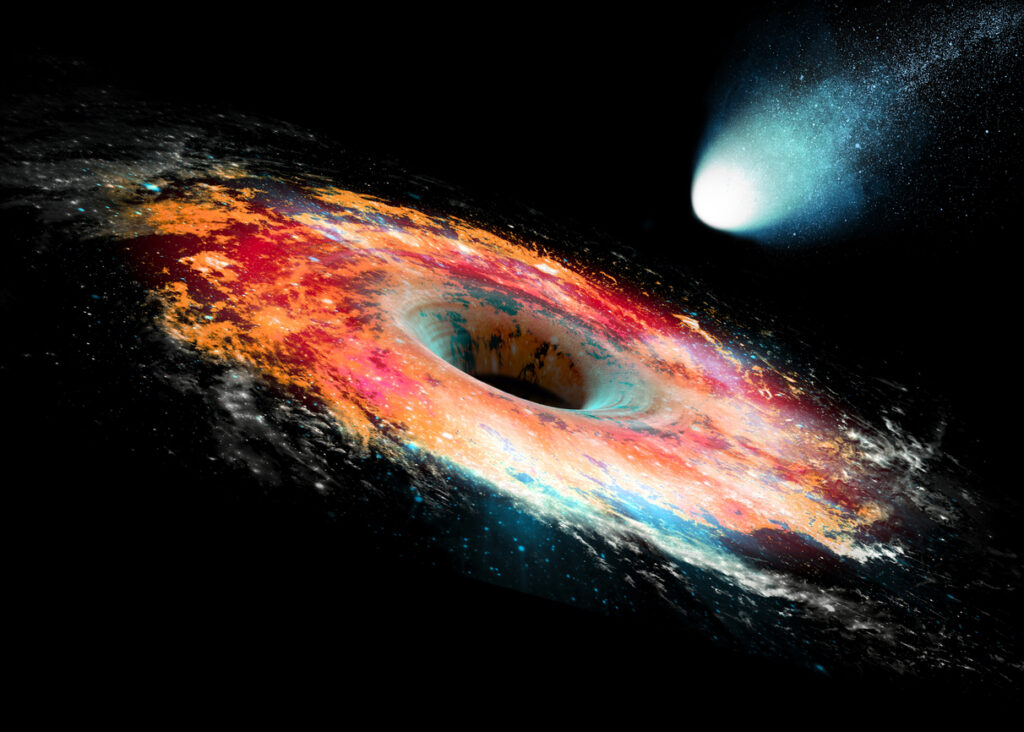
Everyone thinks black holes just suck everything in, but we’ve discovered they’re actually pretty rubbish at eating stuff. Most matter that falls towards a black hole gets flung back out before crossing the event horizon. They’re messy eaters that spray cosmic material everywhere, which actually helps trigger star formation in nearby regions.
Black holes also have this weird effect where they regulate their own growth. As they feed, they heat up the surrounding gas so much that it pushes away more material, basically cutting off their own food supply. It’s a self-regulating system that stops them from just consuming everything around them. They’re more like cosmic recycling centres than the all-consuming monsters we imagined.
Information might not be destroyed after all.
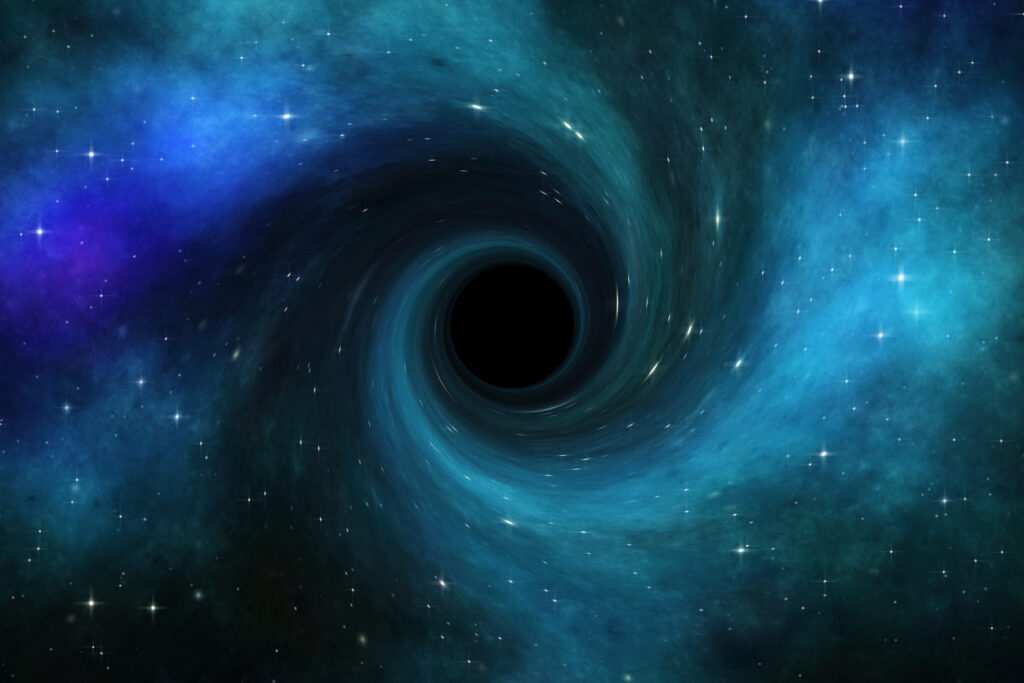
Stephen Hawking spent decades arguing about whether information that falls into a black hole is destroyed forever, which would break fundamental laws of physics. Recent theoretical work suggests information might actually be preserved on the black hole’s surface, encoded in a kind of hologram at the event horizon.
This is massive because it means black holes aren’t these universe-breaking anomalies that delete information from existence. Instead, they might scramble and store information in ways we’re only just beginning to understand. Some physicists think if you could collect all the Hawking radiation a black hole emits as it evaporates, you could theoretically reconstruct everything that ever fell into it.
They can launch jets at nearly light speed.
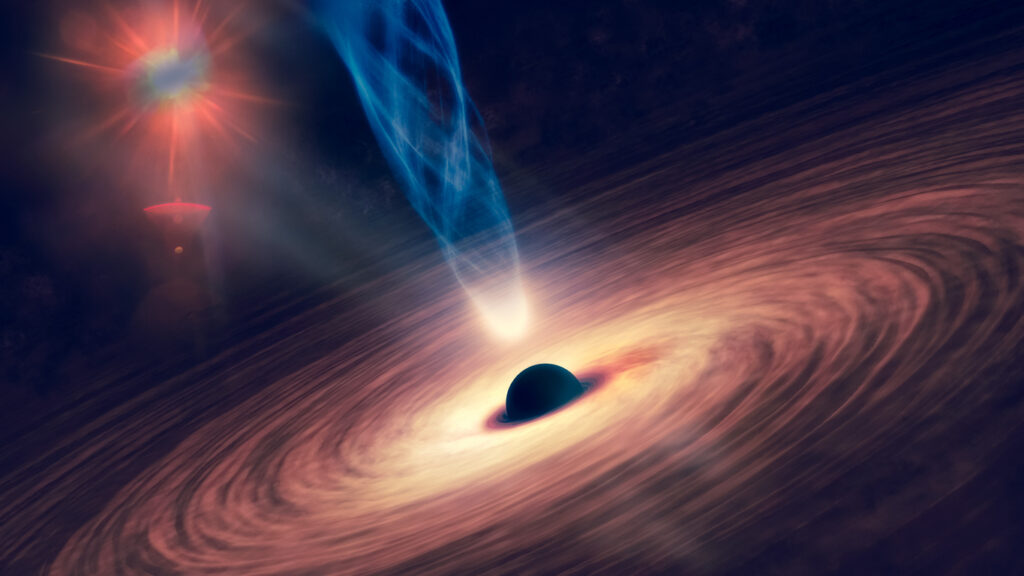
Supermassive black holes can shoot out jets of particles that stretch for millions of light-years, travelling at 99.98% the speed of light. These jets are so powerful they can blow holes through entire galaxies and prevent new stars from forming. We’re talking about streams of matter longer than the distance between galaxies, all powered by a black hole’s spin.
What’s really wild is these jets can stay stable and focused for millions of years. The black hole’s magnetic field acts like a cosmic particle accelerator, taking matter from the accretion disk and firing it out in these incredibly narrow beams. They’re basically the universe’s largest engines, converting matter into pure kinetic energy on scales we can barely comprehend.
Intermediate black holes were hiding in plain sight.
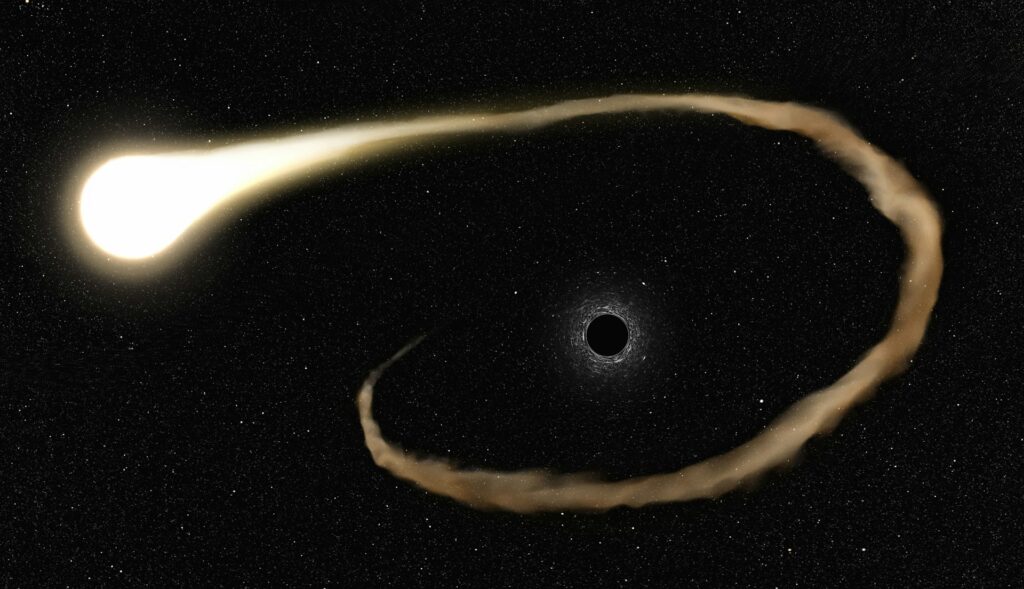
For ages, we only knew about stellar-mass black holes (up to 100 times the sun’s mass) and supermassive ones (millions to billions of solar masses). There was this weird gap where intermediate-mass black holes should exist, but we couldn’t find them. Turns out they were there all along, hiding in globular clusters and dwarf galaxies.
Finding these missing links helps explain how supermassive black holes got so big. They might grow through a chain of mergers, starting with stellar-mass black holes combining into intermediate ones, which then merge into supermassive monsters. It’s like finding the fossil that connects two evolutionary branches, except it’s about how gravity wells evolve.
They sing in gravitational waves.
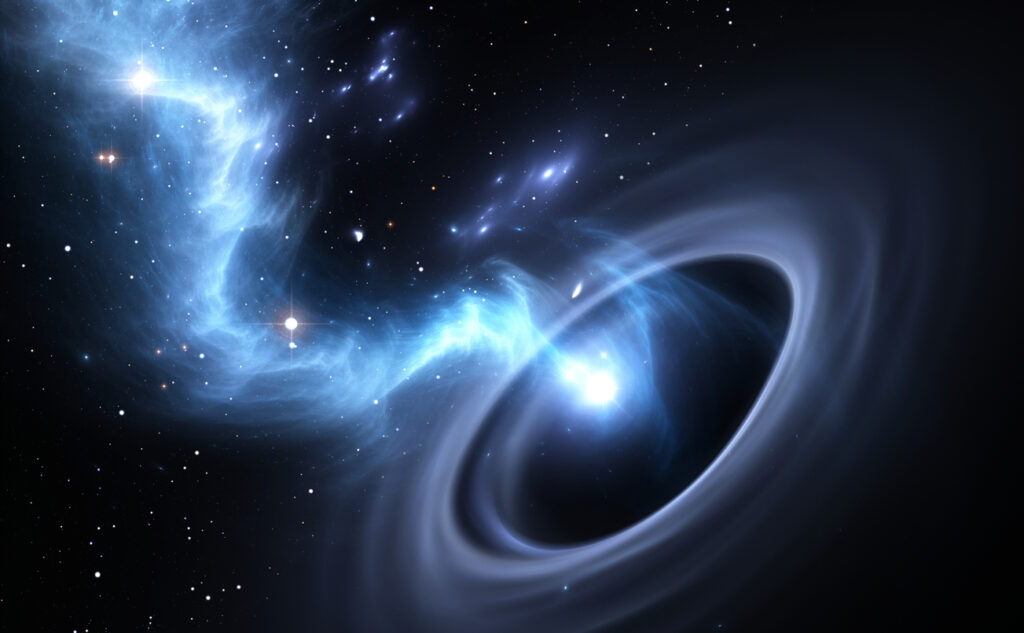
When black holes merge, they don’t just create one burst of gravitational waves. The newly formed black hole rings like a bell, creating a unique gravitational wave signature that tells us about its mass and spin. Each black hole has its own “tone” based on its properties, and we can actually “hear” these tones with detectors like LIGO.
This ringing, called the ringdown phase, lets us test general relativity in the most extreme conditions possible. Every merger we detect confirms Einstein’s predictions with ridiculous precision, but scientists keep looking for tiny deviations that might point to new physics. It’s like having a cosmic tuning fork that tests the fundamental laws of reality.
Primordial black holes might be dark matter.
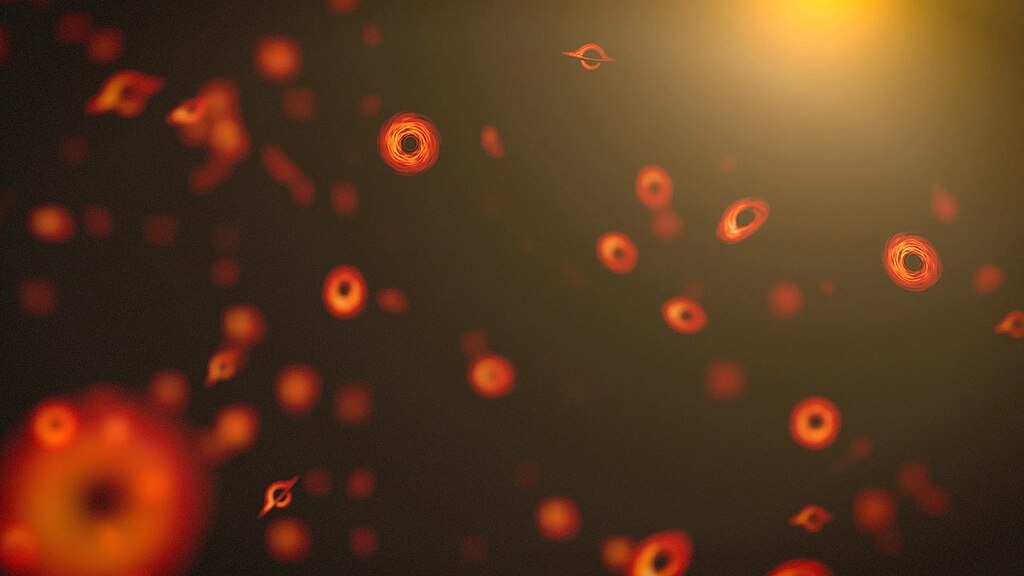
Some scientists reckon black holes formed in the first second after the Big Bang might make up dark matter. These primordial black holes wouldn’t need a star to form, they’d just be regions where the early universe was dense enough to collapse directly. If they exist, they could be anything from microscopic to thousands of solar masses.
This would solve two massive mysteries at once, explaining what dark matter is and why we can’t detect it directly. These ancient black holes would be almost impossible to spot unless they’re actively eating something, or we catch their gravitational lensing effect. Recent gravitational wave detections of unexpectedly massive black hole mergers might actually be these primordial relics colliding.
They create the brightest lights in the universe.
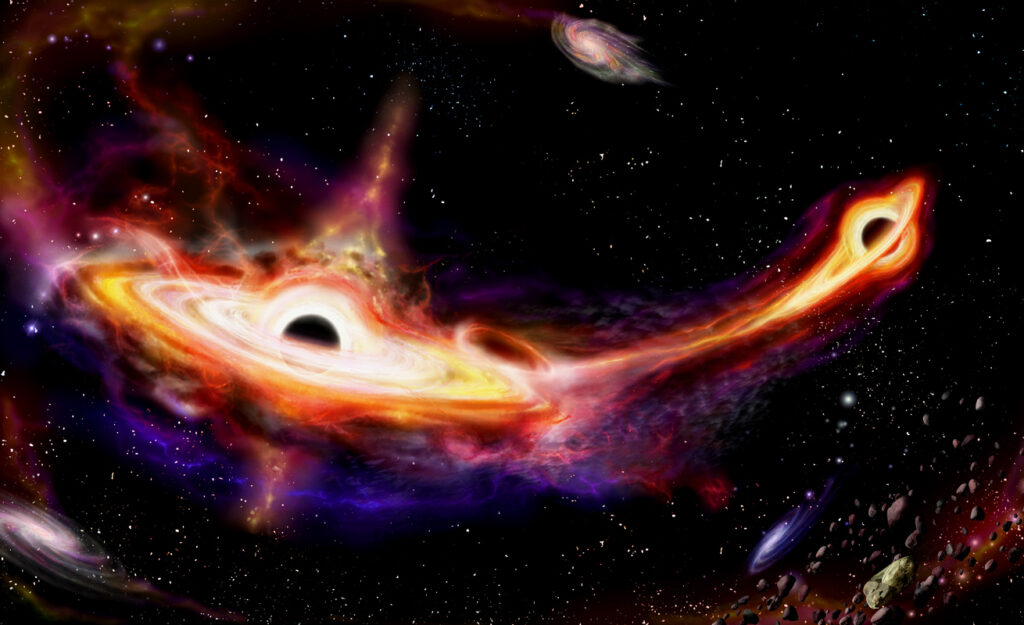
Quasars, the brightest objects we can see, are powered by supermassive black holes eating entire stars. A single quasar can outshine an entire galaxy of hundreds of billions of stars, all from a region smaller than our solar system. The accretion disk around an active black hole reaches temperatures of millions of degrees, creating a cosmic lighthouse visible from billions of light-years away.
What’s mental is that most of this light comes from friction. Matter spiralling into the black hole rubs together so violently it heats up to temperatures that make our sun look cold. About 40% of the matter’s mass gets converted to energy before it even reaches the event horizon, which is way more efficient than nuclear fusion in stars.
Black holes have hair (sort of).
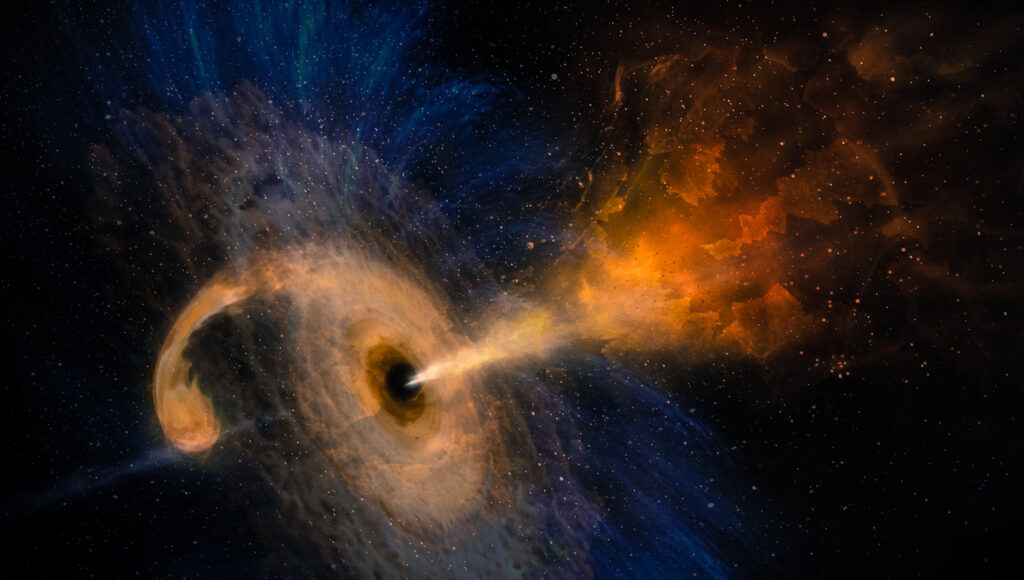
The “no-hair theorem” said black holes could only be described by three properties: mass, spin, and electric charge. Everything else about the matter that formed them was supposedly lost. But recent research suggests black holes might have “soft hair”, subtle patterns in the spacetime around them that preserve information about what fell in.
This discovery could solve major paradoxes in physics and change how we think about information in the universe. It suggests black holes aren’t the simple objects we thought, but have complex structures at their horizons that encode their entire history. They’re more like cosmic hard drives than cosmic erasers.
They might be gateways to other universes.
The maths inside rotating black holes suggests they might not have a point singularity at their centre but a ring-shaped one. If you could somehow survive the journey, passing through this ring might take you to another region of spacetime or even another universe entirely. Some theories suggest every black hole could contain a baby universe that started with its own Big Bang.
This isn’t science fiction, it’s what the equations actually predict, though we’ve got no way to test it without jumping into a black hole ourselves. The idea that our entire universe might exist inside a black hole in some parent universe is a legitimate scientific hypothesis. It completely changes how we think about cosmology and our place in existence.