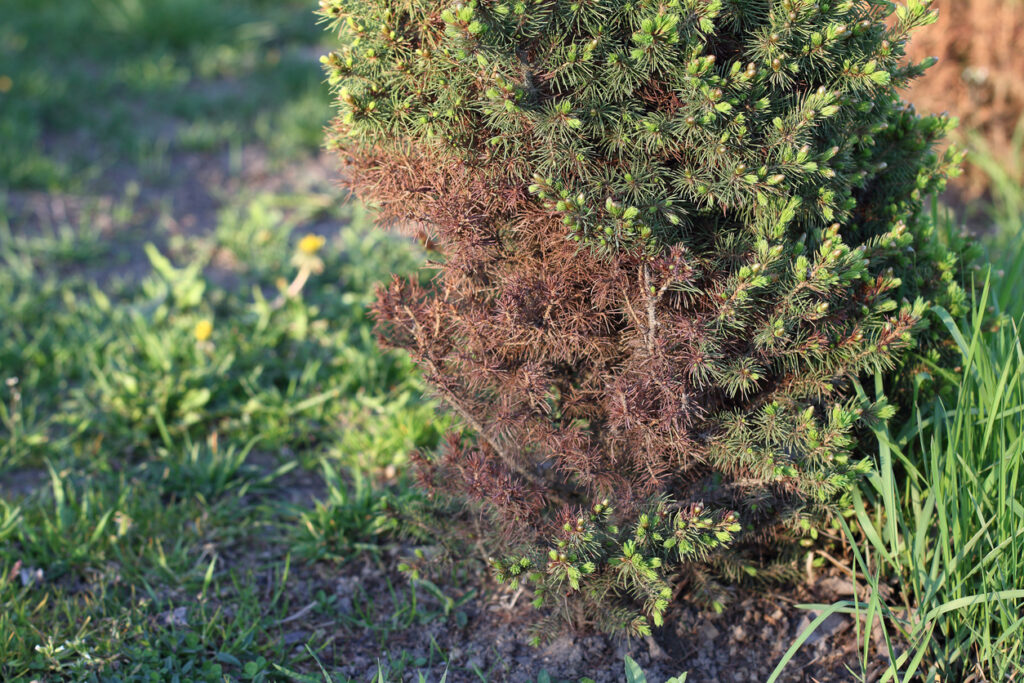
If you’ve spotted brown needles at the base of your conifer, don’t panic just yet. While it might look worrying, there are loads of reasons this happens, from totally natural processes to fixable problems. Let’s work through what might be causing it. Some are fixable, others are just natural; either way, at least you’ll know what’s behind it.
1. Natural ageing process
Look, if you’ve noticed the bottom branches turning brown, you’re probably wondering if something’s wrong. Here’s the thing though, it’s actually pretty normal for conifers to shed their oldest needles, which are usually at the base and inner parts of the tree. These needles have done their job for a few years, and the tree’s basically decided it’s time to let them go.
The tree’s putting all its energy into the newer growth at the top, where the sun actually hits. You’ll notice this happens more in autumn when the tree’s preparing for winter, but honestly, it can happen throughout the year depending on the species you’ve got.
2. Lack of sunlight
Those lower branches are living in the shadow of everything above them, which means they’re basically useless to the tree after a while. Conifers need sunlight to photosynthesise, and when the bottom branches aren’t getting any, the tree cuts its losses and stops sending nutrients there.
This is especially obvious if your conifer’s planted really close to other trees or buildings. The competition for light gets intense, and the bottom always loses out. You might think you’re doing your garden a favour by packing plants in tight, but conifers really need their space to keep those lower branches green.
3. Poor air circulation
When air can’t move freely through the lower branches, you’re basically creating a perfect environment for fungal problems. The moisture just sits there, especially after rain or morning dew, and that dampness leads to all sorts of issues that turn needles brown.
The lack of air movement also means the lower branches stay wet longer after watering. This constant moisture stress weakens the needles and makes them more likely to brown off. Sometimes people think they’re helping by planting ground cover underneath, but if it’s too thick, you’re actually making things worse.
4. Watering issues
Both overwatering and underwatering can cause browning at the base, which I know sounds confusing but hear me out. When you overwater, the roots can’t breathe properly, and they start to rot, which shows up as browning that often starts at the bottom.
On the flip side, when conifers don’t get enough water, they’ll sacrifice their oldest needles first to keep the new growth alive. This is particularly common during hot summers or if your conifer’s competing with thirsty plants nearby for whatever moisture is available.
5. Dog urine damage

If you’ve got dogs, this might be your culprit right here. Dog urine contains high levels of nitrogen and salts that literally burn the needles and can kill off lower branches. Male dogs especially love marking their territory on conifers, and that repeated exposure creates brown patches exactly where they’re lifting their leg.
The damage usually starts as yellow patches that quickly turn brown and crispy. Once those needles are burnt, they’re not coming back, and if it happens repeatedly in the same spot, you might lose entire branches. It’s not just about the unsightly brown patches, either, the salts can build up in the soil.
6. Salt damage
If your conifer’s near a road or pathway that gets gritted in winter, salt spray and runoff could be causing that browning at the base. The salt pulls moisture out of the needles and roots, basically dehydrating your tree from the outside in.
Salt damage is sneaky because it might not show up immediately. Sometimes you won’t see the browning until spring, when the accumulated salt from winter finally takes its toll. The soil around the base can become toxic with salt buildup, making it impossible for the roots to take up water properly.
7. Pest problems
Various pests love making homes in the lower branches of conifers, where it’s sheltered and protected. Spider mites, scale insects, and aphids can all cause browning by sucking the sap from needles. You might not even notice them at first because they’re tiny, but the damage builds up over time.
Bark beetles are another nightmare for conifers. They bore into the trunk and branches, disrupting the tree’s ability to transport water and nutrients. The browning from beetle damage often starts at the base and works its way up, and by the time you notice it, the infestation might be pretty advanced.
8. Fungal diseases
Fungal infections thrive in the damp, shaded conditions at the base of conifers. Diseases like root rot, needle cast, and various blights can cause progressive browning that starts low and spreads upward. These fungi love moisture, so they’re particularly problematic in humid weather or if you’re overwatering.
Once a fungal disease takes hold, it can spread quickly through the dense lower branches. The needles might start with small spots before turning completely brown and dropping off. Some fungi even produce visible spores on the affected branches, which is a dead giveaway that disease is your problem.
9. Chemical damage
Herbicides and other garden chemicals can drift onto your conifer’s lower branches, especially if you’re spraying on a breezy day. Even if you’re careful, chemicals can persist in the soil and be taken up by the roots, causing browning that appears first in the older, lower growth.
Sometimes the damage comes from seemingly harmless sources. Fertiliser burn from too much lawn feed washing into the root zone can cause browning. The tree might survive the chemical exposure, but those damaged needles aren’t coming back green.
10. Root problems
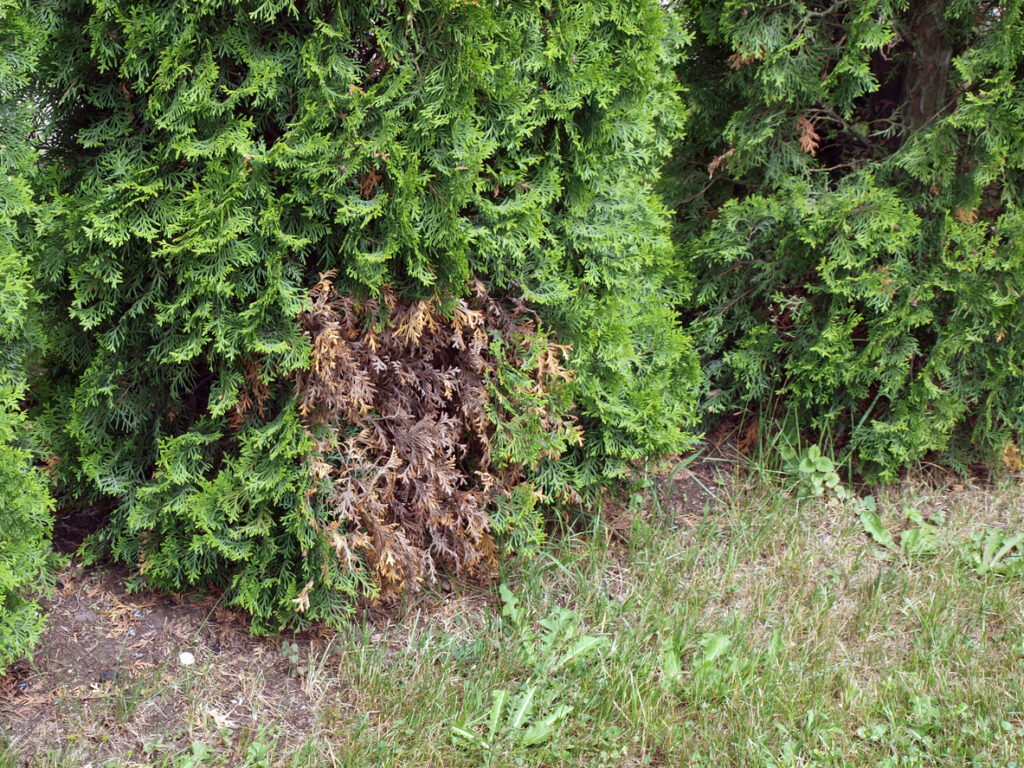
When roots are damaged, restricted, or diseased, the first sign often shows up as browning in the lower branches. Maybe the roots have hit compacted soil, or they’re circling in a pot that’s too small, or construction work has damaged them. Whatever the cause, when roots can’t function properly, the tree starts shutting down from the bottom up.
Root problems are frustrating because you can’t see what’s happening underground until symptoms appear above. Poor planting depth, where the tree’s been planted too deep or too shallow, is a surprisingly common cause of gradual decline that starts with lower branch browning.
11. Winter damage
Cold, drying winds in winter can desiccate lower needles, especially if the ground’s frozen and the roots can’t take up water to replace what’s being lost. This winter burn might not show up until spring, when you suddenly realise whole sections at the base have turned brown.
The freeze thaw cycle can also damage bark and branches at the base where snow accumulates. Young conifers and those recently transplanted are especially vulnerable to this kind of winter damage.
12. Competition and stress
Conifers growing in tough conditions with lots of competition from other plants often show stress through browning lower branches. They’re fighting for water, nutrients, and light, and something’s got to give. The tree prioritises its survival by keeping the top green while sacrificing the bottom branches.
General environmental stress from pollution, poor soil, or climate extremes can also cause this browning pattern. Urban conifers dealing with reflected heat from pavements and air pollution often struggle to maintain their lower branches. The tree simply doesn’t have the resources to keep everything green, so it lets the least productive parts go brown.