
At first glance, Mars looks completely different from Earth. It’s got that dusty red surface, eerie atmosphere, and absolutely no blue oceans or green forests in sight. But here’s the weird part: a lot of the rock that makes up Mars is actually pretty similar to what we have here on Earth: basalt, volcanic material, iron-rich minerals. So what makes the whole planet look like it’s blushing? Turns out, the colour is more about chemistry and dust than anything fancy or mysterious. Let’s break it down.
It’s all about iron.
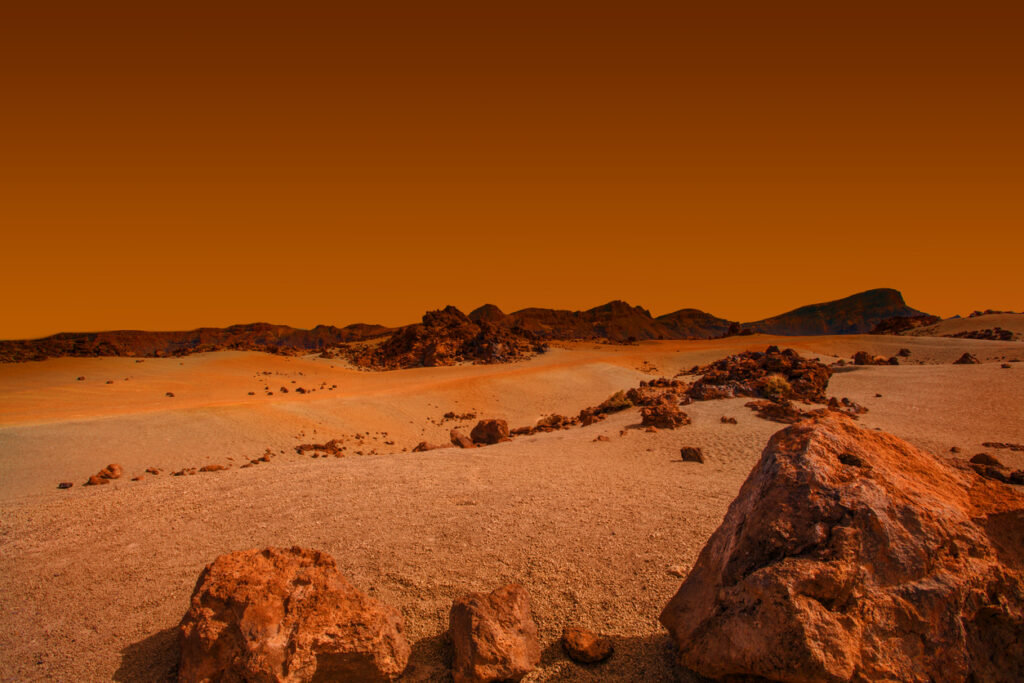
The surface of Mars is packed with iron-rich minerals. That’s nothing unusual because Earth has plenty of iron too. The key difference is what happens to that iron over time. On Mars, it’s been exposed to millions of years of wind, dust storms, and slight atmospheric reactions.
Instead of forming dense metal or sinking deep into the core like much of Earth’s iron, the iron on Mars stayed closer to the surface, and slowly started to rust. And yes, that’s pretty much what gives it that signature reddish tinge: planetary-scale rust.
Mars has no rain to wash it away.
On Earth, rust gets rinsed, eroded, and moved around by rain and rivers. Mars doesn’t have running water anymore, at least not on the surface, so once the iron oxidises and forms a layer of red dust, it just sits there. Over time, that dust builds up and spreads. It covers rocks, fills craters, and gets swept into the atmosphere. So even areas that might be made of darker rock underneath can still look red because of the fine coating of oxidised iron on top.
The dust is extremely fine.
Mars is covered in a layer of ultrafine dust, much finer than anything you’d find on Earth’s surface. It’s more like powdered talc than sandy grit. This stuff gets everywhere: on rover wheels, solar panels, even floating in the thin Martian air. This fine dust reflects sunlight in a way that makes it appear red or reddish-orange. Even when the ground beneath it is a darker volcanic rock, the light bouncing off the dust dominates the view and gives the whole planet its rusty glow.
Mars has a weak atmosphere.
Unlike Earth, Mars doesn’t have a thick atmosphere to protect or transform its surface. On Earth, the atmosphere filters light, traps moisture, and shapes how surfaces weather. Mars’ atmosphere is thin, dry, and mostly made of carbon dioxide.
This means it doesn’t protect the surface from radiation, or shield it from meteor dust or solar winds. Everything is more exposed, and the oxidation process plays out differently. With no rain, no erosion, and no plant life to cover it up, that red colour just sticks around.
It’s not red everywhere up close.
Here’s a fun twist: Mars only looks red from a distance. If you were standing on the surface, you’d actually see a range of colours including greys, browns, and black volcanic rocks, depending on where you are. It’s the dust that gives everything a red tint from far away.
NASA rovers have captured images showing a much more varied surface than what telescopes show from Earth. So “The Red Planet” is kind of a nickname based on how it appears from orbit, not necessarily how it looks right under your feet.
Earth’s rocks have changed more over time.
Earth’s surface has been shaped by billions of years of tectonic movement, oceans, erosion, and plant life. Even if we started out with similar volcanic rock, Earth’s terrain has been reshuffled and resurfaced many times.
Mars, in contrast, has stayed mostly geologically quiet for the last few billion years. Its surface has been slowly oxidising in place rather than getting recycled through volcanoes or tectonic plates. That’s why its rocks look older, dustier, and redder because they are.
There’s no vegetation to break it up.
On Earth, even in places with lots of iron-rich rock, greenery tends to interrupt the colour. Grass, trees, moss—any plant life can change the visual impression of the land. Mars, obviously, doesn’t have that. So there’s nothing to soften the look or hide the rust. The redness is uninterrupted and dominates the entire landscape. It’s one of the reasons Mars looks so stark compared to the more colourful, patchy surface of Earth.
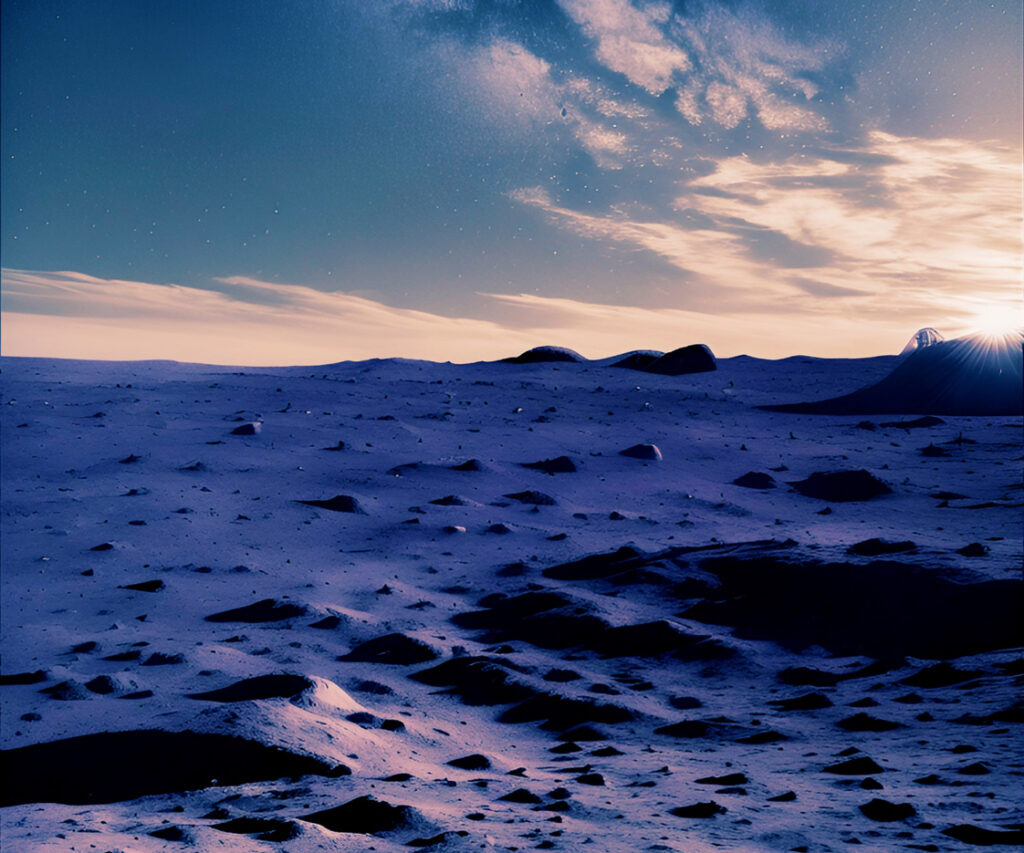
Martian sunsets are blue, not red.
Oddly enough, while the planet looks red, sunsets on Mars actually appear blue. That’s because the fine red dust in the air scatters sunlight in a way that allows blue light to pass through more directly at low angles, like sunrise and sunset. So you get the opposite effect of Earth, where red sunsets are the norm. It’s a weird twist that shows how Mars plays by its own rules when it comes to colour and light. A red planet with a blue sky, just not all day long.
Space photos exaggerate the red.
Some of the most iconic images of Mars have had their colours adjusted slightly to highlight certain details. While the red is definitely real, some photos boost it for clarity or dramatic effect. It helps scientists, and the public, spot surface features more easily. That’s not to say the red’s fake, just that Mars might not be quite as neon-rusty as some posters and press images suggest. In real life, it’s more muted, more dusty-orange, and a lot more varied than you might expect.
The nickname just stuck.
Humans have been calling Mars “the Red Planet” since ancient times, long before we understood what caused the colour. With the naked eye, it appears reddish in the night sky, which set it apart from the stars and sparked curiosity for centuries. Now we know it’s more of a chemistry thing than anything else. Same rocks as Earth, just a whole lot dustier, drier, and rustier. It turns out Mars isn’t red because it’s exotic. It’s red because it’s been quietly oxidising in peace for billions of years.