You don’t need a complicated rainwater harvesting system or expensive gear to start recycling water in your garden. With a bit of creativity and a few easy habits, you can reuse more water than you think, cutting down on waste and helping your plants thrive. Whether you’ve got a small patio or a full veggie patch, here are 13 down-to-earth ways to reuse water in your garden without needing anything fancy.
1. Save your cooking water.
The next time you boil pasta, potatoes, or veg, don’t pour that water down the drain. Once it’s cooled, it’s great for the garden, especially for leafy greens or container plants. Just avoid anything that’s been salted. This kind of starchy water adds a little nutrient boost, and it’s an easy habit to build into your routine. Keep a jug or bucket nearby to collect it while you’re draining pans.
2. Put a bucket in the shower.
While you’re waiting for the water to heat up, a surprising amount runs straight down the plughole. Stick a bucket under there and use that water on outdoor plants or pots. It’s clean, fresh, and totally usable, which is perfect for dry spells when every drop counts. You’ll be shocked how much you collect over the course of a week.
3. Reuse pet water.
If you change your dog or cat’s water bowl daily, don’t chuck it away. Use it to top up pots, planters, or anything looking thirsty outside. As long as there’s no soap or additives, it’s completely fine for plants. It might only be a couple of cups, but over time it adds up, especially if you’ve got multiple pets or larger outdoor water bowls.
4. Use leftover water from dehumidifiers.
Water collected in dehumidifiers or tumble dryer condensers is essentially distilled. It’s not drinkable, but it’s fine for watering non-edible plants or even topping up bird baths in dry weather. It’s especially useful if you live in a flat and don’t have access to a hose. Just make sure the appliance hasn’t added any scent or cleaning chemicals to the water.
5. Water houseplants with unfinished drinks.

Half-drunk glasses of water, cold tea (without milk), and even the dregs of your water bottle can all go straight into your indoor or outdoor plants. There’s no reason it should go to waste. Just skip anything with sugar, milk, or alcohol, as that can harm roots or attract pests. Plants aren’t picky; they’ll take whatever clean water you’ve got.
6. Rinse water from washing veg.
When you rinse fruit or veg in a bowl or under running water, catch the runoff. That water is perfectly good for watering herbs, pots, or anything near the kitchen door. Pop a bowl in the sink while you’re prepping dinner and you’ll quickly realise how much water usually goes unused. It’s one of the easiest daily swaps to make.
7. Direct your downpipe into a water butt or bin.
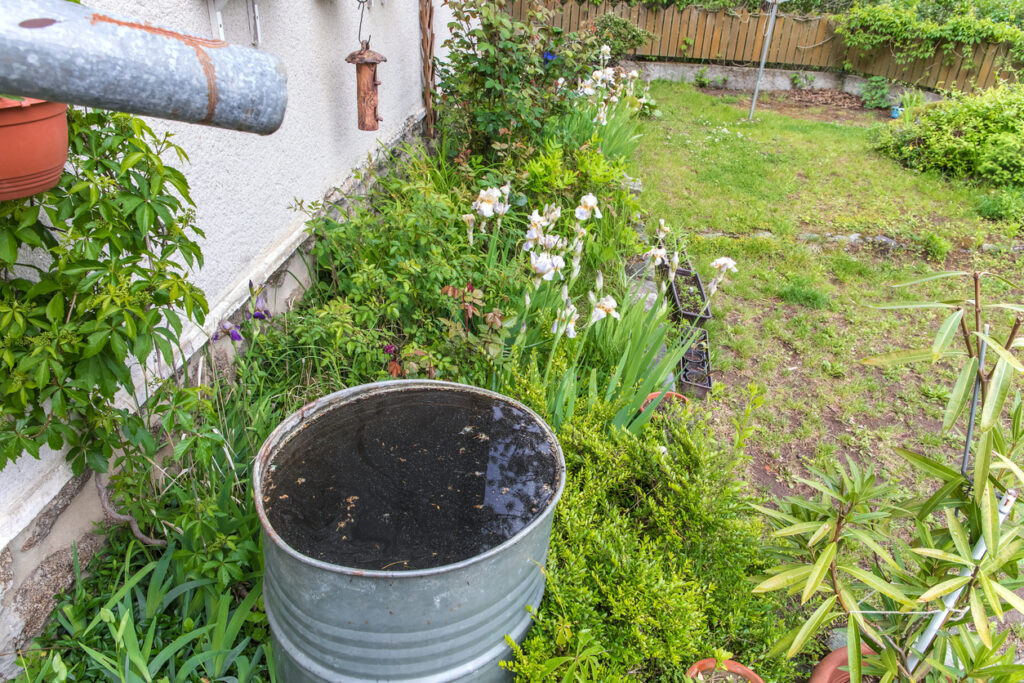
If you’ve got a downpipe from your roof, you can divert it into a standard water butt, old bin, or even a storage tub. You don’t need a full filtration setup, just a screen to keep leaves out. It’s one of the most effective low-effort ways to harvest rainwater. In the UK, even one rainy afternoon can fill a whole butt, giving you days’ worth of water for beds and borders.
8. Reuse paddling pool water.
At the end of a warm week, don’t tip out the pool straight into the lawn. Use a bucket or siphon to move that water to flower beds, hedges, or even trees. As long as it hasn’t been heavily chlorinated or filled with bath bubbles, it’s safe for plants, and makes good use of a lot of litres that would otherwise vanish.
9. Place a washing-up bowl in the sink.
Washing hands, rinsing veg, or even waiting for the tap to run warm all add up. A washing-up bowl in the sink lets you catch all that excess water for reuse outside. You can then carry it out and water pots, shrubs, or even your compost heap. It’s especially handy in houses without a garden tap, where every saved litre matters more.
10. Use greywater from your bath or washing machine.
If you’re a bit more confident, you can collect greywater from your bath or washing machine—just be mindful about soaps and detergents. Eco-friendly, non-bio products are safest for garden use. This water is best used on ornamental plants, not edible ones. But if you’re doing laundry anyway, it makes sense to give your garden a drink at the same time, especially in a dry spell.
11. Reuse vase water.

Once cut flowers start to fade, don’t dump the water in the sink. It may look cloudy, but it’s harmless and still hydrating for outdoor pots or shrubs. If your vases tend to build up algae or smell, just use the water on compost or pour it into soil rather than directly on leaves. It’s another small win that builds the habit of reusing what you’ve already got.
12. Catch rain in buckets and tubs.
No water butt? No problem. Place old bins, storage tubs, or even laundry baskets under gutters, balconies, or roof edges. It’s not fancy, but it’s free water every time it rains. Just be sure to cover or use it quickly to avoid mosquito breeding or algae buildup. You can even stash buckets around the garden to collect drips during a heavy storm.
13. Store water in old bottles for dry days.
Whenever you save a bit of water, say from cooking or the shower, pop it in an old juice bottle or milk jug and label it. Build up a few of these in the shed or porch so they’re ready when the weather turns dry. It’s a low-tech but effective way to keep your garden going without relying solely on the tap. Plus, it feels pretty satisfying to water your plants with what would’ve otherwise gone down the drain.