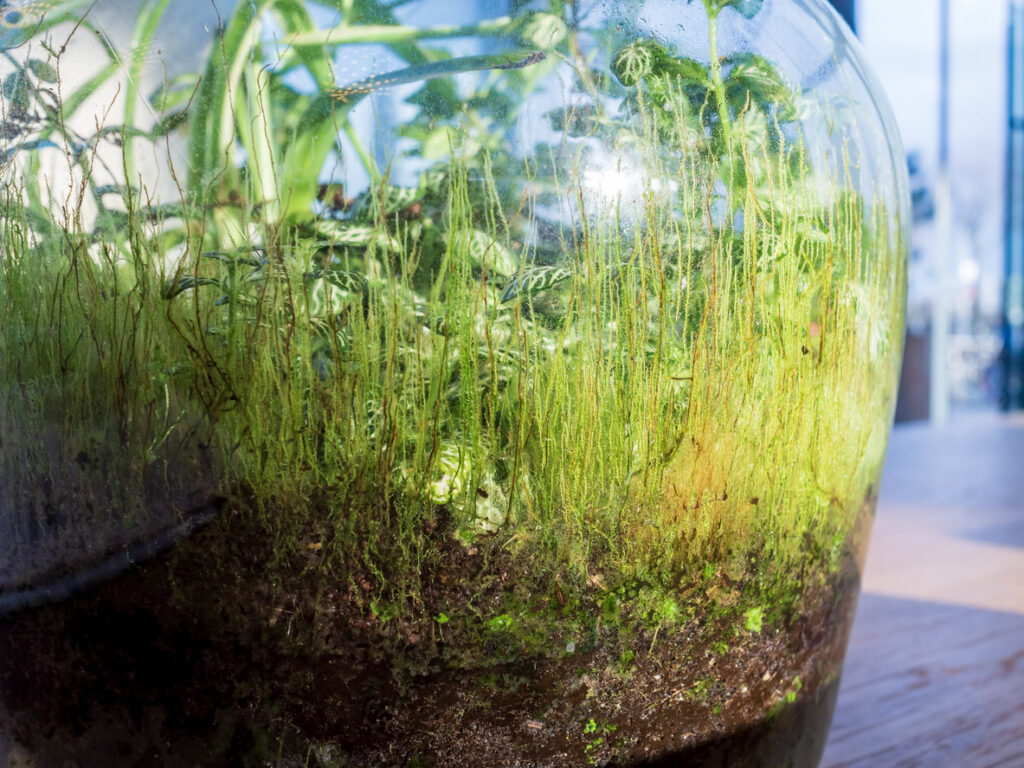
Imagine watering a plant once, sealing it in a glass bottle, and then just… never touching it again. For decades. Sounds fake, right? But that’s exactly what’s happened with some of the world’s oldest bottle gardens: tiny sealed ecosystems that have been thriving on their own for 50 years or more. No watering. No pruning. No fuss. So how on earth does that work? Let’s crack the glass on this weird little wonder of nature-meets-science.
They basically recycle their own water.
Once the bottle is sealed, it becomes a closed-loop system. When the plant “sweats” through transpiration or moisture evaporates from the soil, it rises, condenses on the glass, and drips back down like a built-in rain cycle. It’s like having your own personal cloud inside a bottle.
This self-watering loop is what keeps the plant alive without any outside help. No need for top-ups, misting, or guilt-watering at 10 p.m. because you forgot for three weeks straight. Nature’s got this one handled.
The air stays surprisingly fresh, thanks to photosynthesis.
You’d think the air would get stale in a sealed bottle, but nope. During the day, the plant uses light to photosynthesise, pulling in carbon dioxide and releasing oxygen. At night, it flips the process, releasing carbon dioxide while using oxygen. It balances itself out.
This ongoing exchange is what keeps the ecosystem stable. The plant’s not just sitting there looking pretty; it’s running a tiny 24-hour breathing system that somehow doesn’t collapse under its own weirdness.
Microbes do the dirty work.
There’s a whole unseen world inside that soil: bacteria, fungi, and other microscopic organisms breaking down dead leaves and plant bits into nutrients. They’re the silent clean-up crew keeping things from turning into a rotting mess. These microbes recycle waste back into usable nutrition for the plant. It’s like composting, but in miniature and without the bad smell. They’re basically what makes the whole “set it and forget it” part actually work.
There’s no room for pests (literally).
If your bottle garden was sealed properly, it’s basically pest-proof. No fungus gnats, no aphids, no mystery mites showing up to ruin your hard work. They simply can’t get in once the lid’s shut. If something does sneak in at the start? Chances are it won’t last long in the sealed environment. Without enough food or space, pests tend to crash and burn pretty quickly. It’s nature’s version of “no entry without a pass.”
No overwatering, no underwatering ever.
Most plant deaths are caused by watering gone wrong. Too much, too little, too erratic—it’s all very Goldilocks, but a sealed bottle garden completely removes that risk. The water never escapes, and the plant drinks what it needs, when it needs it. It’s like handing the watering schedule over to the plant itself. No guesswork. No apps. Just pure, unbothered hydration. You’d almost think the rest of your houseplants were being dramatic on purpose.
They stabilise into their own weird little climate.

After the first few weeks, a bottle garden sorts itself out. Temperature, humidity, and moisture all level off into a routine. It becomes its own little world, completely separate from whatever chaos is happening outside. That stability is key. Because everything inside is consistent, the plant doesn’t get stressed by drafts, heatwaves, or random cold snaps. It just keeps ticking along, decade after decade, like it’s figured out the secret to eternal calm.
Light does all the heavy lifting.
As long as the bottle gets some indirect sunlight, the plant can keep making energy through photosynthesis. No artificial lights, no grow lamps, no daily rotations required. It just needs a windowsill and a bit of patience. The sealed glass also traps warmth and light in a way that boosts growth in the beginning, like a mini greenhouse. However, once things settle, the plant stops trying to grow endlessly and just maintains what it’s got. Chill plant, chill vibe.
Dead leaves don’t pile up; they get repurposed.
In an open pot, dead leaves just sit there looking sad until you scoop them out. In a bottle garden, they break down naturally and turn back into fuel for the plant. It’s like watching death become dinner, in the least creepy way possible. This internal composting loop keeps the soil rich and reduces waste without anyone lifting a finger. It’s not messy. It’s efficient. And it means you never have to stick your hand in and fish around with tweezers.
Some plants are just naturally suited to bottle life.
Not every plant can survive in a closed system, but some, such as ferns, mosses, and tradescantia, absolutely thrive. They like the high humidity, don’t need tons of space, and grow at a manageable pace without taking over the joint. If you’ve ever wondered why certain terrariums last and others crash in a month, it often comes down to plant choice. Get it right at the start, and you might accidentally build a plant that outlives you.
There’s no root rot because water’s not pooling.
One of the biggest killers of houseplants is soggy soil drowning the roots. But in a sealed bottle garden, the balance of evaporation and condensation means water’s always moving, not just sitting around like a swamp. The humidity stays high, but the roots aren’t swimming. It’s like a self-sustaining mist that keeps everything damp without drowning it. Honestly, it’s the dream setup for fussy plants that hate being wet and dry at the same time.
Once it’s balanced, the plant stops trying to “grow.”
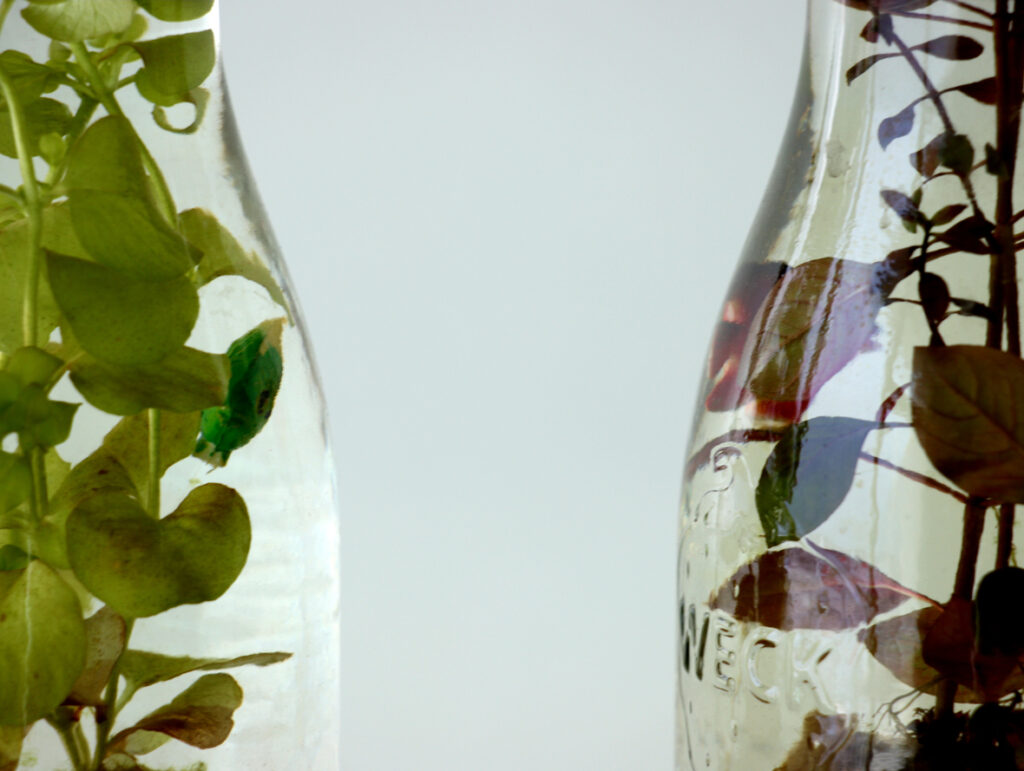
In a normal pot, plants keep reaching for more: more space, more light, more nutrients. In a bottle garden, once the plant hits its limit, it just… chills. No endless growth, no leggy stretching, no drama. This natural slowdown helps everything stay sustainable long-term. The plant isn’t trying to escape or overtake the bottle. It’s reached its happy place and decided to stay there. Respect.
They thrive on being left alone.
Unlike the rest of your houseplants, which seem to need constant babysitting, bottle gardens genuinely do better the less you mess with them. Open the lid too often and you throw off the balance. Leave it sealed, and it keeps doing its thing. Silently. Perfectly. It’s the ultimate low-maintenance setup. No guilt. No guesswork. Just a tiny, self-sufficient world quietly thriving in the corner. Honestly, it might be the most emotionally stable thing in your entire house.