When people think of giant fish, they picture the tropics—maybe a shark somewhere in Australia or a tuna the size of a sofa cruising through the Pacific.

However, the UK’s waters are surprisingly full of massive swimmers that make pond goldfish look like bath toys. Whether they’re gliding off the coast or lurking in rivers, these fish are the absolute units of British waters, and some of them might just be passing under your paddleboard right now.
1. Basking shark

This is the biggest fish you’ll find in UK waters, and the second-largest fish in the world, right behind the whale shark. Basking sharks can grow up to 12 metres long, which is basically like swimming next to a double-decker bus. Don’t worry, though. They don’t have teeth for biting, just massive mouths for hoovering up plankton.
You’re most likely to spot one off the coasts of Cornwall, the Isle of Man, or the Hebrides during the warmer months. They look terrifying at first glance, but they’re the gentle giants of the sea, swimming along with their mouths wide open like they’ve just heard some shocking gossip.
2. Bluefin tuna
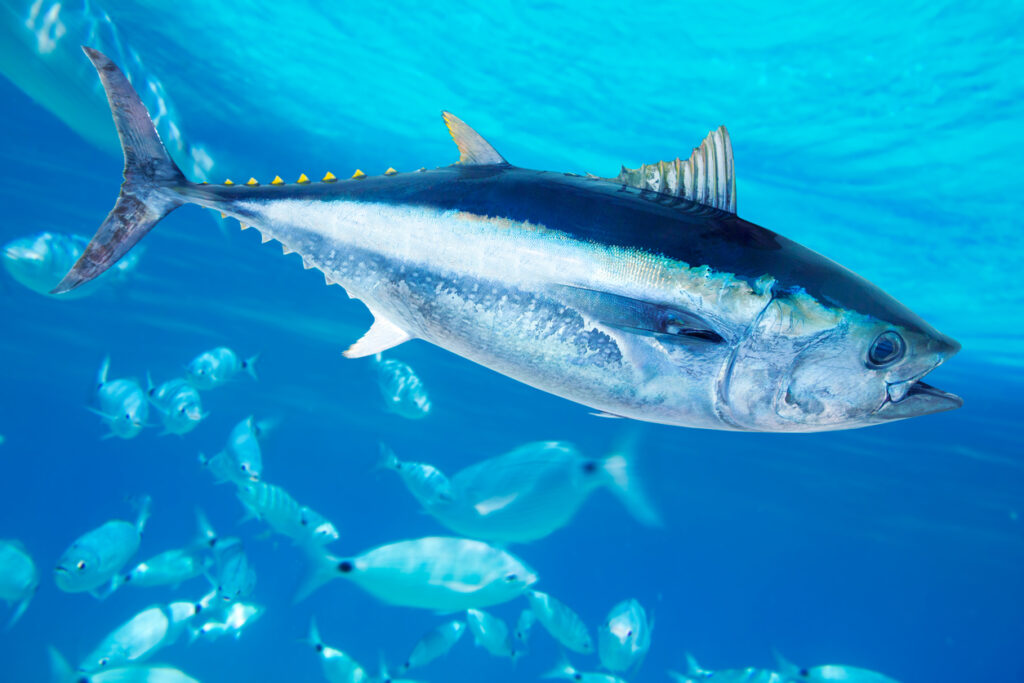
Once thought to have vanished from UK waters, these ocean powerhouses are making a comeback, and what a comeback. Bluefin tuna can hit speeds of over 40 mph and grow up to 3 metres long. They’re basically the torpedoes of the fish world, and yes, they look that cool in real life.
They’re usually seen around the southwest coast of England and sometimes off Wales, chasing schools of smaller fish with the grace of a ballerina and the force of a freight train. Spotting one in the wild is like seeing a sports car cruise by, except it’s shiny, muscular, and has gills.
3. Atlantic halibut
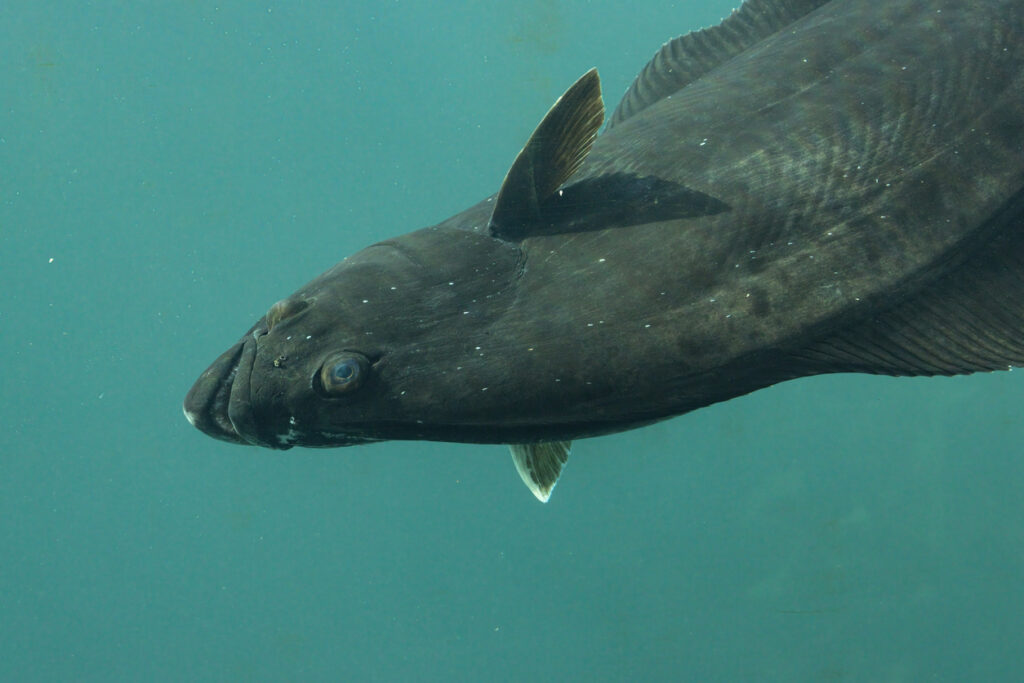
Think of the halibut as the heavyweight flatfish of the northern seas. It can grow up to 4.5 metres long (yes, that’s not a typo) and weigh over 300 kg. It’s got that classic “looks-like-a-doormat-but-could-flatten-you” energy.
Halibut are rare in UK waters these days due to overfishing, but they’re still lurking around the deeper parts of the North Atlantic. They spend most of their time looking like underwater pancakes, blending into the seabed and plotting their next massive meal.
4. Common skate

Another record-breaker that calls the UK home, the common skate is one of the largest rays in the world and can reach nearly 3 metres across. Basically, it’s like a dinner table with fins. And unlike dinner tables, it moves, and sometimes jumps.
You might find them off the west coast of Scotland or in parts of the Irish Sea. Despite the name, they’re not so common anymore due to population declines, but conservation efforts are helping them glide back into the spotlight, literally.
5. Conger eel

These slippery giants can reach over 3 metres long and look like something you’d expect in a myth about haunted shipwrecks. They live in rocky crevices and shipwrecks and have the classic “I haven’t blinked since 1993” stare that makes them extra eerie.
Conger eels can be found along much of the UK coastline, especially in the south and southwest. They’re nocturnal, mysterious, and definitely the sort of creature you’d assume was made up until it swam past you like a big, wet pipe with teeth.
6. Sturgeon

Part fish, part ancient relic, the sturgeon is basically a living fossil that’s been doing its thing since the age of the dinosaurs. Some species in UK rivers can reach 2.5 metres or more, with armour-plated scales and a face that says, “I remember when continents looked different.”
You might find them in estuaries or lower river systems, especially in the Severn or Thames basins. They’re rare now and protected, but every so often one shows up and reminds us that prehistoric drama is still alive and well in British waters.
7. Monkfish

If a fish could win “most likely to be mistaken for a sea monster,” it’d be the monkfish. These deep-sea dwellers can grow up to 2 metres long and have a face only a mother (or maybe a marine biologist) could love. Big head, bigger teeth, and a lumpy charm all their own.
They hang out at the bottom of the sea, often near Scotland or deeper offshore zones. What they lack in looks, they make up for in sheer weirdness, and, for better or worse, they’re also considered a delicacy. Just don’t expect eye contact over dinner.
8. Porbeagle shark

Related to the great white but much less famous, the porbeagle shark is sleek, strong, and surprisingly common around the UK. They can grow up to 3 metres long and are built for speed, stealth, and drama-free predation.
They’re often seen in the North Sea, Celtic Sea, and around Ireland. They look like your classic “sharky” shark—pointy nose, powerful tail—but they’re more chill than Hollywood would have you believe. Still, not the type of fish you’d want brushing past your leg on a swim.
9. Thresher shark

This one’s a bit of a show-off. Thresher sharks are known for their absurdly long tails, which can be as long as their bodies, used like whips to stun prey. They’re elegant, fast, and look like someone stretched the back end of a normal shark just for laughs.
They can reach over 5 metres long and are spotted occasionally in southern UK waters during summer. They’re not dangerous to humans, but they do come with serious “sea dragon” vibes. Tail envy is real when you see one of these in action.
10. Giant cod (yes, really)

We often picture cod as a humble chip shop filler, but wild North Atlantic cod can grow far beyond what’s on your plate. Some reach 1.8 metres and weigh over 90 kg. It’s like the boss level version of every cod you’ve ever eaten.
These big lads are mostly found in colder, deeper waters around Scotland and the North Sea. They’re still popular with fishers, and their size makes them living proof that not all cod are created equal. Some could probably eat your dinner, not be your dinner.