Planting a tree near your home sounds like a lovely idea until you realise how quickly the wrong one can turn into a structural nightmare, or hog every bit of sunlight going.
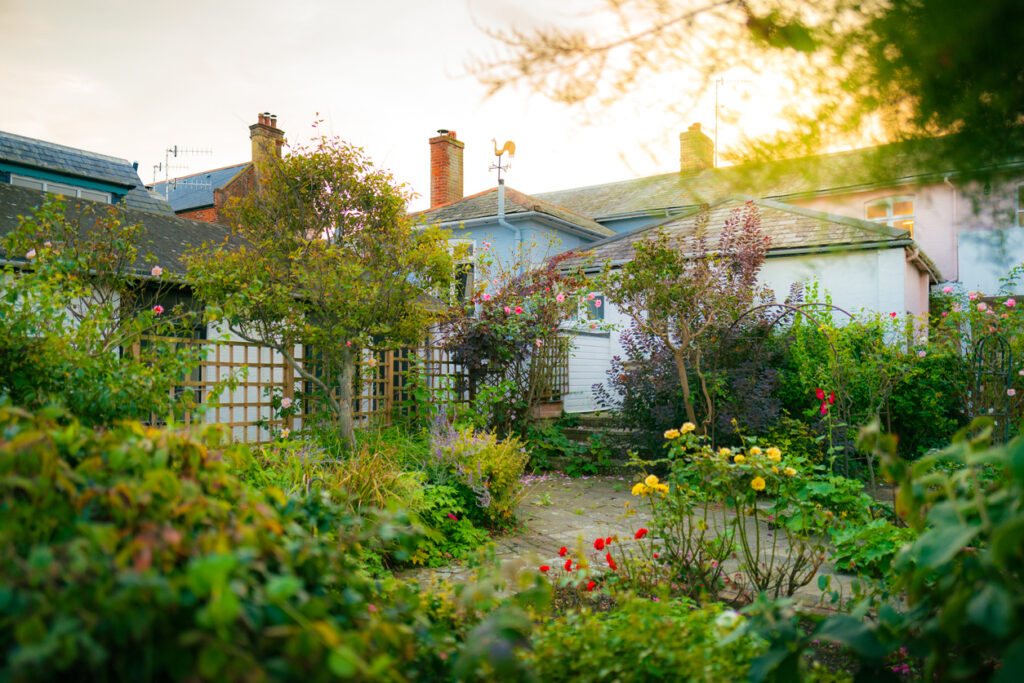
It’s not all bad news, though. There are plenty of small, well-behaved trees that look great, stay manageable, and won’t cause problems with roots or overgrowth. If you’re looking to add a bit of character or shade without risking your roof tiles or pipes, here are some of the best small trees available in the UK to plant near your house.
1. Amelanchier (Juneberry or snowy mespilus)
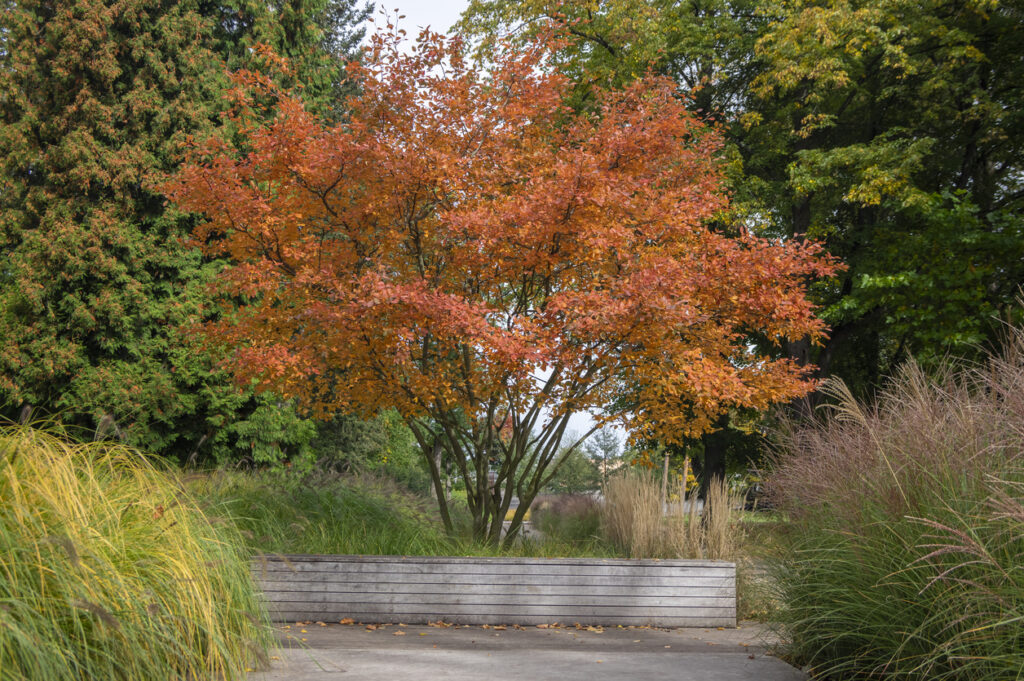
Amelanchier is one of those quiet stars in the garden: pretty without being showy, low-maintenance, and rewarding all year round. You get delicate white blossom in early spring, edible berries in summer, and rich autumn colour that genuinely holds its own. It rarely gets taller than 6 metres and tends to grow with a gentle, upright shape, so it won’t feel like it’s pressing in on your windows.
It also doesn’t come with aggressive roots, which makes it a safe choice for planting fairly close to your house. Plus, it’s brilliant for pollinators and birds, so it adds a bit of wildlife interest too. It’ll tolerate most soil types and doesn’t mind a bit of shade, which is ideal if you’re tucking it into a more sheltered corner.
2. Acer palmatum (Japanese maple)
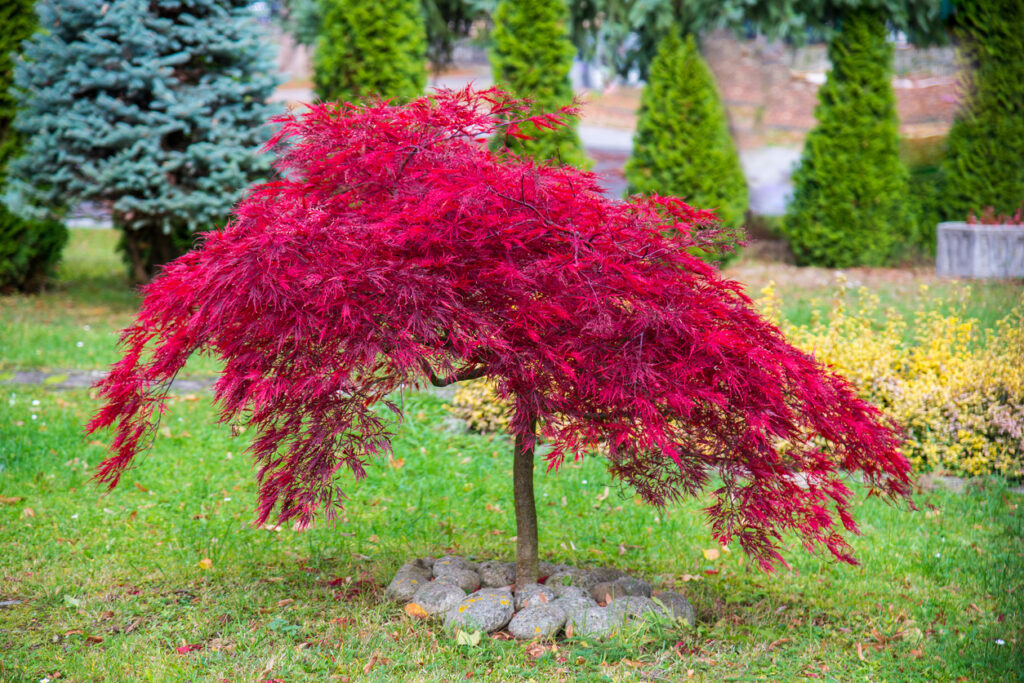
Japanese maples are a go-to for small spaces with big personality. Their foliage puts on a proper show, starting soft green or deep burgundy in spring and going blazing red or orange in autumn. Most stay between 2 to 4 metres tall and wide, making them one of the safest bets near a home or fence line.
They do like a bit of shelter, so try to avoid windy spots. Dappled shade works best, especially for the more delicate varieties, and they prefer slightly acidic soil. If you’ve got a north or east-facing area that feels a bit overlooked, one of these will quietly elevate it without taking over.
3. Prunus incisa ‘Kojo-no-mai’
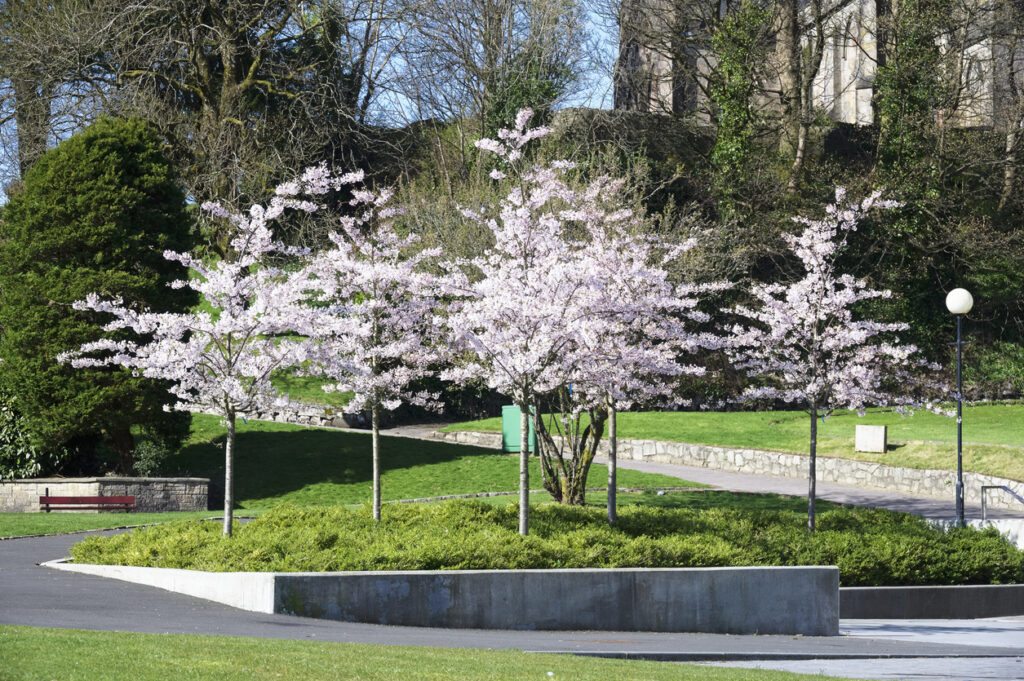
This compact cherry is more of a statement shrub than a traditional tree, but it earns its spot with early spring blossom that feels like a warm-up for the rest of the garden. It grows slowly and usually maxes out around 2.5 metres, so you can even pop it in a large pot if you’re working with a patio or small space near the house.
In autumn, the leaves turn fiery red before dropping, and its zig-zaggy branches still add interest even in winter. It’s also super low-maintenance. As long as it’s got decent drainage and a sunny or part-shade position, it’s happy to just get on with things.
4. Sorbus aucuparia ‘Autumn Spire’ (upright rowan)
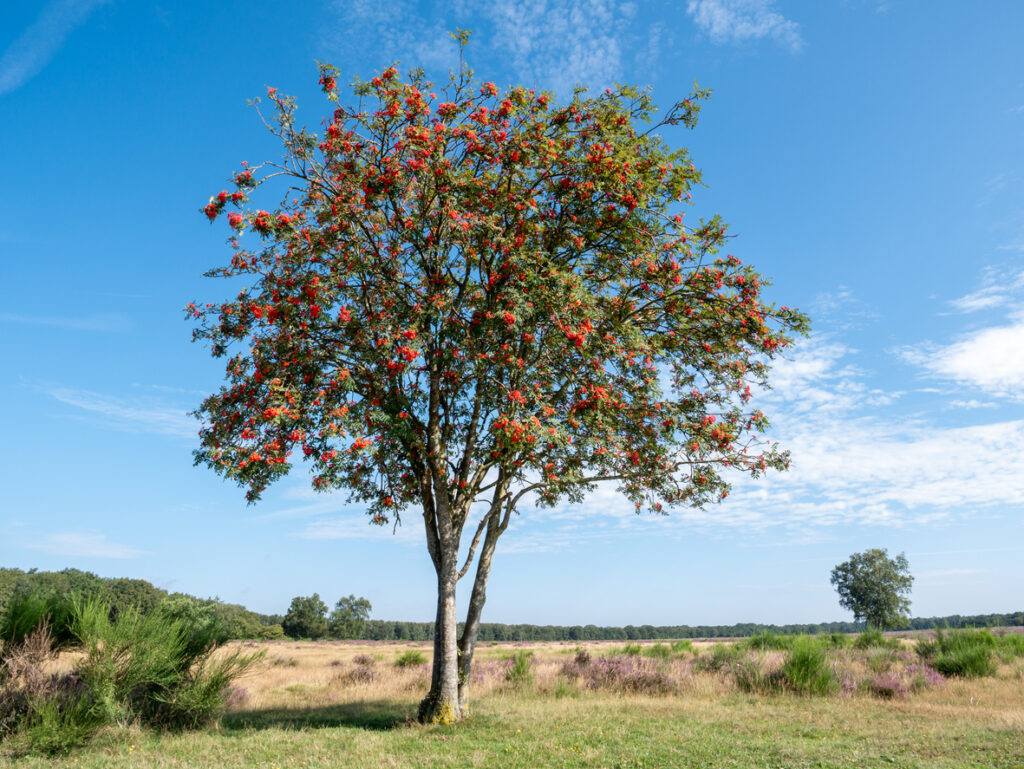
If you’re after something a bit taller but still tidy, ‘Autumn Spire’ is a great modern version of the traditional rowan. It grows upwards rather than outwards, rarely wider than 1.5 metres, and tops out around 4–5 metres, so it’s perfect for narrower spots between buildings or along driveways.
In spring, you get creamy flowers that attract bees, followed by bright berries in late summer and gorgeous autumn colour. It’s also a brilliant tree for birds, who’ll treat it like a mini buffet. It doesn’t need fancy soil and will tolerate both sun and light shade without complaint.
5. Euonymus europaeus ‘Red Cascade’ (spindle tree)
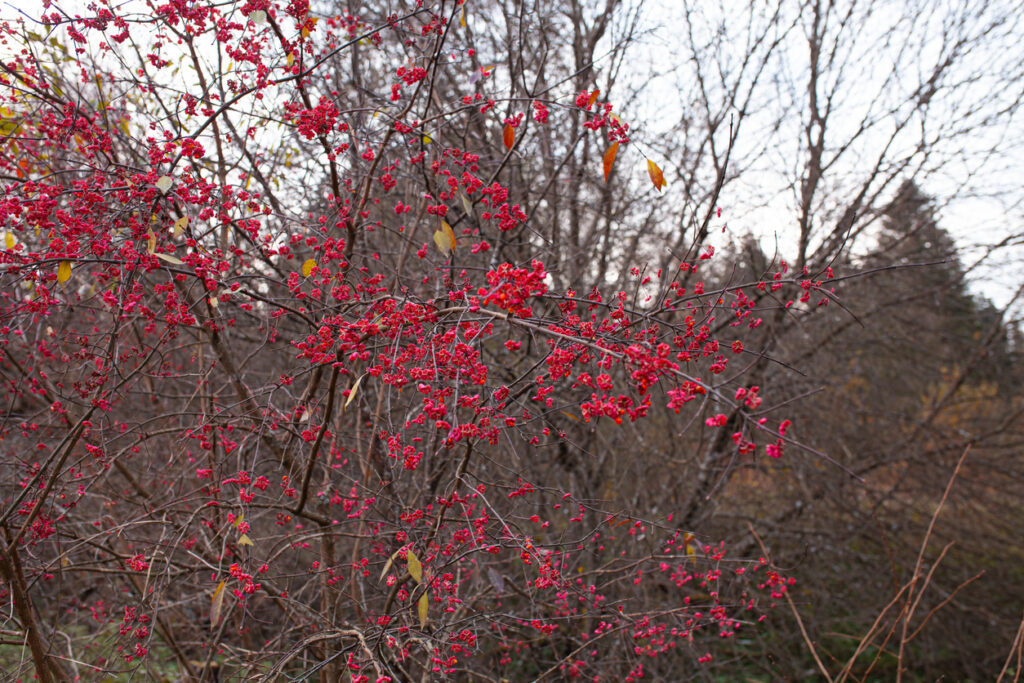
Technically more of a large shrub, the spindle tree can be trained into a neat small tree shape. It’s especially worth it for the autumn interest alone. The leaves go deep scarlet, and the pink and orange seedpods look like something out of a cartoon. Mature height is around 3 metres, so it’s not going to cause any structural worries.
It’s also hardy, unfussy, and tends to do well in most UK soils. Just make sure it’s not too shaded, as it needs decent light to colour up properly. If you want something a bit different that still behaves itself near the house, this one’s a solid choice.
6. Crataegus monogyna ‘Compacta’ (compact hawthorn)
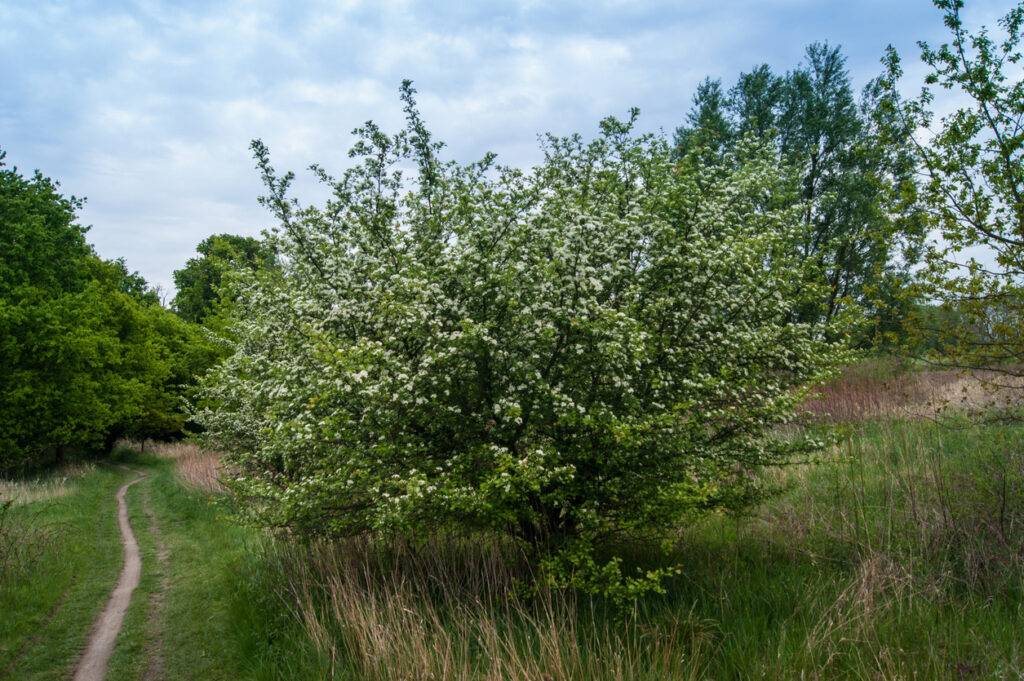
The regular hawthorn might be too sprawling for near-house planting, but the compact version is much friendlier. It brings the same benefits of pretty spring blossom, autumn berries, and thorny branches for privacy, but in a smaller, more manageable package that rarely gets taller than 4 metres.
It’s also great for wildlife and can handle just about anything the UK throws at it: wind, clay soil, drought, even some salt exposure if you’re near the coast. It’s a no-fuss option if you want something tough but attractive that doesn’t cause chaos with roots or height.
7. Cercis canadensis ‘Forest Pansy’
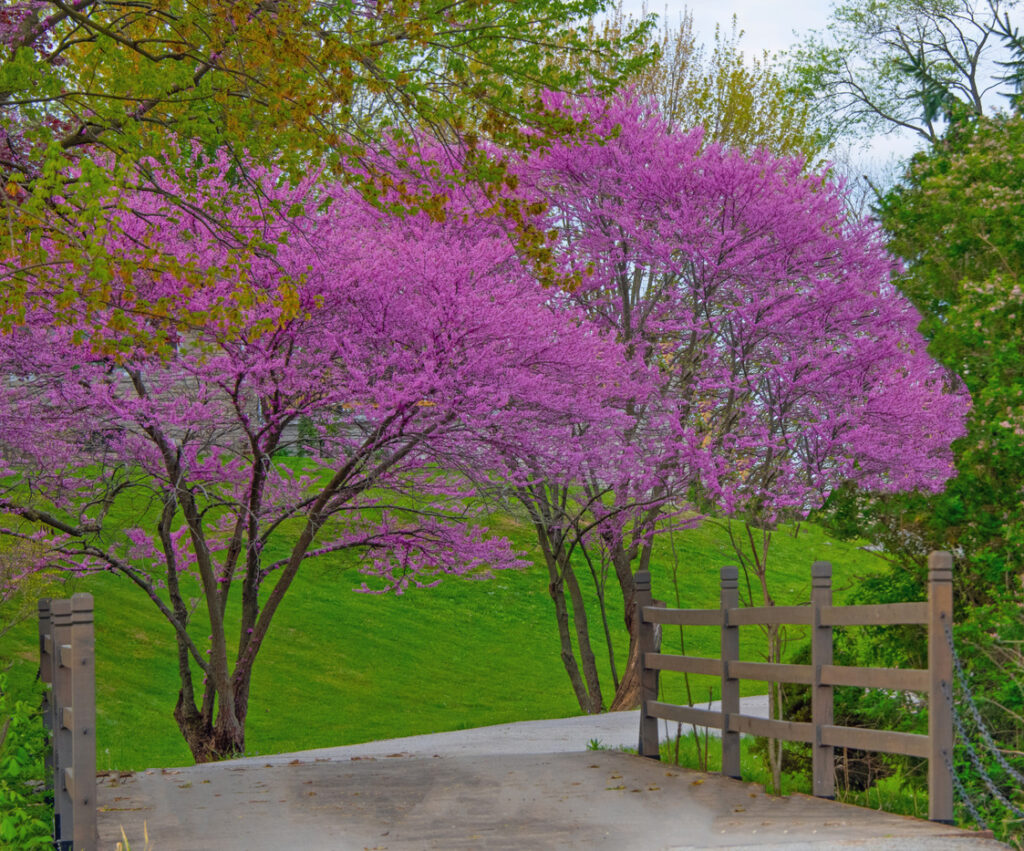
This one’s a little more dramatic, but worth it if you want something with standout colour and shape. ‘Forest Pansy’ has deep purple, heart-shaped leaves and produces soft pink blossoms in spring. It’s not the hardiest of the bunch but can thrive in sheltered, sunny spots in the southern UK.
It grows slowly and usually stays under 5 metres, with a graceful, branching form that looks good year-round. It’s more ornamental than functional, but if you’re after a feature tree that won’t overshadow your house, it’s definitely one to consider.
8. Cornus kousa (flowering dogwood)
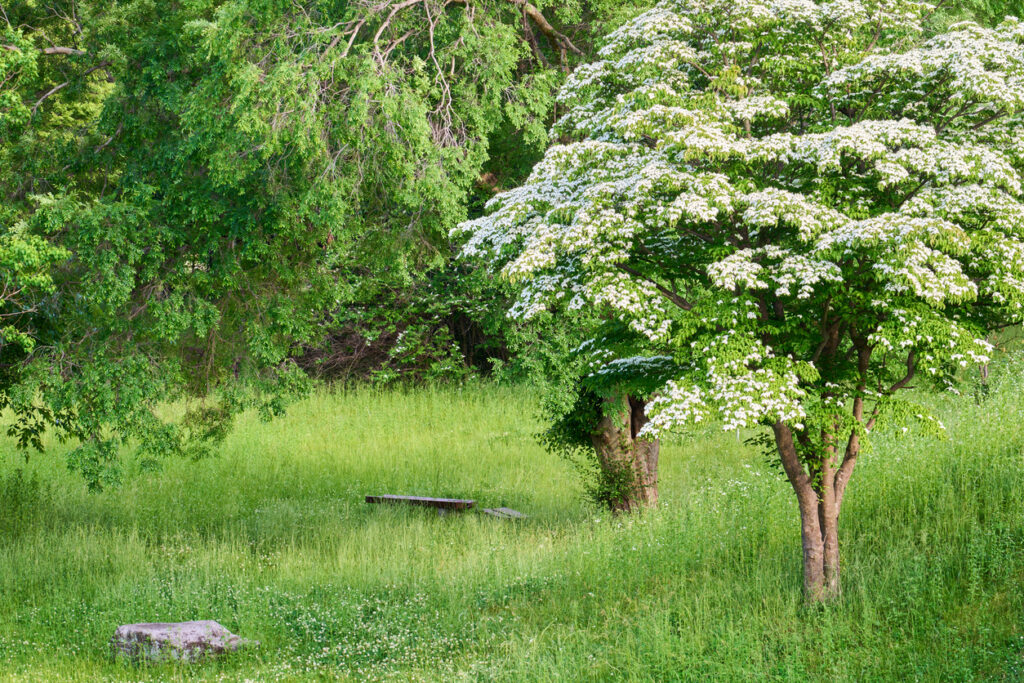
Cornus kousa is one of those trees that quietly wins people over. In late spring to early summer, it puts out creamy-white bracts that look like big, bold flowers, followed by strawberry-like red fruits and rich autumn colour. It has a gentle, tiered structure that gives it a lovely shape even in winter. Height-wise, it usually reaches around 4–6 metres, but it grows slowly and stays well-behaved.
It prefers well-drained, slightly acidic soil and a spot that gets some sun. If you’ve got a front garden or side return that feels a bit flat, Cornus kousa brings seasonal interest without the risk of overpowering the space. It’s elegant without being high-maintenance.
9. Pyrus salicifolia ‘Pendula’ (weeping silver pear)
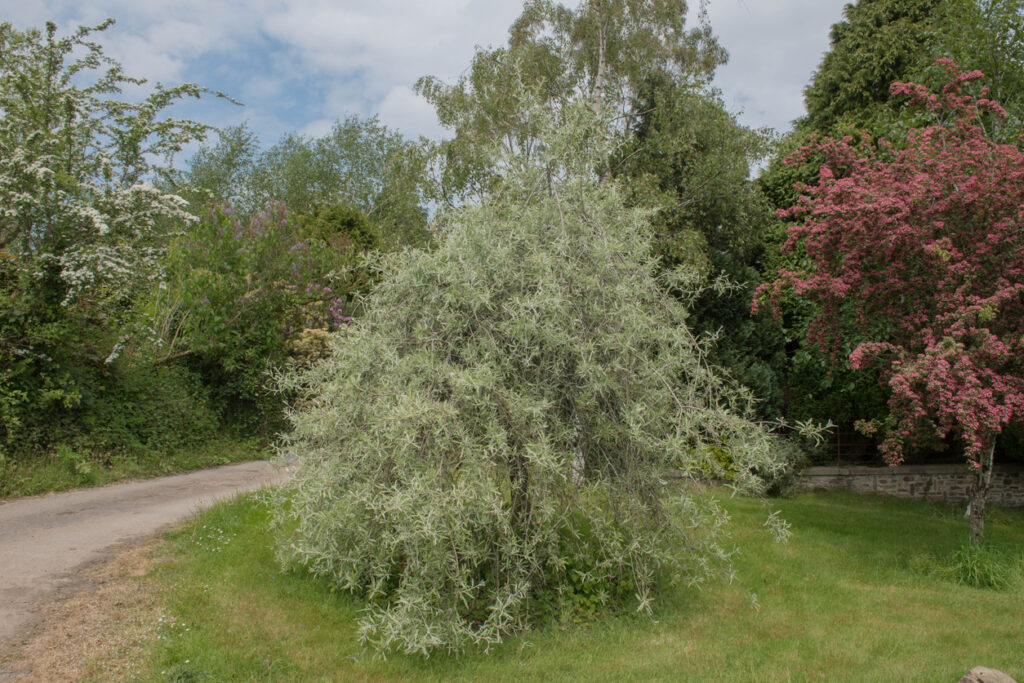
If you’re after something that feels a bit different, the weeping silver pear is one to consider. It’s got narrow, silvery-grey leaves that shimmer in the sun and form a graceful, weeping shape that adds softness to garden corners or near fences. At full maturity, it usually tops out around 5–6 metres but keeps a compact, cascading habit.
In spring, it produces small white blossoms, though the foliage is really the main attraction. It handles poor soils and urban conditions well, and because the roots aren’t particularly aggressive, it’s safe to plant near buildings or patios where space is a bit tighter.