Proboscis monkeys don’t exactly fly under the radar.

With noses so long they look like they might topple over, they’ve become one of nature’s strangest headliners. However, there’s more to those droopy snouts than just comic relief. Behind the odd appearance is a surprisingly clever bit of evolution, and it’s not just about looks. From communication to mating to survival, here’s why those noses actually matter, even if they look like a punchline.
1. The bigger the nose, the better the chances with the ladies.
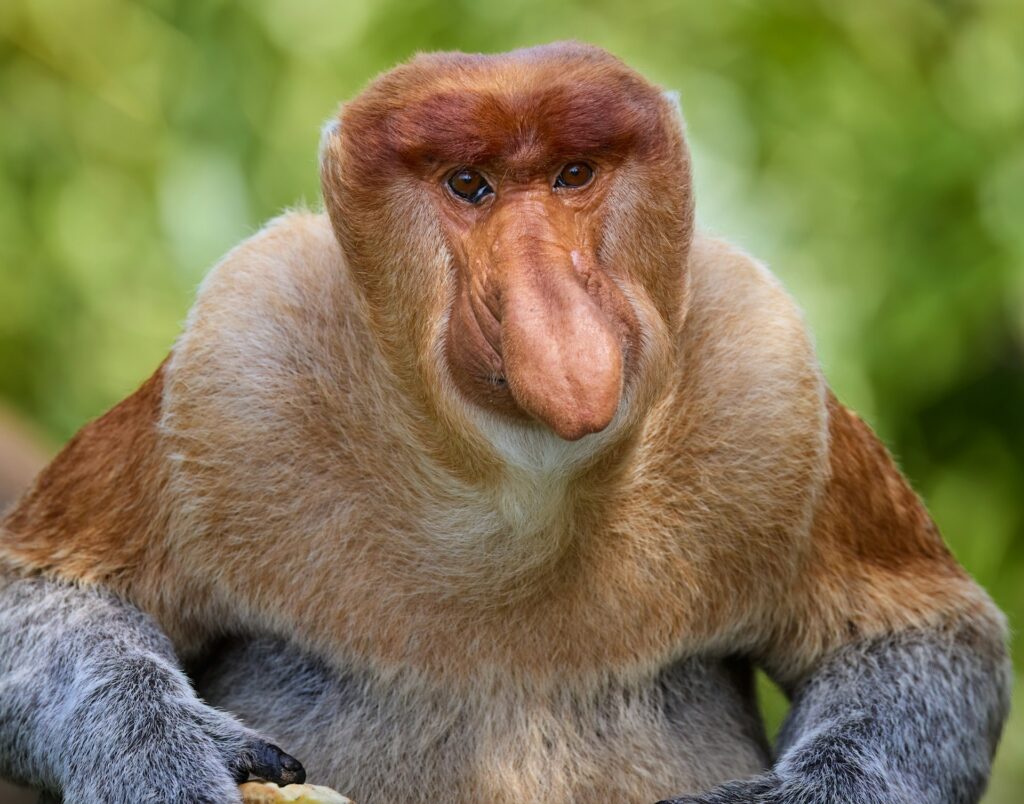
In the world of proboscis monkeys, size really does matter, at least when it comes to noses. Males have those oversized, pendulous noses because the females prefer them. The theory is that a bigger nose signals maturity and genetic quality, making a male more attractive during mating season.
Over time, this preference has exaggerated the trait, with some noses growing up to 10 centimetres long. It’s not just decoration; male monkeys with bigger noses have been found to have more females in their group. That’s natural selection doing its thing in full view.
2. It helps them make louder, deeper calls.
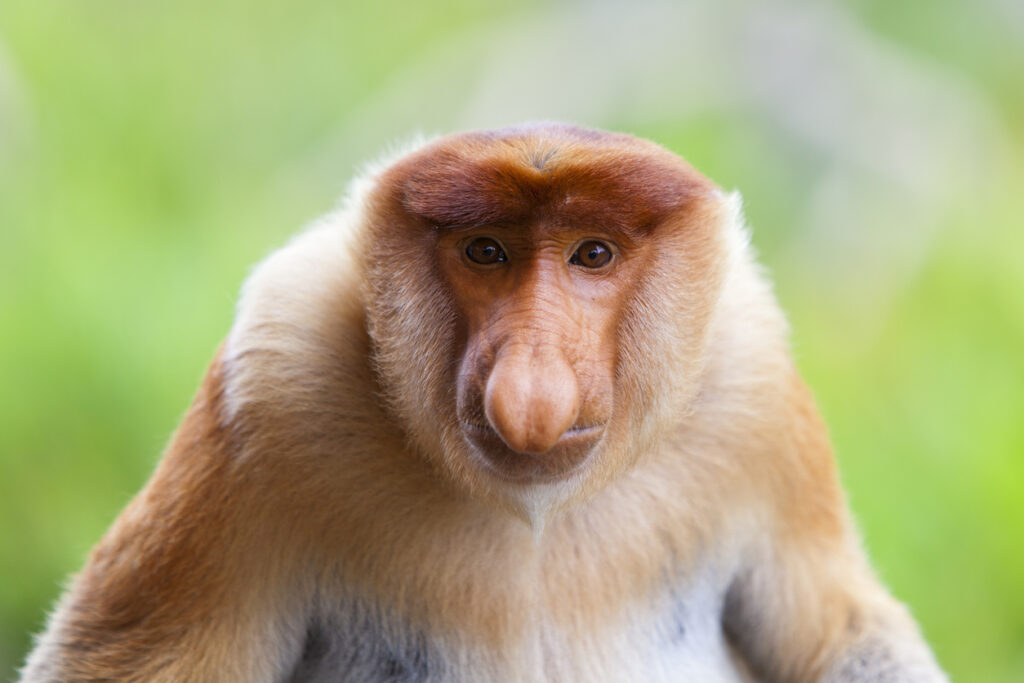
A large nose isn’t just a visual feature. It changes how sound comes out, too. Proboscis monkeys use vocal calls to communicate through thick forest, and that massive nose acts like a built-in amplifier. It deepens the tone and projects the sound farther.
This gives dominant males an edge because they can assert themselves over longer distances, warn off rivals, or keep their group together in dense jungle. The nose literally helps their voice carry more weight, and in monkey social dynamics, that’s a big deal.
3. It’s a status symbol, not just an accident.
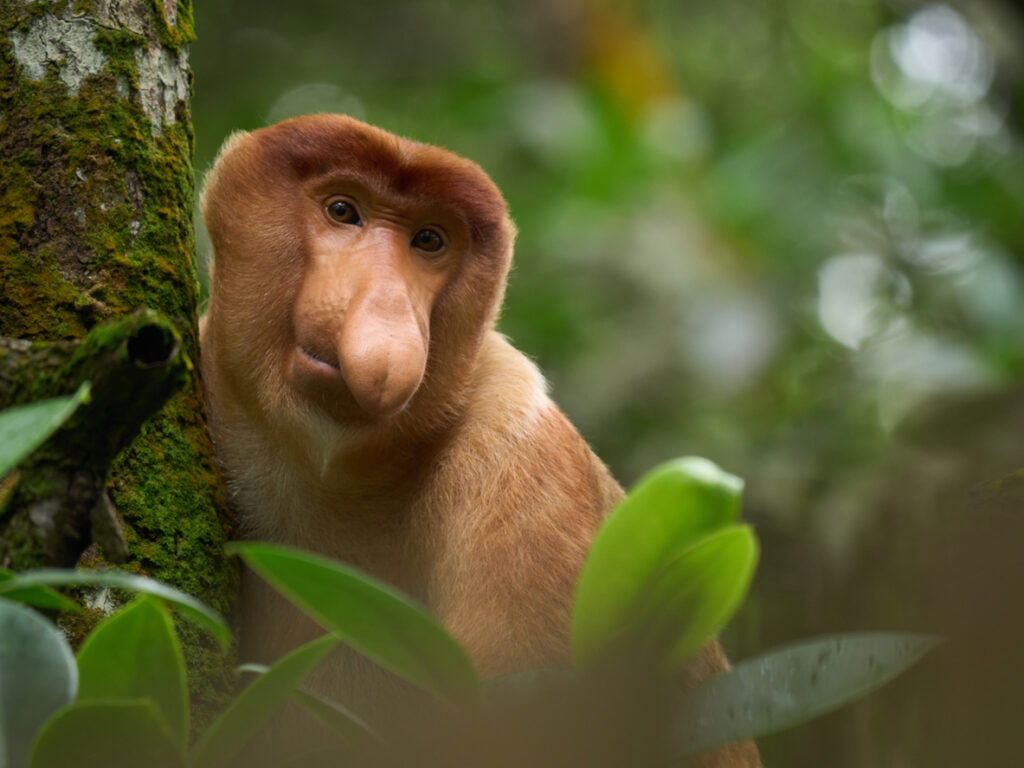
Much like a lion’s mane or a peacock’s tail, the proboscis monkey’s nose seems to have evolved as a sign of strength and social dominance. A bigger, more pronounced nose tells other monkeys that a male is in charge, and not just genetically, but socially too. Other males are less likely to challenge someone who looks and sounds dominant, which means the nose actually helps maintain peace in the group. It’s less about fighting and more about keeping the hierarchy clear from the start.
4. It makes their face more expressive.

Proboscis monkeys are social animals, and facial expressions play a role in how they communicate. The flexible, mobile nose helps exaggerate their facial movements, especially when paired with gestures or sounds. It’s not exactly eyebrow wiggling, but that large nose helps soften or emphasise expressions in subtle ways, like flaring during agitation or drooping when relaxed. In a group setting, this kind of non-verbal communication helps smooth things over without resorting to confrontation.
5. It’s a by-product of a bigger body size.
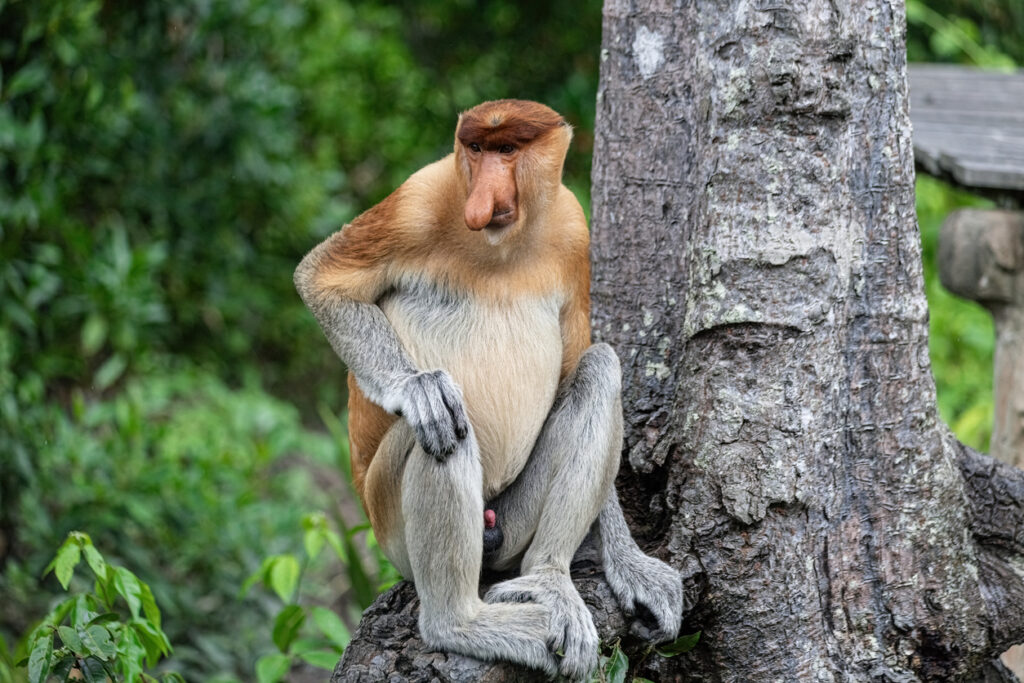
Males are much larger than females in this species, and that size difference affects more than just muscle mass. Some researchers think the big nose is partly a result of general growth. After all, larger animals just develop larger features all around, nose included.
So while the nose might have started as a small visual cue, it became exaggerated as males grew in size overall. It’s one of those features that got carried along for the ride and kept evolving as females continued to prefer the more dramatic look.
6. It’s useful in cooling their breath in humid forests.
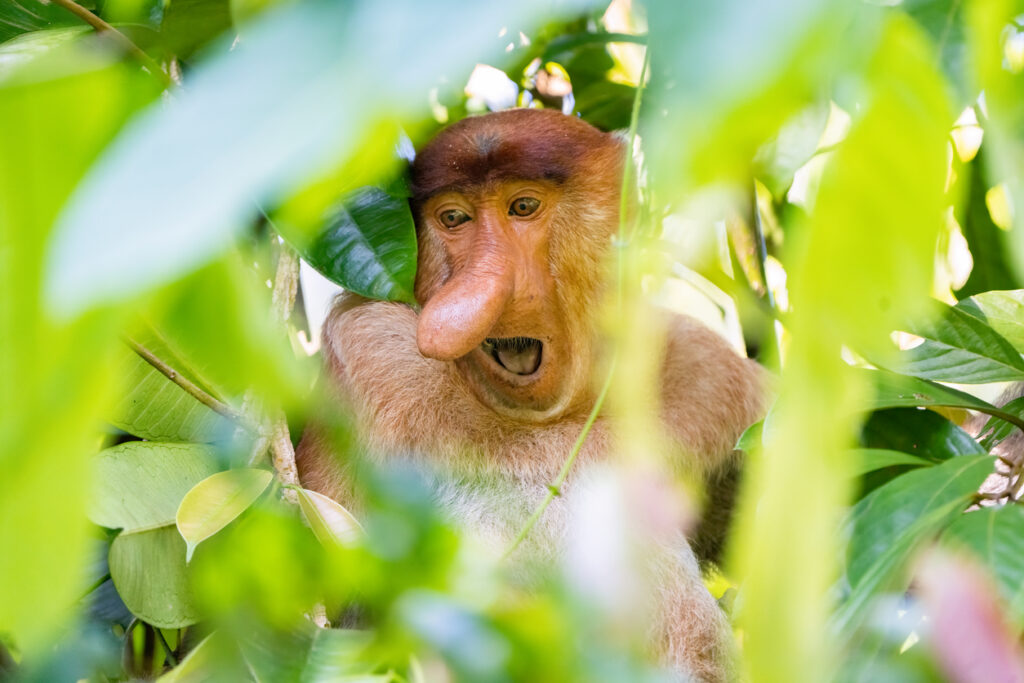
Some biologists think the nose might help humidify or cool the air as it passes through, which could be useful in the hot, sticky jungles of Borneo. The long nasal cavity might act like a natural air filter and moisture regulator.
While this isn’t fully confirmed, it’s not far-fetched. Many animals have physical adaptations that help them deal with their specific environments, and for a monkey living in muggy, tropical heat, a bit of internal climate control would definitely help.
7. It’s part of their unique identity within the monkey world.
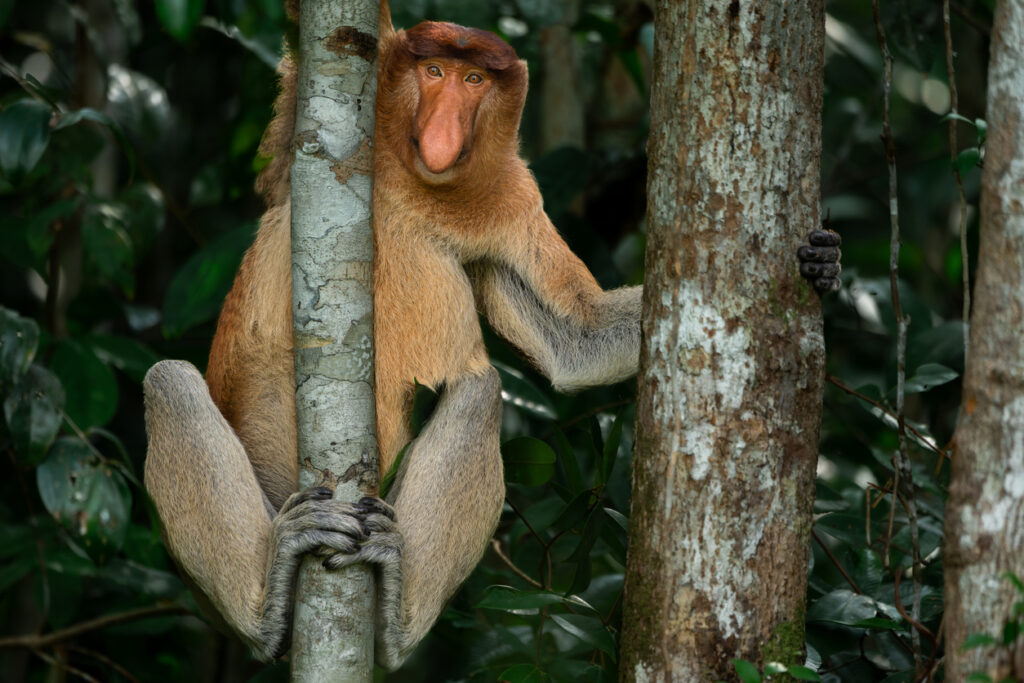
Proboscis monkeys are found only in Borneo, and their huge noses set them apart from just about every other primate. Evolution often drives species in unique directions based on local pressures, and in this case, the result is a nose you’d never mistake for anything else. The nose helps define their place in the ecological landscape, making them both visually and behaviourally distinct. In terms of evolution, it’s a clear marker of their niche, just like the gibbon’s arms or the orangutan’s cheeks.
8. It helps create a resonating chamber for vocal patterns.
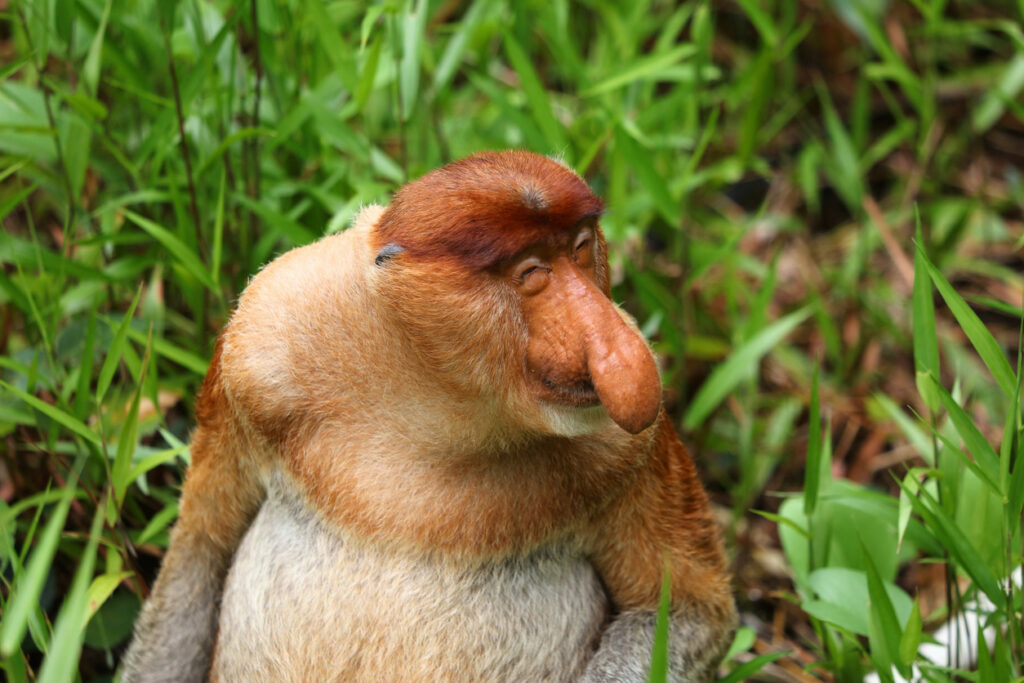
Proboscis monkeys don’t just grunt or squeak; they have complex vocal repertoires. The nose helps form a resonating chamber that changes the acoustics of their calls, making them sound richer and more layered.
This matters when you live in dense forests and need to be heard across trees and rivers. The way the nose shapes these sounds isn’t just random. It gives each individual a recognisable voice, which can help keep groups connected even when they’re spread out.
9. Females prefer the full package, not just the nose.
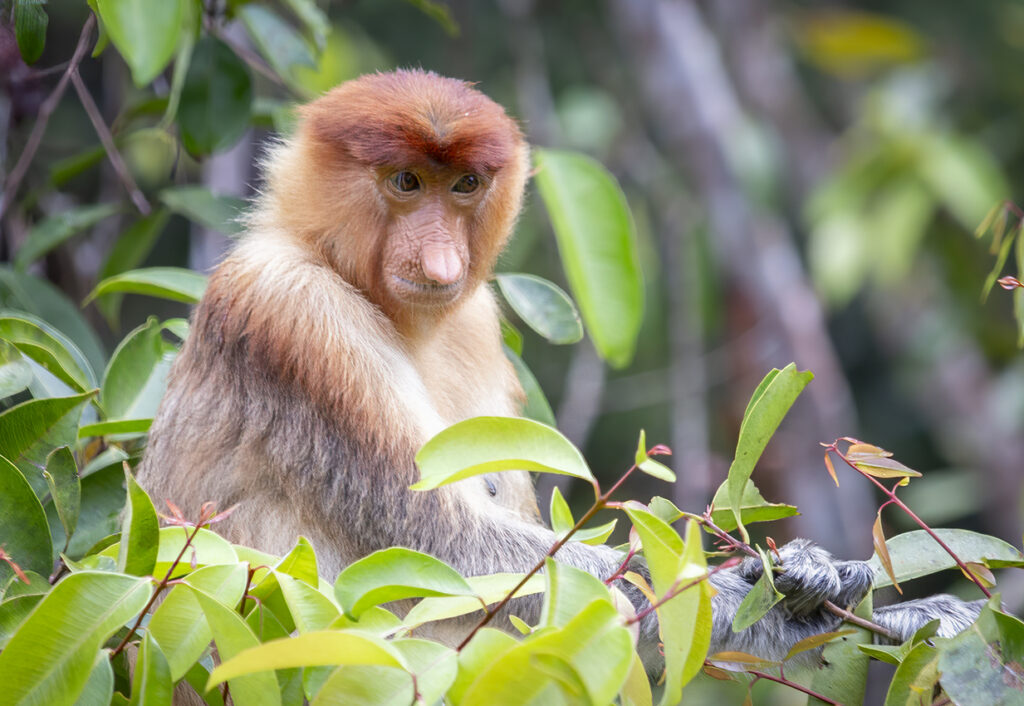
While the nose gets the spotlight, female proboscis monkeys aren’t choosing mates based on noses alone. They go for overall body condition, vocal strength, and how well a male manages his social group. The nose just happens to be a handy shortcut for all of that.
In other words, the nose is like nature’s way of advertising the full deal. If it’s big and healthy-looking, it probably means the monkey behind it is strong, dominant, and in good shape: qualities that make for better survival chances for any offspring.
10. It helps them stay cooler when they swim.
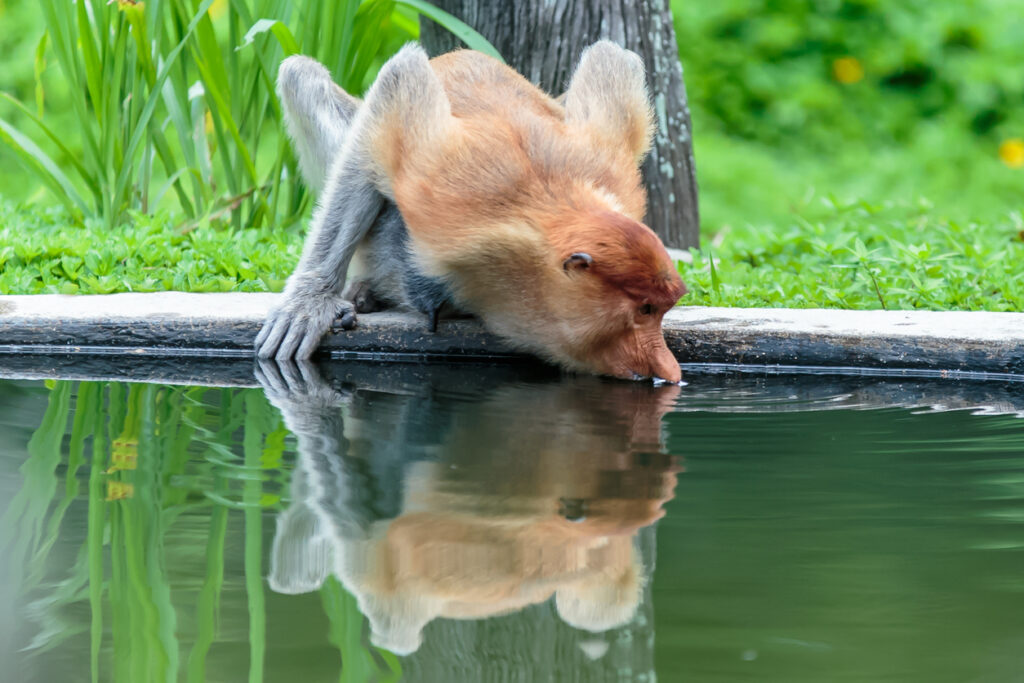
Proboscis monkeys are surprisingly good swimmers, and that big nose might even help a bit by warming or filtering air when they come up for breath. While they use their limbs and tails for paddling, their nasal structure may help regulate air intake in and out of the water.
Again, this is still a working theory, but it makes sense when you look at how often these monkeys rely on rivers for movement and safety. Evolution tends to build multipurpose features, and the nose could easily have picked up a few extra roles along the way.
11. It boosts social bonding through scent.
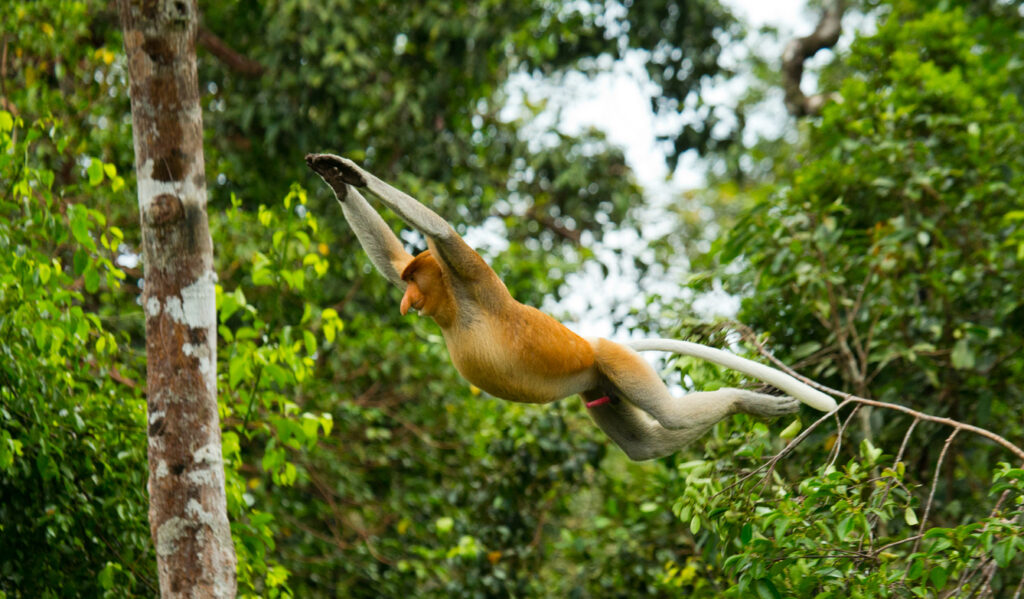
Though sight and sound get most of the attention, scent plays a quiet but important role in monkey society. That long nose could potentially help with detecting individual smells, especially in group settings where grooming and proximity matter.
Proboscis monkeys spend a lot of time close to each other, and having a sensitive nose might help them pick up on mood, health, or familiarity. It’s subtle, but in tight-knit groups, even a slight edge in scent detection can make a difference in social harmony.
12. It’s a reminder that evolution isn’t always tidy.
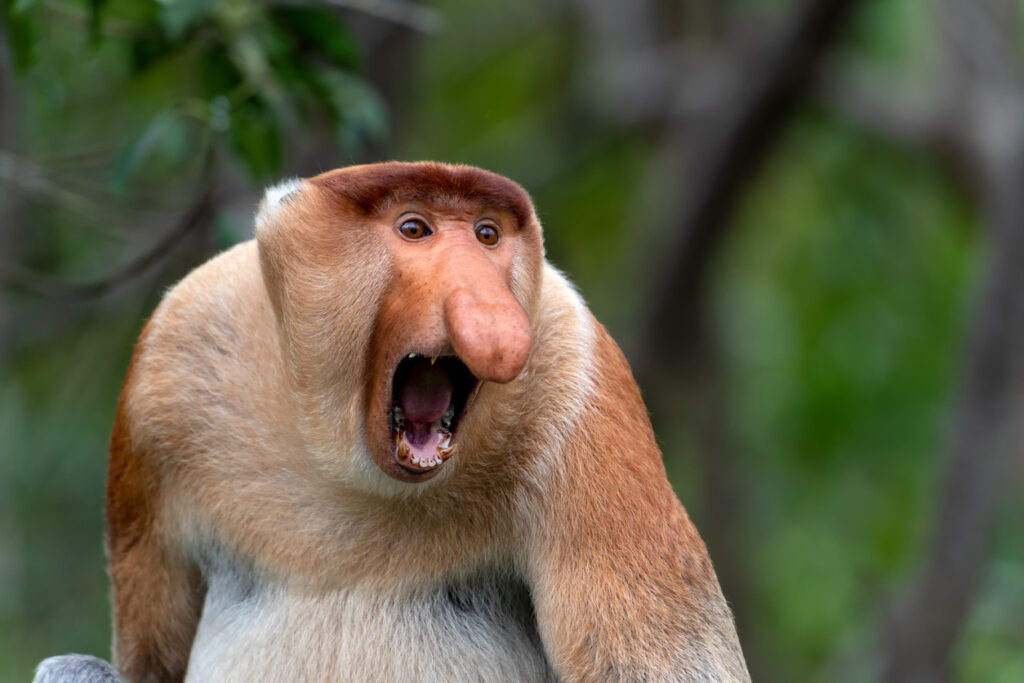
At the end of the day, the proboscis monkey’s nose shows that evolution doesn’t just make things sleek and efficient. Sometimes it exaggerates, goes weird, or builds features that only make sense in a specific context. The nose works, but it also looks ridiculous.
That’s kind of the point. Evolution isn’t about style; it’s about survival, attraction, and whatever helps a species keep going. In the case of the proboscis monkey, an absurdly large nose just happens to be the winning strategy, and somehow, it really works.