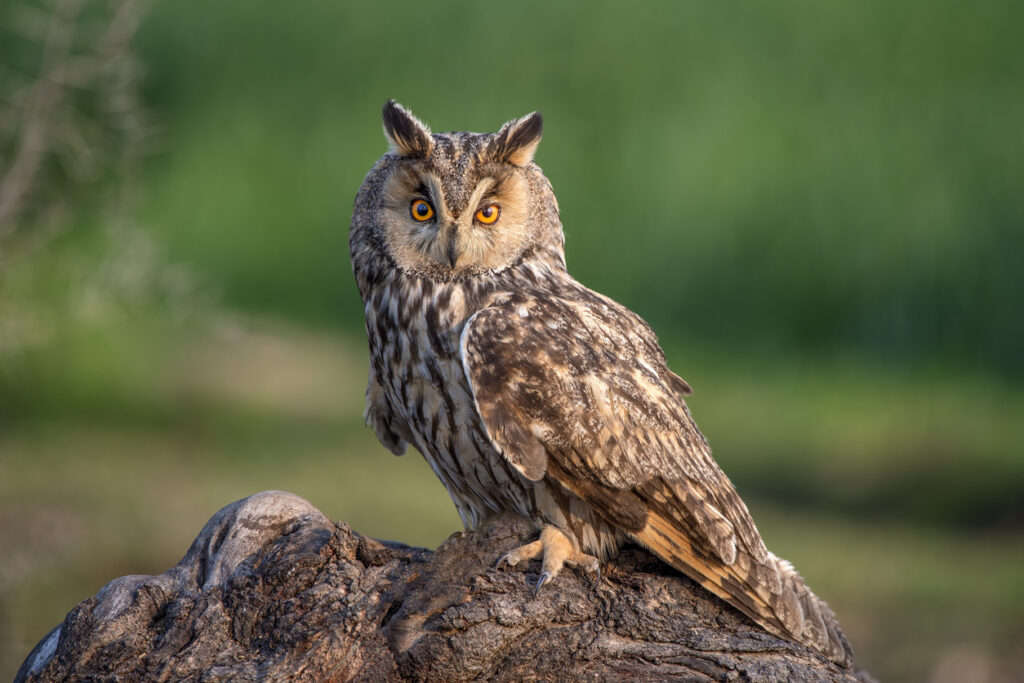
If you’ve ever watched an owl fix its gaze, you’ll know it’s both eerie and impressive. With a twist of the neck, they can turn their heads seemingly all the way around, which is far more than any human ever could. But how and why do they do it? Is it just a creepy party trick, or does it actually serve a purpose? As it turns out, this extraordinary ability is key to how owls hunt, survive, and make up for one major sensory disadvantage. Here’s exactly why they’ve evolved to rotate their heads so far, and how their bodies manage it without snapping something vital.
They can’t move their eyes in their sockets.
Unlike humans, owls can’t move their eyes side to side. Their eyes are fixed in place, like telephoto lenses locked into a skull. So if an owl wants to look in a different direction, the only option is to turn its whole head. This fixed-eye setup gives owls excellent depth perception and the ability to see far, but it also means they need a way to scan their surroundings without actually moving their bodies. That’s where their remarkable neck flexibility comes in.
They can rotate their heads about 270 degrees.
Owls can’t turn their heads in a full circle (despite the spooky stories), but they come impressively close. Most species can rotate their heads around 270 degrees, which is about three-quarters of the way around a full turn. It allows them to look over their shoulders, peer beneath them, or even twist back to track prey moving behind. It’s not just a weird party trick. In fact, it’s a survival tool that lets them stay alert and precise without physically changing position.
Their necks have extra vertebrae.
Owls have 14 neck vertebrae, which is twice as many as humans. That extra bone structure gives them the flexibility they need to twist their necks so far without damaging anything in the process. It’s not just about range, either. Smoothness and control matter too. This extra hardware gives them the ability to make slow, steady movements as well as lightning-fast snaps to spot prey or react to danger.
They’ve evolved special blood vessels for the job.
Turning your head that far sounds like a recipe for cutting off blood flow, but owls have a clever anatomical trick to prevent that. Their arteries are designed with small reservoirs that keep blood flowing to the brain even during extreme rotations. It’s basically a built-in backup system. While humans would risk a stroke trying to copy that kind of neck movement, owls have evolved to do it safely without damaging blood vessels or starving the brain of oxygen.
They use it to scan silently for prey.
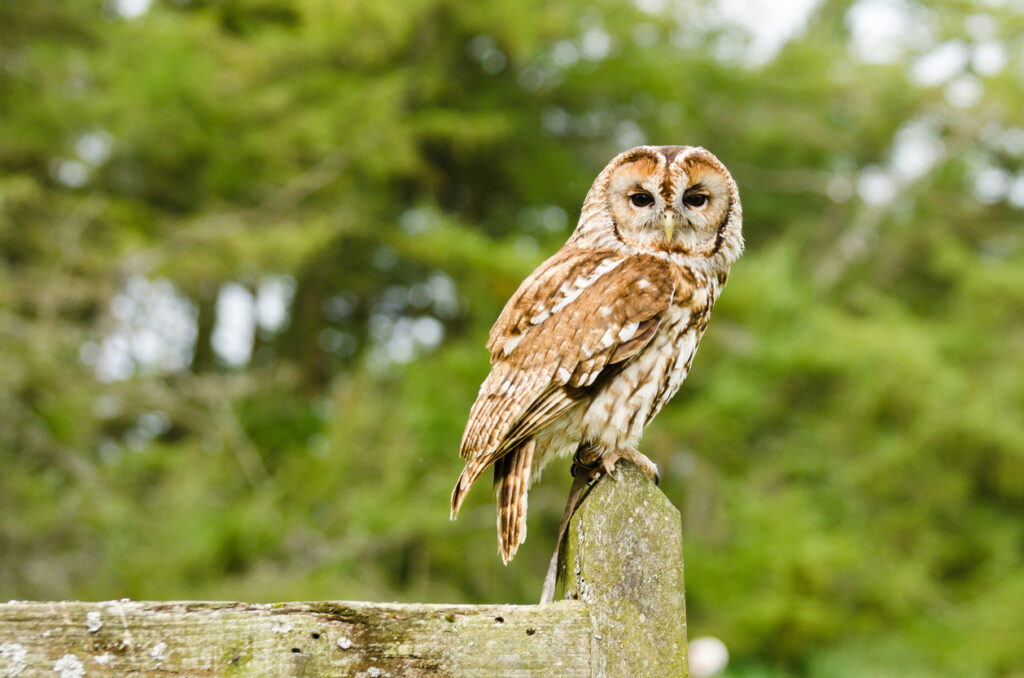
Owls are known for their near-silent flight, and their head-turning ability complements that stealth. Instead of moving their body or rustling branches, they can just swivel their head to scan a wide area without making a sound. This is especially useful at night, when they rely heavily on hearing and vision to catch small movements in the dark. Their whole hunting style is built around staying unnoticed, and the silent swivel is part of that strategy.
It helps them hunt in complete darkness.
At night, every tiny sound matters. Owls rely on their acute hearing to pinpoint where prey is hiding. By turning their heads with such precision, they can triangulate sounds and match what they hear with what they see. They’re not just looking around randomly; they’re using subtle head movements to zero in on the source of a rustle or squeak. The rotation helps them “map” the sound in 3D space, allowing for shockingly accurate strikes in total darkness.
It lets them stay perfectly still while scanning.
Prey animals are wired to notice movement. So instead of shifting their body and giving themselves away, an owl can stay frozen and turn just its head. This makes it harder for anything to spot them before it’s too late. It’s a bit like how a security camera pans across a room. You get full coverage without actually moving the base. For owls, that means a higher success rate when hunting and a better chance of staying hidden themselves.
It gives them a full panoramic view.
Thanks to their rotation range and massive eyes, owls can effectively scan almost an entire circle around them without moving their body. Combine that with their ability to fly silently and perch in high places, and they become formidable sentinels. While they can’t see everything at once, their head movements let them quickly build a mental 360-degree map of their surroundings. It’s a major reason why they’re such efficient nocturnal predators.

It compensates for their flat facial structure.
Unlike many predators that rely on snouts or elongated faces, owls have flat, round faces. This facial structure helps funnel sound to their ears but doesn’t allow for the same visual reach as something like a fox or cat. The ability to rotate their head helps make up for that limitation. Instead of craning forward or leaning around objects, they just rotate with near mechanical precision, keeping their flat face fixed forward while their neck does the work.
Their ear placement plays a role too.
Owls have asymmetrical ears; one is often higher than the other, which helps them detect the vertical direction of sound. When they move their heads, they can more accurately determine where the sound is coming from. Each head tilt or turn isn’t just visual. It’s auditory, too. They’re aligning their ears for maximum detail, much like how we might cup a hand behind one ear to hear better. It’s subtle, but it makes a big difference.
Some species are even more flexible than others.
Not all owls rotate their heads to the same degree. Species like the barn owl or great horned owl have particularly impressive flexibility, thanks in part to their size and specific neck structure. Smaller owls still have strong head-turning abilities, but they might use it slightly differently, like combining quick flicks with short flights to reposition. Each species has adapted its movement to suit its hunting style.
Their head movements are used for communication.
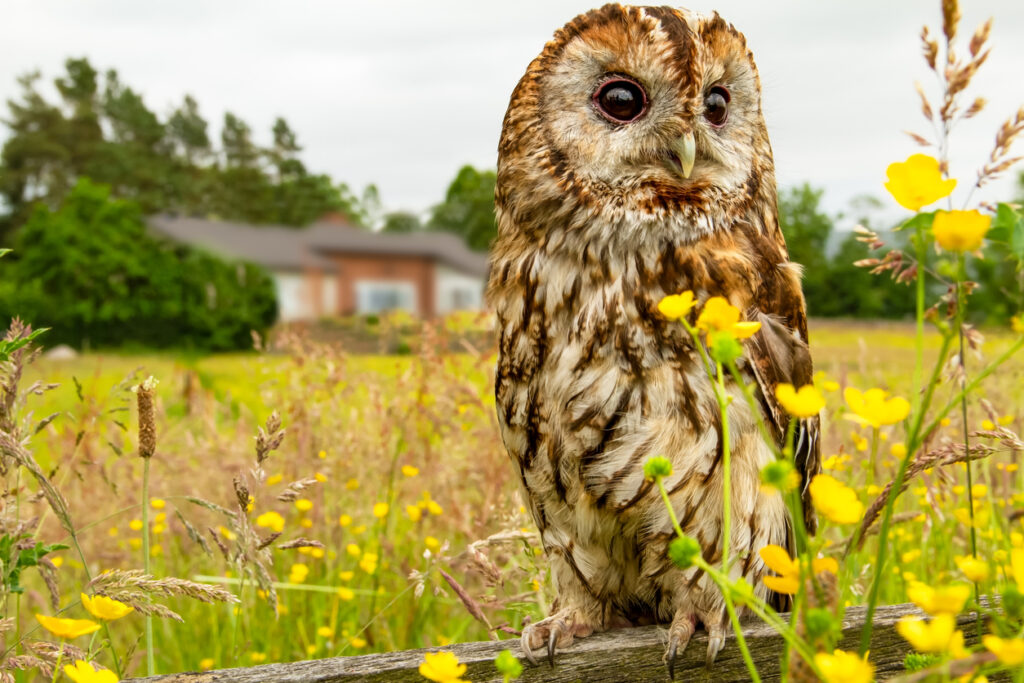
It’s not all about hunting; owls also use head turns and tilts to communicate, especially between parents and chicks. A slow head swivel might signal curiosity, while a sudden snap could warn off rivals. Watching a pair of owls interact can be surprisingly expressive. Their body language relies heavily on neck and head motion, which is just one more reason their signature movement is such a key part of who they are.
It helps them monitor threats from behind.
Even apex predators have to watch their backs sometimes. The ability to turn their head almost completely around means owls can keep tabs on potential threats, even when they’re perched with their back exposed. It’s a survival tool as much as a hunting aid. When you can’t swivel your eyes or spin your body easily, being able to rotate your head gives you a critical advantage in both offence and defence.
It’s part of what makes owls so distinctive.
Owls already look unusual with their forward-facing eyes, flat faces, and feathery tufts, but that uncanny head swivel is what really sets them apart. It’s one of those things that stops people in their tracks, even if they don’t know exactly why. In a way, it’s become symbolic of owls as a whole: mysterious, alert, slightly spooky, and finely tuned for survival. That graceful, silent rotation is more than just cool-looking. It’s the result of millions of years of perfectly adapted evolution.