
Thinking about the edge of the universe is one of those ideas that fascinates pretty much everyone. We can map galaxies, study distant light, and track how fast everything is spreading out, but the question of what sits at the boundary still leaves scientists scratching their heads. The scale is so far beyond anything we deal with in daily life that even the simplest explanation feels massive. That’s why people keep coming back to it; the mystery is part of the appeal.
What makes the whole thing even more intriguing is that no one has a definite answer, only theories built from the best clues we have. Some ideas lean towards physics, some stretch into concepts that are hard to picture, and some challenge how we think about space itself. Each one tries to make sense of something we can’t see directly, and that’s what makes this topic so addictive.
1. The universe may not have an edge at all.
One theory says the universe is shaped in a way that has no real boundary. If you travelled far enough in one direction, you might eventually return to where you started. This would mean the universe curves gently instead of ending suddenly. In this model, there is no wall, border or final point. Space simply keeps looping. It feels strange because we imagine everything must have an ending, but this shape removes the idea of an edge completely.
2. The edge might just be the limit of what we can see.
Some scientists believe the edge isn’t a physical boundary. It’s simply the furthest distance light has reached since the universe began. Anything beyond that distance is invisible because its light hasn’t arrived yet. That would mean there is more universe beyond the visible limit. We’re not seeing the whole picture. We can only see what light has had time to travel to us since the beginning of everything.
3. Space may keep expanding faster than we can observe.
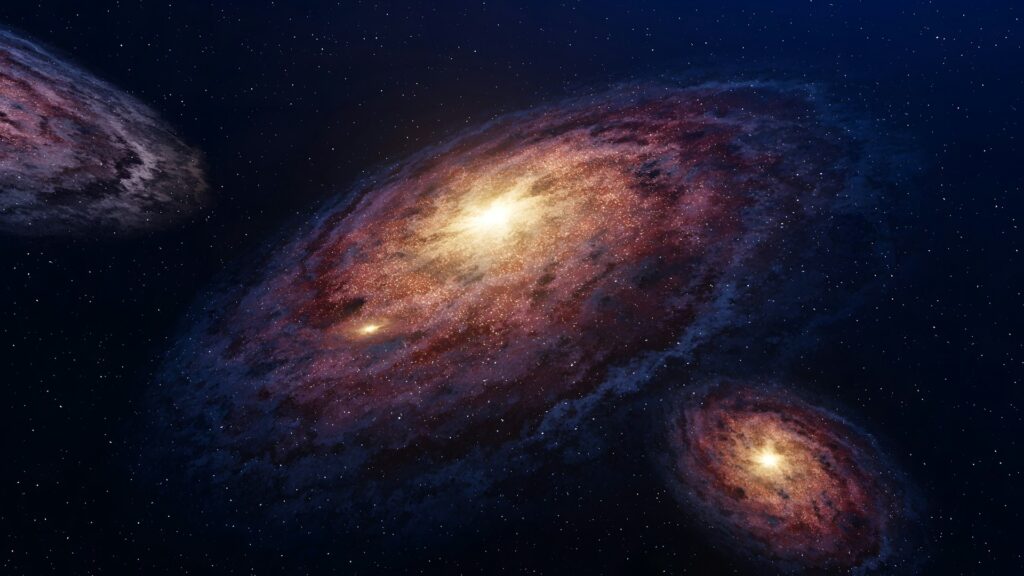
The universe is expanding, and some areas grow so quickly that light from them can never reach us. This creates a moving boundary where distant regions stretch away faster than we can detect them. The edge becomes a horizon that always changes. The expanding limit means new areas appear at the boundary all the time. The universe keeps growing, and the observable edge keeps moving further out of reach.
4. There could be different laws of physics beyond what we see.
Some theories suggest the universe might not behave the same way everywhere. Beyond the observable edge, the forces that control matter could work differently. This idea comes from mathematical models that allow changes in physical rules over extreme distances. If true, areas beyond our view might look nothing like the space around us. Stars, galaxies, or even matter itself could behave in unfamiliar ways that we can’t actually predict yet.
5. The edge might be connected to other universes.
The multiverse idea suggests our universe is one bubble in a much larger space filled with other bubbles. If this is correct, the edge of our universe could touch another universe with different conditions and physical laws. We can’t test this idea, but it explains why our universe seems finely balanced for life. It may be one of many, each forming with its own random qualities.
6. The universe could be flat and infinite.
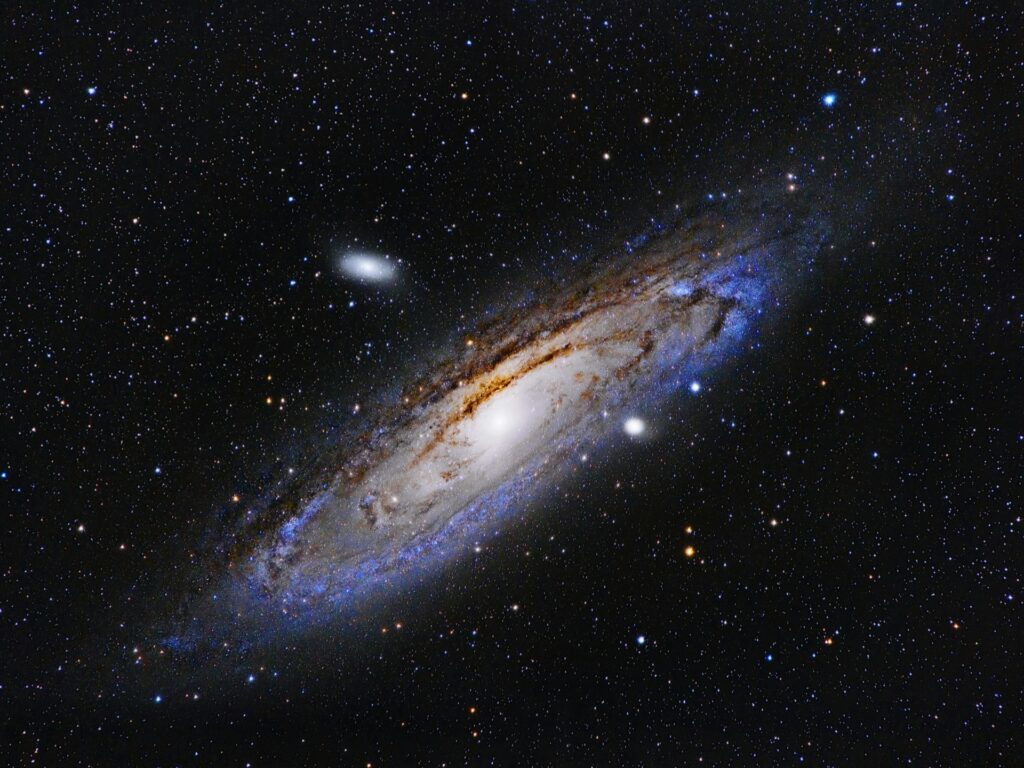
Many scientists believe the universe is flat, meaning it stretches endlessly in all directions. In this theory, there is no edge because space doesn’t curve back on itself. It simply goes on forever without looping. If the universe is truly infinite, then the idea of an edge becomes meaningless. There is no boundary to reach because space continues without stopping.
7. We might be inside a larger structure we can’t detect.
Some theories suggest the universe sits inside a bigger system, similar to how a grain of sand sits inside a beach. The edge we imagine could be a boundary created by our limited tools rather than a real physical wall. In this idea, the true outer structure is unknown. We might be part of something far larger than we can measure or even imagine with current science.
8. Space could fold in on itself at extreme distances.
Certain models say that space may bend or fold in unusual ways the further out you go. This could create a strange boundary where normal movement becomes impossible. Distances may warp so much that travelling forward would curve space around you. The bending of space would make the edge feel like a limit, even though nothing solid exists there. It would be a natural boundary created by the shape of the universe itself.
9. Time itself may behave differently near the edge.
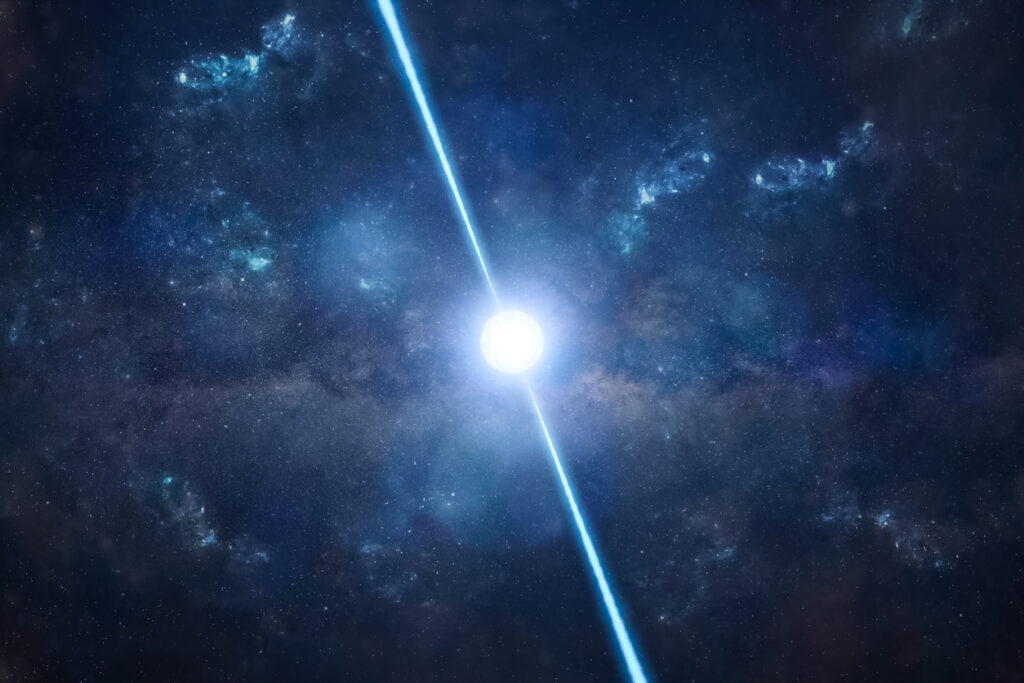
Some theories suggest that time changes the further you move from the centre of mass in the universe. Near the edge, time could flow faster, slower or in unusual patterns. This idea comes from the link between gravity and time in physics. If time behaves differently, the edge might feel strange or unfamiliar. It could create a region where events unfold at a pace we can’t understand.
10. Dark energy might dominate the edge completely.
Dark energy drives the expansion of the universe. Some scientists think the outer regions might be almost entirely controlled by this force. Galaxies would be too far apart to interact, leaving empty space filled mostly with dark energy. If this is true, the edge is a place where almost nothing visible exists. It would be silent, cold and extremely empty compared with the areas closer to us.
11. The edge might show the earliest moments of the universe.
The further we look into space, the further we look into the past. At the boundary, we see light from the earliest stages of the universe. This means the edge acts like a time window, showing the universe as a newborn. We can’t see beyond that point because no earlier light exists. This creates a natural limit, not because space ends, but because history ends there.
12. There could be structures that we can’t detect with normal light.
Some scientists think the edge may hold objects made from dark matter or other unknown materials. These structures wouldn’t shine or reflect light, so our telescopes can’t pick them up. They might fill space without us knowing. This idea explains why galaxies behave strangely at large scales. Hidden structures might be guiding the movement of matter even though we can’t see them.
13. The edge may forever remain a mystery.
Even with advanced telescopes and new theories, the edge of the universe might always sit beyond our reach. It keeps moving, hidden by distance and speed. Our tools may never be strong enough to reach it, and the mystery is part of what makes space so fascinating. The universe holds answers we may never fully understand, and the edge is one of the biggest questions of all.