You’ve probably seen enough nature documentaries to know that octopuses are basically the closest thing we have to aliens on Earth, but the sheer variety across the species is still a bit of a mind-bender.
We’re talking about creatures that can change their skin texture to mimic a jagged rock, squeeze through a hole the size of a 50p coin, and even outsmart humans in laboratory tests. From the giant ones lurking in the freezing depths of the Pacific to the tiny, neon-ringed hunters that could end a person with a single bite, they’ve evolved some of the most bizarre survival tactics in the animal kingdom. It’s not just having eight arms and three hearts that makes them so spectacular; it’s the level of intelligence and adaptability that makes most other sea life look like they’re running on basic software.
The mimic octopus
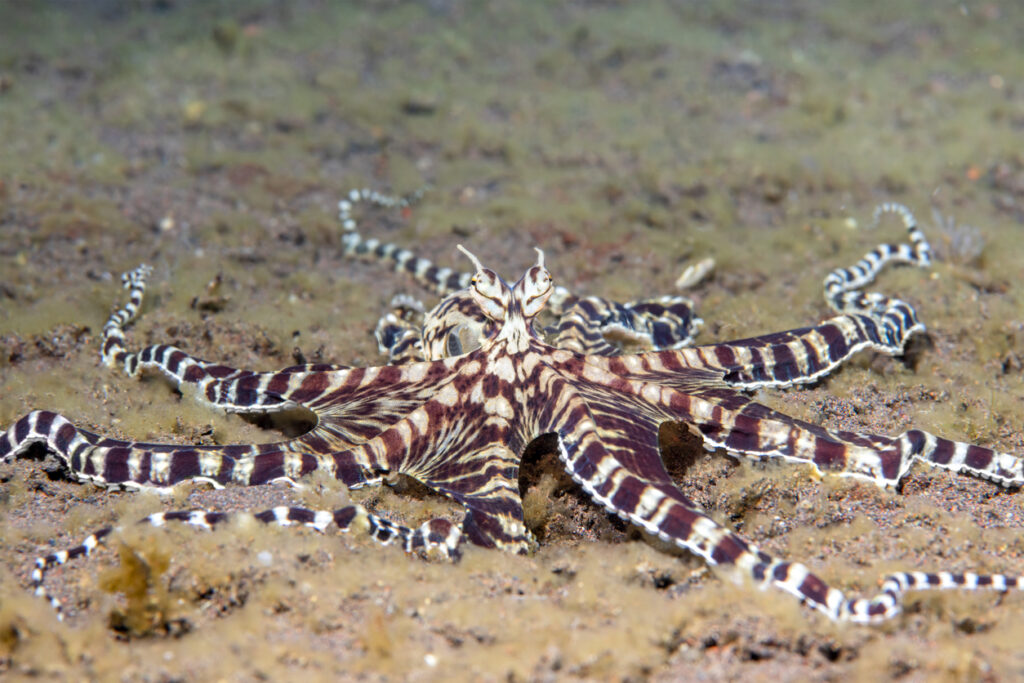
Found in the tropical waters of the Indo-Pacific, the mimic octopus does something no other known species can do with quite the same range or accuracy. It deliberately impersonates other animals, not just in colour and texture but in shape and movement, to avoid predators or sneak up on prey.
It’s been observed copying lionfish, flatfish, and sea snakes, adjusting its performance depending on the threat it’s facing. The fact that it seems to choose which animal to impersonate based on context suggests a level of decision-making that researchers are still trying to fully understand. It was only formally identified in 1998, which makes you wonder what else is out there going undiscovered.
The blue-ringed octopus
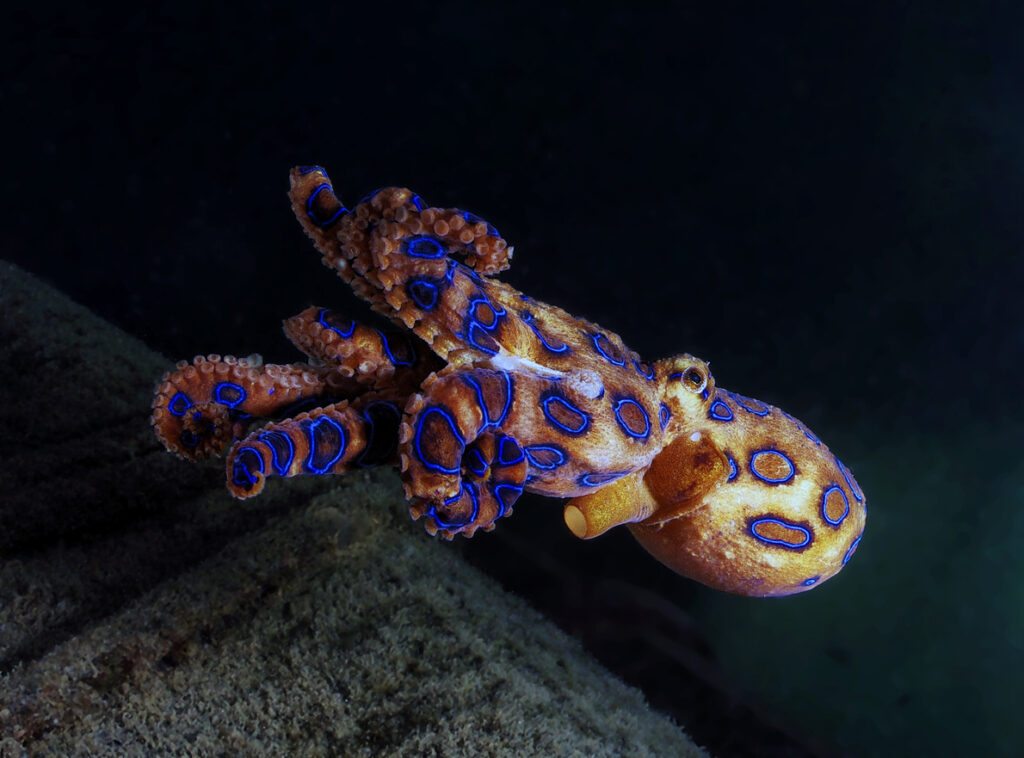
Small enough to sit in the palm of your hand, and genuinely one of the most venomous animals on earth. The blue-ringed octopus carries enough tetrodotoxin to kill a human, and there’s no antivenom. Most of the time, it looks fairly unremarkable, a mottled brownish creature moving quietly around shallow rock pools across the Pacific and Indian Oceans.
That being said, when it feels threatened, those vivid iridescent blue rings appear almost instantly as a warning. The bite itself is often painless, which makes it particularly dangerous because people don’t always realise what’s happened until the paralysis begins. It’s a reminder that extraordinary things sometimes come in very small, understated packages.
The dumbo octopus
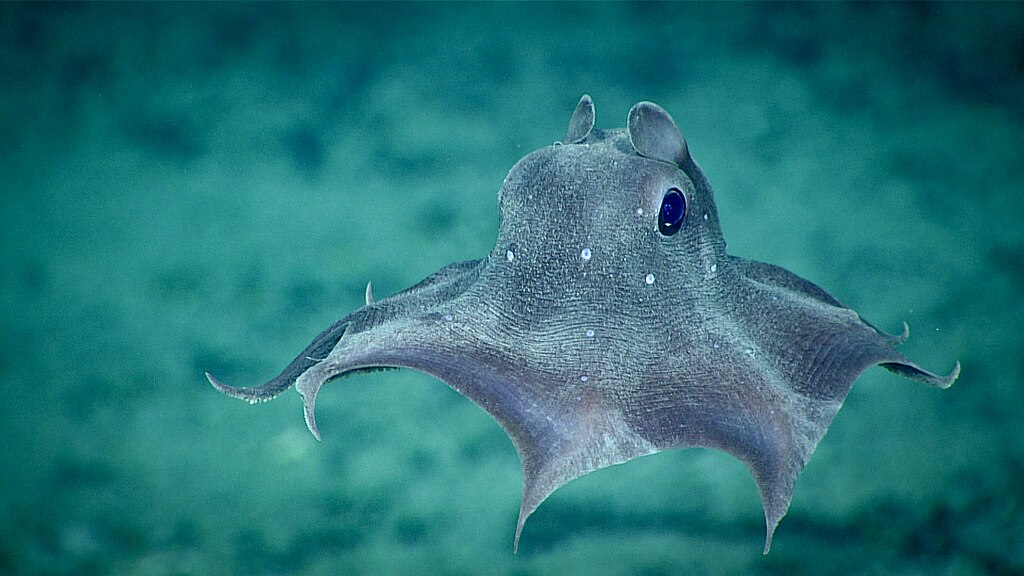
Named after the elephant with oversized ears, the dumbo octopus uses two ear-like fins on either side of its mantle to move through the water, which gives it a genuinely endearing, almost cartoon-like appearance. It lives deeper than almost any other octopus species, some found at depths of over 7,000 metres, which puts it among the deepest-dwelling octopuses ever recorded.
Because it lives in such extreme environments, relatively little is known about its behaviour or lifespan. What has been observed suggests it swallows prey whole rather than using the drilling and venom approach common in shallower-water species, which makes sense given how much energy deep-sea life needs to conserve.
The glass octopus
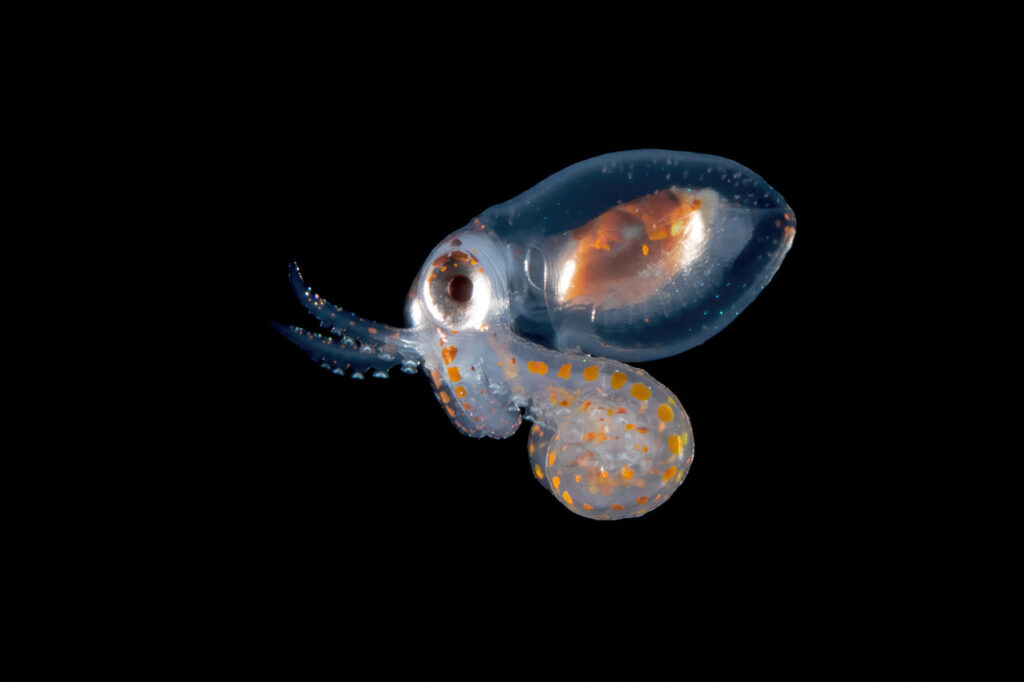
Almost entirely transparent, the glass octopus is one of the stranger-looking creatures in the ocean. Its internal organs are visible through its body, and aside from its opaque eyes and digestive tract, it’s remarkably see-through. It lives in the open ocean at mid-water depths, and because of where it lives, it’s rarely observed and even more rarely filmed in any detail. A
research expedition in 2021 captured some of the clearest footage ever recorded of one, and the images drew a lot of attention simply because it looks so extraordinary. Scientists believe the transparency is an adaptation to avoid predators in open water, where there’s nowhere to hide.
The coconut octopus
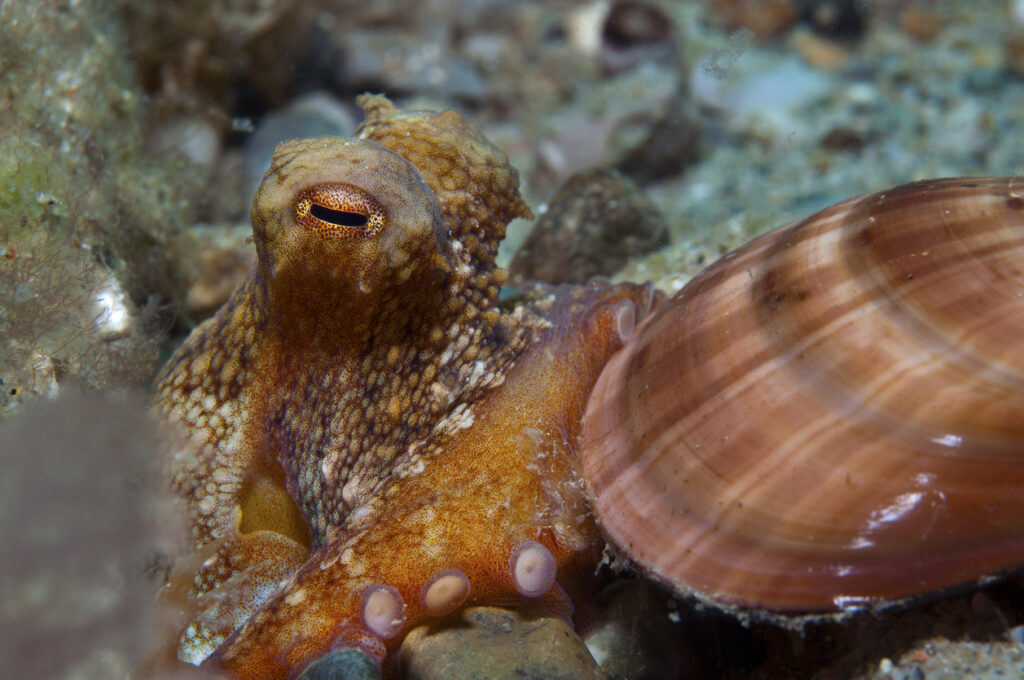
What makes the coconut octopus notable isn’t just its appearance but its behaviour. It collects discarded coconut shells and large bivalve shells from the sea floor, carries them around, and assembles them into a portable shelter when it needs protection. This is considered tool use, which is relatively rare in the animal kingdom and genuinely uncommon in invertebrates.
It’s been filmed walking across the sea floor on two arms while holding a shell in the others, moving with a slightly awkward but deliberate gait. The fact that it plans ahead enough to carry something it’s not immediately using suggests a kind of forward-thinking behaviour that researchers find particularly interesting.
The star-sucker pygmy octopus
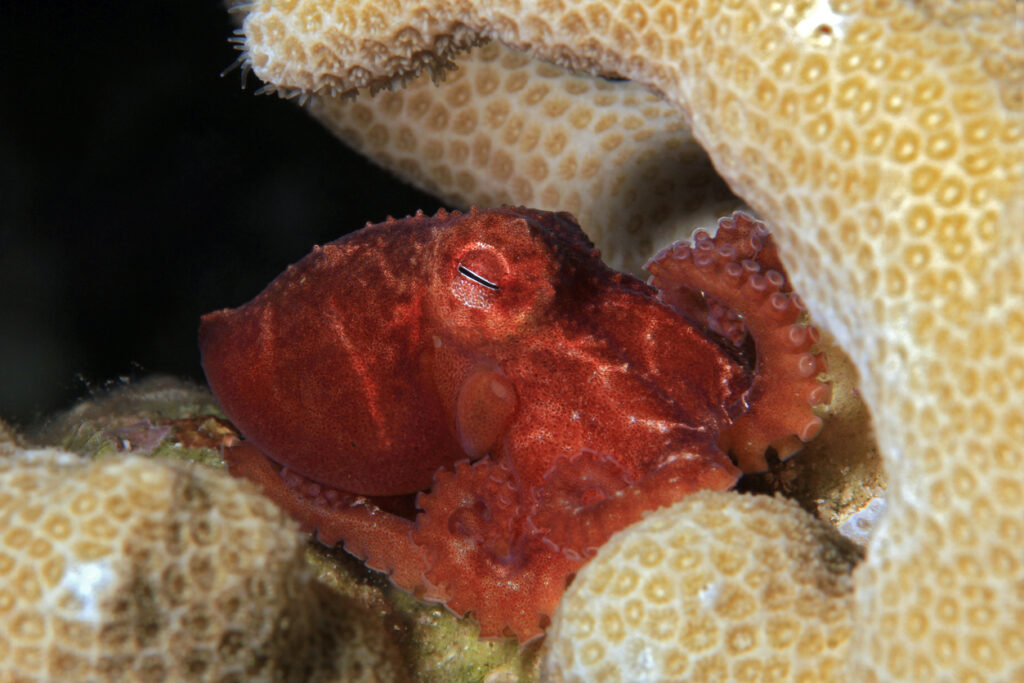
One of the smallest octopus species in the world, the star-sucker pygmy octopus grows to around 2.5 centimetres and weighs less than a gram. It lives in the Western Pacific and is most active at night, spending daylight hours hidden in crevices or under debris on the sea floor.
Despite its tiny size, it’s a capable hunter, feeding on small crustaceans and other invertebrates. Most people have never heard of it, which is partly because it’s so small and partly because small species tend to attract less research attention than their more dramatic relatives. But it’s a good example of how remarkable things in the natural world don’t always announce themselves loudly.
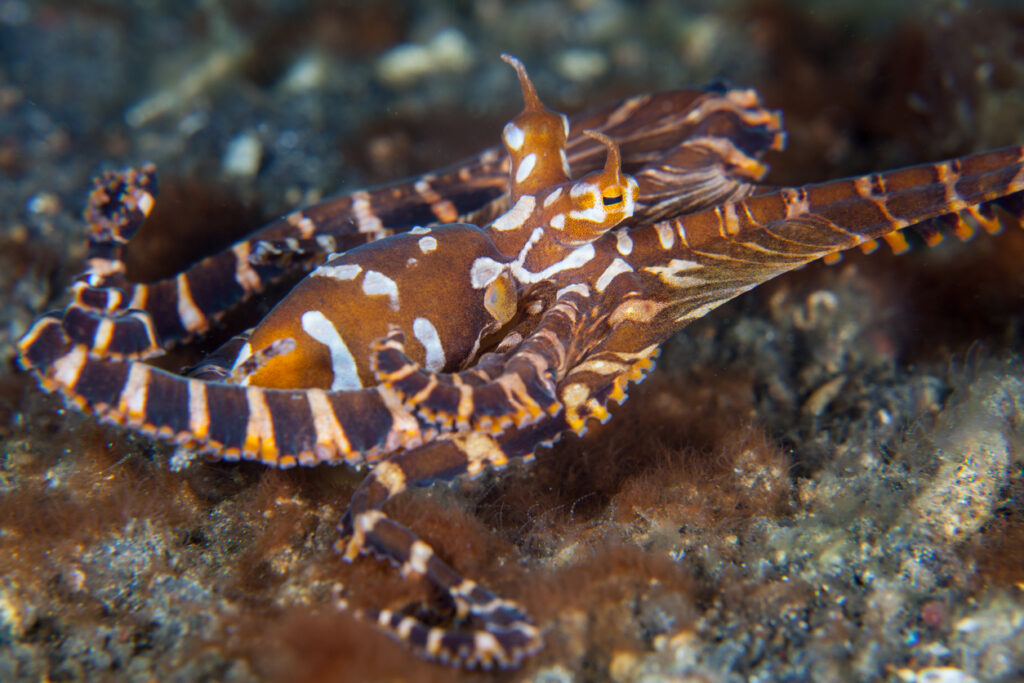
The wunderpus octopus
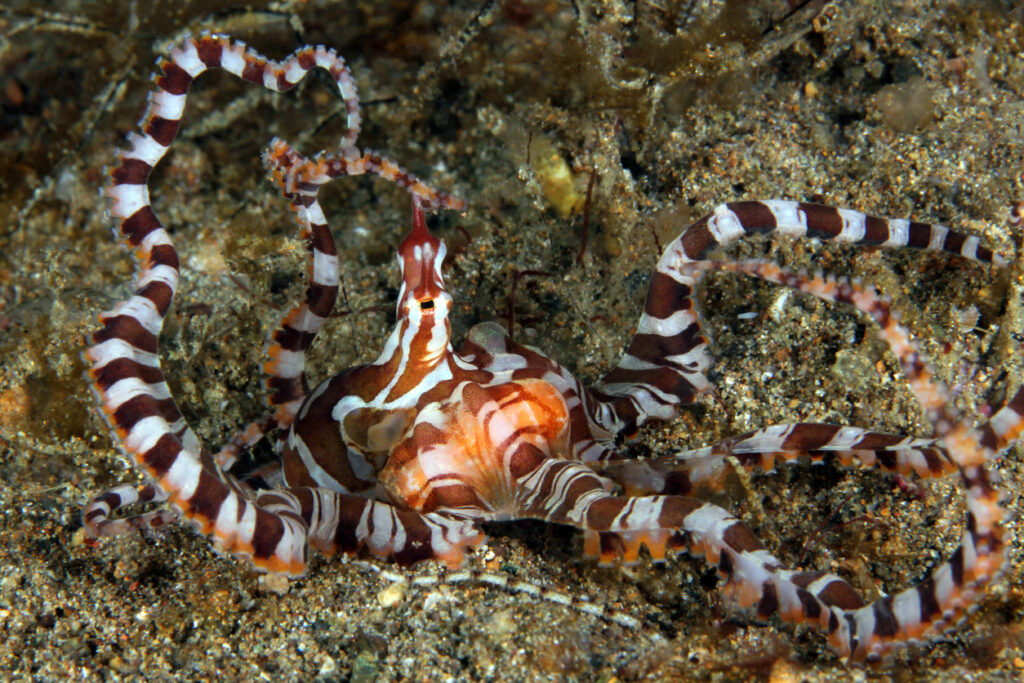
The wunderpus has a striking white-and-brown striped pattern that makes it one of the more visually distinctive octopus species. It’s found in sandy shallow-water habitats across the Indo-Pacific and, unusually for octopuses, seems to have a stable individual pattern, meaning you can potentially identify individual animals by their markings in the way you might identify a zebra.
This is uncommon in octopuses, which generally change their appearance so frequently and dramatically that individual identification is difficult. It’s also been observed doing a threat display involving spreading its arms flat against the substrate and pulsing its pattern, which looks dramatic enough that it’s been mistaken for the mimic octopus by divers who weren’t looking closely.
The larger Pacific striped octopus
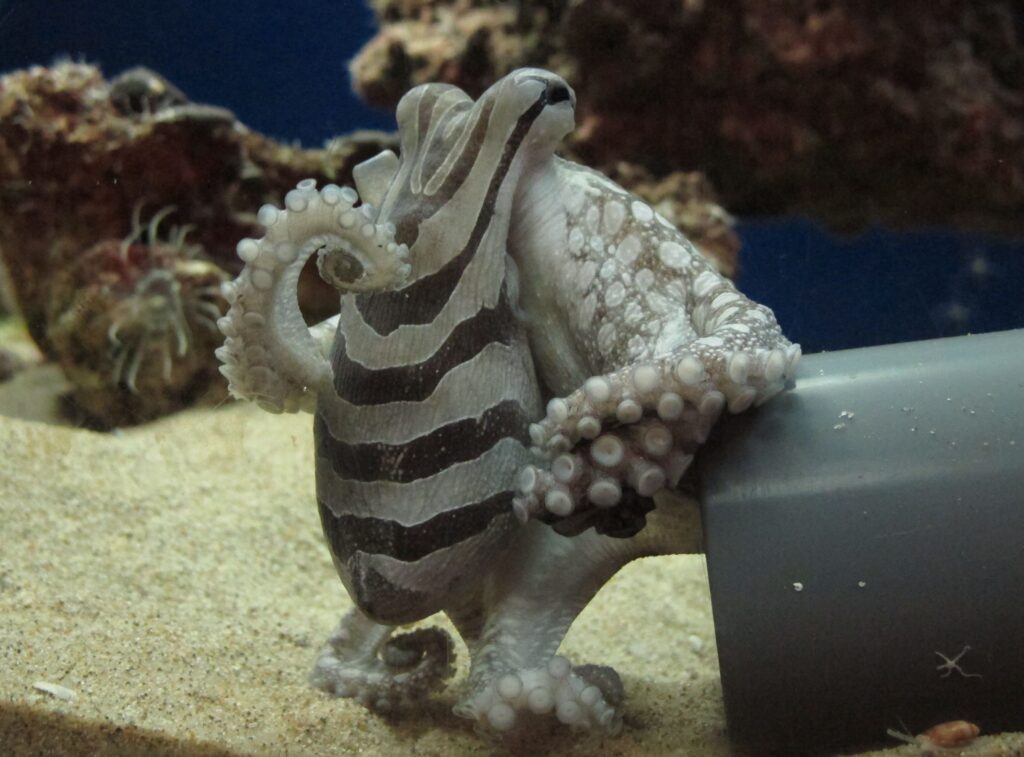
Most octopus species are solitary and tend to eat their prey by immobilising or overpowering it. The larger Pacific striped octopus does things differently on both counts. It’s been observed living in groups of up to 40 individuals, which is highly unusual for a species typically considered to be a lone hunter.
It also has a peculiar hunting method involving tapping prey to startle it before grabbing it, rather than the direct pounce approach most octopuses use. Its mating behaviour is also unusual in that pairs appear to mate face to face and beak to beak, which no other octopus species has been reliably documented doing. It consistently surprises researchers and challenges assumptions about what octopus behaviour is supposed to look like.
The Atlantic pygmy octopus
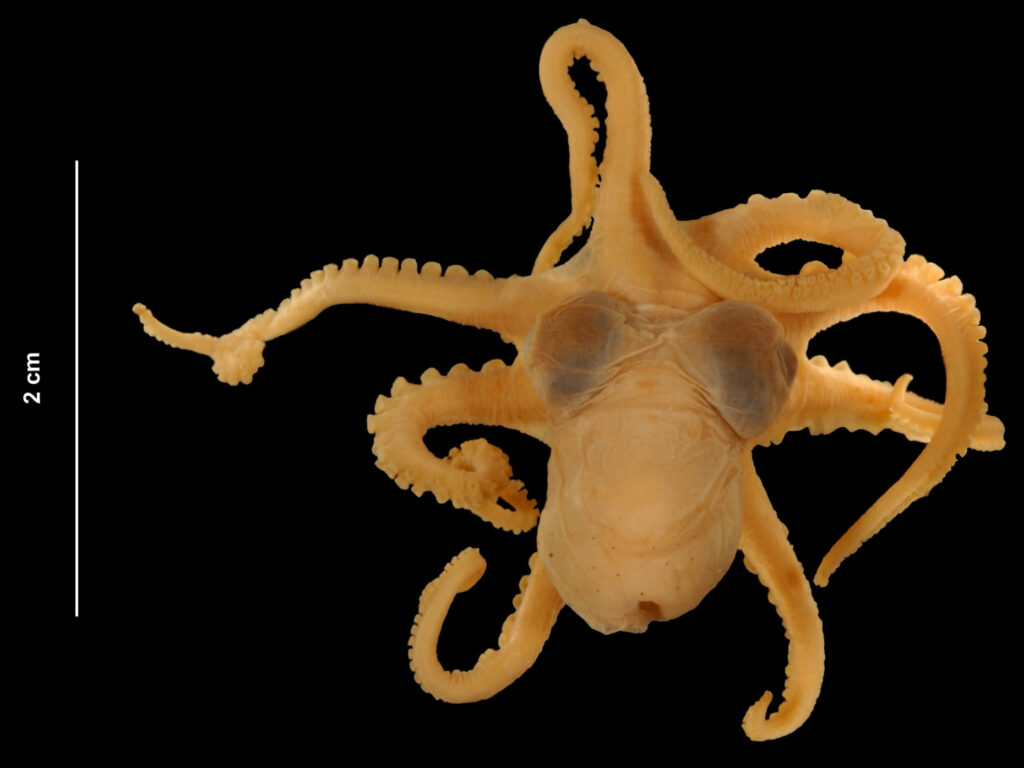
Found along the coastlines of the western Atlantic, the Atlantic pygmy octopus is small, adaptable, and surprisingly bold for its size. It’s been studied in captivity more than many other species and has shown a strong capacity for learning, including solving puzzles to access food and remembering solutions over time.
It’s also been observed using empty shells and other debris not just for shelter, but in ways that suggest active problem-solving rather than instinctive behaviour. For something the size of a tennis ball, its cognitive performance in controlled tests is impressive, and it’s become a fairly popular subject for researchers interested in cephalopod intelligence.
The seven-arm octopus
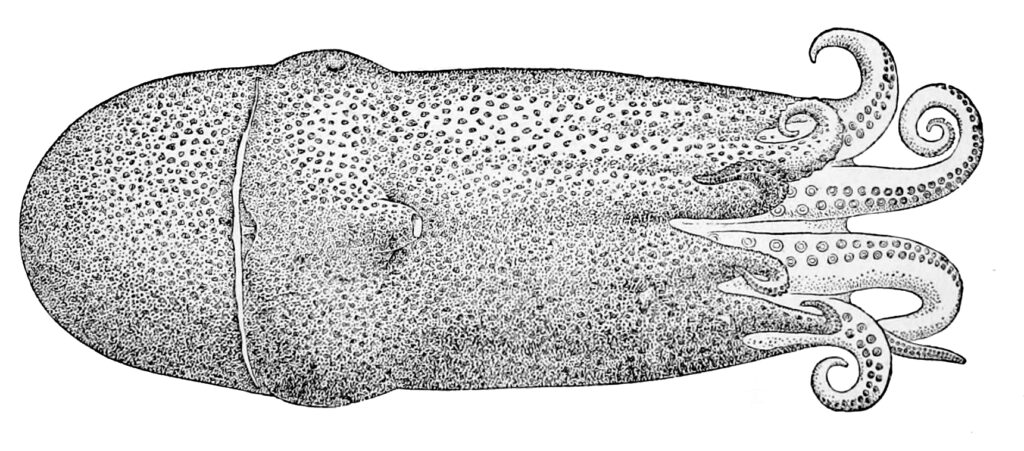
Despite the name, the seven-arm octopus actually has eight arms like every other octopus. In males, one arm is coiled up and tucked away near the eye, used for reproduction, and because it’s so rarely visible it gave early observers the impression that the animal only had seven. It’s one of the largest octopus species in the world, with some individuals reaching a mantle length of around 60 centimetres and a total arm span considerably larger than that.
It lives in the open ocean rather than on the sea floor, which is unusual for octopuses, and it feeds on jellyfish and other soft-bodied prey. Given its size and habitat, relatively little is known about how it actually lives, and new observations still occasionally turn up details that shift what researchers thought they understood about it.