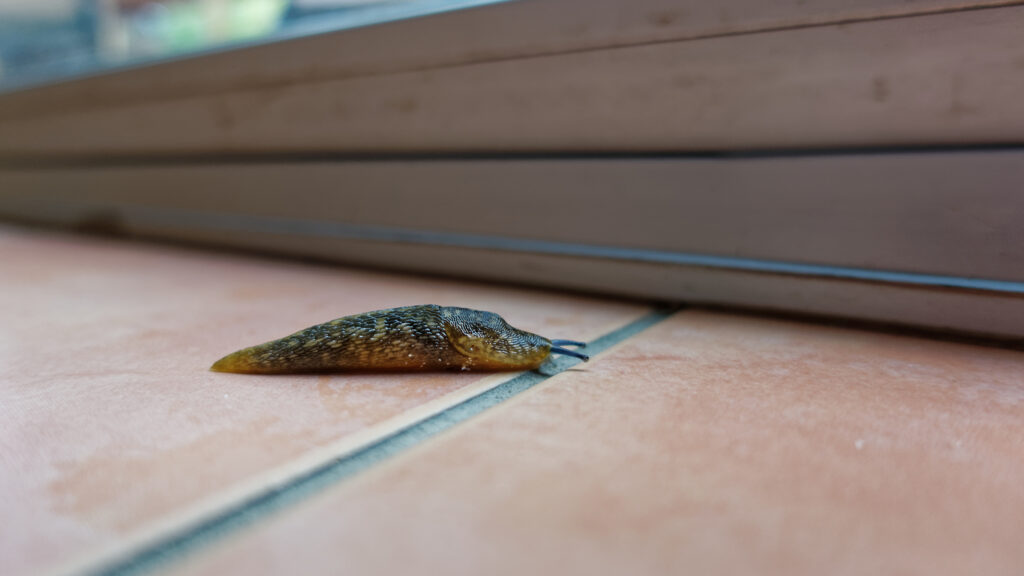
Slugs turning up inside the house can feel baffling the first time it happens. Most people expect them in the garden, not slowly sliding across the kitchen tiles at night. The reason it happens is usually simple. Slugs follow moisture and food smells, and once they discover a small route inside, they often return along that exact path night after night.
Carefully search for the tiny gaps they use to get inside.
The first step is understanding that slugs rarely enter through obvious openings. Their soft bodies allow them to squeeze through extremely narrow spaces that would seem impossible for most animals. Small cracks in brickwork, gaps around pipework, or tiny openings near floorboards can all act like doorways for them.
Walk around the outside of your house and look closely at the base of walls, vents, and utility pipes. Even a gap the width of a pencil can be enough for a slug to pass through. Sealing those openings with outdoor filler, sealant, or expanding foam often stops the problem immediately because it removes the route they rely on.
Check the space underneath doors.
A very common entry point is the narrow gap beneath external doors. To a slug, that small space is more than enough room to slide under, especially on damp evenings when the ground outside is wet.
Fitting a door brush or rubber seal is a simple fix that makes a big difference. Not only does it block slugs, it also helps keep out insects, drafts, and cold air. Many people discover that once this gap is sealed, the mystery of slugs appearing on the kitchen floor suddenly disappears.
Fix damp areas that make your house appealing.

Slugs need moisture to survive because their bodies dry out quickly. This means that they’re always searching for damp, cool places to hide during the day and travel during the night. If your house has leaking pipes, damp corners, or condensation building up in certain rooms, it can attract them indoors. Repairing leaks, improving ventilation, and reducing moisture levels removes the environment they’re looking for, making the house far less inviting.
Keep kitchens and floors free of food traces.
Although slugs are famous for eating garden plants, they’re not particularly fussy. Food scraps, vegetable peelings, crumbs, and pet food can all attract them once they enter a house. Cleaning floors and worktops thoroughly each evening removes those food signals. Even small crumbs can produce smells that slugs detect easily. A clean kitchen gives them no reason to keep exploring indoors.
Seal gaps around pipes and utility cables.
Wherever pipes or cables pass through walls, there is often a small gap left behind during construction. These spaces are rarely noticeable unless you look closely, but they can act like hidden tunnels from outside. Check areas under sinks, behind washing machines, and around boiler pipes. Filling those gaps with sealant or expanding foam closes off another possible pathway that slugs might be using to reach the inside of the house.
Remove hiding spots close to your walls outside.

Slugs rarely travel long distances during the day. They prefer to hide somewhere cool and damp close to where they feed at night. Garden clutter near the house often provides perfect hiding places. Stacks of wood, unused plant pots, dense ground cover, and piles of leaves give them safe shelter right beside the building. Clearing these areas away from the walls reduces the number of slugs living nearby, which lowers the chance of them finding their way indoors.
Use copper barriers around entrances.
Copper is widely used as a slug deterrent in gardening because it interacts with their slime in a way they find uncomfortable. When a slug touches copper, it produces a mild reaction that encourages them to turn away. Copper tape placed around door thresholds, vents, or other entry points can create a barrier they prefer not to cross. It doesn’t harm them, but it makes that route much less appealing.
Check air vents and drainage openings.
Older houses often have small ventilation openings near the base of walls. While these are important for airflow, they can sometimes allow insects or slugs to slip through. Fitting fine mesh covers over vents or drain openings helps prevent this. The mesh still allows air to pass through, while blocking larger creatures from entering.
Create a dry border around the outside of the house.

Slugs travel most easily across damp soil, grass, or smooth stone. Rough, dry surfaces are harder for them to move across because they can’t maintain the same layer of slime underneath their bodies. A strip of gravel, coarse sand, or crushed stone along the base of the house can make a noticeable difference. It forms a dry barrier that many slugs avoid crossing, especially during warm weather.
Watch where they travel on damp nights.
If you are unsure where the slugs are coming from, step outside after dark with a torch during damp weather. This is when they’re most active and easiest to spot. Often, you’ll see them following the same path along walls, patios, or garden edges. Once you identify the route they’re using, you can block that specific entry point, which usually stops the problem much faster than guessing where they might be entering.