Plants can’t talk, but they communicate constantly through their leaves, stems, soil, and overall appearance, and once you know what to look for the signals are fairly consistent. Most houseplant problems come down to a handful of causes, and the plant’s appearance usually points clearly toward which one it is.
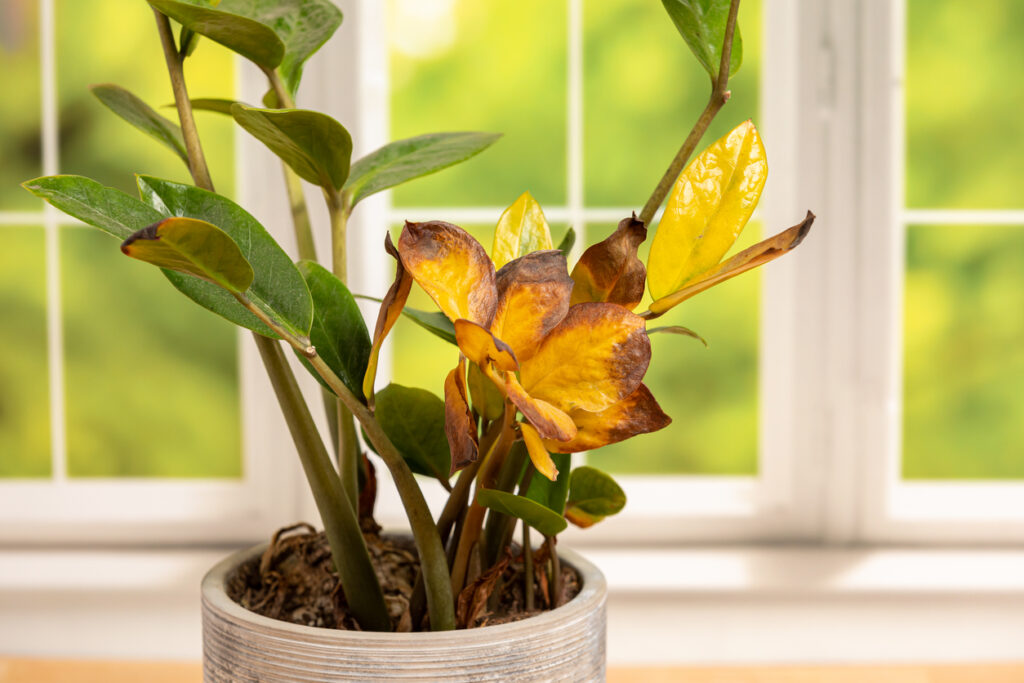
1. Yellowing leaves across the whole plant
Widespread yellowing that affects multiple leaves at once rather than just the odd older leaf at the base is often a sign of overwatering. When roots sit in waterlogged soil for too long they begin to suffocate and rot, and a root system that can’t function properly can’t deliver nutrients to the rest of the plant regardless of how much fertiliser is in the soil.
Before watering again, push a finger two inches into the compost and only water if it feels genuinely dry at that depth. If the soil smells unpleasant or the roots look brown and mushy when you check, you’re dealing with root rot and the plant will need repotting into fresh dry compost with any damaged roots removed.
2. Brown, crispy leaf tips and edges
When the tips and edges of leaves turn brown and dry out to a crispy texture, the plant is telling you the air around it is too dry. Most houseplants come from humid environments, and the combination of central heating in winter and dry summer air can drop indoor humidity to levels that stress them in a big way.
Grouping plants together raises the local humidity slightly as they transpire, placing a tray of water and pebbles beneath the pot helps, and regular misting gives temporary relief. Some plants, particularly spider plants, peace lilies, and calatheas, are particularly sensitive to dry air and will show tip browning reliably when humidity is insufficient.
@zosplants let’s talk about why your plants are looking depressed recently – it’s not your fault! #planttok #planttiktok #houseplants #plantcare #fyp ♬ original sound – zoë🦇
3. Leggy, stretched growth reaching toward the light
When a plant produces long, weak stems with unusually large gaps between leaves rather than the compact bushy growth it had when you brought it home, it’s not thriving, it’s stretching. This is a clear sign that the plant isn’t getting enough light and is putting all its energy into reaching toward whatever source it can find.
Moving it closer to the window or to a brighter position is the obvious solution, though it’s worth doing this gradually rather than moving it suddenly from deep shade to direct sun, which can cause its own set of problems. If the plant has become very leggy and the new growth is pale and weak, trimming it back and giving it more light simultaneously tends to produce the best recovery.
4. Dropping leaves suddenly and without apparent reason
A plant that suddenly drops a huge number of leaves, particularly if they were otherwise healthy before falling, has probably experienced a shock of some kind. The most common triggers are a sudden drop in temperature, a cold draught from an opened window or door, being moved to a different environment, or roots being disturbed during repotting.
Ficus trees are particularly prone to this response and will shed leaves in response to even relatively minor changes in their environment. The solution is to find the most stable position available, avoid moving the plant once it’s settled, keep it away from cold windows and draughts in winter, and then wait because a plant that’s dropped leaves from stress rather than disease will likely recover given stable conditions.
5. Wilting despite moist soil
Most people assume wilting means the plant needs water, and a lot of the time, that’s correct. However, a plant that’s wilting while the soil is still moist or wet is giving you the opposite message. This is a classic sign of root rot, where the root system has been damaged by overwatering to the point that it can no longer take up water even when water is available.
The plant is wilting not from drought but from an inability to function properly, and adding more water at this point makes the situation worse rather than better. Check the roots by removing the plant from its pot, trim away any brown mushy sections, allow the remaining roots to dry slightly, and repot into fresh well-draining compost.
@jessieheim Plants that drop leaves are mad and stressed out, here’s a simple way to bring them back to a chill happy plant, vital root. #plantcare #indoorplants #houseplants #fyp #plantlady ♬ original sound – JessieHeim
6. Pale, washed-out leaves that were previously deep green
Leaves that are losing their colour and becoming pale or yellowish-green rather than their previous healthy shade are likely telling you one of two things. Either the plant isn’t getting enough light, in which case the paleness tends to be uniform and accompanied by slow or leggy growth, or it’s not getting enough nutrients, in which case the paleness often appears first in the newer growth at the tips while older leaves stay greener for longer.
Plants in the same pot for more than a year or two will have exhausted most of the available nutrients in their compost, and feeding with a balanced liquid fertiliser through the growing season usually produces a visible improvement within a few weeks.
7. Small sticky deposits on leaves and stems
A sticky residue on leaves, sometimes accompanied by a sooty black coating that develops on top of it, is a sign of a sap-sucking pest infestation. Aphids, scale insects, and mealybugs all feed on plant sap and excrete a sticky substance called honeydew as a byproduct, and the black sooty mould that grows on that honeydew is what often gets noticed first.
Check the undersides of leaves and the joints between stems and leaves carefully because pests tend to congregate in sheltered spots. Wiping down leaves with a damp cloth removes both the pests and the residue, and repeated treatment with diluted neem oil or insecticidal soap deals with the population over time.
8. Roots growing out of the drainage holes
When you can see roots emerging from the bottom of the pot or growing in a dense mass around the inside of the container, the plant has outgrown its home and needs repotting. A root-bound plant has less and less compost relative to root mass, which means it dries out faster, takes up nutrients less efficiently, and generally struggles to grow at the rate it wants to.
Moving up one pot size rather than several at once gives the roots room to expand without leaving them surrounded by a large volume of wet compost they can’t yet fill, which can cause the waterlogging problems that come from overwatering. Spring is the ideal time to repot most houseplants as they’re entering their main growth period.
@curiouslymedia I was today years old when I learnt that plants can cry 😮 A new study has found that plants cry when they are stressed, they literally pop off as their ultrasonic screams sound like sad little popping noises. #PlantLovers #interestingfacts #PlantsOfTikTok #PlantTok ♬ original sound – Curiously
9. Leaves with spots, patches, or unusual discolouration
Localised spots or patches of discolouration on leaves rather than the uniform yellowing or paleness of a systemic problem usually point to something more specific. Brown spots with yellow halos often indicate a fungal or bacterial infection, frequently triggered by water sitting on leaves in cool conditions. White or silver patches with a powdery texture are a sign of powdery mildew, which thrives in warm conditions with poor air circulation.
Pale stippling across the leaf surface, particularly if accompanied by fine webbing on the undersides, is a sign of spider mites, which are more common in dry centrally heated rooms than most people expect. Each of these requires a different response, so identifying which you’re dealing with before treating saves time and avoids making things worse.
10. No growth at all through the growing season
Most houseplants slow down or stop growing entirely through winter when light levels are low and temperatures drop, and that’s entirely normal. A plant that’s producing no new growth at all through spring and summer, however, is telling you something is wrong. The cause is usually one of the fundamentals being sufficiently out of range to prevent growth, inadequate light, a pot that’s too large or too small, depleted compost, consistent under or overwatering, or a root system that’s been damaged enough to limit function.
Going back to basics and assessing each of the main variables in turn rather than assuming a single cause tends to be the most effective approach because stalled growth is often the result of more than one thing being slightly off simultaneously rather than one major problem that’s easy to identify and fix.