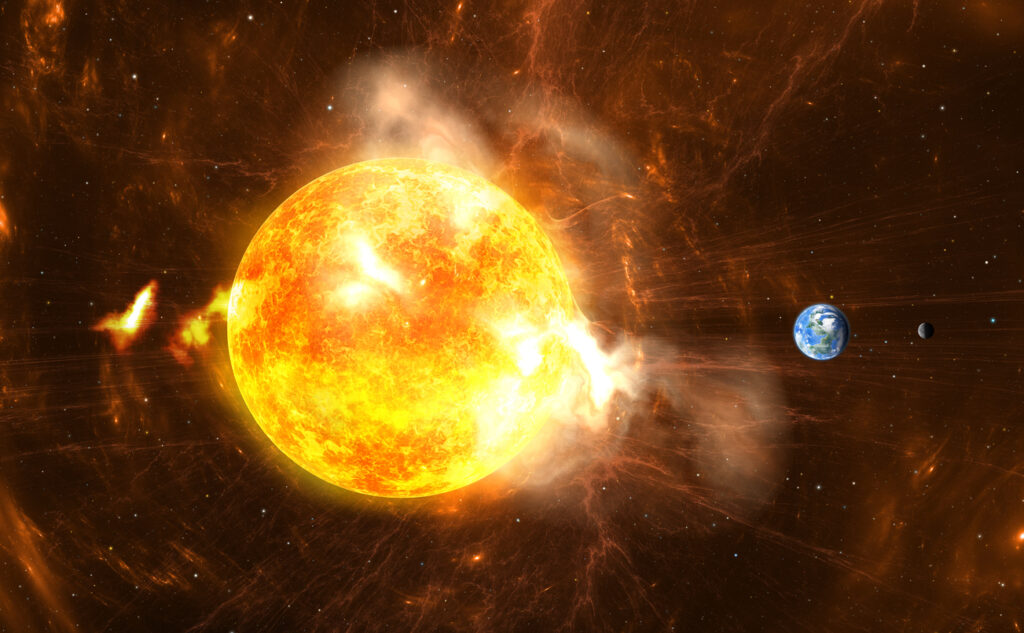
When people think of weather, they usually picture clouds, rain, or sunshine, not what’s happening out in space. However, solar storms and bursts of charged particles can have a surprising impact on life down here. From interrupting satellites to playing havoc with power grids, what’s happening millions of miles away can reach us more directly than you might imagine.
Space weather doesn’t just affect technology; it can even influence the natural world and, in subtle ways, our own bodies. Scientists are still uncovering how these cosmic shifts ripple through Earth’s atmosphere and beyond. It’s a strange reminder that our planet isn’t isolated at all, but constantly caught in the pull of something much bigger.
1. GPS systems go haywire during solar storms.
Solar storms interfere with satellite signals, making GPS inaccurate by metres or even completely unreliable. This affects everything from sat navs to precision agriculture to aircraft navigation. A strong geomagnetic storm can make GPS useless for hours.
Most people don’t realise when their GPS is acting up that it might be caused by space weather. Delivery drivers, farmers using GPS-guided equipment and aviation all get disrupted when the sun throws particles at Earth’s magnetic field.
2. Migratory birds get lost.
Birds navigate partly using Earth’s magnetic field. During geomagnetic storms, this natural compass gets disrupted and birds end up off course. Studies show increased bird strikes at airports and disoriented flocks during periods of high solar activity.
Pigeons used in homing experiments perform significantly worse during geomagnetic disturbances. The birds aren’t broken, their navigation system is being scrambled by space weather they can’t see or understand.
3. Power grids can fail completely.
Geomagnetic storms induce currents in long power lines and transformers. These currents can overload systems and cause blackouts. The 1989 Quebec blackout left six million people without power for nine hours because of a solar storm.
Power companies monitor space weather specifically to protect grids. A severe solar storm could potentially cause widespread blackouts lasting weeks or months by destroying transformers that take years to replace.
4. Whales and dolphins beach themselves more often.
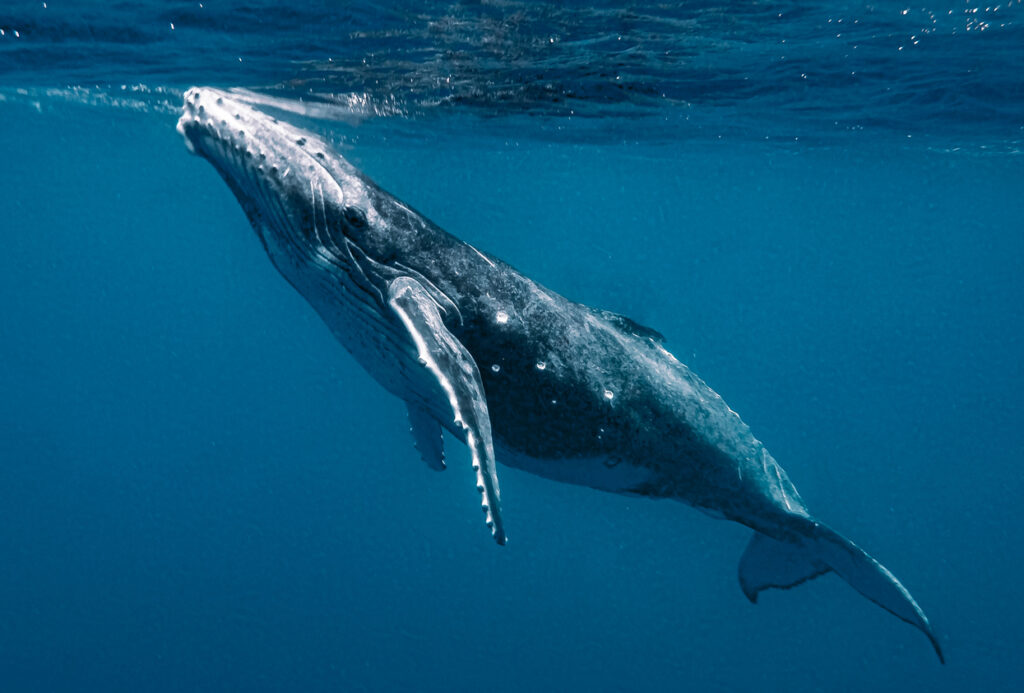
Marine mammals use Earth’s magnetic field to navigate. Research shows increased beaching events correlate with geomagnetic disturbances. When space weather disrupts the magnetic field, whales following their internal compass end up in shallow water.
Not all beachings are caused by space weather, but there’s enough correlation that scientists take it seriously. These animals evolved to trust their magnetic sense, and space weather makes that sense unreliable.
5. Radio communications go dead.
Solar flares cause sudden ionospheric disturbances that block radio signals. High-frequency radio used by aircraft, ships, and military just stops working. Commercial flights over polar routes sometimes have to reroute because they lose radio contact.
Amateur radio operators track solar activity specifically because it determines whether they can make long-distance contacts or not. Strong solar activity can black out radio communications across entire continents for hours.
6. Satellites die prematurely.
Solar storms bombard satellites with charged particles that damage electronics and degrade solar panels. Satellites in orbit slowly die from accumulated radiation damage. During major solar storms, satellites can fail completely and become expensive space junk.
Your satellite TV might pixelate, or your internet might drop during solar storms because the satellites providing those services are being battered by particles from the sun. Space weather literally destroys the technology we depend on.
7. Pipelines corrode faster
Geomagnetically induced currents flow through underground pipelines, accelerating corrosion. Oil and gas companies monitor space weather because it affects pipeline integrity. Strong geomagnetic activity causes measurable increases in corrosion rates.
This seems impossibly indirect, but it’s real. Space weather creates electrical currents in Earth’s crust that flow through any long metal structure, including pipelines. This speeds up chemical reactions that corrode the metal.
8. Your heart rate changes.

Studies show correlations between geomagnetic activity and heart attack rates. Hospital admissions for cardiac events increase during geomagnetic storms. The mechanism isn’t fully understood, but the statistical correlation is consistent across multiple branches of research.
Your heart’s electrical system might be subtly impacted by changes in Earth’s magnetic field. This doesn’t cause heart attacks in healthy people, but may be a trigger for those already at risk during periods of high geomagnetic activity.
9. Stock markets become more volatile.
Research suggests correlation between solar activity and market behaviour. Some studies show increased volatility and trading errors during geomagnetic storms. The theory is that subtle effects on human cognition and mood influence collective market behaviour.
This is controversial, but multiple studies have found patterns. Whether space weather directly affects human psychology or whether it’s statistical coincidence remains debated, but the correlations exist in the data.
10. Aircraft passengers and crew get radiation doses.
Cosmic rays normally blocked by Earth’s atmosphere penetrate deeper during solar storms. People flying at high altitudes, especially polar routes, receive measurably higher radiation exposure. Frequent fliers and crew accumulate significant radiation doses over time.
Airlines track solar activity and sometimes reroute flights during major solar storms to reduce radiation exposure. Pregnant crew members are particularly monitored because foetal development is more sensitive to radiation than adult tissue.