
Science is usually seen as a series of brilliant breakthroughs, but a lot of it is actually just a long list of “oops” moments that we eventually corrected. When you’re staring at the stars with limited tech, it’s incredibly easy to jump to conclusions that make perfect sense at the time. Some of the most famous names in history spent years defending ideas that we now know are complete rubbish, simply because they lacked that one bit of data to prove otherwise.
These weren’t just wild guesses; they were theories based on the best evidence available back then. Whether it was assuming the Earth was the centre of everything or convinced there were man-made canals on Mars, these blunders were the standard “truth” for decades. Looking back at these 10 mistakes shows how much our understanding has moved on, and it’s a good reminder that what we’re certain about today might look just as daft in another 100 years.
1. They thought the Sun went around Earth because that’s what it looked like.
For thousands of years, everyone believed the Earth sat still while the Sun moved across the sky, and honestly, can you blame them? That’s exactly what it looks like when you watch a sunrise or sunset. Earth doesn’t feel like it’s moving at all, and the Sun clearly appears to travel from one horizon to the other. Ancient astronomers weren’t being thick, they were just trusting what their eyes and bodies told them. The idea that we’re actually spinning incredibly fast while flying through space seemed ridiculous because you can’t feel any of it happening.
2. They thought space needed to be full of invisible stuff to carry light.
Scientists knew that sound needed air or water to travel through, so they figured light must work the same way. They invented this concept of invisible material filling all of space to explain how light from stars reached us. It wasn’t a daft idea, it made perfect sense based on how other things behaved. An experiment in the late 1800s tried to detect this invisible stuff and found absolutely nothing, which eventually led to understanding that light doesn’t need anything to travel through.
3. They were convinced Mars had canals built by aliens.
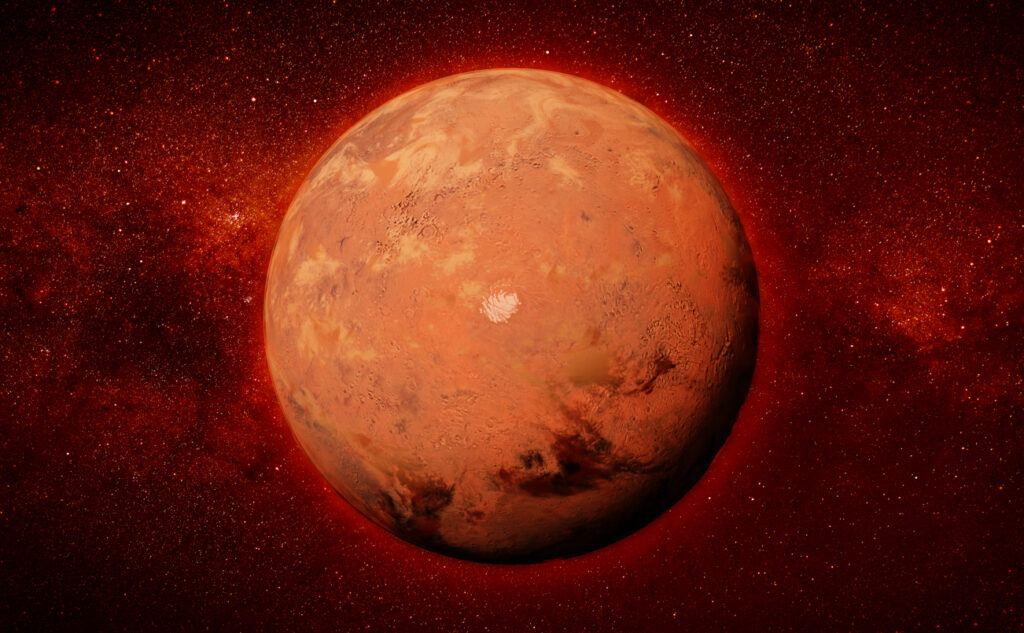
When astronomers first got decent looks at Mars in the late 1800s, some thought they saw long straight lines crisscrossing the planet. Since Mars clearly had ice at its poles, scientists figured an advanced civilization must have built canals to transport water to dry areas. The logic seemed solid because what else would explain those lines? Better telescopes eventually proved the canals were just tricks of light and shadow, but the theory made sense at the time, given what they could actually see.
4. They insisted rockets couldn’t possibly work in space.
Respected scientists in the early 1900s said rockets were useless in space because there’s no air to push against. On Earth, everything needs something to push against to move forward, so this seemed obviously true. The New York Times actually mocked a rocket scientist in 1920 for suggesting his designs would work in the vacuum of space. The paper had to print a correction in 1969 as astronauts headed to the Moon, admitting they’d been completely wrong about how rockets work.
5. They assumed the universe had always existed exactly as it is.
Before the 1900s, everyone thought the universe had been around forever in pretty much its current state. This seemed reasonable because nothing appeared to be changing on a large scale, and the idea of everything having a starting point raised awkward questions. Scientists couldn’t see any evidence that the universe was expanding or had a beginning. Observations in the 1920s proved the universe was actually growing bigger, which meant it must have started small at some point in the past.
6. They couldn’t figure out what powered the Sun.
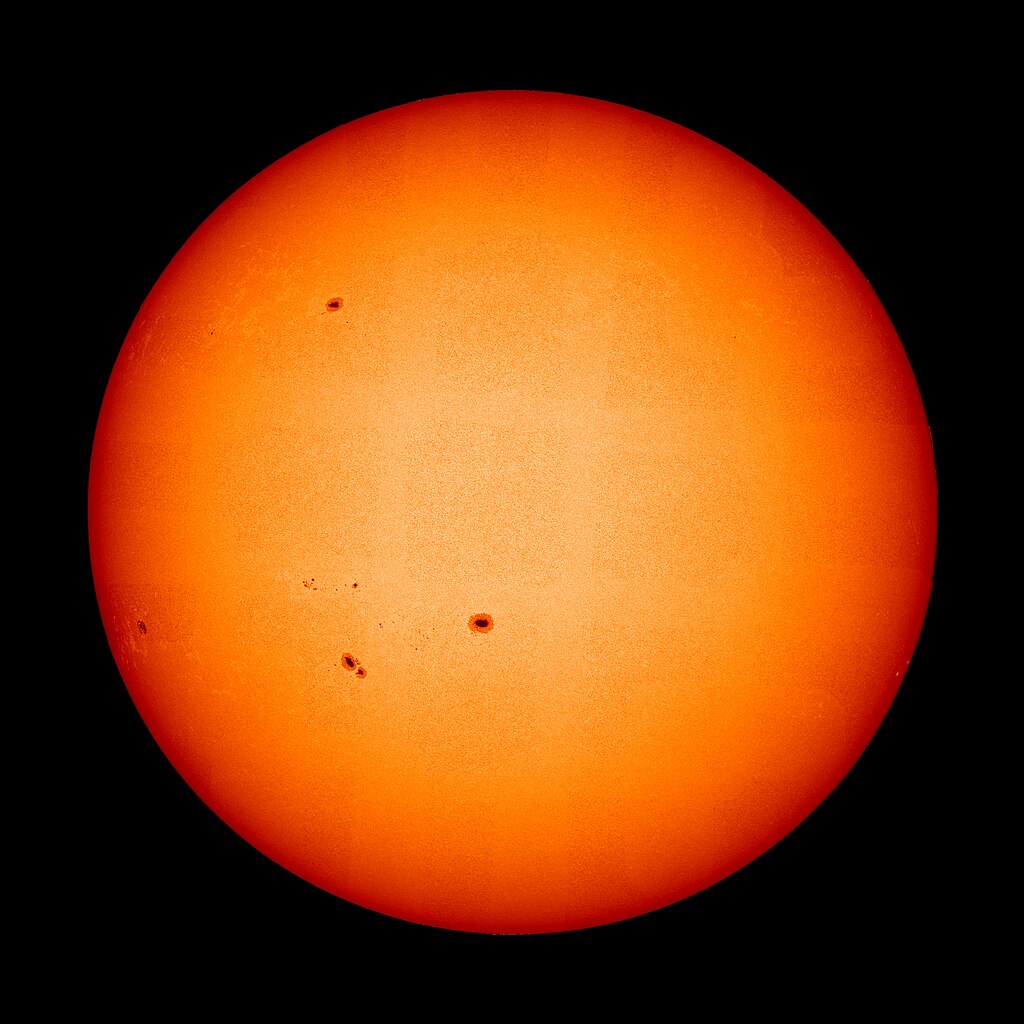
Early scientists tried to work out what kept the Sun shining, and every answer they came up with lasted nowhere near long enough. If the Sun was burning like a giant coal fire, it would have gone out thousands of years ago. Even their best theories could only explain about 30 million years of sunlight, which didn’t match what we knew about Earth’s age. The idea that atoms could smash together inside the Sun to release energy seemed impossible because the conditions required were thought to be too extreme to actually happen.
7. They were sure Mercury always showed the same side to the Sun.
Mercury spins very slowly, and for decades whenever astronomers looked at it, they saw the same features in the same places. The obvious conclusion was that Mercury kept one face permanently toward the Sun, just like the Moon does to Earth. Scientists believed this from the 1880s until 1965, when better technology proved Mercury actually does rotate, just in an unusual pattern. The earlier observations had just caught it at unlucky times that made it seem frozen in place.
8. They massively underestimated how far away stars are.
When scientists first tried measuring the distance to stars, the numbers were so small their instruments couldn’t detect them. The logical conclusion was that stars simply weren’t that far away, and the measurements were just at the edge of what their equipment could handle. Early estimates put the nearest stars at distances we now know are absolutely tiny compared to reality. Better instruments eventually revealed that stars were millions of times farther than anyone had imagined, completely changing how big we thought space was.
9. They didn’t believe black holes could actually exist.
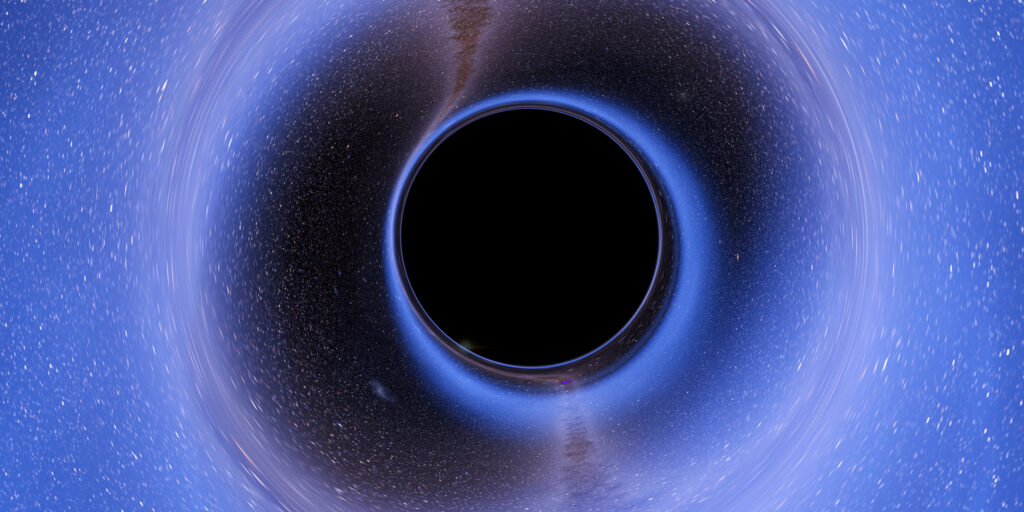
Even after the maths predicted black holes were possible, most scientists thought nature would never actually create them. It seemed like surely something would prevent matter from collapsing completely before reaching that extreme state. Even Einstein himself didn’t believe black holes were real, thinking some unknown force would stop the collapse. It took decades and actual observations to accept that the universe really does create these bizarre objects.
10. They thought we’d never be able to detect ripples in space.
Einstein predicted that massive events in space would create ripples, but he calculated they’d be so unbelievably tiny that measuring them would never be possible. This seemed accurate because these ripples compress space by less than the width of an atom. The technology needed to detect something that small appeared to be forever out of reach. Scientists finally managed it in 2015 using incredibly sensitive equipment that Einstein couldn’t have imagined when he made his pessimistic prediction.