When you first see a babirusa, it barely looks real.
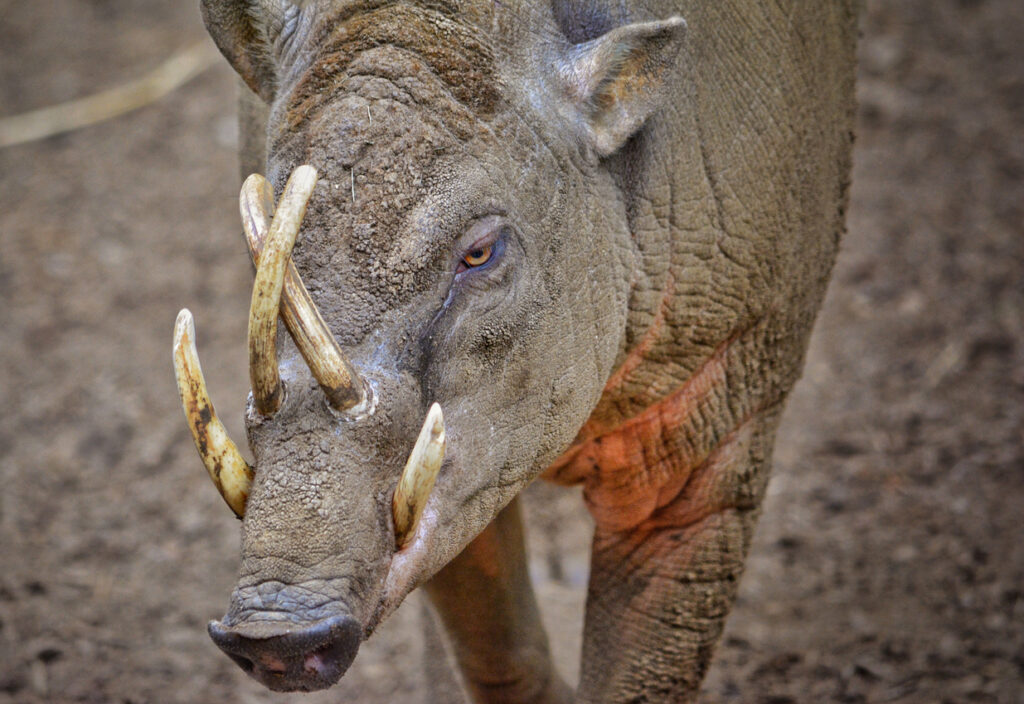
The curved tusks push up through its snout and arc back toward its forehead, giving it a shape that feels more prehistoric than modern. It looks like something drawn in an old natural history book, rather than an animal still walking around today. That strange, almost outdated appearance is exactly why people often describe it as a living fossil.
Its tusks grow in a way that feels ancient.
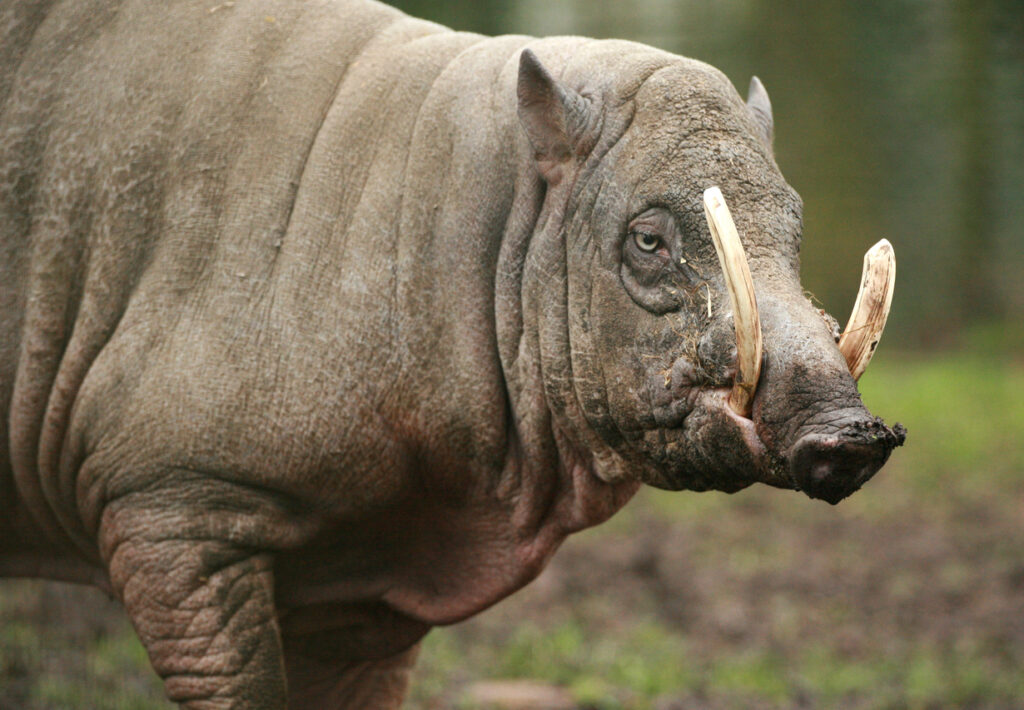
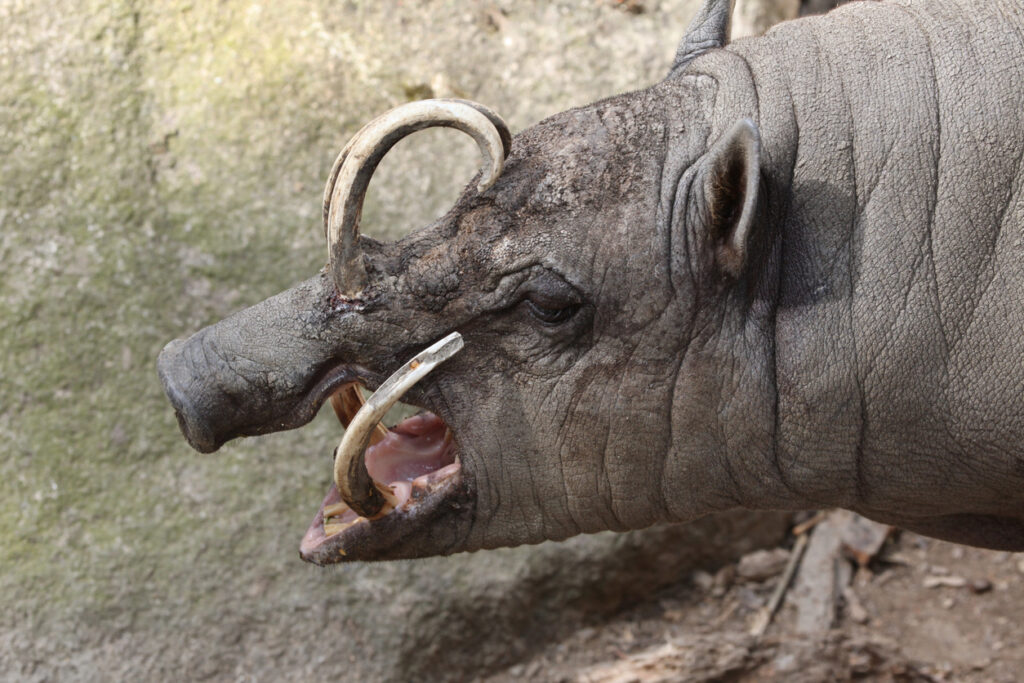
The babirusa’s most striking feature is the male’s upper tusks. Instead of growing neatly inside the mouth like most pigs, these canines push upward through the skin of the snout and curve back toward the forehead. They keep growing throughout the animal’s life.
This unusual growth makes the babirusa look almost unfinished or experimental, like a design from an earlier stage of evolution. If the tusks aren’t worn down naturally, they can even curl back far enough to touch the skull. It feels like a trait from a much older world.
It comes from an old and isolated branch of the pig family.
The babirusa belongs to the pig family, but it split from other pigs a long time ago. It lives mainly on Indonesian islands such as Sulawesi, where it evolved in relative isolation. Being cut off from mainland populations allowed it to develop in its own direction. As time went on, that separation helped preserve features that look quite different from modern farm pigs or wild boar.
Its body looks lean and almost skeletal.
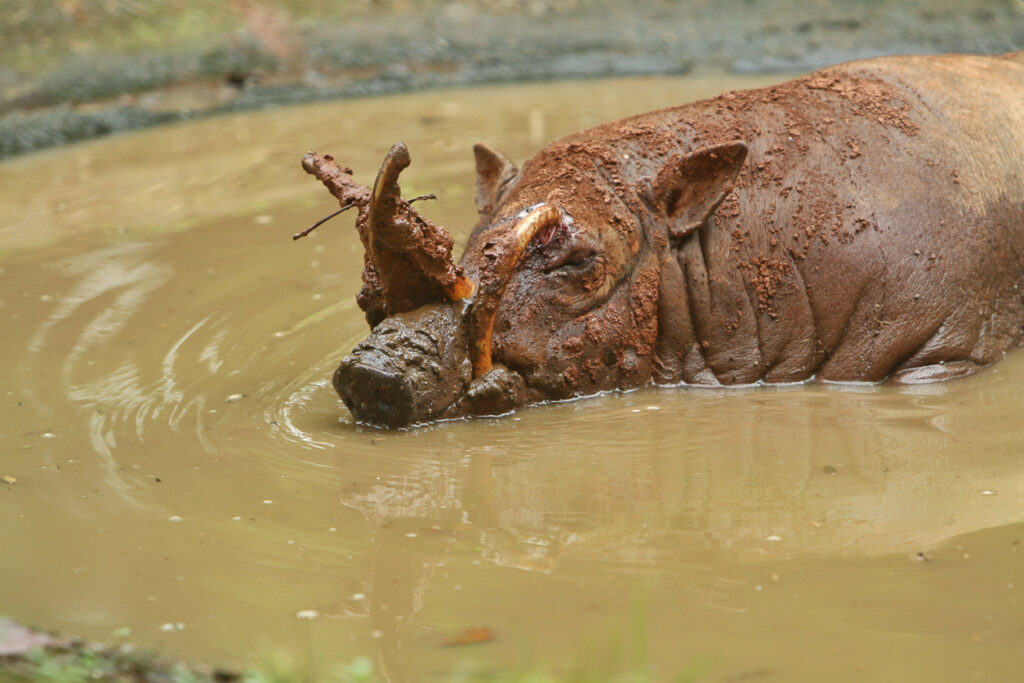
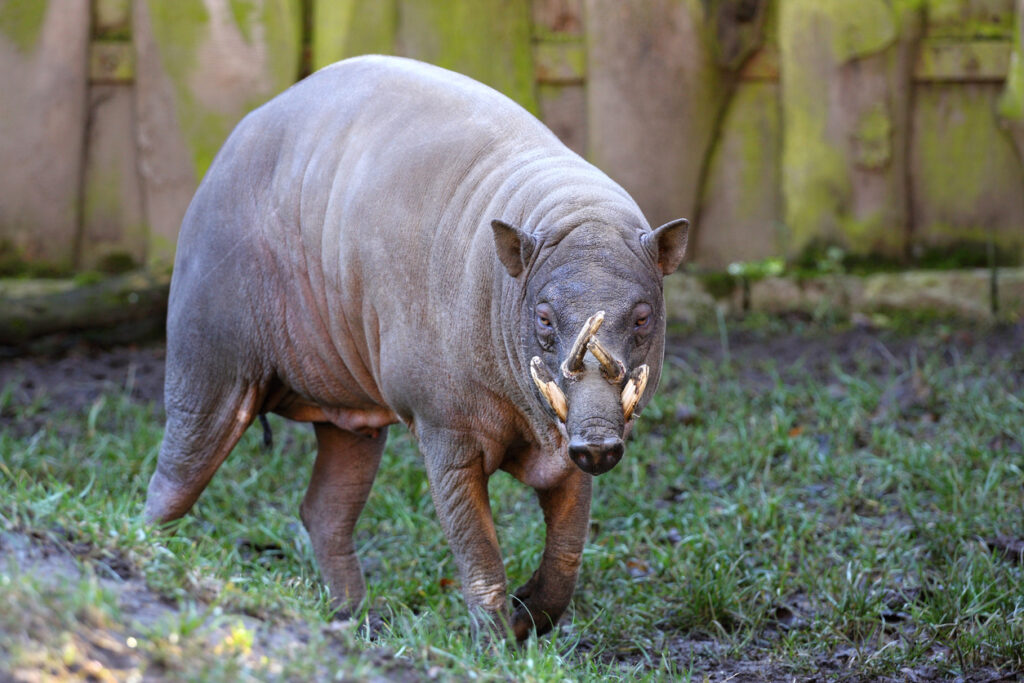
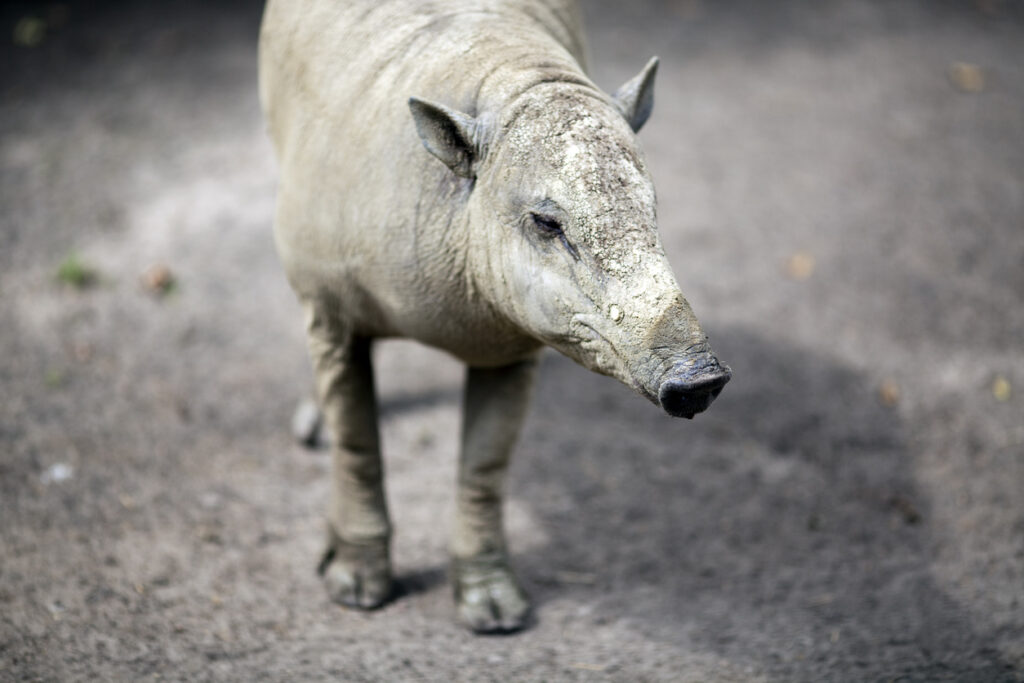
Unlike the round, sturdy shape people associate with pigs, the babirusa has long legs and a slimmer frame. Its ribs can sometimes be faintly visible beneath its skin, which adds to its unusual outline. That lean build, paired with the dramatic tusks, gives it a slightly skeletal look. It doesn’t resemble the farm animals most of us picture. Instead, it feels closer to something you might expect to see in a museum display.
Its skin and sparse hair add to the prehistoric feel.
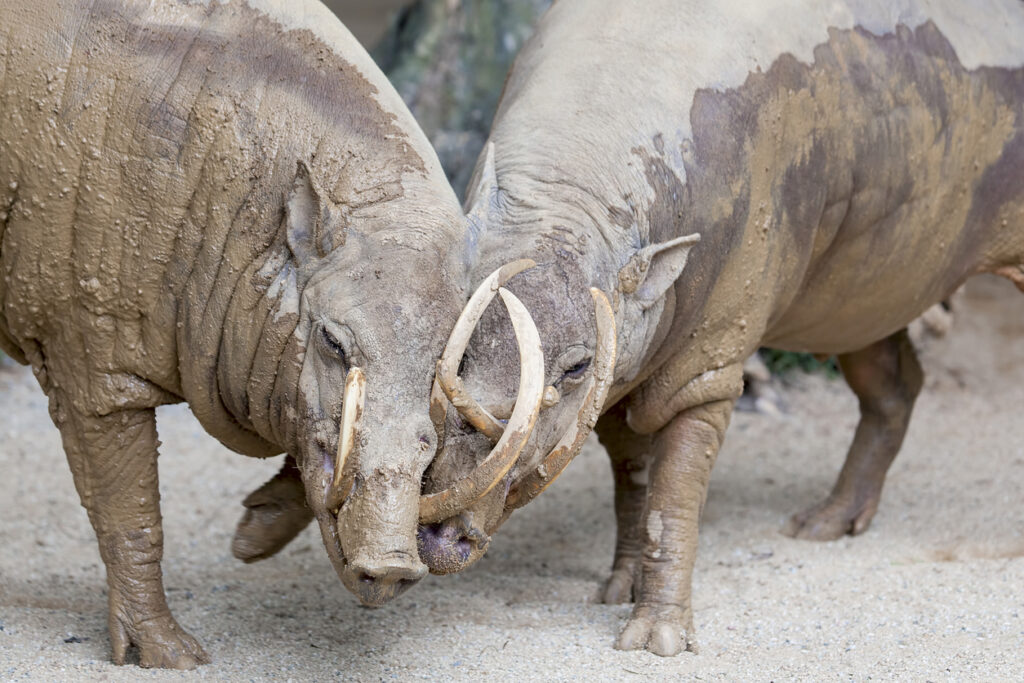
Babirusas have relatively thin skin and much less hair than many other wild pigs. In some cases, their skin appears smooth and slightly wrinkled, with patches that look almost bare. The lack of thick bristles makes them seem exposed and unusual. Without the familiar shaggy coat of a wild boar, the overall look feels older and less refined, which adds to that fossil-like impression.
The males look dramatically different from the females.
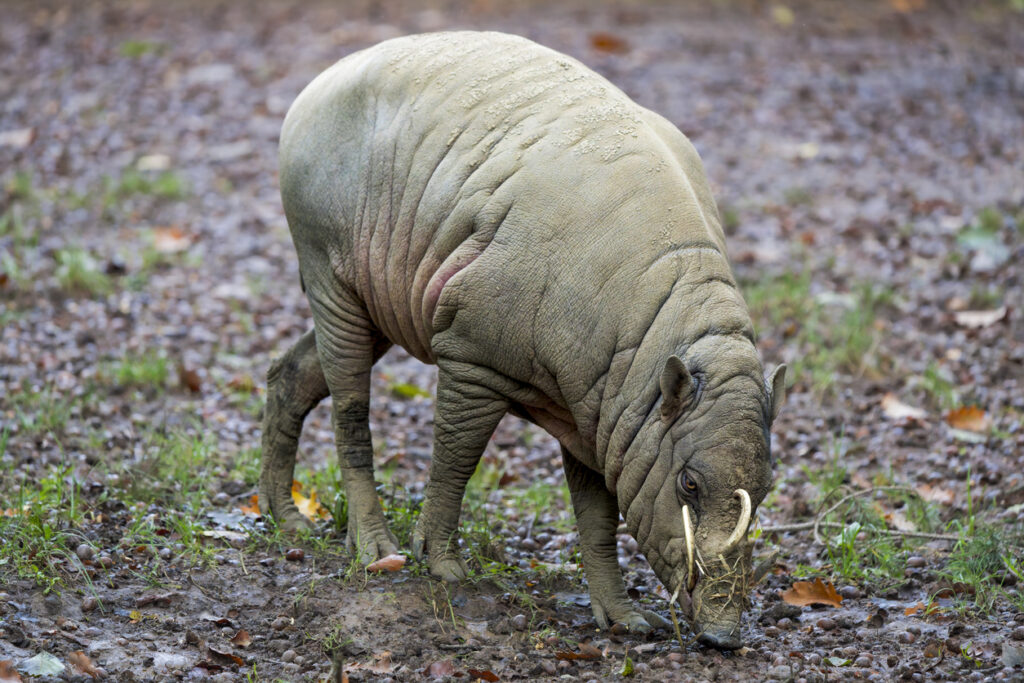
Those upward curving tusks are mostly found in males. Females either lack them entirely or have much smaller ones. That contrast makes the males look especially extreme and almost exaggerated. Large display features in males are common in nature, but the babirusa’s tusks feel unusually bold. They give the species a dramatic edge that makes it stand out even more among living mammals.
It has survived in relative isolation for millions of years.
Island life helped protect the babirusa from many predators and competitors found elsewhere. In stable environments like this, species can retain distinctive features for long periods without needing to change drastically. Because of that, the babirusa’s appearance has remained unusual and separate from more familiar pig species. When animals evolve on their own path for millions of years, they can end up looking like survivors from a different era.
Its movement and behaviour feel slightly different.
Babirusas are strong swimmers and have been known to cross water between islands. They forage in forests for fruit, leaves, and fallen plant material rather than behaving like typical rooting pigs. Seeing one move through a forest with those curved tusks gives it a striking silhouette. The combination of graceful movement and strange features reinforces that ancient look.
Its name hints at how unusual it is.
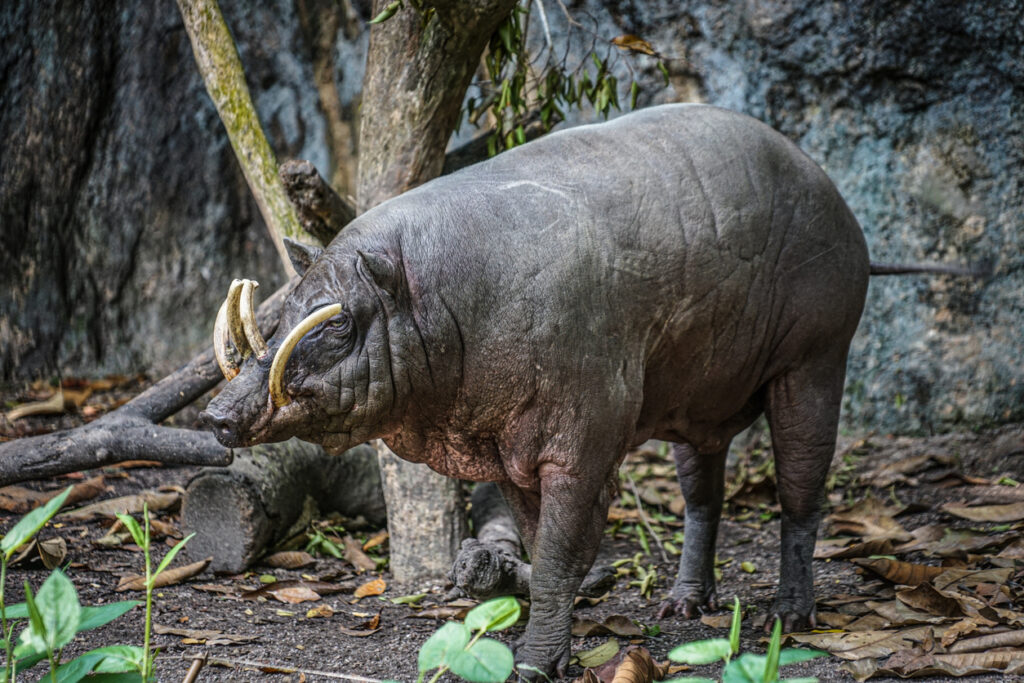
The word babirusa roughly translates to pig deer in local languages, referring to the antler-like appearance of its tusks. Even early observers struggled to describe it using familiar comparisons. That hybrid sounding name adds to its mystique. When an animal seems to blend traits in unexpected ways, it naturally feels older or more mysterious than species that fit neatly into one category.
It resembles early pig-like mammals in fossils.
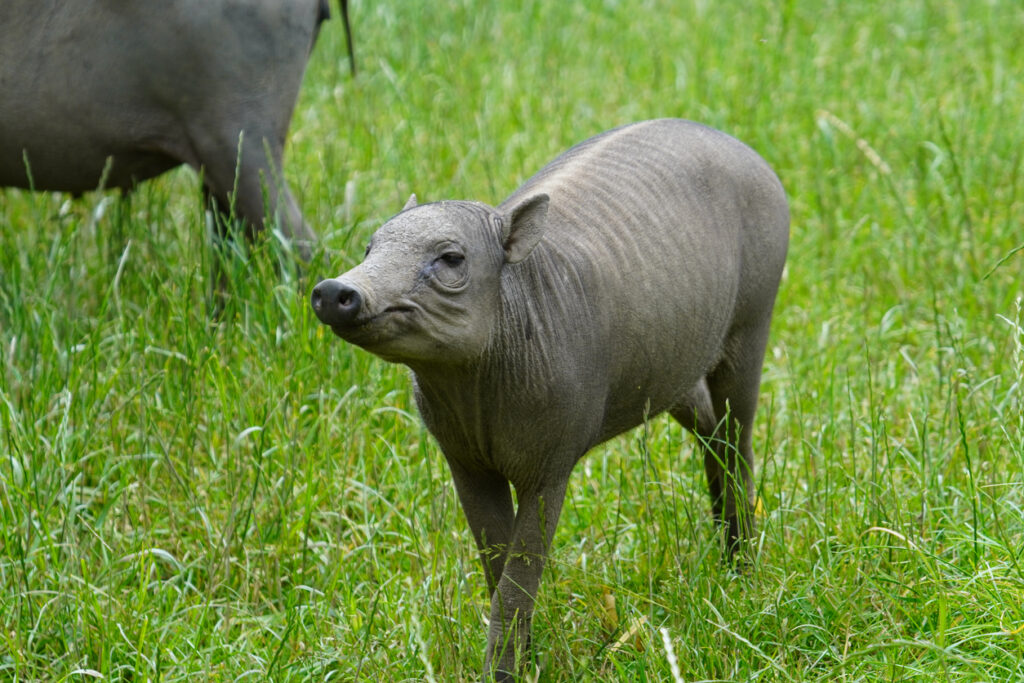
When compared with fossil images of early pig-like ancestors, the babirusa’s head shape and proportions can feel surprisingly similar. While it’s fully modern, it carries traits that echo older body plans. The resemblance doesn’t mean it has stopped evolving. It simply shows that some designs work well enough to persist. When those designs look unusual to us, they get labelled as ancient.
It looks unlike almost anything else alive today.
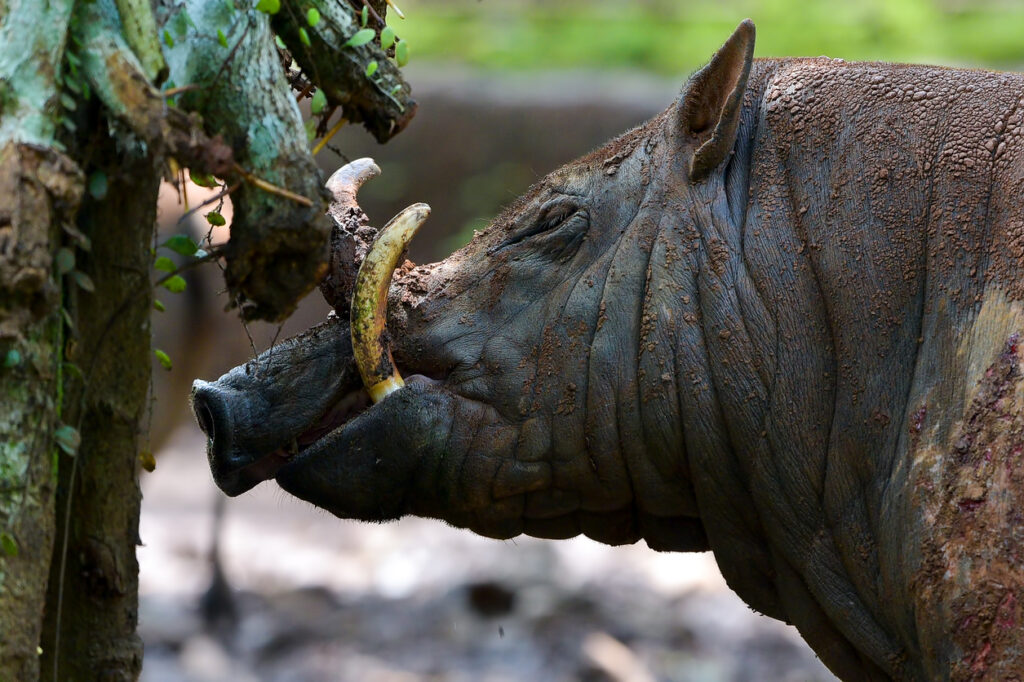
Part of what makes the babirusa feel like a living fossil is how unique it appears. There are no close lookalikes roaming other parts of the world with the same tusk arrangement and body shape. When an animal stands so far apart from familiar species, it naturally feels as if it belongs to another chapter of history. The babirusa may be fully modern, but its strange, dramatic appearance makes it look like it stepped straight out of the past.