The Moon landing in 1969 is one of humanity’s most celebrated achievements, a moment that defined an entire generation.
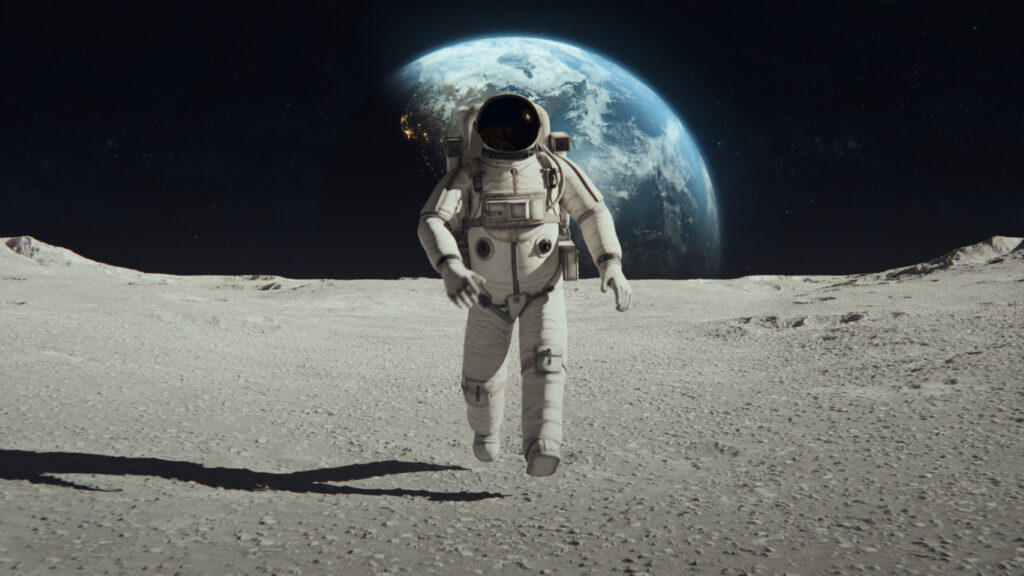
Millions watched as Neil Armstrong took those first steps on the lunar surface, marking what seemed like undeniable proof of human progress. However, not everyone was convinced.
Over the years, a surprisingly large number of people have come to question whether it really happened. They point to strange details in the photos, unexplained shadows, and inconsistencies in the footage that they claim don’t quite add up. Despite decades of evidence and expert explanation, the theory that the Moon landing was faked still lingers, and the reasons behind that enduring doubt reveal something fascinating about how people think and who they trust.
1. The flag appears to wave in the footage
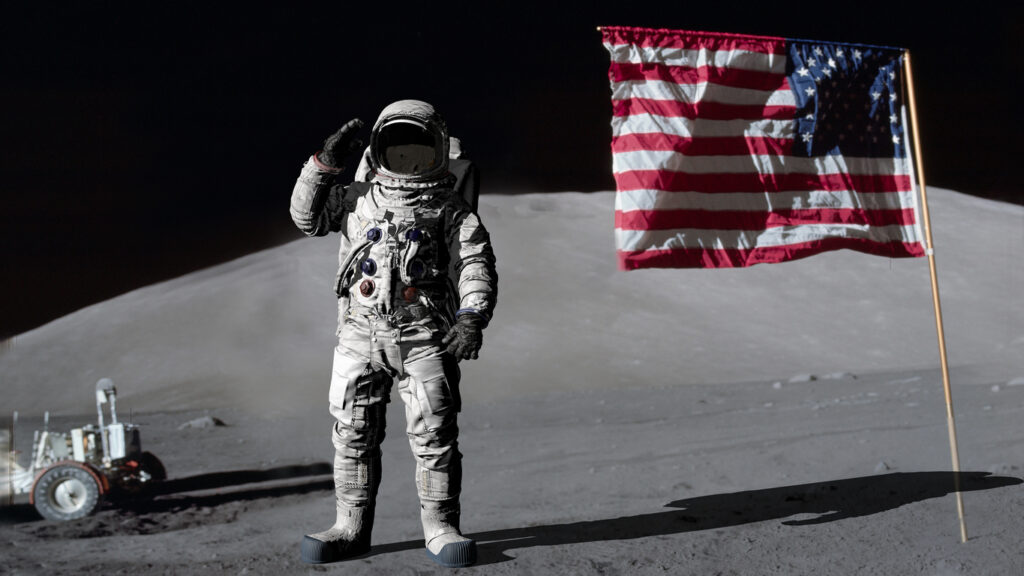
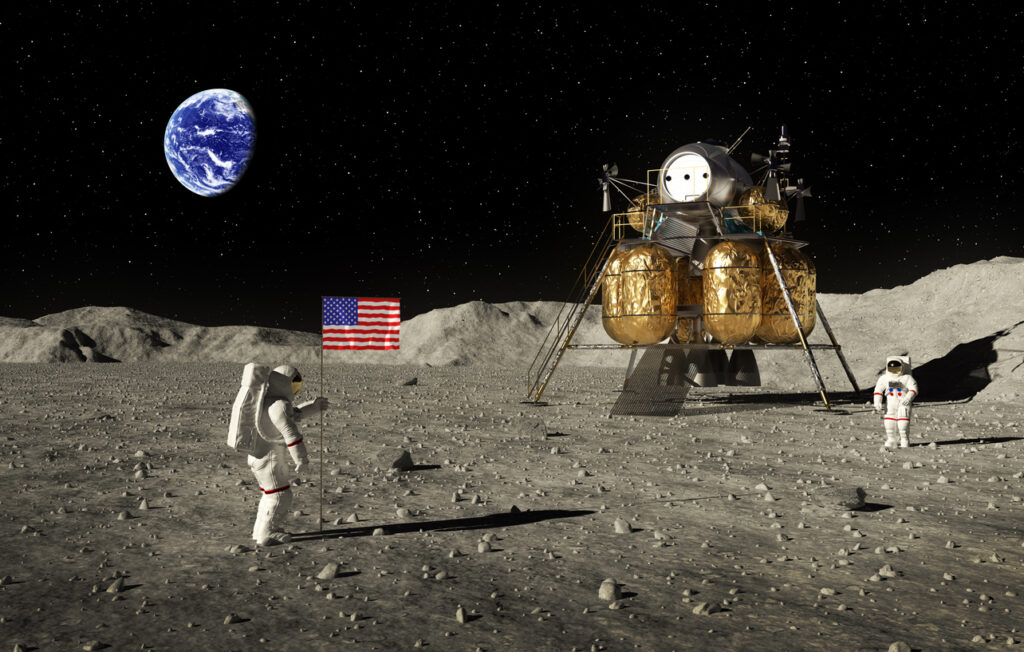
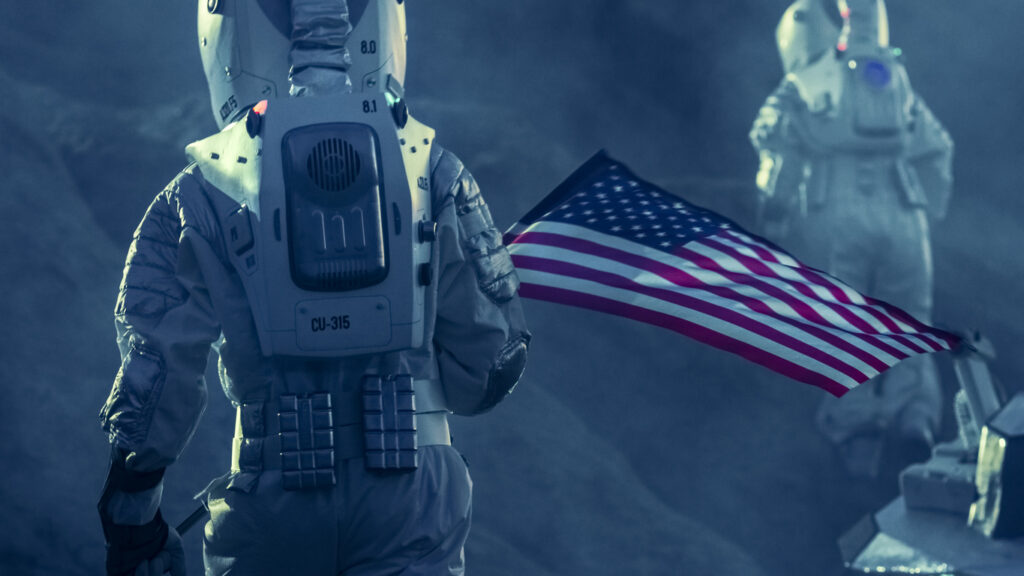
Moon landing sceptics point to video showing the American flag seemingly rippling and waving, which shouldn’t happen in the vacuum of space with no atmosphere or wind. It looks exactly like a flag moving in a breeze on Earth.
The flag moved because astronauts were handling the pole and because it had a horizontal rod sewn into the top to keep it extended. That motion came from physical manipulation, not wind, but the footage does look suspicious if you don’t know that detail.
There are no stars visible in photographs.

Space is full of stars, yet photos from the moon show a completely black sky without a single star visible. To sceptics, this proves the images were taken in a studio rather than on the actual moon. The cameras were set for bright lunar daylight and the astronauts’ white suits, which meant the exposure wasn’t long enough to capture dim starlight. It’s the same reason you can’t see stars in photos taken in bright city lights at night.
The lighting looks artificial in some photos.
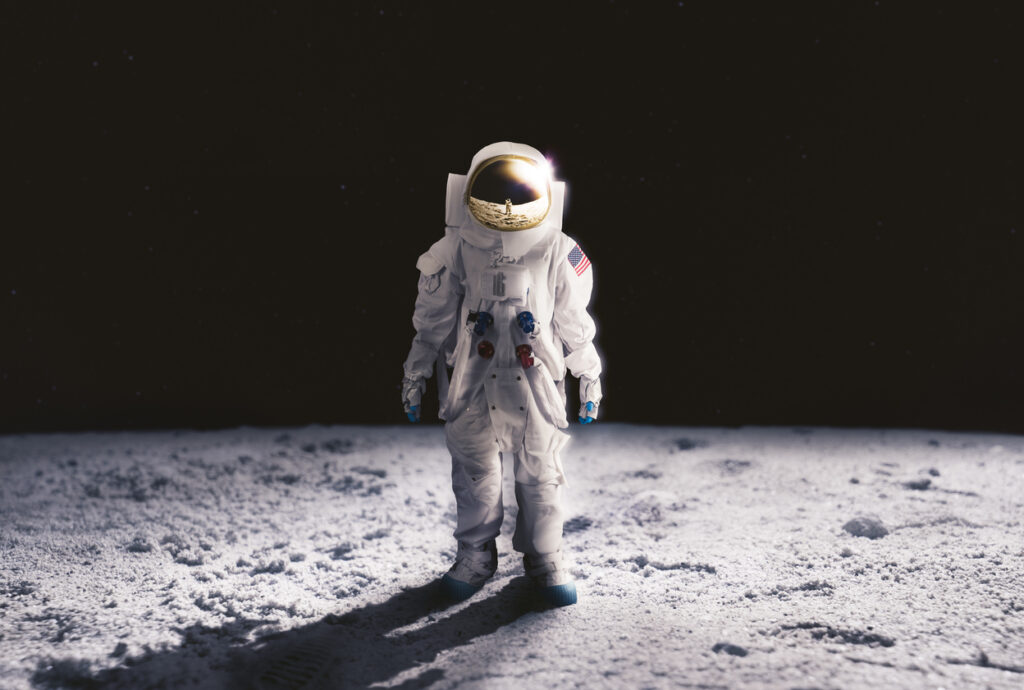
Certain photographs show objects lit from multiple angles or shadows going in different directions, which suggests studio lighting rather than a single light source like the sun. Some images also show illuminated areas that should theoretically be in shadow.
The lunar surface reflects light, and the landing module itself created reflected light, producing illumination from multiple directions naturally. The uneven terrain also creates shadows at varying angles, but it does look staged at first glance.
The footage looks like it was slowed down.
When you speed up the moon landing footage, astronauts moving in one sixth gravity look remarkably like people moving at normal speed on Earth. That similarity makes people suspicious that it’s just slowed film of people in a studio. While the similarity exists, speeding up footage also distorts other elements that don’t match Earth physics. The dust kicked up by boots falls in ways that only work in a vacuum with low gravity, which would be nearly impossible to fake.
There’s a mysterious object reflected in a helmet.
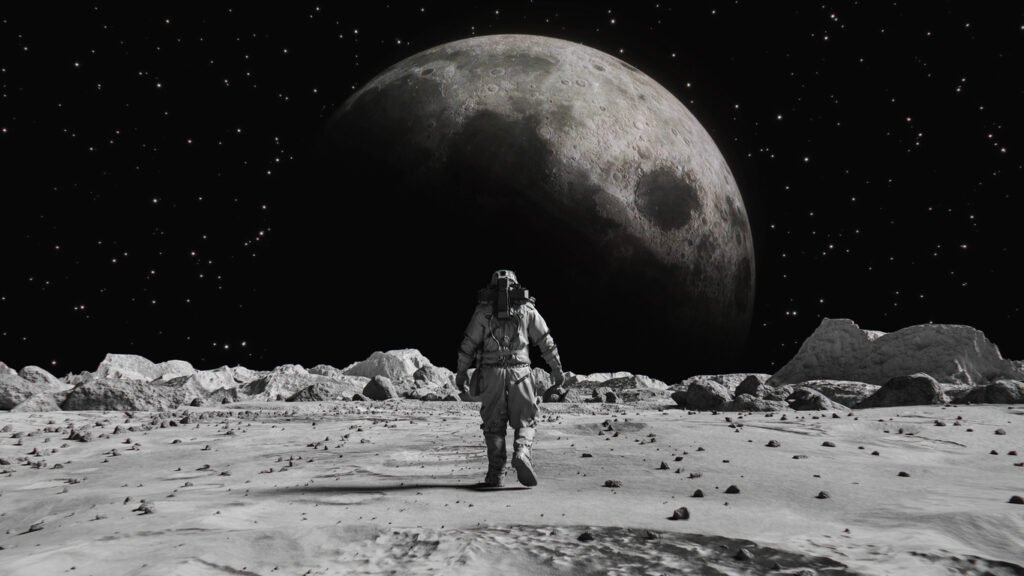
Close examination of helmet reflections in certain photos shows what appears to be a figure without a spacesuit or possibly studio equipment. These anomalies suggest other people were present who weren’t supposed to be there. The reflections are actually other suited astronauts, equipment, or artifacts from the camera and development process. But the graininess and distortion in magnified reflections do create shapes that look suspicious if you’re already doubting.
The technology wasn’t advanced enough in 1969.
Modern smartphones have more computing power than the Apollo guidance computer, which makes people question how NASA managed such a complex mission with 1960s technology. It seems impossible that ancient computers could navigate to the moon and back.
The Apollo computer was sufficient for its specific task, and the mission relied heavily on ground-based calculations and manual piloting. But the technological gap between then and now does make it feel implausible to younger generations.
The Van Allen radiation belts should have killed them.
Earth is surrounded by intense radiation belts that would expose astronauts to dangerous levels of radiation. Sceptics argue that passing through these belts, even briefly, would have caused severe radiation sickness or death.
The trajectory was planned to minimize time in the most intense parts of the belts, and the spacecraft provided shielding. Astronauts did receive radiation exposure, but within safe limits, though sceptics argue the shielding wasn’t adequate for survival.
No blast crater exists under the lunar module.
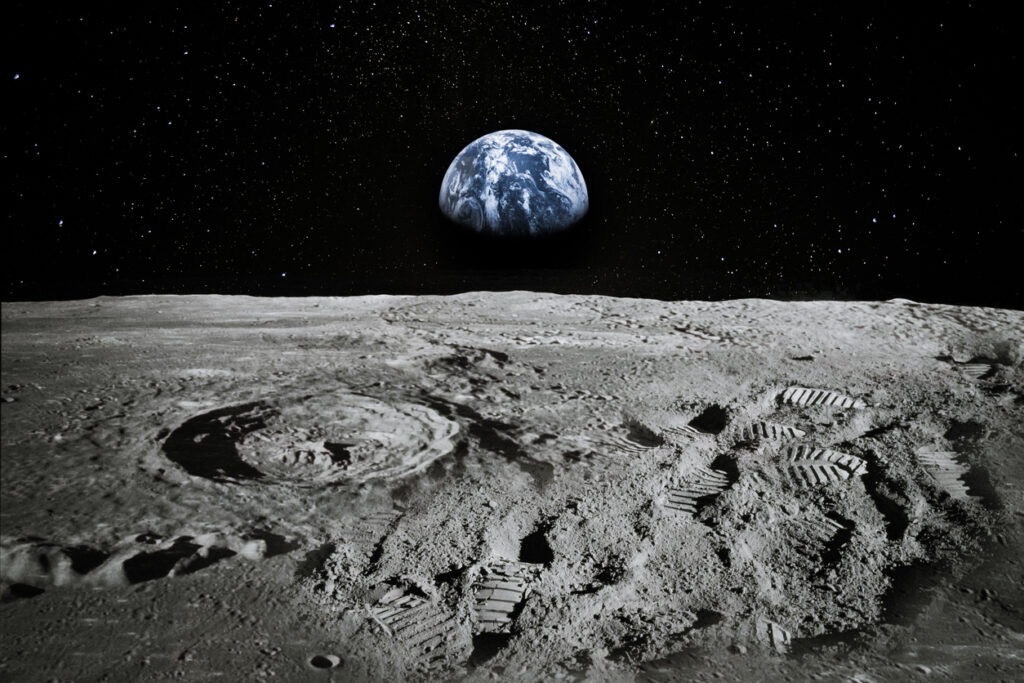
The landing module’s descent engine should have created a crater or at least disturbed a significant amount of surface dust, yet photos show relatively undisturbed ground beneath it. That suggests the module was placed there rather than landed. The engine thrust was reduced near landing, and the lunar surface is harder than it appears once you get past the top layer. But the lack of dramatic disturbance does look odd given the power required to slow the descent.
Multiple countries were in a space race.
The Soviet Union had every reason to expose a fake moon landing and the technology to track the mission and verify or debunk it. The fact that they never claimed it was faked is used both to support and question the landing’s authenticity. Some sceptics argue the Cold War rivals collaborated on the deception for political reasons. Others say if Russia couldn’t prove it was fake, it probably wasn’t, which actually supports the landing’s legitimacy more than questions it.
Whistleblowers would have come forward by now.

Thousands of people worked on the Apollo programme, and sceptics argue that if it was faked, someone would have talked by now. The absence of credible whistleblowers after 50 years suggests it actually happened. Counter to this, conspiracy believers say whistleblowers have come forward but were silenced or discredited. They point to supposed deathbed confessions and anonymous testimonies, though none have provided verifiable evidence.
The footage looks staged and rehearsed.
Everything about the moon landing broadcasts looks too perfect, too choreographed, like a performance rather than a genuine exploration. Astronauts sound scripted in their communications, and movements seem planned rather than spontaneous.
The missions were extensively rehearsed and procedures were strictly followed, which would make them seem choreographed. Astronauts were also trained to communicate clearly, making their transmissions sound more formal than casual conversation.
There’s a “C” marked on a rock in one photo.
A famous photograph shows what appears to be the letter C printed on a rock and a matching C on the ground nearby, suggesting props were labelled for a film production. It’s treated as smoking gun evidence of fakery. Analysis suggests the C is either a hair or mark that appeared during photo processing or printing, rather than something actually on the moon. But it’s become one of the most cited pieces of “evidence” for conspiracy believers.
The crosshairs appear behind objects in some photos.
Camera crosshairs meant to be in front of everything sometimes appear to go behind bright objects in moon photos. This suggests the images were manipulated or composited rather than being straight photographs. The effect happens when very bright objects overexpose the film, causing the thin black crosshair lines to wash out where they overlap the brightness. It’s a photographic artifact, but it does create the impression of manipulation.
Distrust in government fuels the theory.
At its core, moon landing denial often stems from broader distrust of government institutions and official narratives. People who believe they’ve been lied to about other things find it easier to believe the moon landing was another deception.
That scepticism isn’t entirely baseless, given documented government deceptions throughout history. Once trust is broken, even legitimate achievements get questioned, and the moon landing becomes another thing that seems too convenient to be true.