
Saturn’s rings are one of the most recognisable sights in our solar system, but they won’t last forever. While a natural phenomenon makes them look like they’re gone thanks to an optical illusion that happens every 15 to 20 years, this is different. Recent research shows they are disappearing much faster than scientists once thought. Here’s what we know about their fading beauty, and what that might mean for the rest of the Milky Way (and the universe at large).
The rings are made of ice and rock.
Saturn’s famous rings aren’t solid discs, but billions of icy and rocky particles orbiting the planet. They range in size from tiny grains of dust to chunks as large as mountains. The constant swirl of material reflects sunlight, giving the rings their dazzling glow. However, that same material is fragile, easily influenced by Saturn’s gravity and surrounding forces.
They’re surprisingly young.
For years, scientists assumed the rings formed with Saturn over four billion years ago. But recent studies suggest they are much younger, possibly only 100 million years old. That means the rings may have appeared long after Saturn itself formed. If true, their short lifespan becomes even more striking. They’re a temporary feature in cosmic terms, in other words.
Gravity is pulling the rings down.
Saturn’s immense gravity constantly tugs at its rings, pulling particles toward the planet. As they drift in, they burn up in the atmosphere like falling snow. This process, sometimes called “ring rain,” slowly drains the rings of their mass. What looks stable from afar is really a delicate, vanishing system.
The Cassini mission revealed the truth.
NASA’s Cassini spacecraft, which orbited Saturn between 2004 and 2017, gave scientists their clearest view of the rings. It found that material is falling into Saturn much faster than expected. The mission showed that enough ring material is lost every half hour to fill an Olympic swimming pool. At that rate, the rings could vanish within a few hundred million years.
Collisions help break them down.

Particles within the rings are constantly colliding with each other. These crashes grind down larger chunks into smaller pieces, making them more vulnerable to Saturn’s pull. As time goes on, that self-destructive cycle accelerates the rings’ disappearance. The very forces that keep them in orbit also contribute to their eventual loss.
Saturn’s moons play a role.
The planet’s many moons tug at the rings with their own gravity, shaping them into distinct bands and gaps. While this creates the rings’ striking patterns, it also destabilises them. These gravitational nudges push material inwards or fling it outwards, adding to the slow erosion. The moons help sculpt the rings, but they also speed up their decline.
The rings are not evenly spread.
Some parts of Saturn’s rings are much denser than others, which means they are disappearing at different rates. The thinner, dustier regions are especially vulnerable to erosion. That uneven loss gives scientists clues about how the rings formed. Studying the variations helps explain which parts might survive longest and which are already slipping away.
Their disappearance changes Saturn itself.
As ring particles fall into Saturn, they interact with the planet’s magnetic field and atmosphere. This changes Saturn’s chemistry and even affects its weather patterns. In this way, the rings are not just ornaments. They actively shape Saturn’s environment, meaning their loss will leave a permanent mark on the planet.
They won’t last forever.
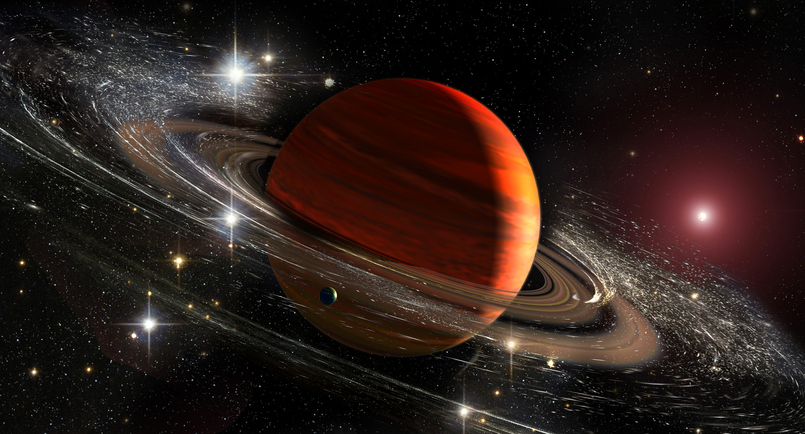
At the current rate of decay, Saturn’s rings may be gone in less than 300 million years. That sounds long, but in the life of the solar system it is brief. We live in a rare window of time when Saturn still wears its rings. Future observers, millions of years from now, may see only a bare planet.
Their fading reminds us of cosmic impermanence.
Saturn’s rings are breathtaking, but their impermanence is part of what makes them remarkable. They show us that even the grandest celestial features have lifespans. Rather than diminishing their beauty, knowing they are temporary makes them even more precious. The rings are a reminder that nothing in the universe is permanent, not even Saturn’s crown.