
The idea of humans packing up and moving to another planet has been sold to us for decades as basically inevitable: Mars colonies, space cities, fresh starts somewhere with better views and fewer problems. It sounds exciting, almost comforting, like there’s a cosmic backup plan waiting if Earth gets too messy. The trouble is, that version of the future skips over some brutally inconvenient realities.
Once you strip away the sci-fi gloss and look at the practical side, living anywhere other than Earth starts to look less like an adventure and more like a constant fight against physics, biology, and basic survival. It’s not that humans lack ambition or clever ideas. It’s that Earth happens to be absurdly well-suited to us in ways we can’t easily recreate, no matter how advanced our tech gets. And when you line up everything we’d be giving up, the dream of settling another planet starts to look a lot less realistic than people like to admit.
Space radiation would destroy your body in the long run.
@mindsnack.education Living on Mars sounds cool — but it’s almost impossible. No breathable air, freezing nights, deadly radiation, and toxic soil. Surviving there would take technology we don’t fully have yet. #facts #fyp #DidYouKnow #MindSnack #LearnOnTikTok #space ♬ Cornfield Chase – Hans Zimmer
Earth’s magnetic field shields us from cosmic radiation and solar particles that constantly bombard everything in space. Other planets either don’t have this protection or have much weaker versions of it, which means colonists would be exposed to radiation levels that cause cancer, damage DNA, and destroy brain cells. You can’t just build thicker walls to stop it either because the kind of shielding you’d need would be so heavy and expensive that constructing it on another planet becomes almost impossible. Even a few years of exposure would drastically shorten your lifespan and cause serious health problems, and there’s no technology on the horizon that changes this reality.
Your bones and muscles would waste away in different gravity.
Mars has about 38% of Earth’s gravity, and other planets are even more extreme in either direction. Your body evolved for Earth’s specific gravitational pull, and when that changes, everything starts to break down. Astronauts on the International Space Station lose bone density and muscle mass even with rigorous daily exercise, and they’re only up there for months, not years or lifetimes. On Mars, your heart wouldn’t have to work as hard so it would weaken, your bones would become brittle because they’re not bearing proper weight, and your entire musculoskeletal system would deteriorate. Children born in low gravity might develop completely differently and possibly couldn’t even survive if they ever came to Earth.
The distance makes any kind of support impossible.
Mars is about 140 million miles away at its closest point, which means a radio signal takes between 4 and 24 minutes to reach Earth depending on where the planets are in their orbits. If something goes wrong, you can’t call for help, you can’t get emergency supplies, and you can’t evacuate. A medical emergency that would be treatable on Earth becomes a death sentence when the nearest hospital is millions of miles away. The psychological weight of knowing you’re completely on your own, with no possibility of rescue, would be crushing for most people.
There’s no air to breathe anywhere else.
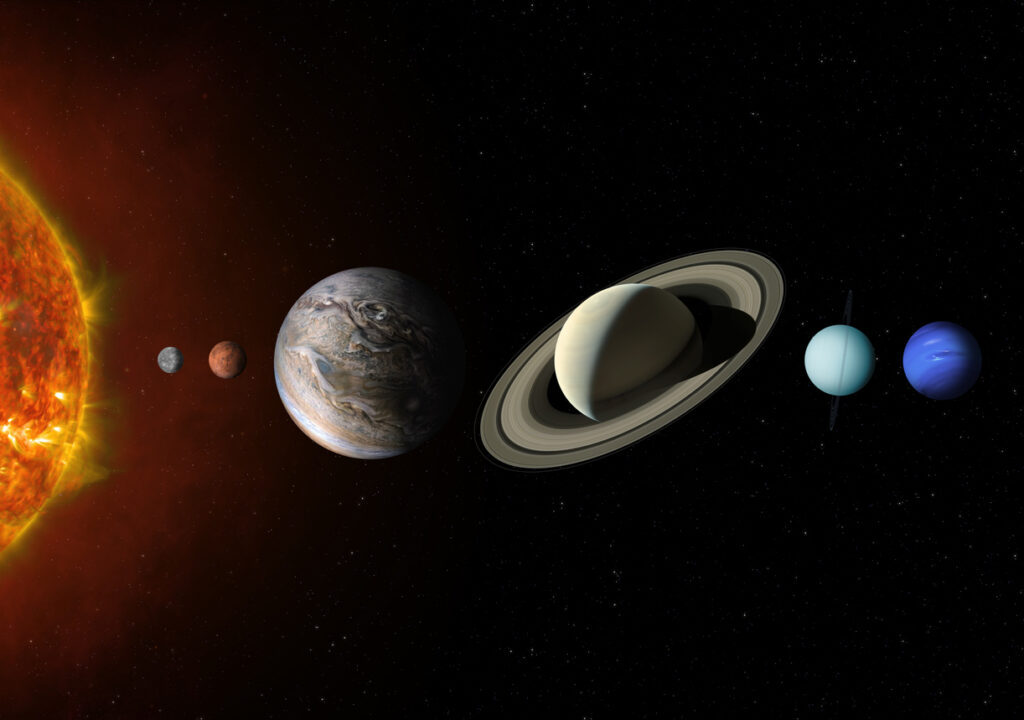
Mars has an atmosphere that’s 95% carbon dioxide and so thin you’d die in seconds without a spacesuit. You’d need to generate breathable air constantly, and any failure in that system means everyone dies before you can fix it. Relying on technology for literally every breath you take, forever, with no backup option if it fails, isn’t really living. One equipment malfunction, one fire, one structural breach, and hundreds or thousands of people suffocate. The psychological burden of knowing that a mechanical failure means instant death would be constant and inescapable.
The temperatures are lethal without constant protection.
Mars averages about minus 60 degrees Celsius, with nights dropping to minus 125. Venus is over 450 degrees Celsius, hot enough to melt lead. These aren’t temperatures you can adapt to or dress for, they require constant artificial heating or cooling, which requires constant energy, which requires constant maintenance. If your heating system fails during a Martian night, you freeze to death in your sleep. Everything becomes dependent on technology working perfectly, all the time, with no breaks, forever. That’s not sustainable for a civilisation.
Water and food don’t exist in usable forms.
@understand.univer Why humans can't survive on Mars #astrology #universe #skywatcher #mars ♬ original sound – Understand Universe
Mars might have water ice underground, but extracting it, purifying it, and distributing it would require massive infrastructure that you’d have to build and maintain. Growing food in Martian soil isn’t possible without completely altering it first because the soil is toxic and lacks the nutrients and microorganisms that make Earth soil work. You’d need to bring everything with you or manufacture it, which means you’re not really colonising a new world, you’re just building an incredibly expensive box to live in that happens to be on another planet. The moment your supply chains fail, everyone starves.
The isolation would break most people mentally.
Being stuck in a small habitat with the same few dozen or few hundred people, unable to go outside without a suit, unable to see anything green or alive, unable to breathe fresh air or feel rain or hear birds, would drive many people to severe depression and anxiety. Studies on isolated research stations show that even highly trained people struggle with the monotony and confinement. Now imagine that’s your entire life, forever, with no holiday, no escape, no variety. The suicide rate would likely be catastrophic, and there’s no therapist or treatment that fixes the fundamental problem of being trapped in a hostile environment.
The cost makes it completely impractical.
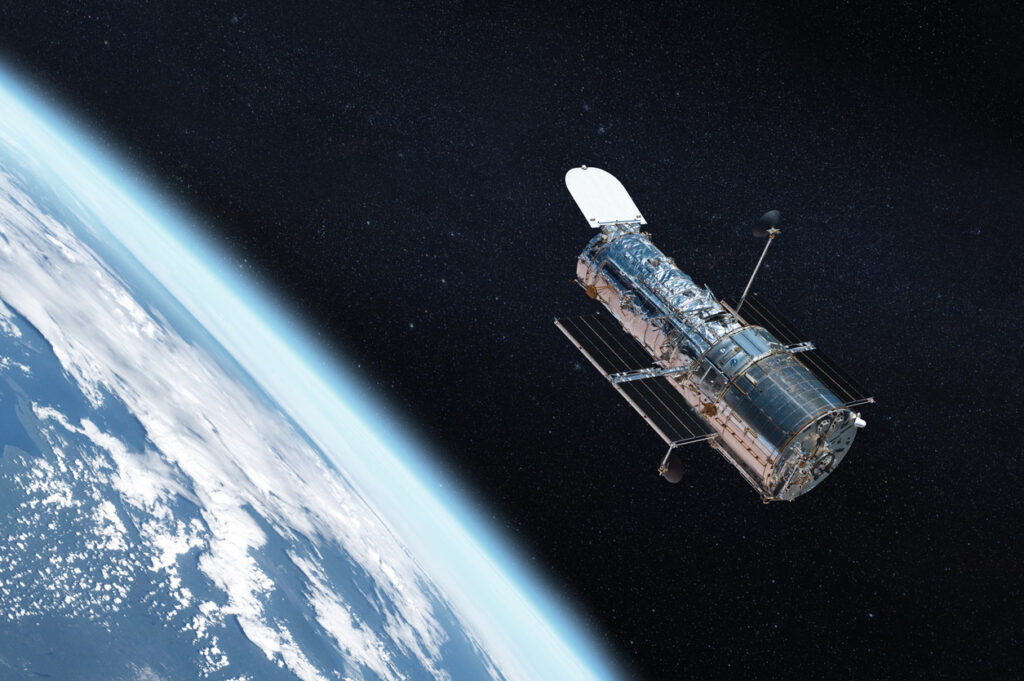
Sending one kilogram of cargo to Mars costs tens of thousands of pounds, and a human colony would need millions of kilograms of equipment, supplies, and building materials. We’re talking trillions of pounds to establish even a small settlement, and then ongoing costs to keep it supplied and maintained. That money could solve virtually every problem on Earth instead, from climate change to poverty to disease. Spending it to put a few people in a glorified prison on a dead planet makes no economic or ethical sense when Earth desperately needs those resources.
Human reproduction might not even work properly.

We have no idea if human pregnancy would proceed normally in low gravity or high radiation environments. Animal studies suggest it probably wouldn’t, and the developmental problems could be severe. A society that can’t reproduce naturally isn’t viable long-term, and the idea of raising children in an environment where they can never go outside, never experience Earth, and never have normal childhoods is ethically horrific. You’d essentially be condemning future generations to a life of confinement and hardship they never chose.
We’d basically have to bring Earth with us anyway.
To survive on another planet, you’d need to recreate Earth’s atmosphere, temperature, gravity, radiation protection, water cycle, food systems, and ecosystems inside artificial structures. At that point, you’re not colonising another planet, you’re just building an incredibly expensive and fragile simulation of Earth in the worst possible location. If we have the technology to do all that, we’d be far better off using it to fix Earth’s problems or build space stations in orbit where you can actually control the environment. The planet itself adds nothing except danger and difficulty.