
Listen, don’t act like you’ve never looked at a goat and thought, “Uh, what’s up with their eyes?” They’re weird, right? Goat eyes look like they belong in a horror movie with those creepy rectangular pupils, but there’s actually some seriously clever evolutionary design behind those bizarre-looking peepers. Here’s some completely random trivia about them that might pop up at your next pub quiz night.
1. They’re basically built-in panoramic cameras.
Those horizontal, rectangular pupils give goats an incredibly wide field of vision. We’re talking almost 340 degrees compared to humans’ measly 180 degrees. It’s like having ultra-wide-angle lenses permanently installed in their heads, which is pretty useful when you’re a prey animal that needs to spot predators coming from basically any direction.
This wide-angle vision means goats can see what’s happening behind them without turning their heads, which is why they always seem to know you’re there even when you think you’re sneaking up on them. They’re not psychic; they just have better peripheral vision than a security camera system.
2. The shape helps them see predators while eating.
When goats put their heads down to graze, those rectangular pupils stay horizontal relative to the ground, giving them a clear view of the horizon where predators are most likely to appear. It’s like having a built-in early warning system that works even when they’re focused on finding the best grass.
Round pupils like ours would give them a much more limited view when their heads are down, but the rectangular shape maintains that wide horizontal scan of their surroundings. Basically, they can eat and watch for danger at the same time without having to constantly lift their heads.
3. They control light intake way better than round pupils.
Rectangular pupils can close down to tiny slits in bright light, giving goats much more precise control over how much light enters their eyes compared to round pupils. This is super useful for animals that are active during the day and need to deal with varying light conditions from dawn to dusk.
When the sun is blazing, those pupils can become almost completely closed slits, protecting their retinas from damage while still allowing enough light in to see properly. It’s like having built-in sunglasses that automatically adjust to the perfect setting.
4. Their eyes can rotate independently of their heads.
This is the really freaky part: goat eyes can actually rotate in their sockets to keep those rectangular pupils horizontal even when they tilt their heads at weird angles. So even if a goat is standing on a slope or has its head turned sideways, those pupils stay level with the horizon.
This independent eye rotation means their vision system is always optimized for spotting movement along the ground level where predators would approach, regardless of what position their head is in. It’s like having gyroscopic stabilization for their eyeballs.
5. The pupil shape enhances depth perception for jumping.
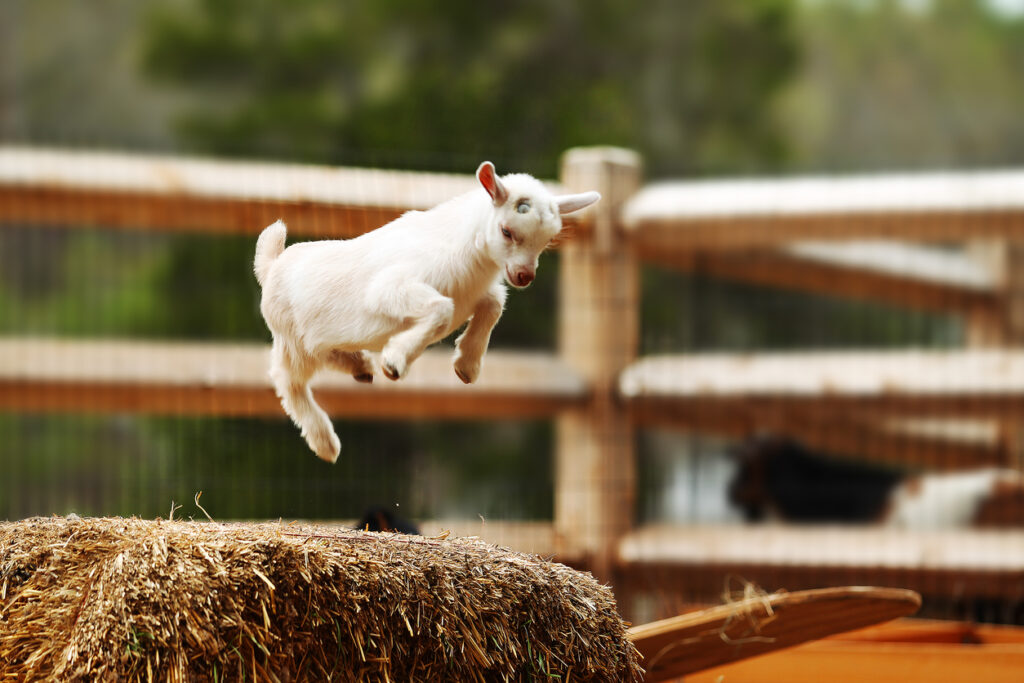
Goats are incredible climbers and jumpers, and those rectangular pupils actually help them judge distances and heights more accurately when they’re navigating rocky terrain or leaping between surfaces. The horizontal orientation gives them better depth perception for gauging how far they need to jump.
This enhanced depth perception is crucial when you’re bouncing around on cliff faces or trying to land precisely on narrow ledges. One miscalculation could mean a very long fall, so having pupils specifically designed for accurate distance judgment is literally a lifesaver.
6. They’re optimized for detecting horizontal movement.
Predators typically approach along the ground in horizontal movement patterns, and rectangular pupils are specifically designed to be extra sensitive to this type of motion. It’s like having motion detectors that are tuned to pick up the exact kind of movement that means “danger approaching.”
This horizontal motion sensitivity means a goat can spot a predator moving through grass or behind rocks much more easily than if it were moving vertically. Their visual system is basically optimized to detect the most common type of threat they’re likely to encounter.
7. The shape reduces glare from water and wet surfaces.
Those slit-like pupils are excellent at reducing glare, which is super helpful for animals that often graze near water sources or on dewy grass. Glare can completely mess up your ability to see clearly, and for a prey animal, temporarily impaired vision could be fatal.
The horizontal orientation of the pupil naturally filters out a lot of the harsh reflected light that bounces off water or wet surfaces, allowing goats to see clearly even in conditions that would have other animals squinting and struggling to make out details.
8. They work better in low light than you’d expect.

Despite being able to close down to tiny slits in bright light, rectangular pupils can also open up really wide in dim conditions, giving goats surprisingly good night vision. The shape allows for a larger opening than you might think, letting in maximum light when needed.
This flexibility means goats can be active during dawn and dusk hours when many predators are hunting, while still being able to see well enough to navigate safely and spot potential threats. It’s like having pupils that work as both telephoto and wide-angle lenses, depending on the lighting.
9. The weird shape actually improves focus.
Rectangular pupils create what’s called “multifocal vision,” which means different parts of the goat’s visual field can be in focus at the same time. This is incredibly useful for animals that need to monitor multiple things simultaneously, like watching for predators while also keeping track of where they’re stepping.
This multifocal ability means goats don’t have to constantly refocus their eyes the way humans do when switching attention between near and far objects. They can maintain awareness of both immediate surroundings and distant threats without the visual lag that comes with refocusing.
10. They help with colour discrimination in grass.
The shape and size of goat pupils enhance their ability to distinguish between different shades of green, which is pretty important when your entire diet consists of plants, and you need to identify the most nutritious options. Better colour discrimination means better food choices.
This enhanced green-spectrum vision helps them identify younger, more tender shoots versus older, tougher plant material, and can even help them spot which plants might be harmful to eat. It’s like having a built-in quality control system for their food.
11. The pupils minimize blind spots.

The wide horizontal shape of rectangular pupils significantly reduces blind spots compared to round pupils, especially in the crucial areas where predators are most likely to approach from. This means there are fewer places where something dangerous could hide without being detected.
Having minimal blind spots is essential for prey animals because predators specifically try to exploit these visual gaps when planning attacks. Rectangular pupils essentially eliminate most of the vulnerable spots in a goat’s visual field.
12. They’re part of a whole visual system designed for survival.
Those weird rectangular pupils don’t work alone. They’re part of an entire visual system that includes eyes positioned on the sides of their heads, specialized muscles for independent eye movement, and enhanced motion detection capabilities. It all works together to create a comprehensive early warning system.
This complete visual package makes goats incredibly difficult to sneak up on, which is exactly what you want when you’re an animal that lots of other animals would like to eat. Every weird feature of their eyes serves a specific purpose in keeping them alive long enough to reproduce and pass on those same survival advantages.