
It’s one of those “hang on, how?” moments. Woodpeckers spend most of their day smashing their heads into solid wood at full force. If we tried that, we’d end up concussed in seconds. So how are these little birds somehow completely fine? Here’s what’s actually going on inside a woodpecker’s head, and why they’re built for a job that should honestly be ridiculous.
Their skulls are built like shock absorbers.
Woodpeckers have a thick, spongy layer of bone at the front of their skulls that compresses slightly with each impact. Think of it like a built-in crash helmet—it absorbs a lot of the force, so their brains don’t have to. Unlike our skulls, which are more rigid, a woodpecker’s is designed to flex just enough to reduce brain trauma. Every time they peck, they’re taking advantage of this natural cushion, which helps protect them from the kind of brain injuries we’d definitely get.
Their brains are tiny, and that’s a good thing.
It might sound harsh, but one of the main reasons woodpeckers don’t get concussions is because their brains are so small. Less mass means less movement inside the skull during impact. In larger animals (like us), the brain has more room to bounce around, which is what causes damage in a concussion. In woodpeckers, the brain fits tightly in the skull and doesn’t jiggle about. Small, snug, and safe—perfect for the job.
Their beaks distribute the impact.
The upper and lower parts of a woodpecker’s beak are slightly different in length and density. This weird design helps spread the force of the peck through their beak instead of straight back into their skull. It’s a bit like hitting a nail with a padded hammer instead of a steel one. The force still gets transferred, but it’s softened along the way. Clever little design quirk that’s helped them evolve into head-bangers with no regrets.
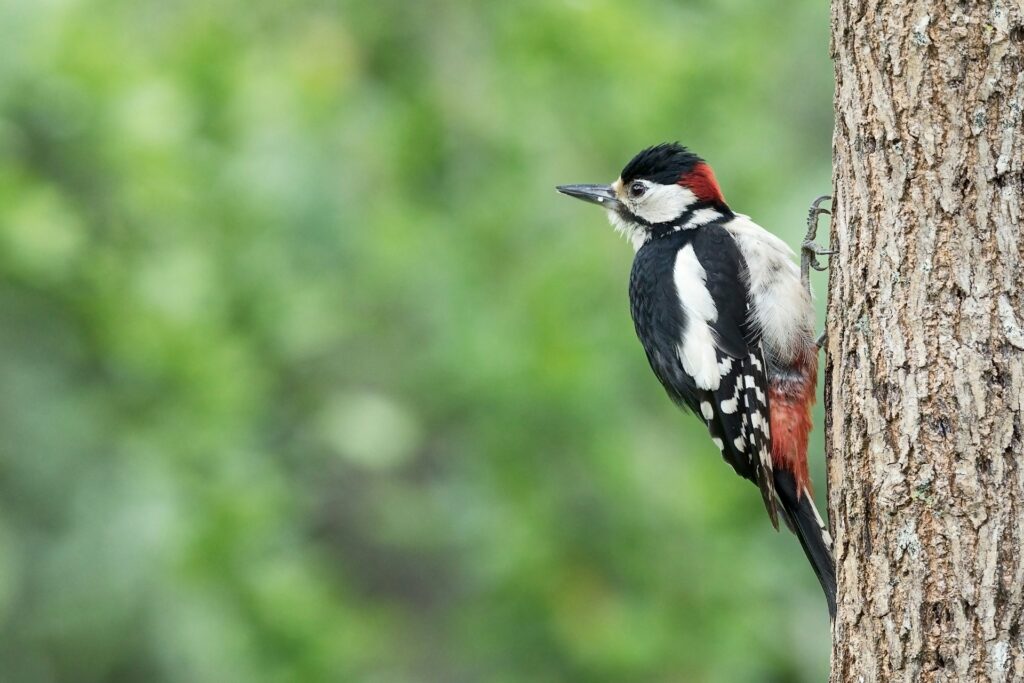
They have a built-in seatbelt for their brain.
A strong membrane called the hyoid wraps around a woodpecker’s skull and brain like a seatbelt. It’s not something we have, but for them, it acts as an extra layer of security to keep everything in place. This structure is super important. Every time they peck, that hyoid acts like a restraint system—keeping the brain from shifting and reducing the risk of damage. Without it, they’d probably be in trouble fast.
Their pecking technique actually helps.
Woodpeckers don’t just wildly bash their heads into trees—they have surprisingly controlled movements. They strike in a straight line and pull back immediately, which reduces the rotational forces that are more likely to cause concussions. It’s not just brute force. It’s a perfected rhythm, like a drummer hitting a beat. Less twisting, less bouncing, and way more precision than you’d expect from something so loud and chaotic.
They take micro breaks constantly.
Even though it seems like non-stop hammering, woodpeckers don’t actually peck continuously. They take mini breaks between bouts, which gives their bodies and brains a moment to reset. These tiny pauses might not look like much, but they’re important. It’s just enough downtime to prevent fatigue and reduce the chance of repetitive stress, which helps avoid long-term damage.
Their brains are positioned at the back of the skull.
This might seem like a small detail, but it makes a big difference. A woodpecker’s brain is positioned more toward the back of the skull, which means it’s not directly in the line of impact. By keeping their brain tucked out of the way, they reduce the risk of front-on trauma. It’s like having your most delicate tech wrapped in extra packaging at the far end of a delivery box.
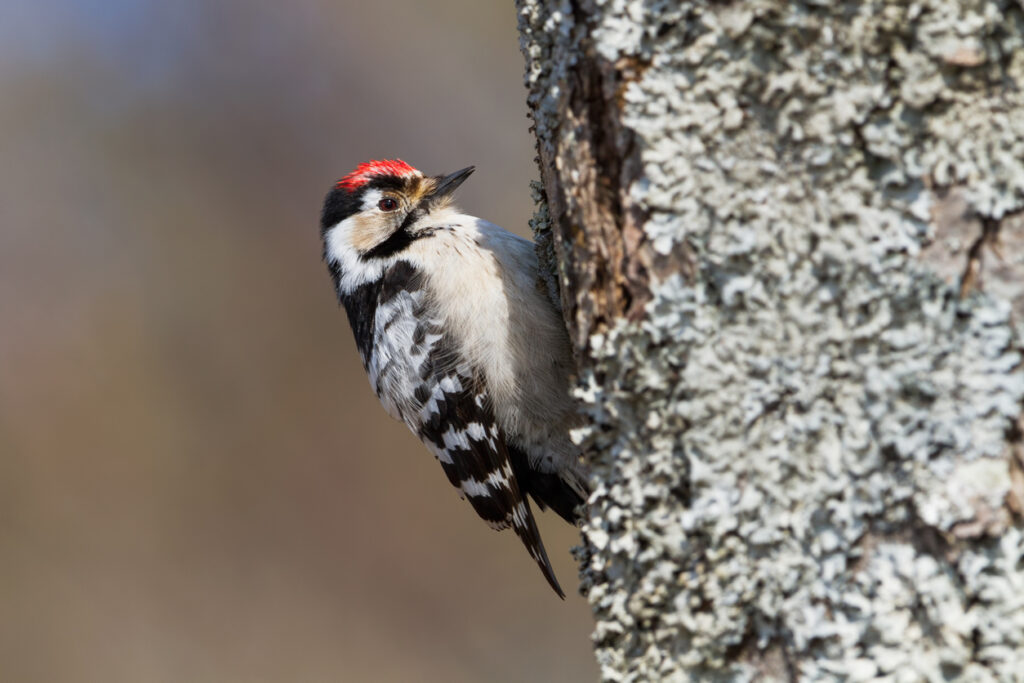
The angle of impact matters.
Woodpeckers always hit the tree at a very specific angle. They don’t go in sideways or at a weird tilt—they aim straight and clean. This helps reduce shearing forces that could twist or rattle the brain. It’s like how you’re told to bend your knees when you land from a jump. Proper technique reduces impact, and woodpeckers have basically mastered their own version of it over millions of years.
They’ve evolved for it—literally.
This isn’t just a lucky accident. Woodpeckers have been adapting to this lifestyle for millions of years. Every part of their anatomy—from their neck muscles to their beak shape—has changed to support their extreme head-banging habit. So while it looks wild to us, to them, it’s totally normal. Nature has spent a long time tweaking and fine-tuning their bodies for the job, and the result is a bird that can safely do something no other creature really can.
Yes, they do have a limit.
Woodpeckers are tough, but they’re not invincible. Studies have found that if they were to peck more than about 12,000 times a day (which is rare), they could start to experience minor damage over time. However, that’s not how they work. They’ve got natural limits and instinctively stay within them. They know when to stop, when to rest, and how to survive doing something that, frankly, no human skull could ever endure.