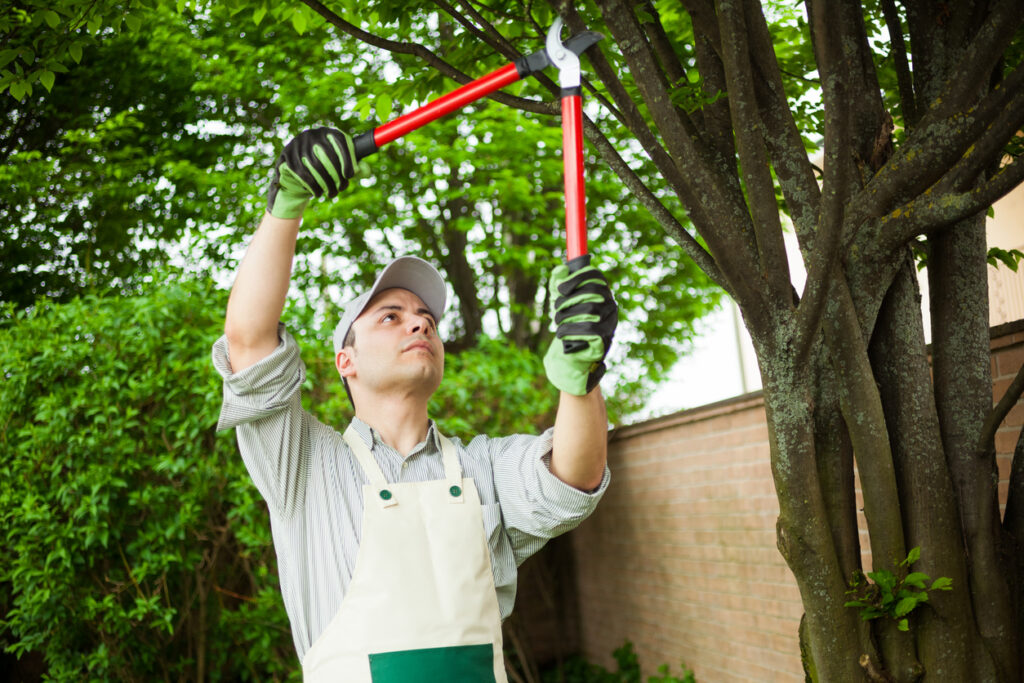
Tree pruning sounds simple enough until you’re standing under a tangled canopy with no idea what to snip, what to leave, or whether you’re about to make things worse. Done right, pruning keeps trees healthy, balanced, and looking their best. Done wrong, it can stunt growth, invite disease, or just leave your tree looking sad and lopsided. Before you dive in with the loppers, here’s what you actually need to know to prune with confidence (and not regret).
Timing matters more than you think.
Pruning at the wrong time of year can stress a tree, interfere with flowering, or even invite disease. As a general rule, most trees prefer pruning in late winter or very early spring, right before new growth starts. This avoids heavy sap loss and gives the wounds time to heal before pests and pathogens wake up.
That said, some trees have their own schedule. For example, stone fruit trees like cherry and plum are best pruned in summer to avoid silver leaf disease. Always check the specific needs of your tree before booking your weekend gardening session.
Less is usually more.
It’s tempting to go in hard and strip back every awkward branch you see, but trees don’t appreciate extreme makeovers. Removing more than 25% of a tree’s canopy in one go can seriously shock it, potentially leading to dieback or stress-related disease.
Instead, aim for gradual improvements over a couple of seasons. Focus on shaping, spacing, and removing dead or weak growth. Trees take time to adapt, and gentle tweaks will lead to stronger, healthier growth in the long run.
Always cut just above a bud or branch.
When making cuts, aim just above a healthy bud or side branch that’s pointing in the direction you want new growth to go. Cutting too far above leaves a stub that won’t heal well, while cutting too close can damage the bud. This approach helps guide the tree’s future shape while encouraging stronger, more directed regrowth. Clean, angled cuts are best—they prevent water pooling and reduce the risk of rot or fungal issues.
Don’t ignore the three D’s: dead, diseased, and damaged.
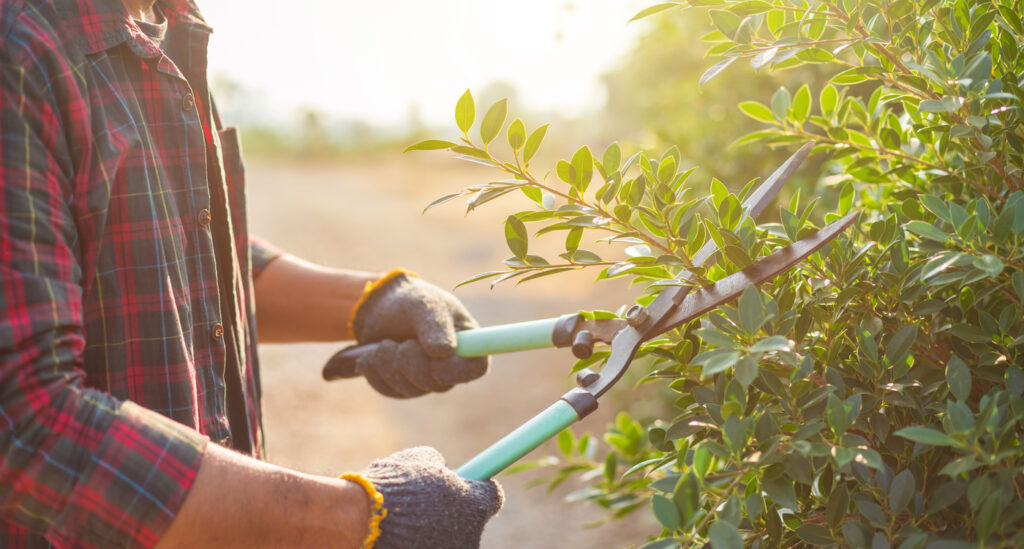
One of the simplest rules in pruning is to start with what’s obviously not helping. Dead, diseased, or damaged branches should be the first to go. They can harbour pests or infection, and they put unnecessary stress on the rest of the tree. Look for branches that snap easily, show signs of decay, or have visible wounds. Clearing them out gives the tree more energy to put into healthy growth and prevents larger issues down the line.
Crossing branches need attention.
When branches rub or cross, it creates weak points and open wounds that can easily become infected. These should be pruned out early, especially in young trees, before they start causing structural problems. Choose the stronger or better-placed branch to keep, and remove the one that’s causing friction. This small step goes a long way in shaping a tidy, resilient framework for your tree as it matures.
Know your tree’s natural shape.
Every tree has a preferred structure. Some like a central leader (one main trunk), while others grow better with an open centre. Pruning against a tree’s natural form can lead to a confused-looking structure and weakened growth. Before you cut, take a step back and look at the overall form. Prune in a way that works with the tree, not against it. If you’re not sure what its natural shape is, a quick online check or garden book can make a big difference.
Use the right tools, and keep them sharp.
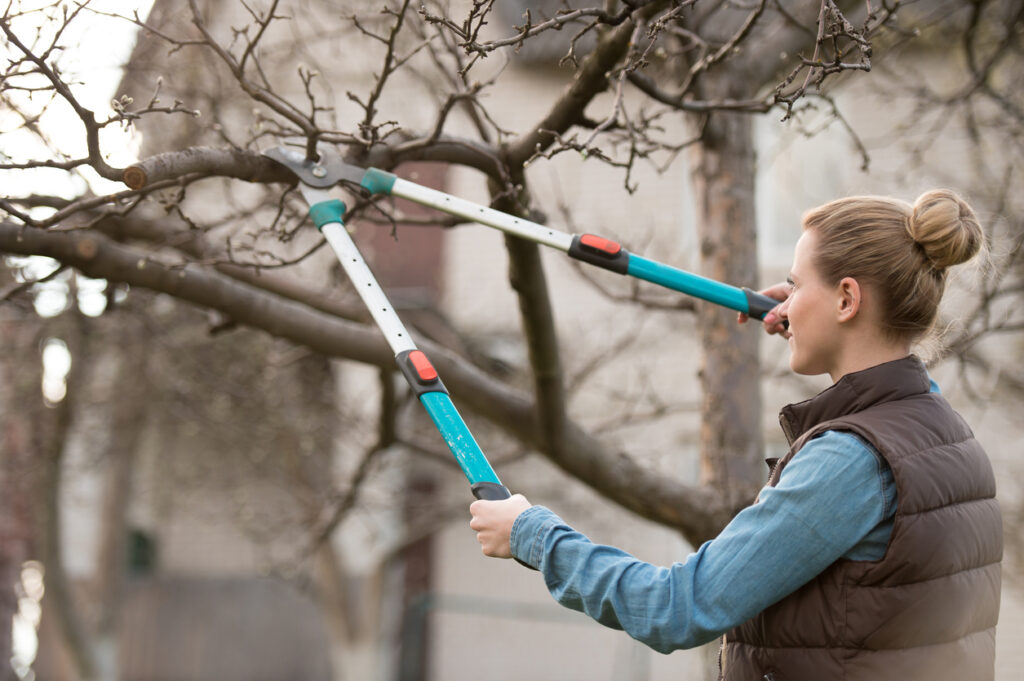
Blunt tools don’t just make the job harder—they crush and tear the wood, creating ragged wounds that take longer to heal. Always use clean, sharp secateurs or loppers sized appropriately for the branch you’re cutting. Sterilise your tools before and after use (especially when dealing with disease) to avoid spreading infections. It’s one of those small steps that makes a huge difference in the long-term health of your trees.
Watch your cuts on big branches.
If you’re removing a large limb, don’t just chop it off in one go. Doing so can cause it to tear down the trunk as it falls, leaving a nasty wound that’s hard for the tree to repair. Instead, use the three-cut method: make an undercut first, then a top cut a few inches further out to remove the bulk, and finally trim the remaining stub cleanly at the branch collar. This helps protect the tree’s structure and reduces long-term damage.
Avoid pruning in wet or frosty conditions.
Cutting when it’s raining or freezing can increase the chance of fungal infections and slow the tree’s ability to heal. Ideally, you want dry weather and mild temperatures—nothing too extreme. Wet conditions also make branches heavier and more prone to snapping unexpectedly. Waiting for a dry day might not be exciting, but your tree (and your safety) will thank you for it.
Not all trees bounce back the same way.
Some trees are resilient and respond well to pruning with fresh growth. Others, not so much. Silver birch, magnolias, and maples, for example, are known to “bleed” sap if pruned too early in the season or too harshly. Understanding your tree’s species helps you tailor your pruning approach. What works for an apple tree could seriously harm a Japanese maple. When in doubt, do a bit of research before grabbing the saw.

Over-pruning can invite sunscald.
Removing too much foliage at once can expose previously shaded areas of bark to harsh sunlight, leading to sunscald—patches of cracked or peeling bark that weaken the tree’s defences. This is particularly common in young or thin-barked trees. A little shade matters more than you’d think, especially after a heavy prune. If you’ve opened things up too much, consider wrapping the trunk temporarily for protection.
Think long-term, not quick fix.
It’s easy to get caught up in making a tree “look better” quickly, but a smart prune is one that considers what the tree will look like in a year or two. Pruning is as much about planning as it is about trimming. Every cut is a choice that shapes future growth, so take your time. Mark branches if needed, step back often, and visualise how the tree will fill out. Your future self (and your tree) will appreciate the extra thought.
Trust your instincts, but don’t be afraid to stop
Sometimes pruning can feel addictive. Once you start, it’s easy to keep going. But if you’re unsure whether to cut something, pause. Over-pruning is hard to undo, but you can always come back to it later. Give yourself time to observe how the tree reacts to your first round of cuts. Trees are slow growers, and it’s okay to take it one season at a time. A careful approach is always better than a rushed one with regrets.