It’s easy to look at a chunky cat and think they’re just well-fed, but carrying that extra weight is a massive health gamble that eventually cuts their life short.

A heavy cat isn’t a happy one; they’re usually struggling with joint pain, breathing issues, or a looming diabetes diagnosis that could’ve been avoided. You might feel like a villain for cutting back on the treats or ignoring those early morning meows for a snack, but you’re actually saving them from a lot of unnecessary suffering.
Getting a cat back to a healthy size takes a lot of discipline on your part because they’ll definitely try to guilt-trip you into overfeeding them. These 12 steps will help you move the needle on their weight without making their life (or yours) completely miserable.
Accept that “a bit chubby” still counts.

A lot of overweight cats don’t look extreme, especially if they have thick fur or a naturally solid build. Extra fat hides easily, and by the time it’s obvious, the body’s already been carrying the load for a while. If you struggle to feel ribs under a gentle touch or your cat has no visible waist from above, weight is likely an issue. Facing that can feel uncomfortable because food is tied to care and affection. Accepting it isn’t supposed to make you feel guilty or judged, but it’s necessary for giving your cat the chance to feel better while changes can still be gentle.
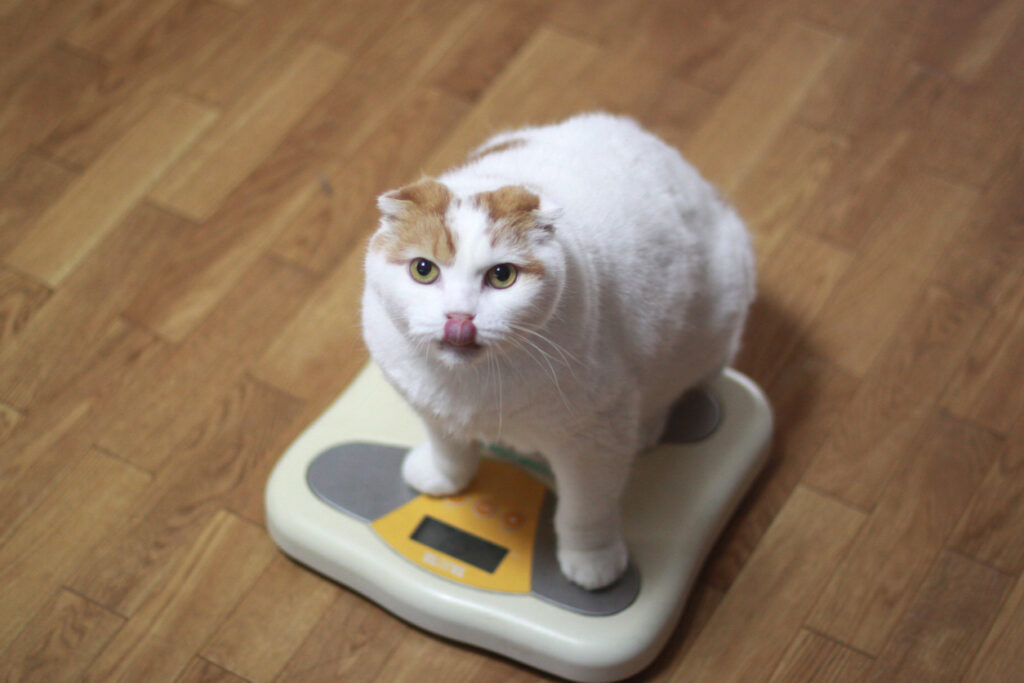
Get a real weight number, not a visual guess.

Cats are hard to judge by sight alone. A proper weigh-in gives you something concrete to work with and removes a lot of uncertainty. Even small changes matter with animals this size. Once you know where you’re starting, progress becomes calmer and more controlled. It helps you avoid panic decisions or overcorrecting out of worry.
Stop leaving food down all day.

Free-feeding makes weight control almost impossible. Many cats eat out of boredom or routine rather than hunger, especially indoor ones. What feels like harmless nibbling often adds up to far more than you realise. Set meal times make intake visible and predictable. Most cats actually settle better when they know when food is coming instead of grazing constantly.
Measure portions every time.
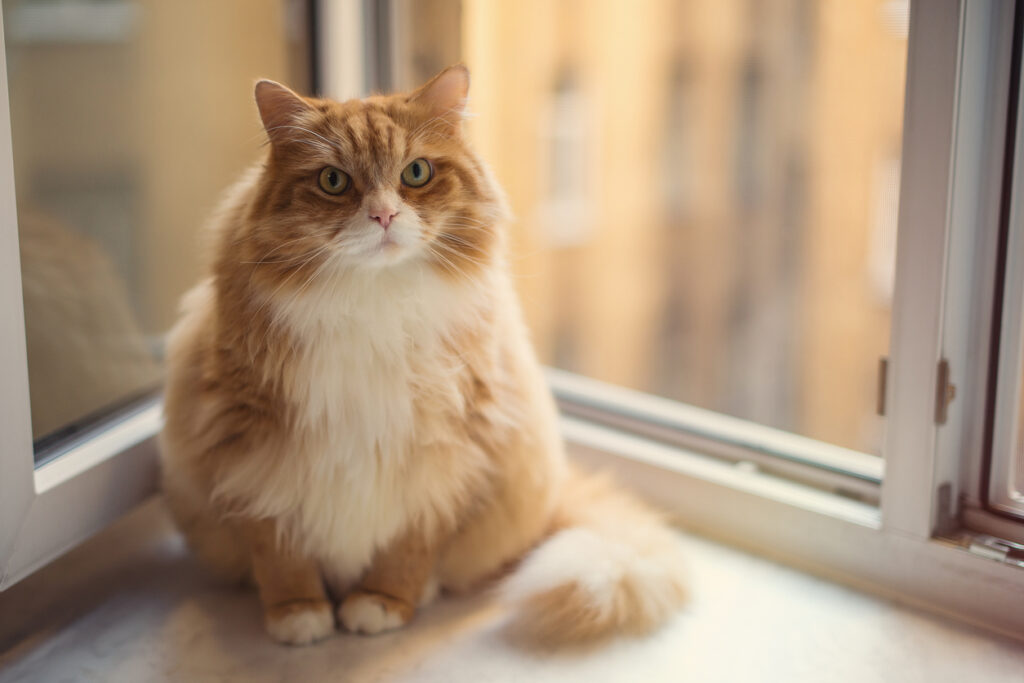
Eyeballing food almost always leads to overfeeding. Dry food especially is easy to underestimate, and just a little extra each day builds up quickly. Cat food is designed to be calorie-dense. Measuring removes emotion from feeding. It turns it into a simple, consistent habit rather than a guess driven by how hungry your cat seems in the moment.
Take a hard look at treats.
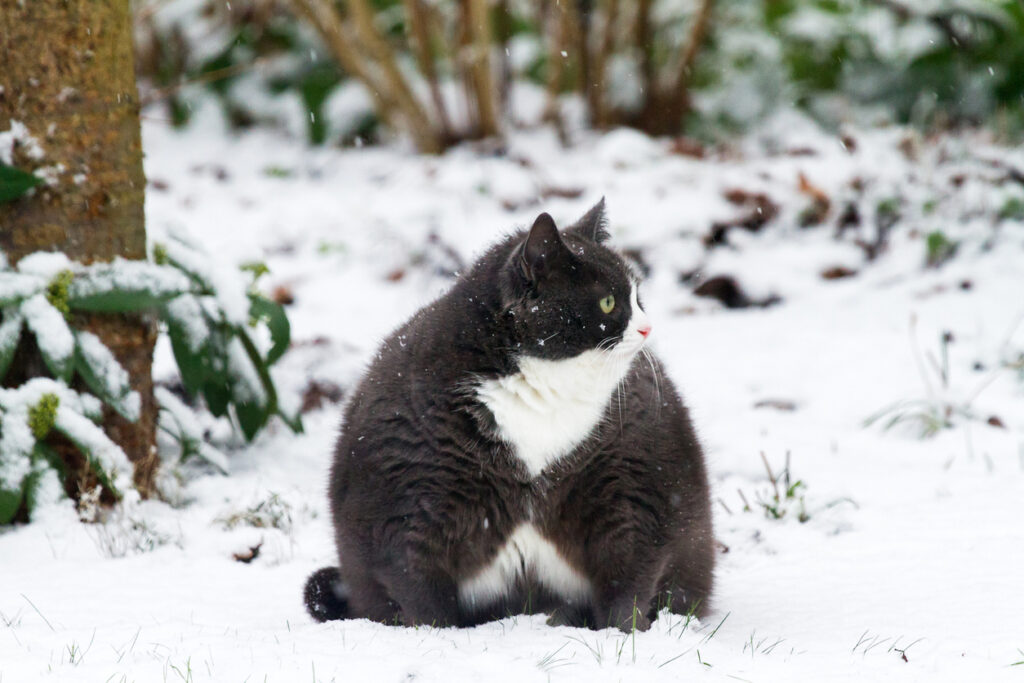
Treats are often the hidden culprit, especially in households where more than one person feeds the cat. Even small treats given regularly can cancel out careful portion control. Cutting back doesn’t mean removing enjoyment. Many cats are just as happy with play, brushing, or attention. Food doesn’t have to be the only way you show care.
Switch to food that supports weight loss properly.
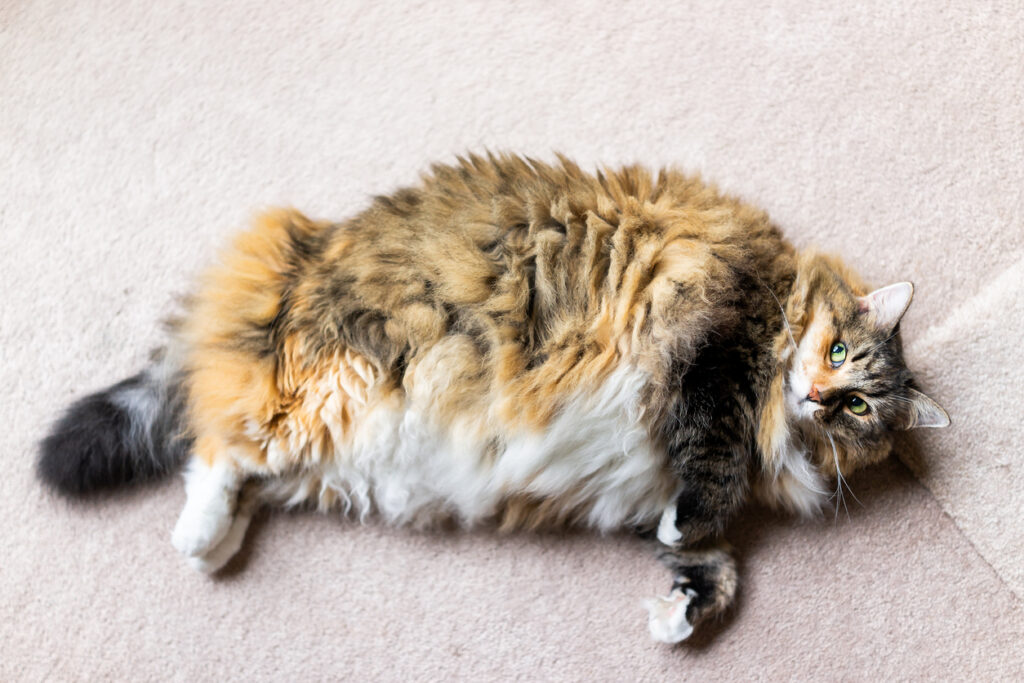
Not all cat food is suitable for overweight cats. Some standard formulas pack too many calories for cats who spend most of their time indoors. Weight-control options are designed to help cats feel full on fewer calories. The aim isn’t to leave your cat hungry. It’s to support slow, steady weight loss without stress or constant begging.
Encourage movement in ways that feel natural.

You can’t force a cat to exercise, but you can invite it. Short bursts of play that mimic hunting tend to work best. Chasing, pouncing, and stalking tap into instincts rather than feeling like effort. Even a few minutes at a time makes a difference. Movement helps with weight, mobility, and mood, all at once.
Make meals slightly more active.
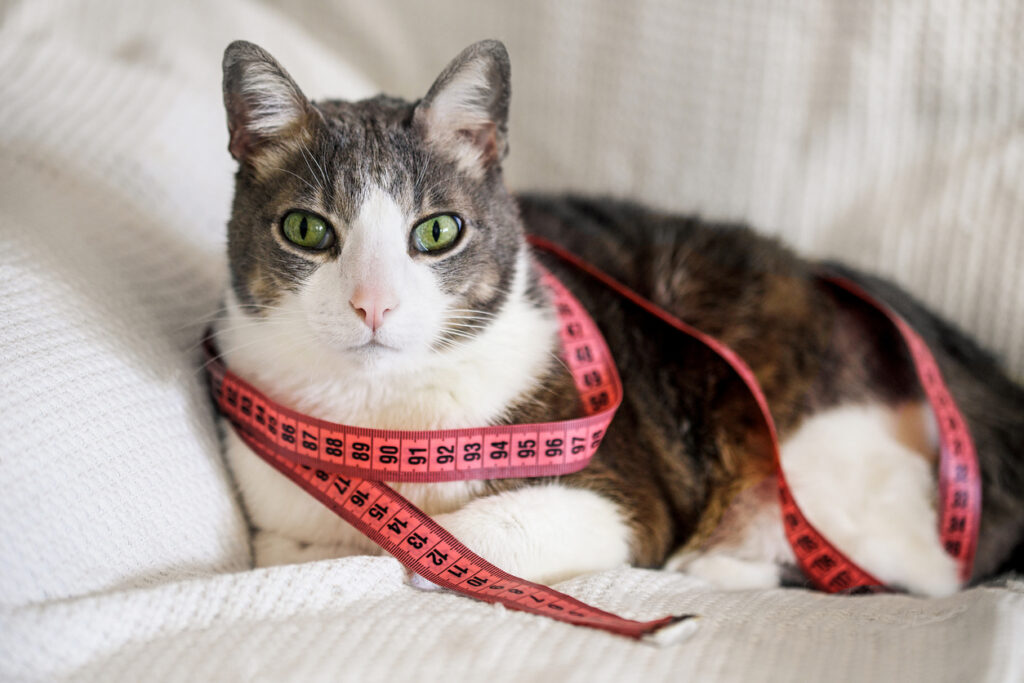
Food puzzles, slow feeders, or spreading food across different spots turn eating into a small activity instead of a passive habit. This slows down fast eaters and adds movement without pressure. It also makes meals more satisfying. Many cats seem calmer when they’ve had to work a little for their food.
Be realistic with older or less mobile cats.
Older cats or those with joint pain won’t suddenly become energetic. Weight loss is still important, but it needs to be gentle and adjusted to what they can handle comfortably. In these cases, diet changes matter most. Even modest weight loss can noticeably improve comfort and mobility.
Pay attention to why your cat is eating.

Cats don’t only eat because they’re hungry. Stress, boredom, routine changes, or lack of stimulation can all drive food-seeking behaviour. Weight gain often follows upheaval in the home. Adding structure, enrichment, and attention can reduce fixation on food. A mentally engaged cat is less likely to overeat out of habit.
Track progress without obsessing.
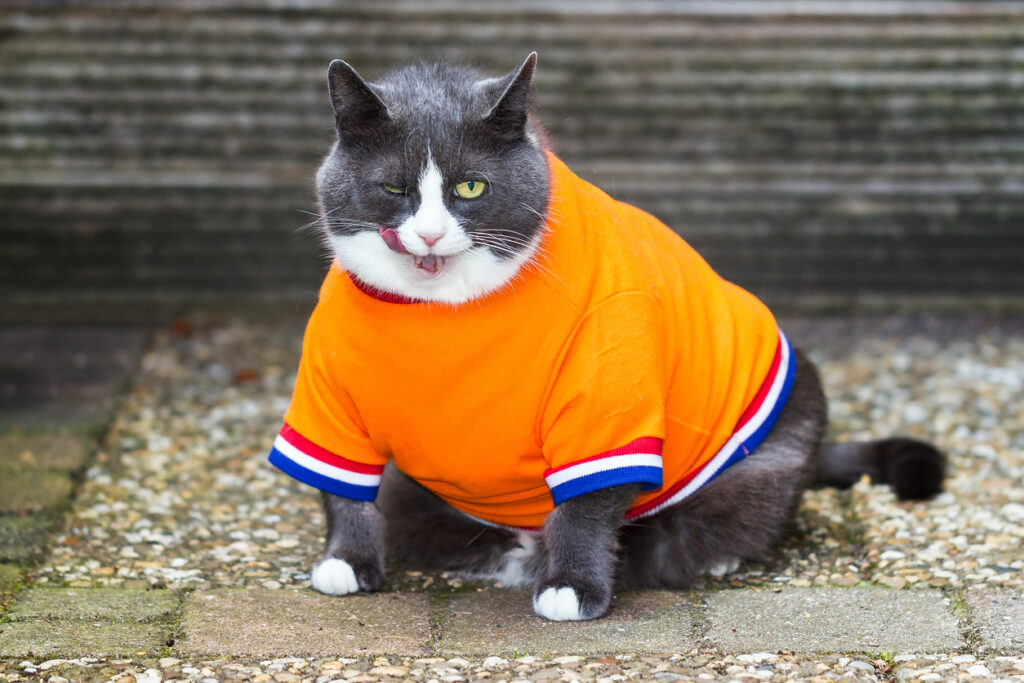
Safe weight loss in cats is slow. Rapid drops can be dangerous and stressful for their bodies. Checking weight every few weeks is enough to see trends without creating anxiety. Plateaus happen and don’t mean failure. The goal is steady improvement, not speed.
Avoid drastic food cuts.

Severely reducing food can cause serious health problems in cats. Their bodies don’t cope well with sudden restriction, even when weight loss is needed. Gradual changes protect their liver and overall health. Consistency beats extremes every time.
Treat this as a long-term change, not a quick fix.

Helping an overweight cat isn’t a temporary project. It’s about building habits that keep them comfortable, mobile, and healthier as they age. Small, steady changes done consistently matter far more than short bursts of effort. The goal is a better quality of life, not a number on a scale.