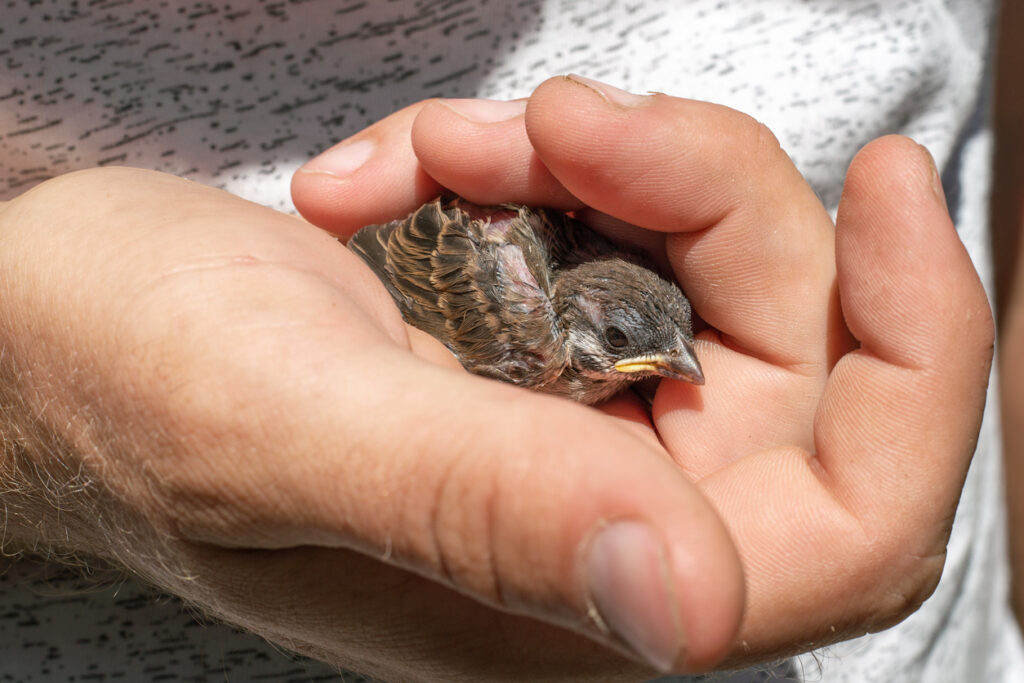
Finding a baby bird on the ground can be panic-inducing. Your first instinct might be to scoop it up and help, but the right move isn’t always obvious. Sometimes it needs urgent care, sometimes it’s just doing what fledglings are supposed to do. With the right knowledge, you can give it the best chance of survival without accidentally making things worse. Here’s what to do if you spot a little fluffball out of the nest and aren’t sure what to do next.
Take a step back before doing anything.
It’s natural to want to rush in and help, but your first move should be to pause and assess. Not every baby bird on the ground is in trouble; many are fledglings learning to fly and are meant to be out of the nest. If the bird looks alert, is hopping or fluttering, and has a few feathers, there’s a good chance it’s fine, and its parents are nearby. Jumping in too soon could cause more harm than good.
Check if it’s a nestling or a fledgling.
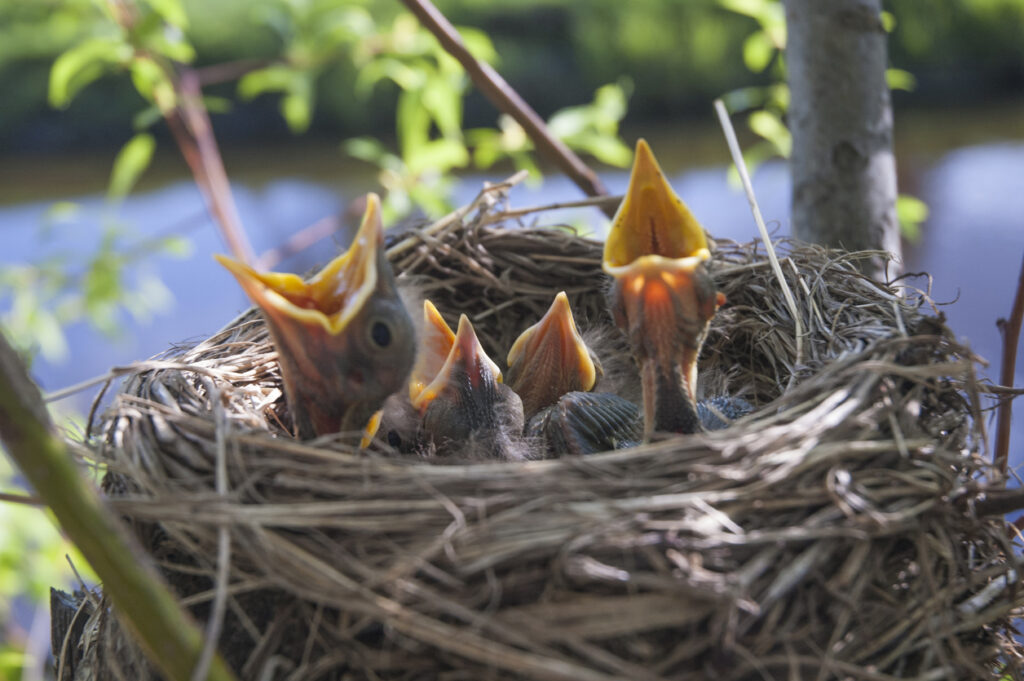
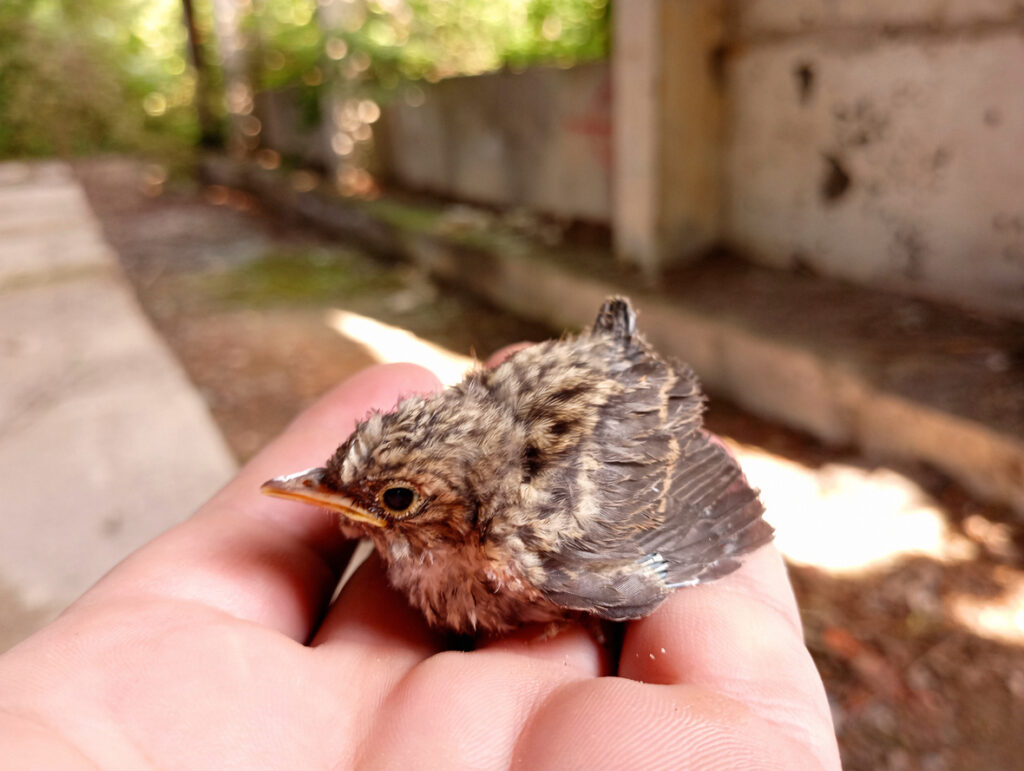
Baby birds at different stages need different help. Nestlings are younger, usually bald or only lightly feathered, and can’t survive without being in the nest. Fledglings are partially feathered and mobile, just clumsy and still learning. If you see pink skin and few feathers, it’s likely a nestling and does need help. If it’s more feathered and moving around, leave it be unless it’s in immediate danger.
Look for the nest.
If you find a true nestling, try to locate the nest it fell from. If it’s nearby and reachable, gently place the bird back inside. Contrary to myth, birds won’t abandon a chick just because a human touched it. Use clean hands or gloves, and make sure the nest is sturdy. If the nest has been destroyed, you can sometimes fashion a replacement from a small basket and tie it to a branch near the original location.
Leave fledglings alone unless they’re in danger.
Most fledglings don’t need rescuing. They’re meant to be hopping around awkwardly while still being fed and watched by their parents. Even if they look lost, they usually aren’t. Only intervene if it’s at risk, like if it’s in a road, near cats, or exposed to harsh weather. In those cases, move it gently to a safer nearby spot out of sight but within hearing range of its parents.
Keep pets indoors.
If you’ve got cats or dogs, and you notice fledglings in the garden or hedgerow, it’s best to keep your pets indoors for a few days. This gives the young birds time to find their wings without getting caught. It’s a small gesture that can make a big difference. Predation by cats is one of the biggest threats to fledglings in urban and rural areas alike.
Watch from a distance.
If you’re unsure whether a baby bird is being cared for, keep an eye on it from a distance. Parent birds usually return within 15–30 minutes, especially if you’re not too close. They might be scared off by your presence, so give them space. If no adults return after a long while and the bird is clearly struggling, that’s when it might be time to step in.
Don’t feed it.
As tempting as it is to give a baby bird food, don’t. Bread, milk, and birdseed are all unsuitable and can do real harm. Wild baby birds have very specific dietary needs based on species and age. If the bird genuinely needs care, it’s best handled by a professional who knows what to feed and how to do it safely. Your good intentions could end up causing more damage than you realise.
Don’t try to keep it.
Taking a wild bird home, even with good intentions, is not only illegal in the UK without a licence, but also rarely works out well for the bird. They require expert care and often don’t survive in household settings. The goal should always be to return the bird to the wild, not to raise it yourself. Even short stints in captivity can stunt development or lead to imprinting problems.
Contact a wildlife rescue if needed.
If the bird is clearly injured, cold, or abandoned, call a local wildlife rescue centre or the RSPCA for advice. They can guide you on what to do and, if needed, take the bird in for care. Keep the bird warm and quiet in a small box with ventilation while you wait for help. Don’t give it food or water unless specifically told to by a professional.

Keep handling to a minimum.
Birds are fragile and stress easily. If you absolutely need to move a chick, use gentle hands or a soft cloth and keep contact brief. The less disruption, the better. Even well-meant handling can delay the return of parents or damage feathers and bones. Always prioritise observation over interference when possible.
Avoid creating a scene.
It’s easy to want to call neighbours or show your kids, but crowds, noise, or fuss can scare off the parents and attract predators. Try to keep the moment calm and low-profile. This applies whether you’re in your garden or on a nature walk. Let the wild stay wild, even when it’s unfolding right in front of you.
Know that survival rates are naturally low.
Not all baby birds will make it, even with intervention. It’s sad, but it’s also part of nature’s process. Many chicks don’t survive, and adult birds lay multiple eggs to account for that. Doing what you can is worthwhile, but don’t carry guilt if things don’t go perfectly. Sometimes, the best thing you can do is simply give them a chance.
Let it be a learning moment.
Finding a baby bird can be a powerful moment, especially for kids. It’s a chance to talk about wildlife, responsibility, and the difference between helping and interfering. Whether you end up rescuing it or walking away, treat it as a gentle reminder that wild animals are living their own complicated lives, often just out of sight. Respecting that is part of caring for the natural world.