Scientists can’t just point to something strange in space and declare it alien life—it doesn’t work that way.
Confirming it demands layers of evidence, strict checks, and an ability to rule out every other possible explanation. Here’s what has to be in place before the words “This is alien life” can be said with confidence. To be clear, we’re nowhere near there just yet, but if we hope we might be someday, these elements will have to be in place.
1. A clear biosignature or technosignature is a good starting point.

A biosignature is a measurable feature, such as a chemical compound, isotope ratio, or pattern, that strongly suggests life. On Earth, oxygen, methane and certain complex organics are tied to biology, so finding them elsewhere can be intriguing. A technosignature points to technology, such as structured radio signals, laser pulses, or artificial light.
For either type to be taken seriously, scientists need to be sure it isn’t the result of a natural process. That means matching the observation against every known non-biological explanation before considering it a potential sign of life.
2. We have to have reliability that can’t be faked by nature.

Some gases and chemicals linked to life can also be produced without it. Methane, for example, can come from living organisms or from volcanic vents. Dimethyl sulphide is another: it’s produced by plankton on Earth but can form under certain chemical conditions without life involved.
This is why multiple clues matter. If a planet’s atmosphere shows several life-linked compounds in the right ratios, and they appear in ways nature doesn’t usually produce, the biological explanation becomes more convincing.
3. The signal has to stick around long enough to be detected.
To confirm life, the sign must last long enough for detection. Some molecules break down quickly under radiation or chemical reactions, so catching them in time is critical. If the signal is fleeting, it may not survive until the next observation. Scientists often prioritise searching for stable biosignatures: think compounds or patterns that can stick around long enough for multiple detections. This ensures there’s enough time for different teams and instruments to check the finding.
4. We have to be able to pick it up with our tools.
Even if life leaves a strong signal, it’s useless if our equipment can’t detect it. Factors like the planet’s distance, atmospheric thickness, and how faint the signal is all play a role. Interference from space dust, stars, or even our own instruments can bury weak signatures. That’s why mission planning focuses on targets with the best chance of producing a detectable reading. Instruments are designed to look in specific wavelength ranges where signals stand out more clearly.
5. Independent confirmation isn’t optional.
One observation doesn’t make a discovery. Independent confirmation means another team, ideally using different instruments or methods, sees the same thing. Without this, there’s always the chance of instrument error, misinterpretation, or even statistical flukes. When results hold up across different platforms, such as both space telescopes and landers, confidence grows significantly. It’s a safeguard against jumping to conclusions too quickly.
6. Ruling out contamination is vital.
Any sample brought back to Earth, or even handled in a spacecraft, risks contamination by terrestrial life. This could mimic signs of alien biology, leading to false positives. Even on-site equipment can introduce traces of Earth microbes or chemicals. To prevent this, scientists use strict sterilisation, sealed containment, and control samples. In some cases, they will even test a second sample from the same site to make sure the findings weren’t introduced by human handling.
7. Context matters—the environment must support life.
A promising biosignature means little if the planet or moon doesn’t seem capable of supporting life. Scientists look for an environment with energy sources, liquid water or other solvents, and conditions that allow chemistry to happen over long timescales. Understanding the setting also helps rule out false positives. For example, a gas linked to life might be natural on a hot, volcanic world, but far more suspicious on a mild, watery planet.
8. Frameworks like NASA’s CoLD scale are incredibly helpful.
The Confidence of Life Detection (CoLD) scale is a step-by-step way to judge findings. It starts with spotting a possible sign, then confirming it isn’t contamination, checking the environment, ruling out natural causes, getting multiple signals, and finally winning independent confirmation.
By climbing these steps in order, scientists avoid skipping ahead to big claims without the evidence to back them. It’s designed to prevent another “false dawn” moment like past overhyped announcements.
9. Examples like K2-18b intrigue, but aren’t proof of anything.
When telescopes detect a life-linked gas such as dimethyl sulphide in an exoplanet’s atmosphere, it sparks interest. But without ruling out every non-living source, the finding remains in the “possible” category. K2-18b is one such example, and that’s exciting, but unconfirmed. These moments are a starting point for further research, not an endpoint. They help scientists decide where to focus future observations and missions.
10. Lessons from meteorites show that morphology isn’t enough.
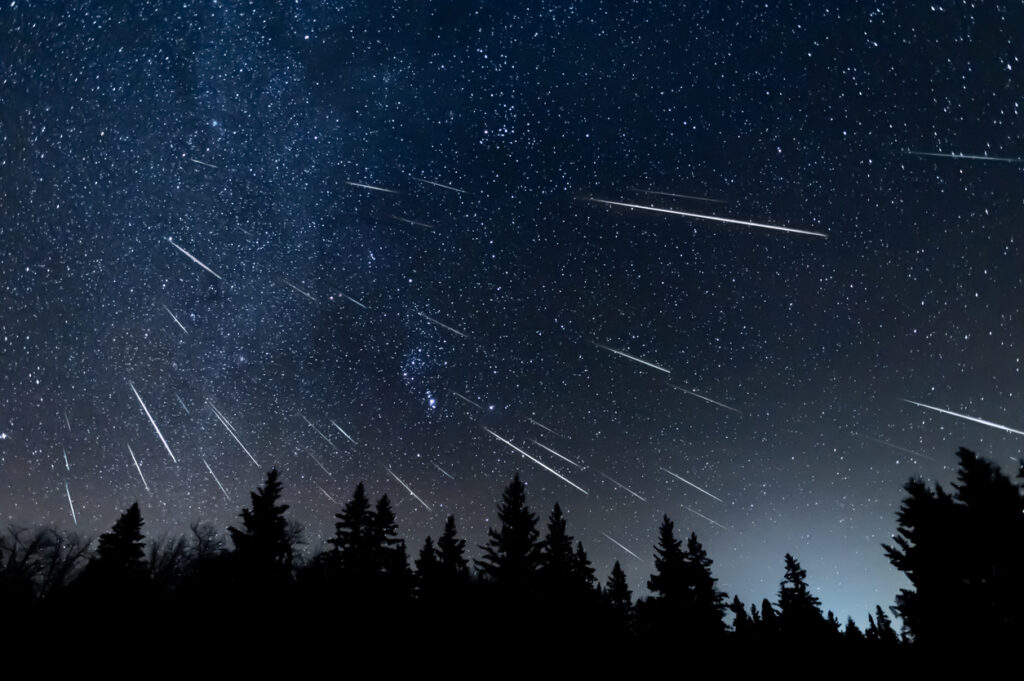
In the 1990s, scientists studying a Martian meteorite found shapes that looked like tiny fossils. The excitement was huge, but later studies showed that geological processes could create similar patterns without life being involved. Now, morphology is seen as a single clue rather than proof. It must be backed up by chemical analysis, isotopic data, and environmental context before it’s taken seriously as evidence of life.
11. Searching for technosignatures offers another path.
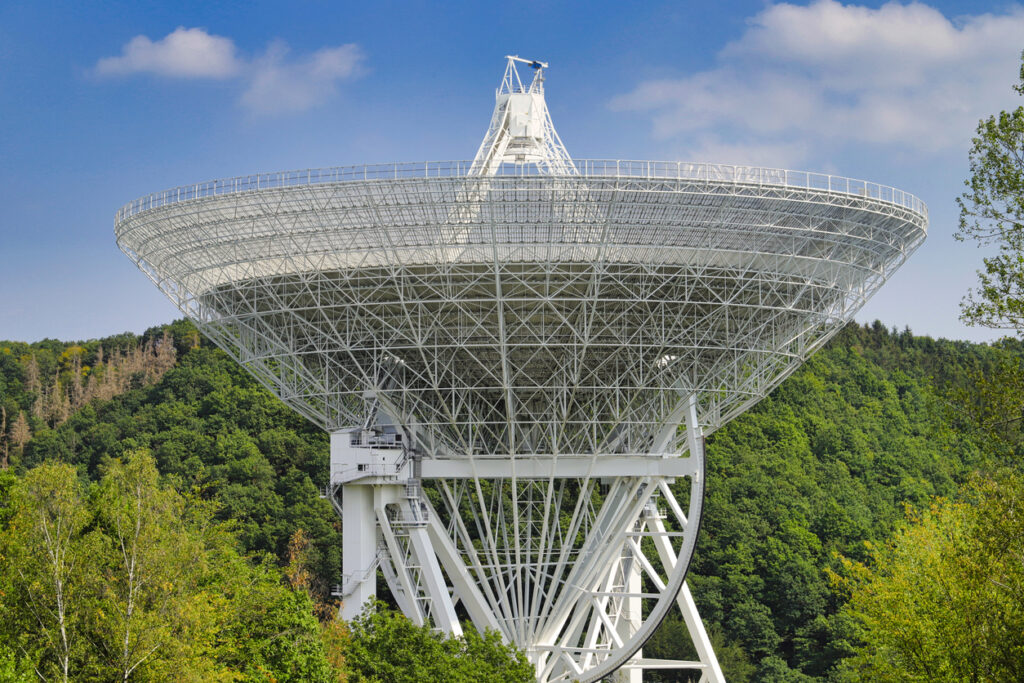
Instead of looking for biological processes, some researchers search for technology-related signals—things like structured radio transmissions, artificial light on a planet’s dark side, or atmospheric chemicals that would only exist if a civilisation put them there. These have the same rules as biosignatures: they must be unexplainable by natural causes, repeatable, and detectable by independent observers before they can be considered genuine evidence.
12. Public communication must be measured.
Announcing life without certainty risks damaging public trust in science. False positives make it harder for people to believe the next claim, even if it’s solid. That’s why agencies tend to release cautious statements and avoid dramatic headlines. Careful communication also helps manage expectations. It makes it clear that the discovery process is gradual, not a sudden moment of certainty.
13. Peer review and consensus matter, too.

Even if a finding looks promising, it won’t gain acceptance without being peer-reviewed and scrutinised by other experts. This step allows for independent analysis, challenges to methodology, and cross-checking of results. Consensus doesn’t mean unanimous agreement. It means enough experts accept the evidence as credible that it becomes the accepted view. That’s when a claim moves from exciting news to established fact.
14. It has to be cumulative, not sudden, since confirmation takes time.
Declaring “This is alien life” is the last step in a long process. It requires multiple, consistent lines of evidence, agreement among experts, and a body of data that rules out every other explanation. It’s slow, deliberate, and careful by design. By the time such an announcement happens, the scientific groundwork will have been laid over years, if not decades. When it comes, it will be because the evidence has survived every challenge put to it.