If you had to design a predator by committee, you’d probably end up with something like the fossa.
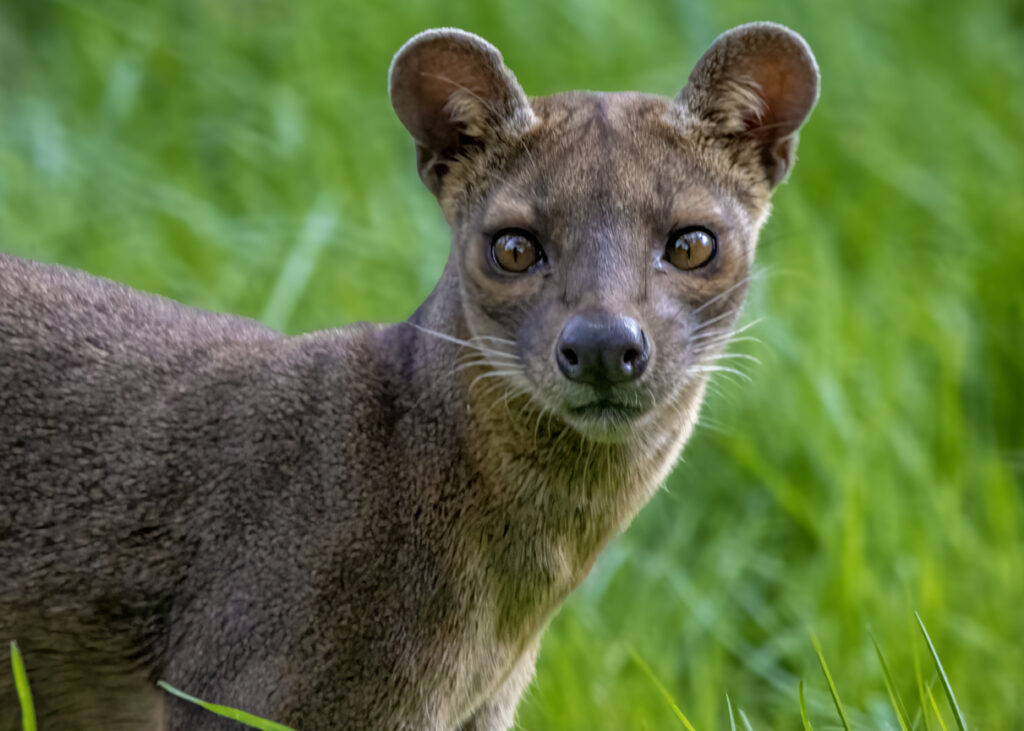
Found only on the island of Madagascar, it looks like someone took the body of a small mountain lion, gave it the agile tail of a monkey, and topped it off with the curious face of a mongoose. It is a bit of a biological puzzle that has left people scratching their heads for years, especially since it doesn’t quite fit into any of the usual animal categories we’re used to.
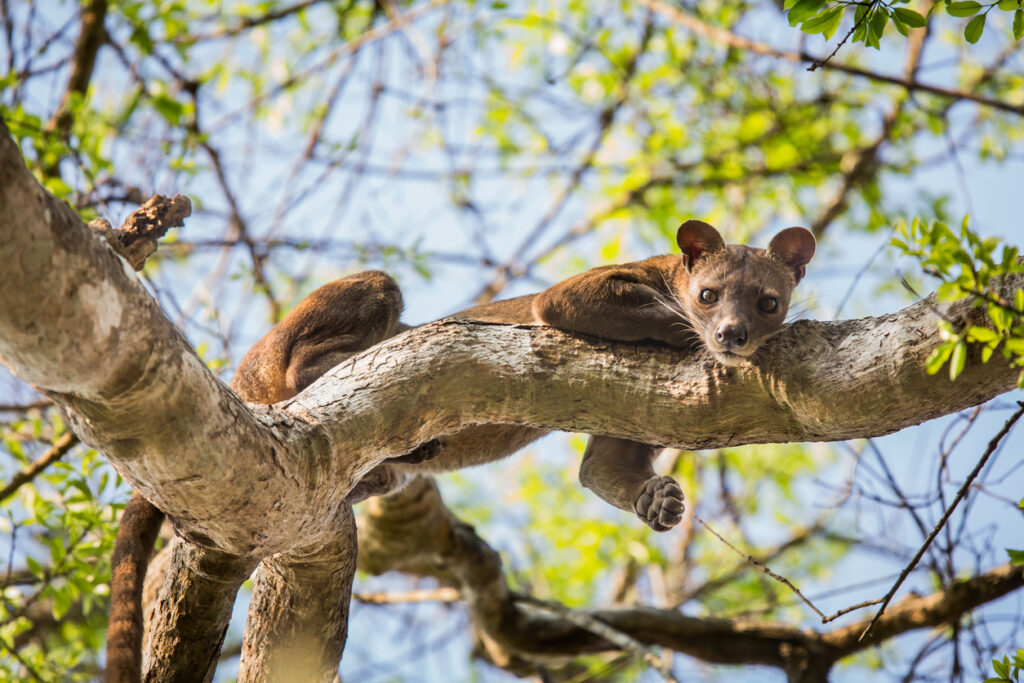
It’s the top dog in its neck of the woods, but its strange, mismatched appearance is actually a brilliant bit of evolution that allows it to be just as comfortable sprinting along the ground as it is leaping through the treetops.
It’s the largest carnivore on Madagascar, and most people have never heard of it.
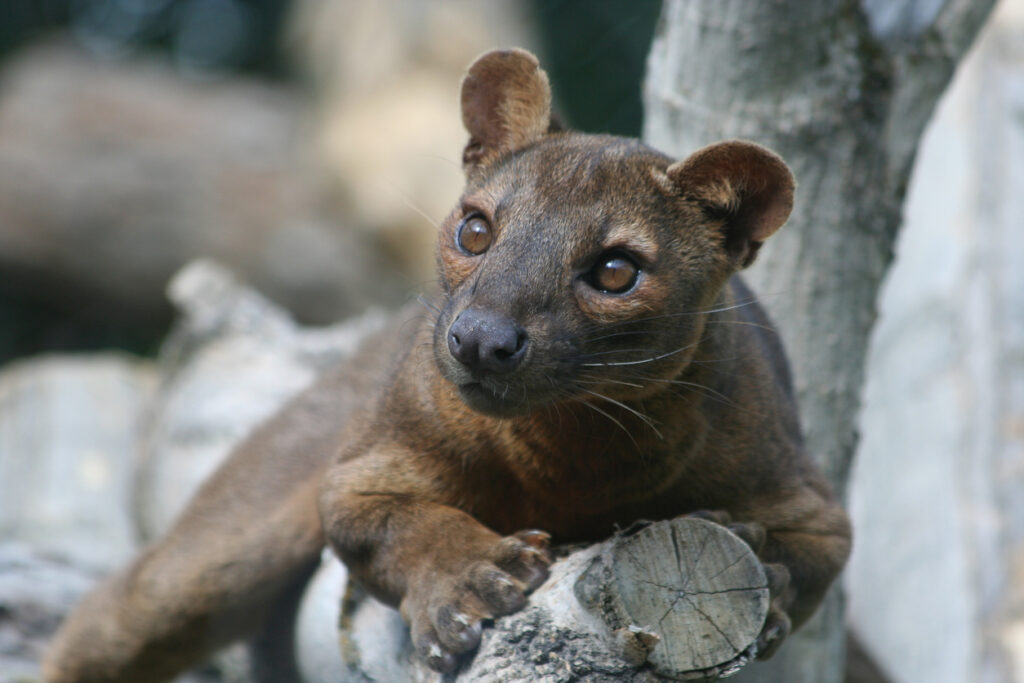
The fossa sits at the top of the food chain on an island the size of France, and yet it barely registers in most people’s awareness. It can reach up to 1.8 metres from nose to tail and weighs up to 12 kilograms, making it a serious predator by any measure. The reason it stays so obscure is simply that Madagascar is a long way from everywhere, and the fossa rarely makes it into the kind of wildlife programming that gets wide attention.
Nobody could agree for years on what kind of animal it actually was.
Early naturalists looked at the fossa and genuinely struggled to classify it. It has a cat-like face, a dog-like body, moves with something resembling a weasel, and its closest relatives turned out to be the mongoose family. For a long time it was grouped with civets, then cats, then somewhere in between. The confusion makes sense when you see one because it really does look like evolution was making several things at once.
It’s a mongoose that went in a completely different direction.
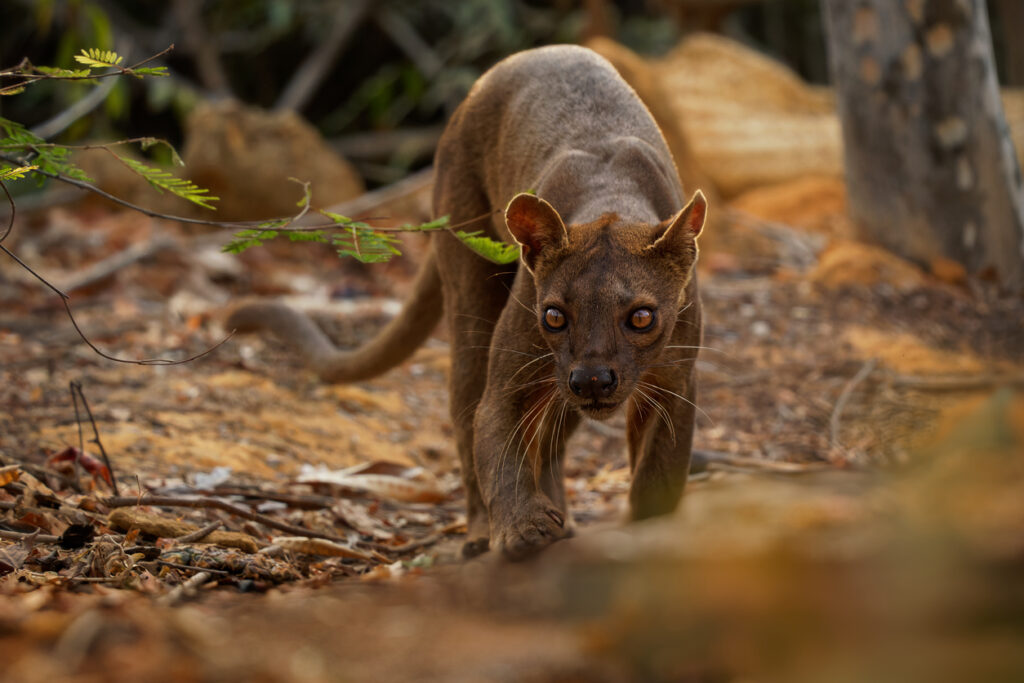
The ancestors of the fossa arrived on Madagascar around 21 million years ago, probably on a raft of vegetation crossing from Africa. Once there, they evolved in total isolation and the fossa became something that looks almost nothing like its mongoose relatives. This is called convergent evolution, where an animal develops features similar to unrelated species because it fills the same ecological role. The fossa essentially became Madagascar’s version of a big cat without being one at all.
Those retractable claws aren’t what you’d expect from a mongoose relative.
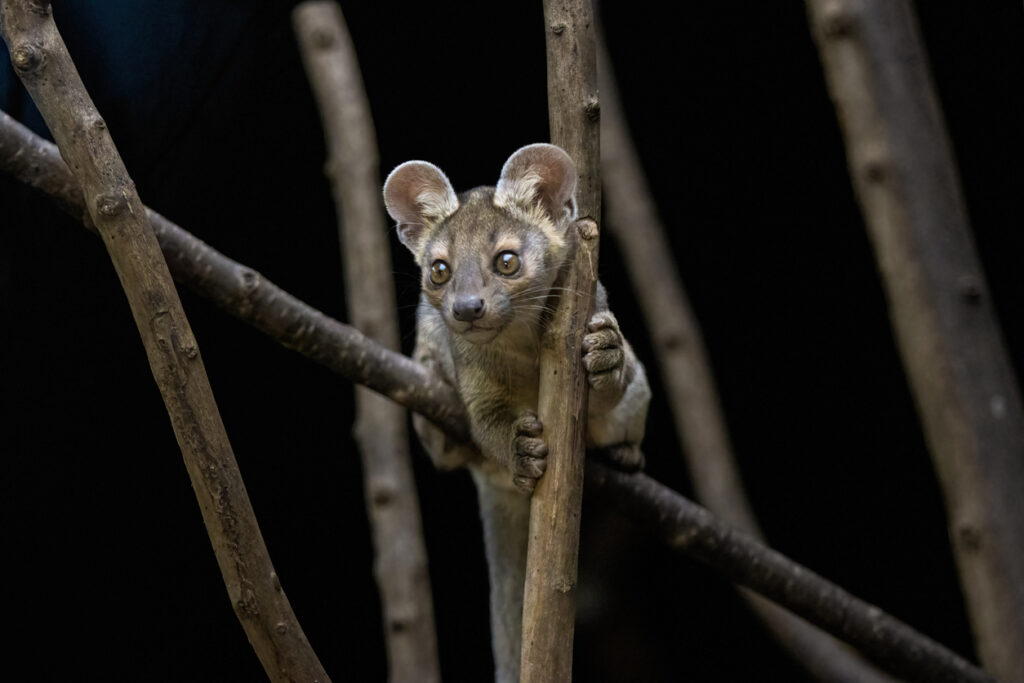
The fossa has semi-retractable claws, which is an unusual feature that it shares with cats rather than with the family it actually belongs to. Combined with highly flexible ankles that can rotate almost fully, it can climb headfirst down tree trunks in a way that looks frankly unnerving. It hunts both on the ground and up in the canopy, and switches between the two with a fluidity that most animals can’t manage. Lemurs, which make up a significant part of its diet, don’t stand much of a chance once a fossa gets close.
It makes sounds that are genuinely difficult to describe.
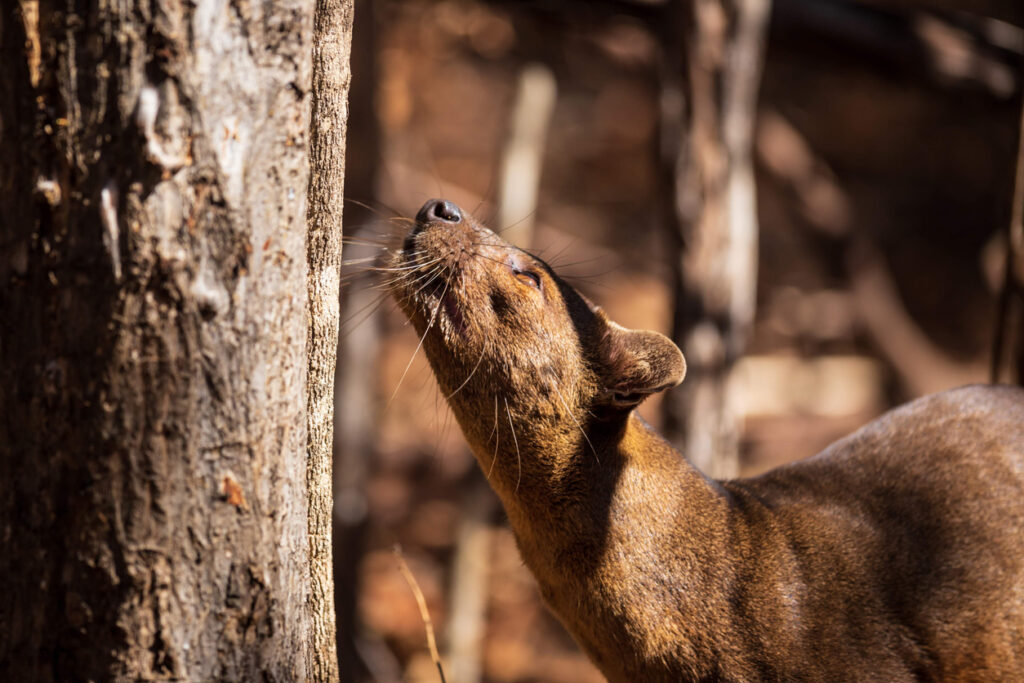
The fossa has a vocal range that includes purring, which confuses people expecting something more threatening, but also a loud, mournful wail used during mating season that carries a long distance through the forest. It also produces a threatening bark and a high-pitched call that researchers have compared to a child crying. None of these sounds particularly match what the animal looks like, and hearing one in the dark would be a deeply unsettling experience.
The mating system is unlike almost anything else in nature.
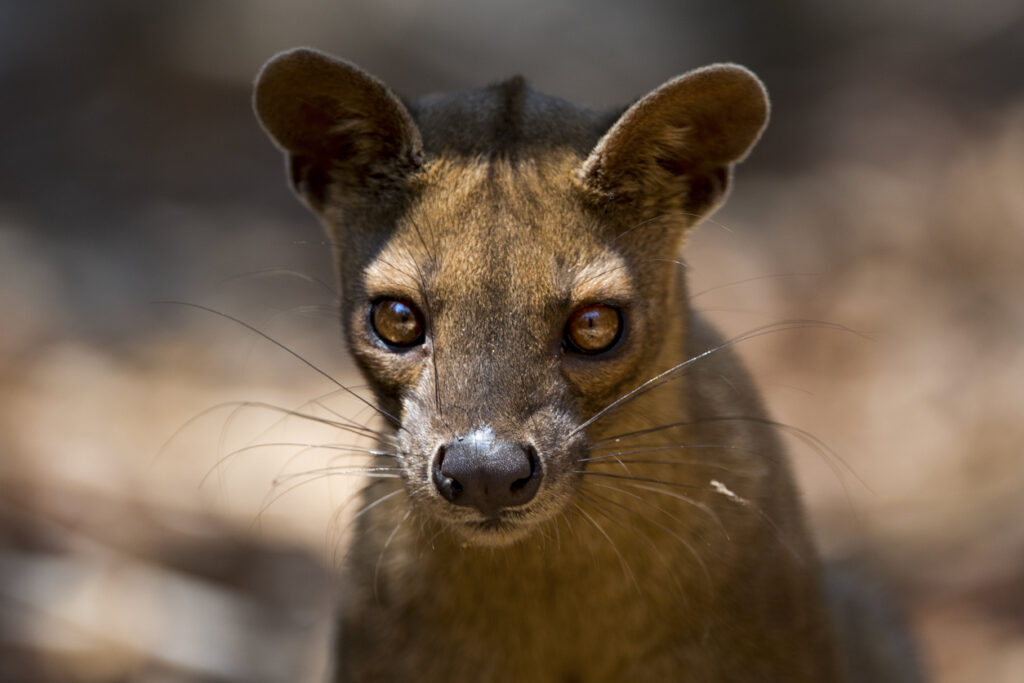
Female fossas pick a specific tree during mating season and stay up in it for up to a week while multiple males compete below. She mates with several of them over that period before moving on. The same trees get used year after year, and younger females have been observed waiting in nearby trees, apparently learning how the whole thing works. It’s a remarkably organised system for an animal that spends most of its life entirely alone.
Young fossas go through a temporary phase that looks completely different.
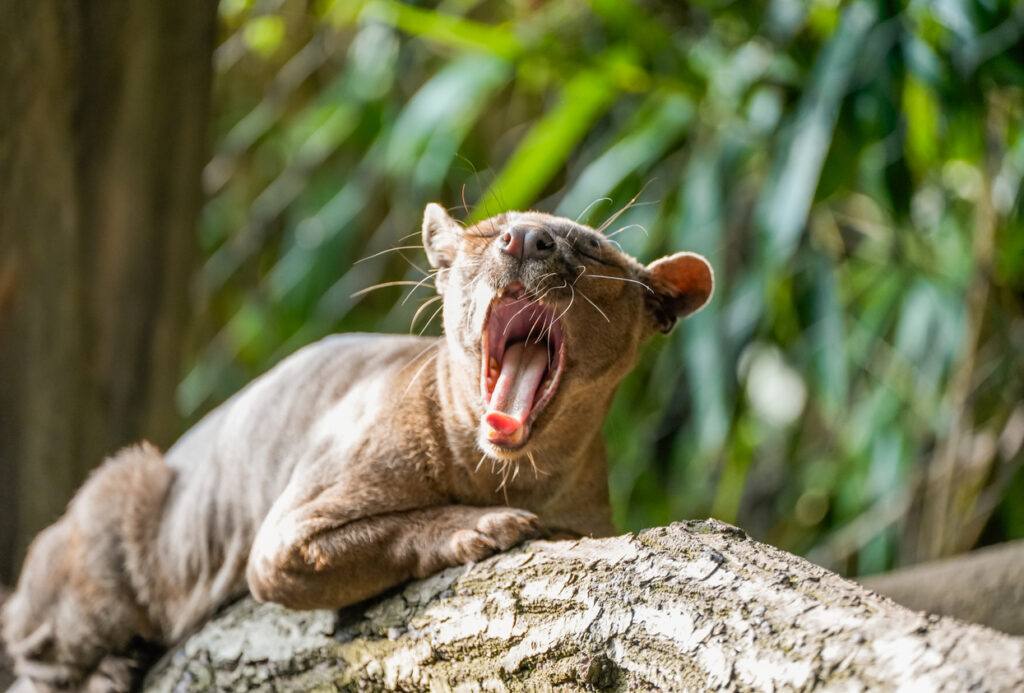
Juvenile fossas are born with whitish grey fur that bears almost no resemblance to the sleek reddish brown coat of the adult. They’re dependent on their mother for around a year and a half, which is a long time for a carnivore of this size. During that period, they learn to hunt, climb, and navigate a habitat that is shrinking fast around them. By the time they’re fully independent, they look like an entirely different animal to the one they started as.
It’s critically important to Madagascar’s entire ecosystem.
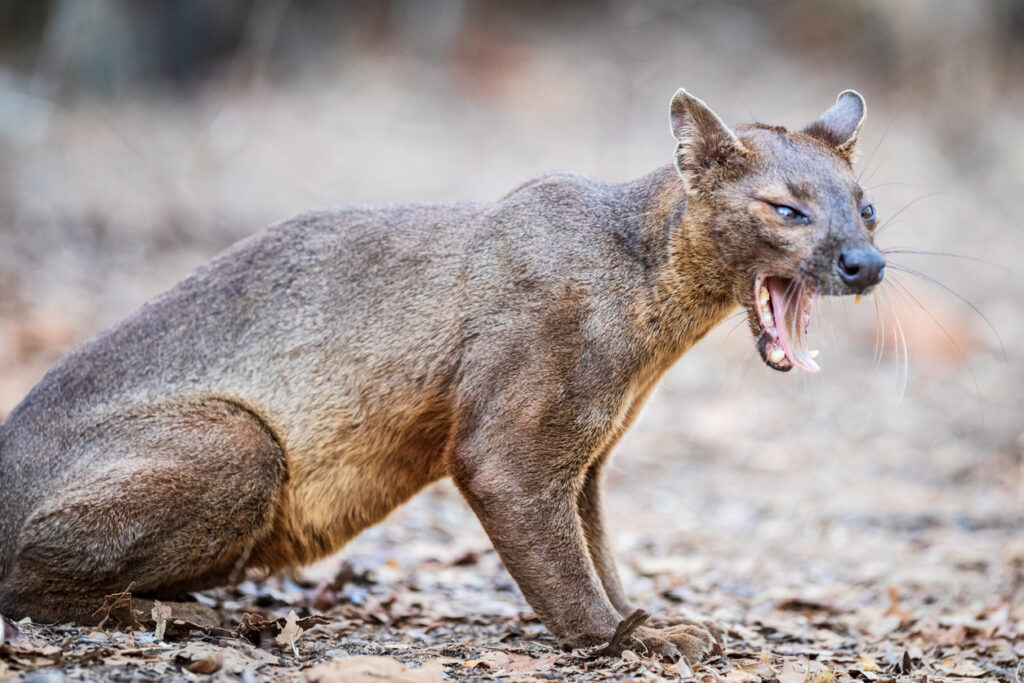
As the apex predator, the fossa keeps lemur populations in check, which in turn affects how the forest vegetation grows and regenerates. Remove the fossa and the whole balance shifts in ways that cascade through every level of the ecosystem. This is the problem with losing a top predator anywhere in the world, the effects ripple outward in ways that aren’t always obvious until the damage is already done.
Habitat loss is the biggest threat, and it’s happening very fast.
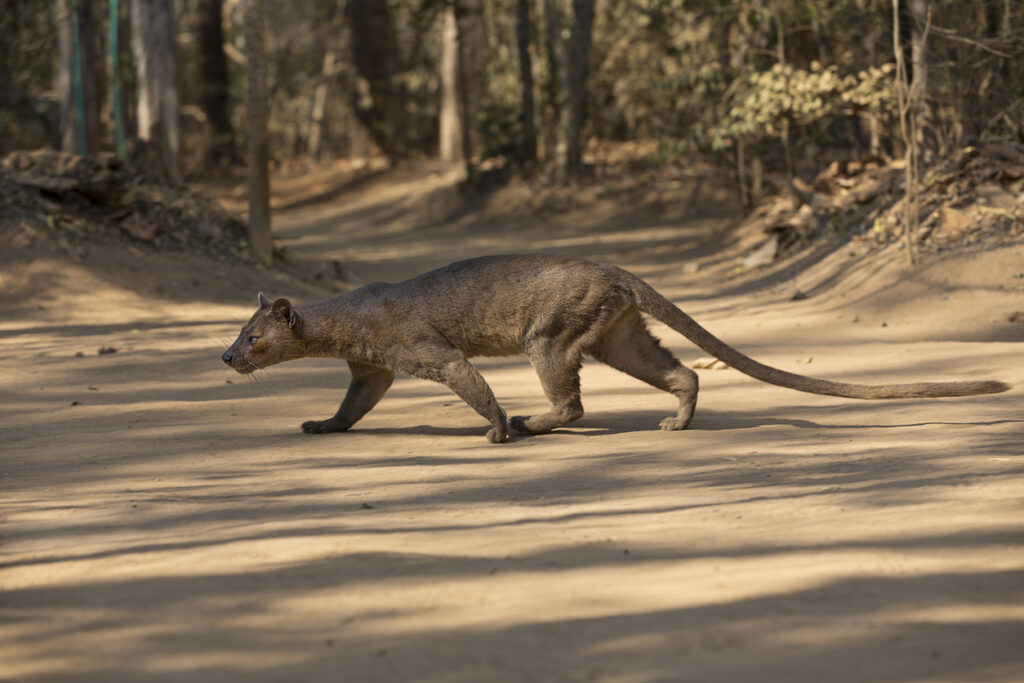
Madagascar has lost around 90 percent of its original forest cover, mostly to slash and burn agriculture, logging, and charcoal production. The fossa needs large stretches of connected forest to hunt and maintain a territory, and it can’t adapt to fragmented patches the way smaller, more flexible animals sometimes can.
It’s also occasionally killed by farmers protecting livestock, even though the fossa’s preferred prey is overwhelmingly wild. The current population estimate sits somewhere between 2,500 and 8,500 adults, and the range is that wide because they’re genuinely hard to find and count.
Most people only know it exists because of a DreamWorks film.
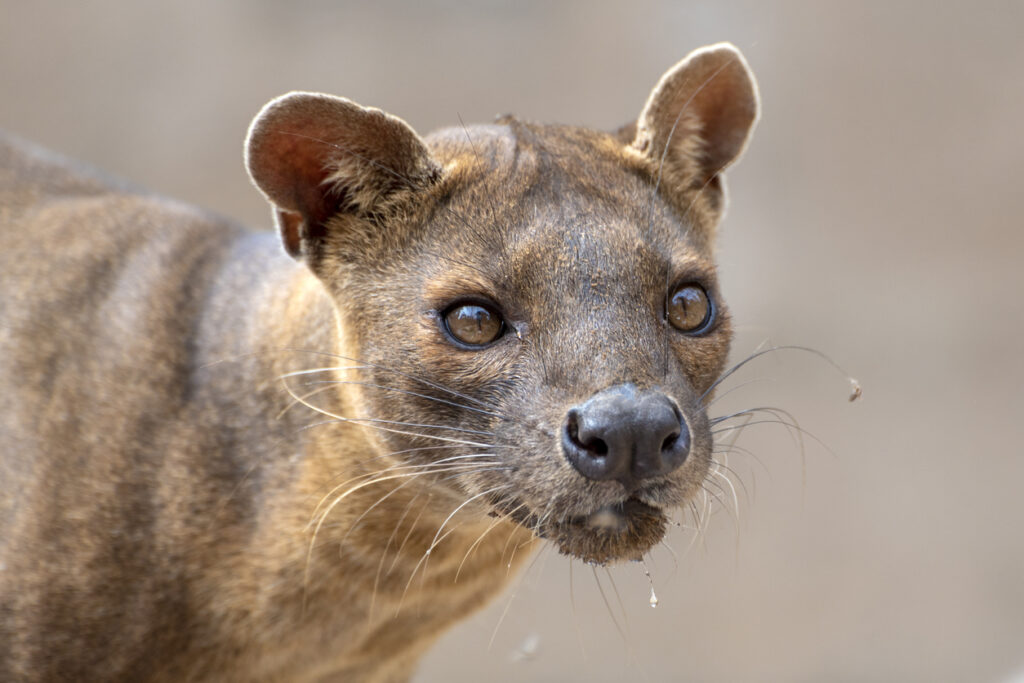
The fossa appeared as the villain in the 2005 animated film Madagascar, which gave it a certain notoriety while also getting almost everything about it wrong. In the film they’re depicted as pack hunters resembling large hyenas, when in reality they’re solitary, considerably smaller, and nothing like what the film showed.
The attention was arguably better than nothing, given how little people knew about the species, but conservationists have spent years gently correcting the impression it left. The real fossa is stranger and more interesting than the cartoon version and deserves to be known for what it actually is rather than what it was turned into for a children’s film.