It’s long been said that dogs see the world in black and white, but that’s not actually true.

While they don’t see colour the same way humans do, their vision isn’t completely colourless either. The dog eye has fewer colour-detecting cells than ours, but that doesn’t mean they’re stuck in a grey fog. Their world looks different, yes, but not drab. So what colours can dogs see, and what does the world really look like through their eyes?
Dogs see fewer colours than humans.

Humans have three types of cone cells in their eyes, which allow us to see a full rainbow of colour. Dogs, on the other hand, only have two. That means their range is more limited, kind of like a person with red-green colour blindness. It’s not that they can’t see colour at all; it’s just that some shades look the same to them. They don’t have the full spectrum we do, but their view of the world still includes blues, yellows, and shades of grey. Just don’t expect them to be wowed by a crimson jumper.
Reds and greens look the same to dogs.

One of the biggest differences in how dogs see is that they can’t distinguish red from green. Those colours probably look more like a sort of grey or brownish tone. So while we see a bright red ball on green grass, your dog likely sees one bland-coloured blob on another. This also means that toys, clothes, or training tools that rely on red and green might not stand out to your dog at all. For visibility, colours like blue and yellow are much more effective in grabbing their attention.
They can see blue and yellow clearly.

If your dog had a favourite colour, it would probably be blue or yellow. These are the colours that stand out most vividly to them, thanks to how their cone cells are wired. Toys in these shades are easier for dogs to spot and more exciting to chase. That’s why you’ll see a lot of dog toys made in blue and yellow hues because they actually pop in your dog’s vision. It’s not just a design choice; it’s backed by how their eyes are built to work.
Their vision is more about brightness than hue.

Since dogs don’t see as many colours, they rely more on contrast and brightness to interpret what’s around them. Light and dark shades matter more to them than subtle colour differences do. Think bold outlines and changes in tone rather than vibrant rainbows. This is why high-contrast toys or objects tend to be easier for dogs to notice. If you want them to spot something in the grass or at a distance, colour contrast, especially involving blue or yellow, makes a real difference.
Dogs see better in the dark than we do.

Even though they don’t see the same range of colours, dogs have the upper hand in low light. Their eyes have more rod cells, which are better at detecting movement and working in dim conditions. That’s why they’re better at navigating at night or in shady areas. So while you might be squinting to see on a dusk walk, your dog probably has no issue trotting ahead like it’s still daytime. Their colour vision might not be fancy, but their night vision is top-notch.
They rely more on motion than colour.

Dogs are wired to detect movement over colour. A fast-moving squirrel or fluttering bird grabs their attention far quicker than a bright static object. Their hunting instincts kick in more based on motion cues than colour cues. This also explains why some dogs go wild for the tiniest movement in the garden but ignore colourful decorations or furniture. Their eyes are more tuned to action than aesthetics.
Dogs’ vision is designed for survival, not beauty.

Human colour vision evolved to help us spot ripe fruit and navigate complex environments. Dogs, however, were built more for detecting prey, spotting movement, and reading shapes from a distance. Their colour limitations aren’t a flaw; they’re just a different survival strategy. So while they may not appreciate a gorgeous sunset or a rainbow, they’re perfectly suited for spotting a rabbit in the underbrush or a moving toy in a field. Their vision is practical, not picturesque.
Some colours may even confuse them.

When we throw a red toy on green grass, we can clearly see both, but to a dog, it’s just two colours that blend into one. That can make playtime a bit less engaging if the toy’s hard to spot, especially in fast-paced games like fetch. If your dog often struggles to find a toy you’ve thrown, it might not be their nose failing them. It could be the colour choice. Swapping to a bright blue or yellow version can make a world of difference.
Dogs don’t care about colour like we do.
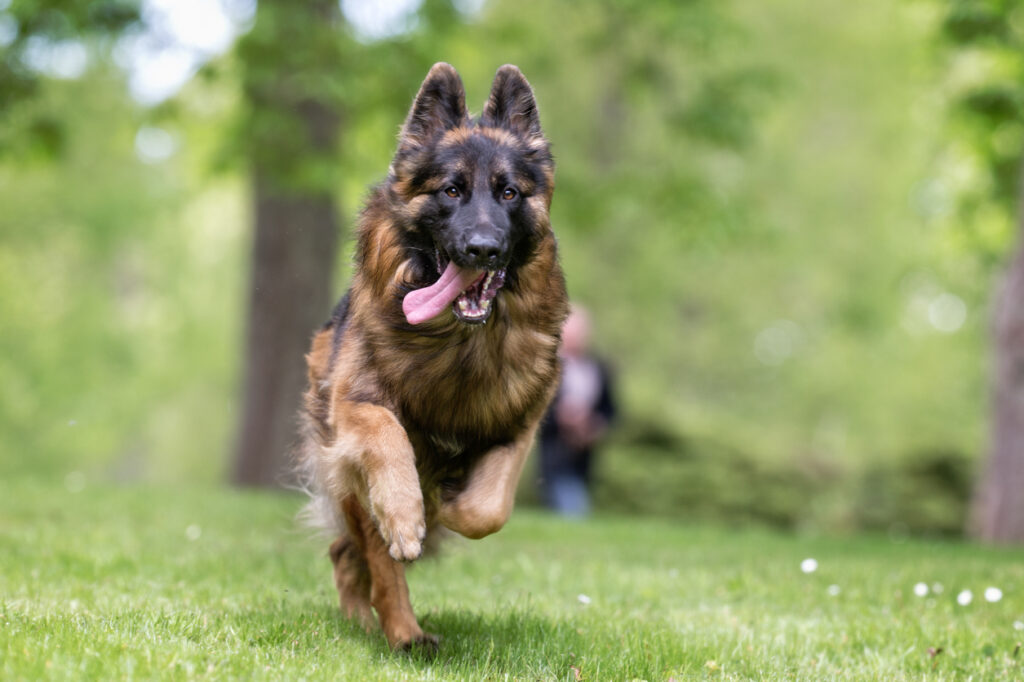
While we might pick items for our pets based on what we think looks nice, dogs don’t attach any emotional meaning to colour. They’re not judging your home’s aesthetic or their new lead’s trendy shade of mauve. To them, it’s all about function: what’s interesting, what moves, what smells good, and what can be chewed. Colour is just one tiny factor, and usually not a deciding one. They’re more concerned about whether it squeaks.
Their world might look muted, but it’s still full of life.
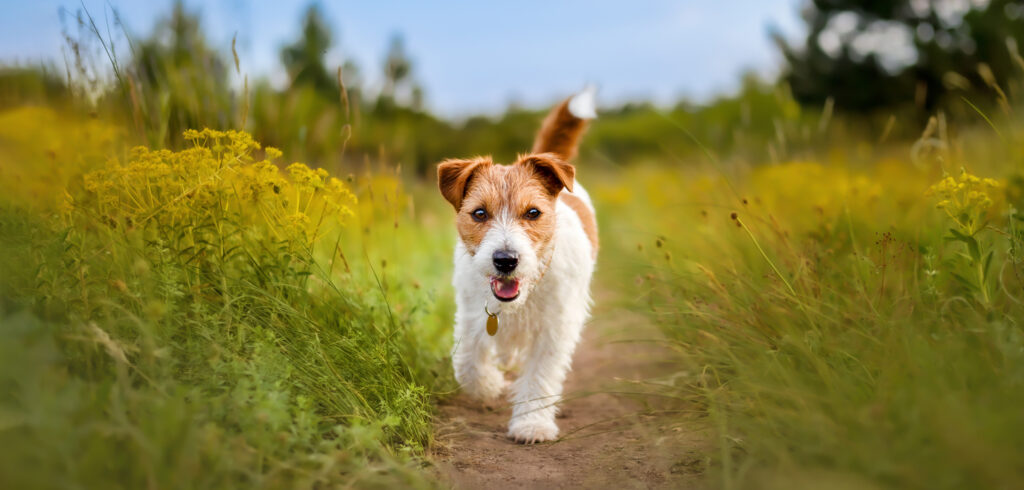
Even though dogs see fewer colours, they experience the world in rich, layered ways. Scent, movement, sound, and texture all combine to give them a vivid sense of their surroundings that goes way beyond colour alone. So no, your dog doesn’t see the world like you do, but that doesn’t mean it’s dull or flat. In fact, with their powerful nose and sharp hearing, they probably notice way more than we ever could, even if the grass isn’t quite as green in their version of it.