It’s a bit mental to think that life doesn’t just survive on volcanic islands; it actually finds a way to thrive in a landscape that’s essentially a pile of cooled-down fire.

While you’d expect these places to be nothing but barren rock and ash, they’re often home to some of the weirdest and most resilient species on the planet. These plants and animals are the ultimate opportunists, moving in before the ground has even properly cooled and evolving in total isolation to handle the sulphur and heat. From giant tortoises to ferns that can sprout through solid lava, these islands are a perfect example of how nature can turn a literal disaster zone into a one-of-a-kind paradise.
Galápagos marine iguanas
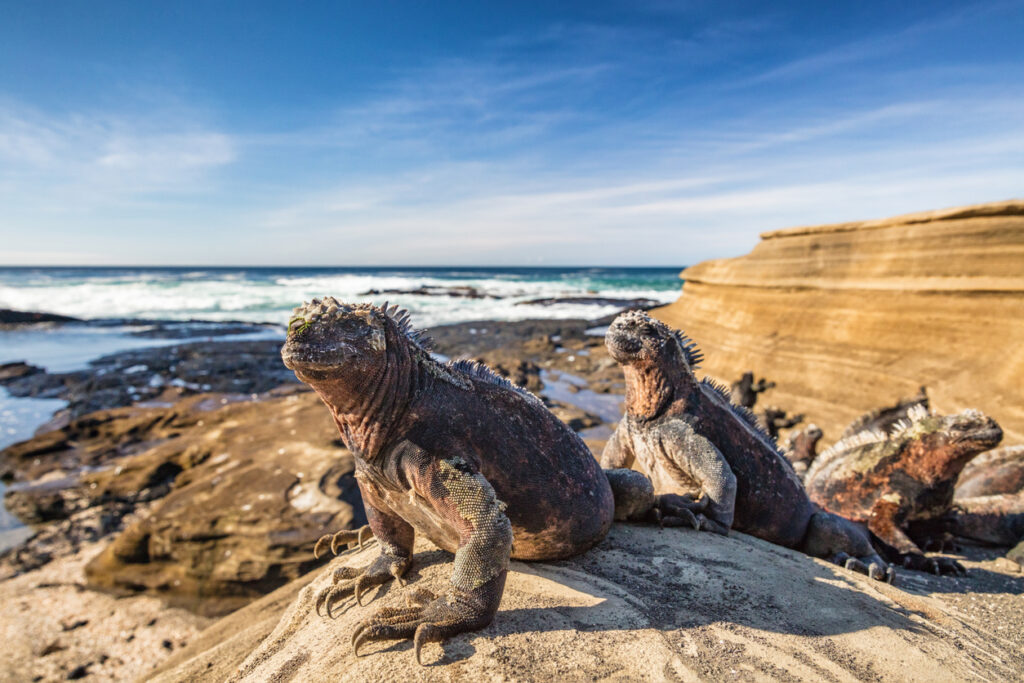
The only lizard in the world that forages in the ocean, the marine iguana evolved on the volcanic Galápagos Islands and adapted to conditions found nowhere else. The black lava shorelines absorb heat efficiently, which the iguanas rely on to warm themselves after diving into cold Pacific waters to feed on algae. Their dark colouring is a direct response to the volcanic landscape they’ve lived on for millions of years, and the two things have shaped each other in ways that are hard to separate.
Silversword plants

Found only on the volcanic slopes of Hawaii, silverswords grow at altitudes where most plants simply give up. They can live for decades producing nothing but a rosette of silver leaves before sending up a single dramatic flower spike, sometimes reaching two metres tall, and then dying. The silvery coating on their leaves reflects intense solar radiation and retains moisture in the thin volcanic soil. They look like something from another planet, which in some ways makes sense given where they’ve chosen to grow.
Fernandina Island hawk

The Galápagos hawk has few natural predators and less natural fear of humans than almost any other bird of prey on earth, a direct result of evolving in an isolated volcanic environment where aerial threats simply didn’t exist. On Fernandina, one of the most volcanically active islands in the archipelago, the hawk has adapted to hunting in the immediate aftermath of eruptions when other animals are displaced and disoriented. It essentially treats volcanic events as feeding opportunities.
Ohia lehua trees

In Hawaii, ohia lehua trees are often the very first woody plant to colonise fresh lava flows, pushing roots into bare volcanic rock before almost anything else can get a foothold. They’re so deeply embedded in Hawaiian ecology and culture that the forest they create, the ohia forest, supports hundreds of other species that couldn’t exist without them. Watching one grow from a crack in black lava is a surprisingly moving thing given what the landscape looked like before it arrived.
Lava lizards

Seven distinct species of lava lizard are found across the Galápagos Islands, each one evolving separately on different islands after being cut off by the ocean. They live directly on volcanic rock surfaces, are extremely territorial and regulate their body temperature using the heat stored in the dark basalt around them. The fact that seven separate species developed from a common ancestor across the same island chain is one of the cleaner illustrations of island evolution available.
Azorean laurel forest

The Azores archipelago sits on some of the most geologically active ground in the Atlantic, yet its native laurel forests are among the most intact relict forests surviving from the Tertiary period. Species that were wiped out across mainland Europe during ice ages clung on in the mild, moist volcanic climate of the islands, making the forests living fossils in the most literal sense. The soil produced by volcanic activity over millions of years is part of what makes the ecosystem so unusually rich.
Galápagos tortoise
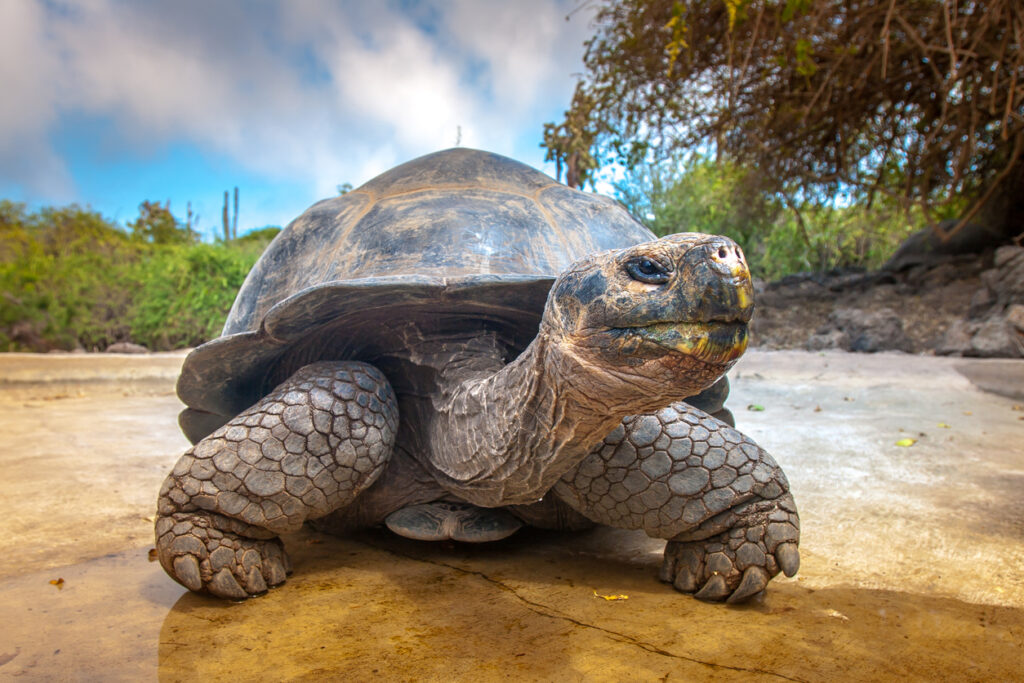
The giant tortoise of the Galápagos evolved differently on each major island, with shell shapes varying depending on the vegetation available at different volcanic altitudes. On islands with lush low vegetation, tortoises have domed shells. On drier islands where they need to reach higher for food, the shell curves upward at the front to allow the neck to extend. The volcanic geography of the islands essentially designed them, island by island, over hundreds of thousands of years.
Hawaiian silversword’s cousin, the greensword

Less famous than its silver relative but arguably just as remarkable, the greensword grows in the wet, boggy volcanic highlands of Hawaii where rainfall is extreme and conditions are punishing. It belongs to the same ancestral lineage as the silversword despite looking entirely different, which illustrates how dramatically a single colonising species can diversify when it’s dropped into a range of volcanic environments and left to adapt. Both plants exist nowhere else on earth.
Réunion bulbul

The volcanic island of Réunion in the Indian Ocean hosts several bird species found nowhere else, and the bulbul is one that has adapted specifically to the island’s dramatic elevation changes caused by volcanic geology. It moves between altitude zones depending on the season, exploiting flowering and fruiting patterns that follow the volcanic topography. Its song is genuinely distinctive, and the bird has become something of a symbol of the island’s unusual biodiversity.
Canary Islands dragon tree

The dragon tree is an ancient species that somehow survived on the volcanic Canary Islands after disappearing from most of its original range, and it has a quality that immediately sets it apart. When cut, it produces a deep red resin that has been used medicinally and ceremonially for centuries. The volcanic soil and the island’s climate kept conditions just stable enough for a species that was essentially running out of places to exist, and individual trees alive today are thought to be several hundred years old.
Lava cactus
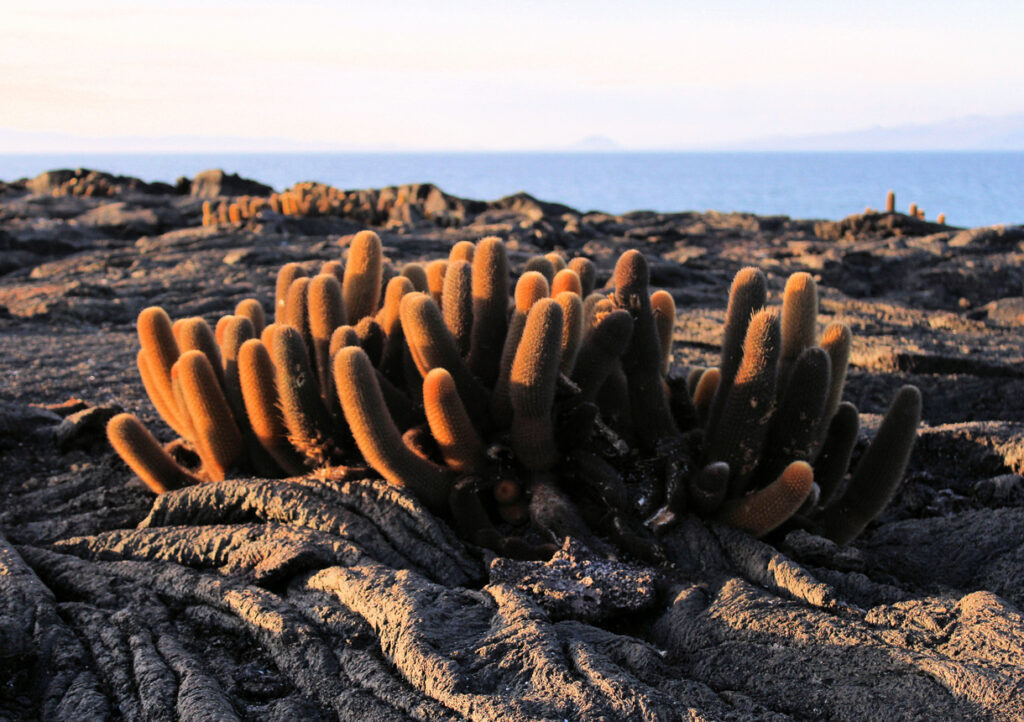
One of the first plants to colonise fresh lava flows in the Galápagos, the lava cactus grows in dense yellow-tipped clusters directly from bare volcanic rock with almost no soil to speak of. It’s a pioneer species in the truest sense, breaking down rock surface over time and creating the conditions other plants eventually need to follow. Finding one growing from what looks like completely lifeless black lava is one of those moments that makes it genuinely hard to dismiss plants as uninteresting.
Galápagos penguin

Penguins are not supposed to live this close to the equator, and yet the Galápagos penguin manages it because of a specific combination of cold ocean currents meeting volcanic island geography. The cool water upwelling around the islands keeps temperatures manageable, and the penguins nest in crevices formed by volcanic rock, which provides shade and protection in a landscape that would otherwise be far too hot for them. They’re the rarest penguin species in the world, and they exist entirely because of a very specific geological accident.