You’ve likely spent so much time looking at nature documentaries from the other side of the planet that you’ve missed the absolute gems right on your doorstep.
The UK isn’t just a collection of grey pigeons and damp foxes; it’s home to some of the most impressive creatures you’ll ever see if you know where to look. From the massive white-tailed eagles that look like flying barn doors to the pods of orcas that turn the Scottish coast into a scene from a high-budget film, the variety is staggering. You don’t need a passport or a long-haul flight to feel that sudden jolt of adrenaline when you spot something truly wild; you just need to get out of the car and head for the edges of the map.
Red squirrels
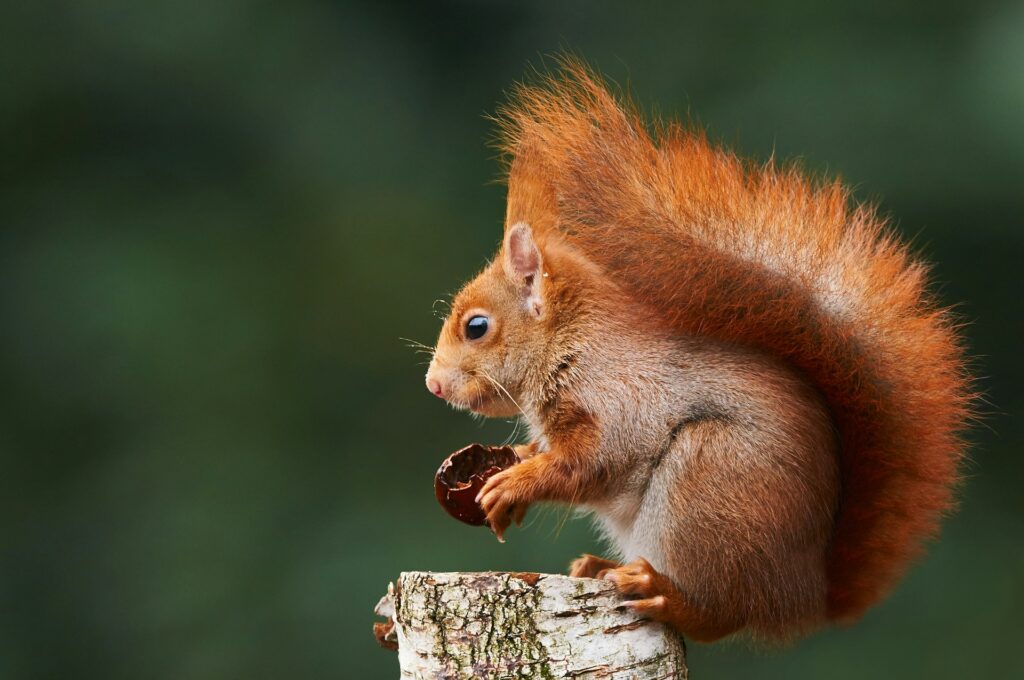
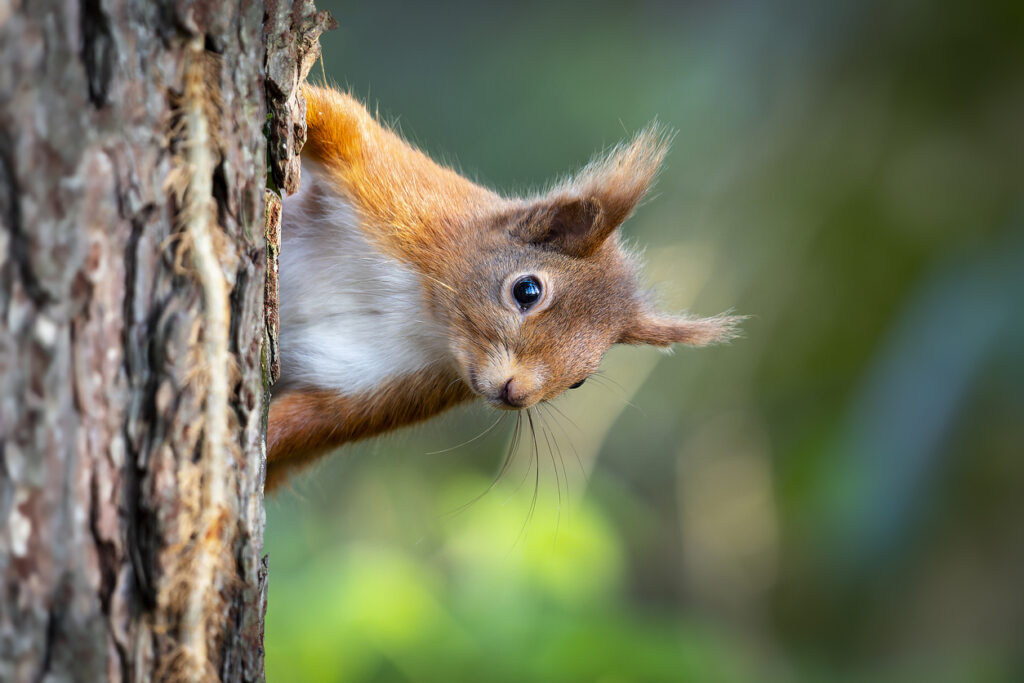
Most people in England have only ever seen the grey variety, which makes spotting a red squirrel feel like stumbling across something from another era. They’re smaller and more delicate than greys, with those distinctive tufted ears that make them look almost fictional. The Scottish Highlands hold the largest population, but you’ll also find them on the Isle of Wight, Anglesey, and parts of Northumberland. Numbers are still fragile, so seeing one in the wild carries a weight that a zoo encounter simply doesn’t replicate.
Puffins

Few things prepare you for your first encounter with a puffin colony. These compact, vividly coloured seabirds gather in enormous numbers on clifftops and rocky islands every summer, and they’re remarkably unbothered by human presence. Skomer Island off the Pembrokeshire coast is one of the best places in Europe to see them up close, with thousands nesting just metres from the footpath. The Farne Islands in Northumberland offer a similar experience, and watching them launch themselves off the cliff edge with their little wings going at full speed is genuinely joyful.
Barn owls

Watching a barn owl quarter a field at dusk is one of those experiences that stops you completely. They’re almost entirely silent in flight, and that white shape moving low over the grass in fading light has a quality to it that’s hard to describe. They’re found across most of the UK in farmland and open countryside, and late evening in summer is the best time to look. Once you’ve seen one hunting for real, no photograph ever quite does it justice.
Basking sharks

Britain’s largest fish is also one of its most surprising. Basking sharks can reach up to eleven metres in length and spend their summers feeding on plankton in shallow coastal waters, which brings them close enough to shore that you can sometimes spot them from clifftops. Cornwall, the Hebrides, and the waters around the Isle of Man are reliable spots. That enormous dorsal fin cutting slowly through calm water is an arresting sight, and knowing it belongs to a creature that poses no threat makes it even better.
Murmuration of starlings

There aren’t many natural spectacles that draw crowds of people standing in a field in November, but a starling murmuration does exactly that. Tens of thousands of birds move together as one fluid, changing shape across the evening sky, and the patterns they create are impossible to predict or explain. The Somerset Levels, Brighton Pier, and the Aberystwyth seafront are well-known gathering spots. It’s one of those things that makes even people who don’t consider themselves nature lovers stop and stare with their mouths open.
Red kites

The comeback of the red kite is one of British conservation’s genuine success stories. They were almost completely wiped out in the UK by the early twentieth century, surviving only in a small pocket of mid-Wales. Reintroduction programmes have since spread them across much of England and Scotland, and they’re now a common sight in the Chilterns, Oxfordshire, and the Yorkshire Dales. That forked russet tail is unmistakable once you know what you’re looking for, and they have an elegance in the air that makes them easy to watch for long stretches.
Otters

Otters are famously difficult to spot, which is part of what makes finding one so satisfying. They’re shy, fast, and often the only evidence of their presence is a ripple on an otherwise still river surface. Scotland offers some of the best chances, particularly along the west coast where sea otters are occasionally visible in broad daylight. On rivers across England and Wales, early morning is your best bet, and patience is non-negotiable. The wait, though, tends to be worth every quiet minute of it.
White-tailed eagles

Britain’s largest bird of prey was extinct here for over a century before reintroduction efforts began to bring it back. A fully grown white-tailed eagle has a wingspan that can reach nearly two and a half metres, which sounds like a fact until you see one overhead and realise the numbers don’t quite capture it. The Isle of White reintroduction project has brought them back to southern England, and they’re well established on the west coast of Scotland. Watching one glide over a loch without a single wingbeat is the kind of sight that recalibrates your sense of what belongs here.
Humpback whales

Humpback whales are being spotted in British waters with increasing regularity, and it’s a development that still catches people off guard. The Hebrides, the waters off Shetland, and the Norfolk coast have all had notable sightings in recent years. A humpback breaching is an almost absurdly dramatic thing to witness — a creature the size of a bus launching itself out of the water just off a British coastline feels like it belongs somewhere far more exotic. It’s a sign of recovering whale populations, and hopefully something that will only become more common.
Hazel dormice

The hazel dormouse is one of Britain’s most elusive and charming mammals. Tiny, golden-furred, and almost entirely nocturnal, most people never see one at all, which makes any encounter feel genuinely special. They’re found in ancient hedgerows and woodland edges across southern England and Wales, and conservation volunteers who check nest boxes sometimes find them curled up and fast asleep. They spend an enormous portion of their lives in hibernation, which partly explains why they’re so rarely seen. If you do spot one, it’s the kind of moment you tend to remember for a long time.
Britain’s wildlife doesn’t ask much of you — just a bit of time, some patience, and a willingness to be in the right place at something close to the right moment. The more attention you pay to what’s around you, the more you realise this country is quietly full of things worth stopping for.