
The UK government has unveiled an ambitious road map to triple its solar capacity from around 18 GW today to 45–47 GW by 2030. Introduced as part of the Clean Power 2030 Action Plan, this strategy aims to slash household energy bills by up to £500 annually while creating roughly 35,000 green jobs. As reported by Government Business, measures include encouraging rooftop solar on schools, hospitals, new homes under the Future Homes Standard, and trialling plug-in “balcony panels” for flats and rental properties, alongside exploring solar canopies over car parks and warehouse roofs.
Why solar is getting a moment in the sun
Solar panels are now among the cheapest ways to generate electricity, outperforming fossil fuels, and according to Solar Energy UK, this “once-in-a-generation” plan is critical to boost Britain’s energy security and price stability. The approach combines large-scale ground arrays with a massive rooftop rollout. The government’s imminent Solar Roadmap outlines over 70 actions to speed up rollout and smooth grid connections. In doing so, officials hope to exceed the original target if more rooftop installs come onstream, a move echoed by industry-backed reports saying the UK might realistically hit up to 50 GW by decade’s end.
We’re generating clean energy, sure, but we’re also building resilience. With the Integrated Plan aiming to power all of Britain’s electricity demand with renewables, solar would make up a sizeable share, alongside wind, and battery storage of around 22–27 GW would help smooth out the intermittency. The National Energy System Operator has emphasised that this shift requires rapid deployment of solar, battery systems, and grid upgrades.
Challenges on the road to 2030
@skynews #Labour has set out its new #CleanPower2030 plan and it’s ‘colossal’ in its ambition. #Sky‘s Science and technology editor, Tom Clarke, outlines the 130-page action plan and its potential impact. #Fyp #EnvironmentalNews #UKGovernment #UKPolitics ♬ original sound – Sky News
Despite the optimism, significant hurdles lie ahead. Experts at Cornwall Insight warn that a further £48 billion in investment is needed to stay on track, as delays around planning permission, limited grid capacity, and sluggish supply chains threaten deployment. Although the current pipeline suggests solar might meet around 44% of electricity needs by 2030, meeting the 67% renewables target mandated by the Climate Change Committee will require more urgency. Planning reforms are therefore under consideration, possibly limiting community objections to infrastructure projects, to avoid bottlenecks, as discussed in The Financial Times. Meanwhile, incentives will need to come from government-backed grants, cheap loans, and expansion of the Smart Export Guarantee so households have confidence their installations will be financially sustainable.
The heart of the plan, though, is its mix of ambition and innovation. By enabling balcony panels, carport canopies, and large rooftop installs across non‑domestic buildings, the strategy intends to unlock hidden solar potential. Homeowners will be supported through grants or low-cost loans, especially those in low‑income brackets, and commercial property owners are set to benefit from simplified licensing and financial packages. Meanwhile, upgrading grid connection rules aims to tackle the log-jam that has left some rooftop projects waiting years to go live.
What it means for your week‑to‑week life, and Britain’s green future
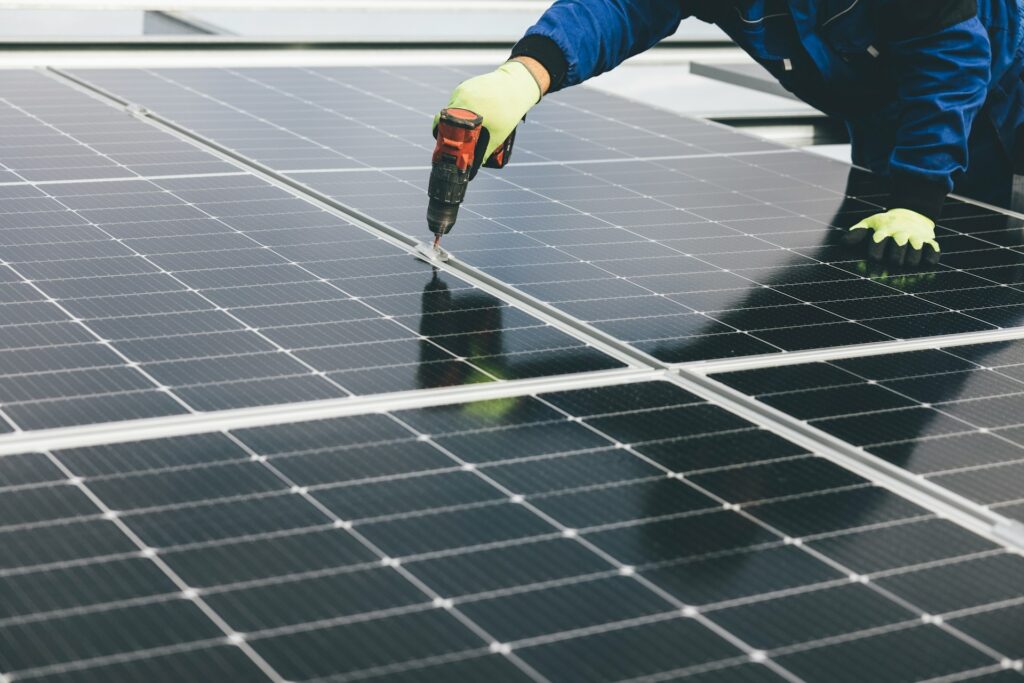
For the average consumer, this means more choice and lower power bills. If you install solar panels now, support systems should improve, and the promise of locking your home into clean, self-generated energy, paired with growth in heat pumps and electric vehicles, becomes more achievable. For renters or flat-dwellers, plug-in balcony panels and shared solar schemes would finally let them take part in the clean-energy transition.
Beyond individual households, cleaner energy will provide protection against volatile fossil fuel costs and geopolitical shocks. As solar and wind take on more of the electricity mix, reliance on imported gas will decline, which is something strongly backed by Labour’s promise to make Britain a clean‑energy superpower. Economically, the transition is expected to catalyse thousands of skilled jobs in installation, manufacturing and grid management, especially in underserved areas.
The wider message from this plan is clear: clean‑power transformation doesn’t just start and end with politicians. It requires widespread participation, from schools and hospitals all the way down to individual renters. If the UK can show that solar can be scaled quickly, affordably, and equitably, it will shame doubters and establish Britain as a global leader in renewable deployment.
This road map sets the stage, but delivery will demand swift action on planning, funding, grid upgrades and public engagement. If the UK follows through, the 2030 target could mark a pivotal turning point, not just for energy security, but for cleaner, fairer living.