When forests are at risk, science can help tip the balance in nature’s favour. UK researchers are facing down the spruce bark beetle, a tiny invader with massive destructive power. Think drones, sniffer dogs, and smart tech, all working to protect Britain’s trees.
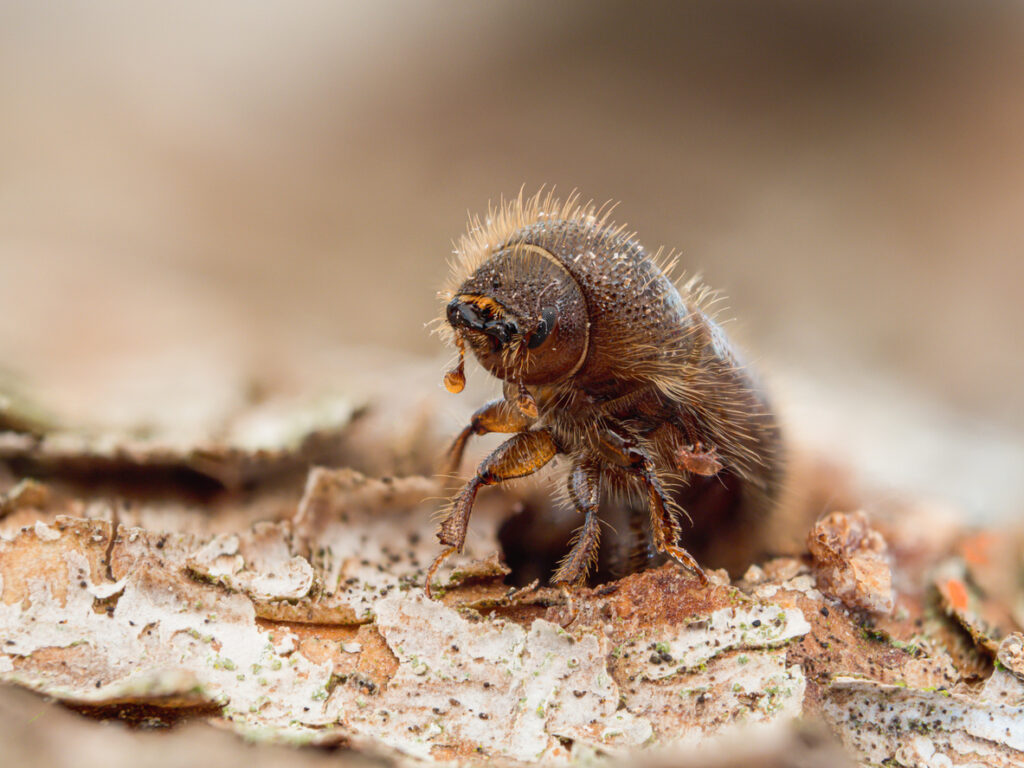
For such a tiny beetle, it has a big potential to destroy.
The eight-toothed spruce bark beetle, only about 5 mm long, has devastated European spruce forests in recent years. It wasn’t spotted in the UK until 2018, but the fact it hitchhiked across the Channel on the wind turned every spruce tree into a potential target.
If it takes hold, it could threaten around 725,000 hectares of Sitka spruce, Britain’s most commercially important tree. Seeing how it has overwhelmed forests elsewhere shows just how high the stakes are on home soil.
Drones act as eyes in the sky catching trouble early
Spotting individual beetles in dense woodland is like looking for needles in a haystack. That’s why drones have joined the fight. They enable scientists to fly over hundreds of hectares, spotting tree damage from the air before it’s too late.
Images captured by drones help pinpoint vulnerable areas for on-the-ground investigation, turning what would be endless walking into targeted checks. It’s how surveillance becomes practical, and powerful.
Sniffer dogs are detecting what humans can’t.
Some things humans can’t smell easily, but trained dogs can. Canine teams now help detect beetle pheromones and even their frass, especially inside large timber stacks where people can’t go safely or efficiently. Dogs can sniff out affected logs under layers of wood, speeding up inspections and helping officials act more quickly. It’s a clever blend of animal instinct and forest protection.
Smart traps powered by AI cameras are helping the problem.

Traditional traps require someone to visit and check them regularly. Now, traps equipped with cameras and AI can monitor daily, identifying beetles via image recognition trained on thousands of reference shots. That means real-time detection and faster responses—no waiting for someone to check, no delays. It brings tech precision directly into pest control strategy.
Nuclear-fallout models have been repurposed for beetles.
One of the cleverest tools in this fight is repurposed nuclear dispersion modelling. Originally built to predict how radioactive material moves through wind currents, it now maps likely routes of incoming beetle populations. Knowing where beetles might land helps officials improve surveillance and target high-risk forest areas before outbreaks start to spread. That’s adapting legacy science for modern ecology.
Managed outbreaks have been achieved in parts of the UK.
Using drones, dogs, AI traps, and dispersion models together, scientists have successfully eradicated beetle populations in key areas across southeast England. Those early detections make all the difference between containment and catastrophe. The lesson is: vigilance pays off. It shows how combining precise monitoring with quick action gives the best shot at protecting forests before the beetles multiply out of control.
Forest stress makes trees more vulnerable.
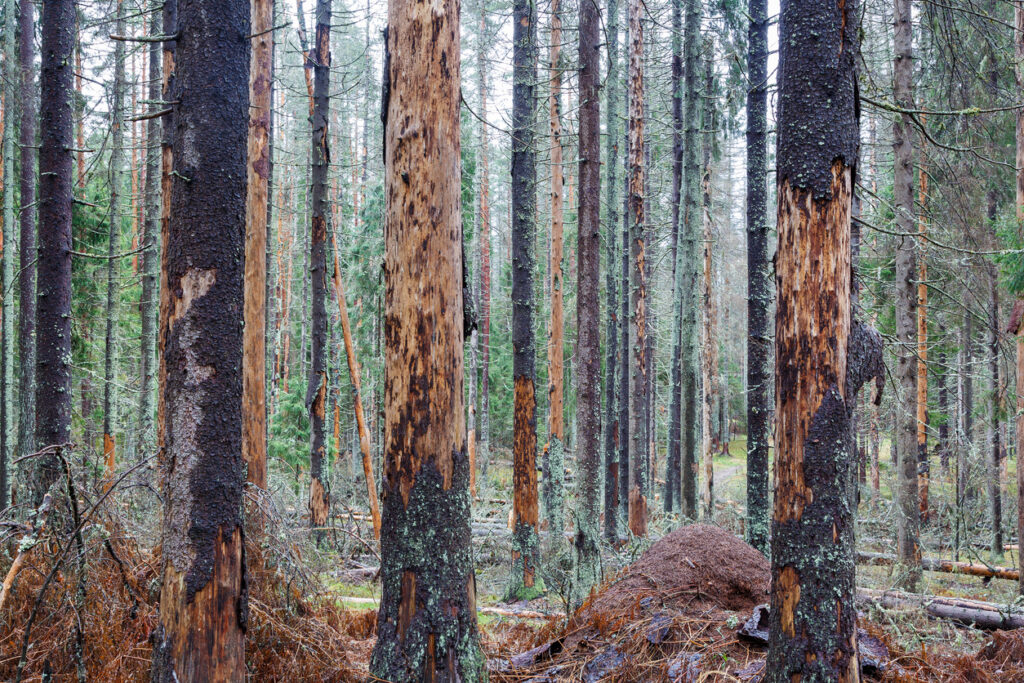
Even healthy trees usually fend off beetles with natural resin defences. But drought or storm damage weakens the trees, giving beetles an easier pathway in. Climate change increases those pressures, making outbreaks more likely. That means this isn’t just about catching beetles. It’s also about supporting forest health. Protecting tree well-being helps build long-term resilience against pest threats.
8. Old forests need thoughtful protection too.
Sometimes infected trees must be removed fast to keep beetles from spreading. That can affect ancient woodlands where conservation mixes with caution. It raises tough questions about how to balance preservation with defence. The solution lies in thoughtful management and restoration—not just felling trees, but nurturing habitats, so woodlands can recover and stay strong.