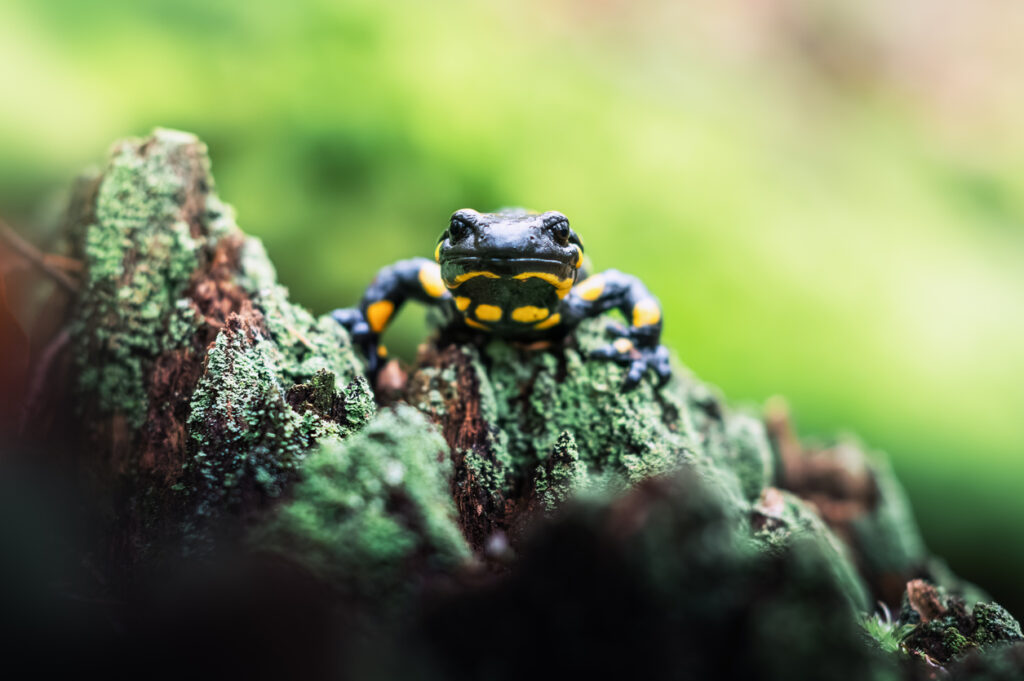
With its bold black-and-yellow pattern, the fire salamander looks like something you’d see in a fantasy film, not slowly plodding through a European forest.
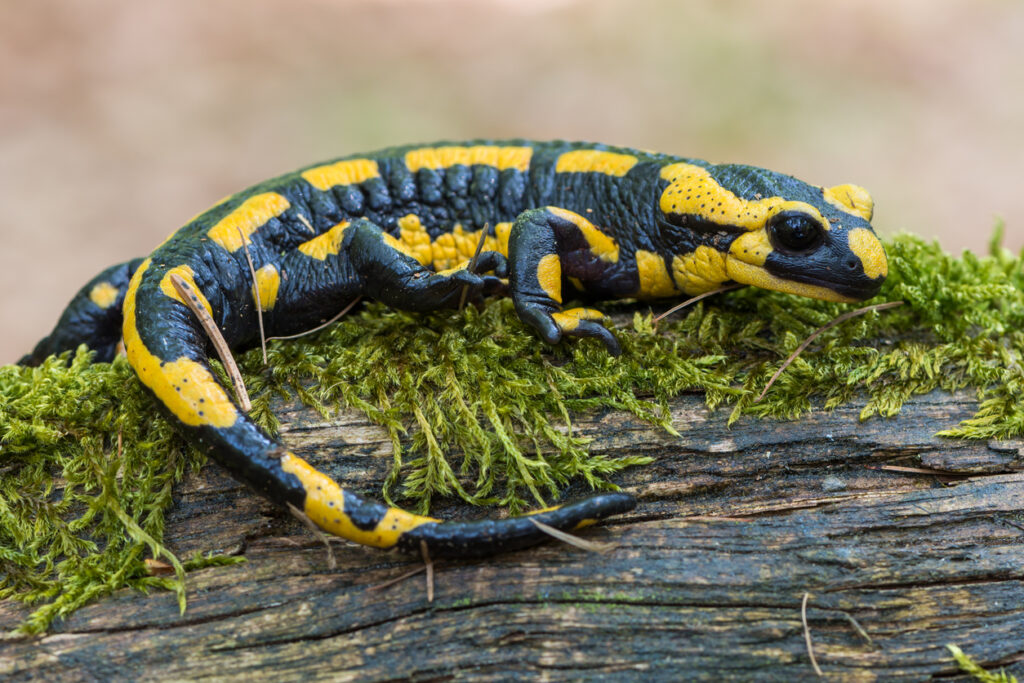
However, this eye-catching little amphibian isn’t just about style. It’s packing one of nature’s more dramatic defence systems: a toxic spray that can leave predators instantly regretting their lunch plans. From how it produces this chemical cocktail to the clever ways it delivers it, here’s how the fire salamander defends itself—plus a few surprising facts about what’s going on under that shiny skin.
It’s not just pretty—it’s warning you.
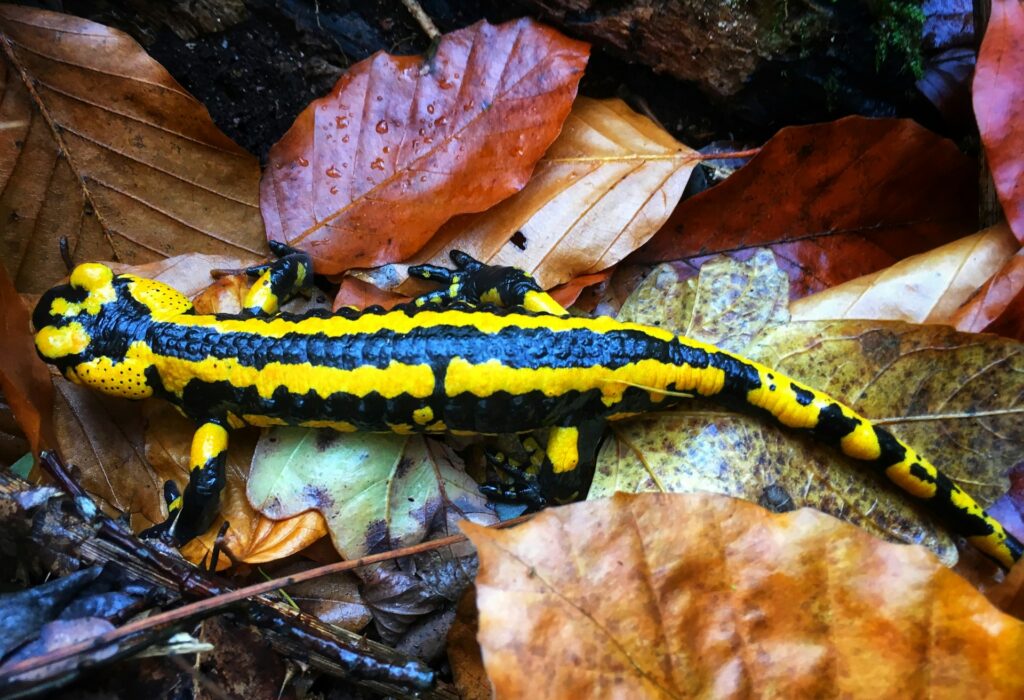
The fire salamander’s striking black-and-yellow colour scheme isn’t just for show. It’s a classic example of aposematic colouring—nature’s way of saying, “Don’t even think about it.” Bright colours in the wild often mean danger, and the fire salamander’s look is its first line of defence. Many predators have learned to associate those colours with regret and will back off before even taking a bite.
It produces a powerful neurotoxin.
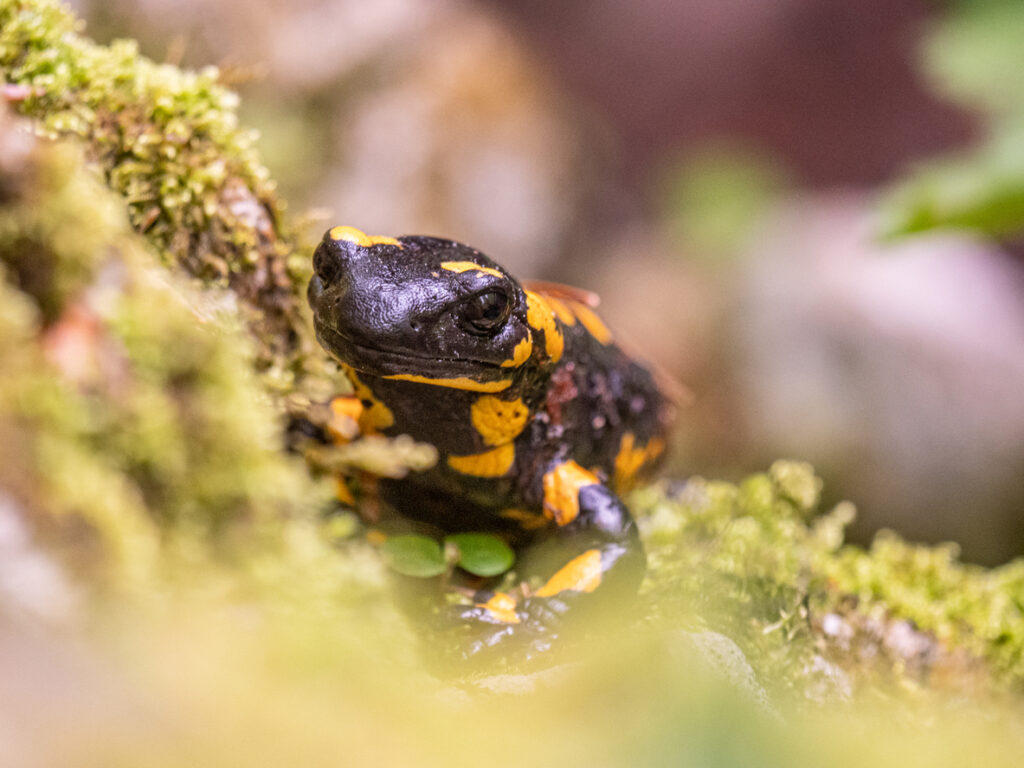
Fire salamanders secrete a substance called samandarine, a potent alkaloid that can interfere with nerve signals. It’s toxic enough to cause muscle spasms, high blood pressure, and even convulsions in would-be predators. It’s not typically dangerous to humans through casual contact, but you definitely don’t want to rub your eyes, or lick one, if that was somehow on your bucket list. The toxin is mainly designed to send a loud “nope” to animals trying to snack on it.
The glands are built right into its skin.
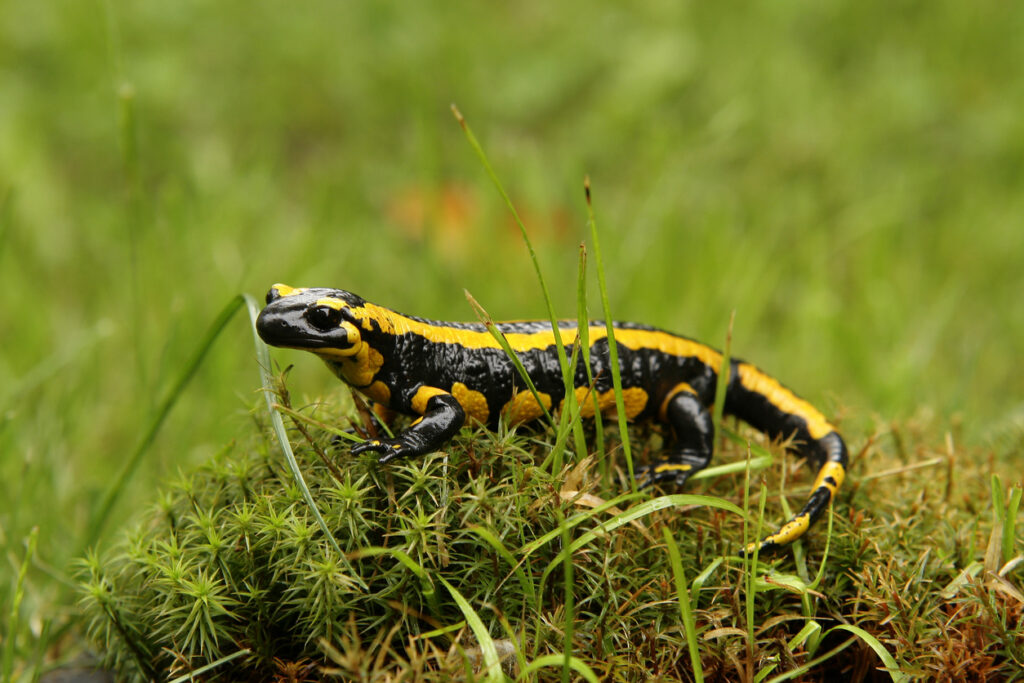
Unlike snakes or bees that deliver venom through a bite or sting, the fire salamander has parotoid glands behind its head and along its back that secrete the toxin directly through its skin. It’s a passive delivery system most of the time, but if provoked, the salamander can squeeze out the toxin in a small spray. It’s not a full-on Super Soaker blast, but enough to startle or seriously discourage a predator.
It can aim the spray at threats.
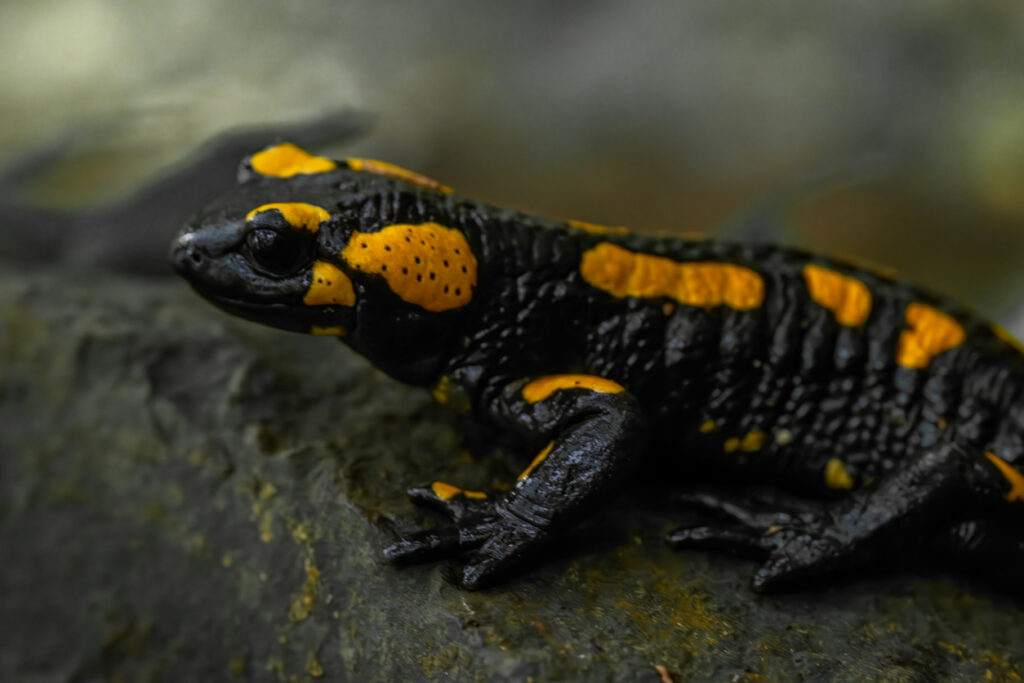
In some species, including certain fire salamanders, the toxin can be sprayed with some direction, aiming at a predator’s face or eyes for maximum effect. This makes it more than just a passive deterrent. If a fox, bird, or curious dog gets too close, the salamander might twist its body and release a quick chemical warning shot to the face. It’s not subtle, but it works.
The spray is painful to mucous membranes.
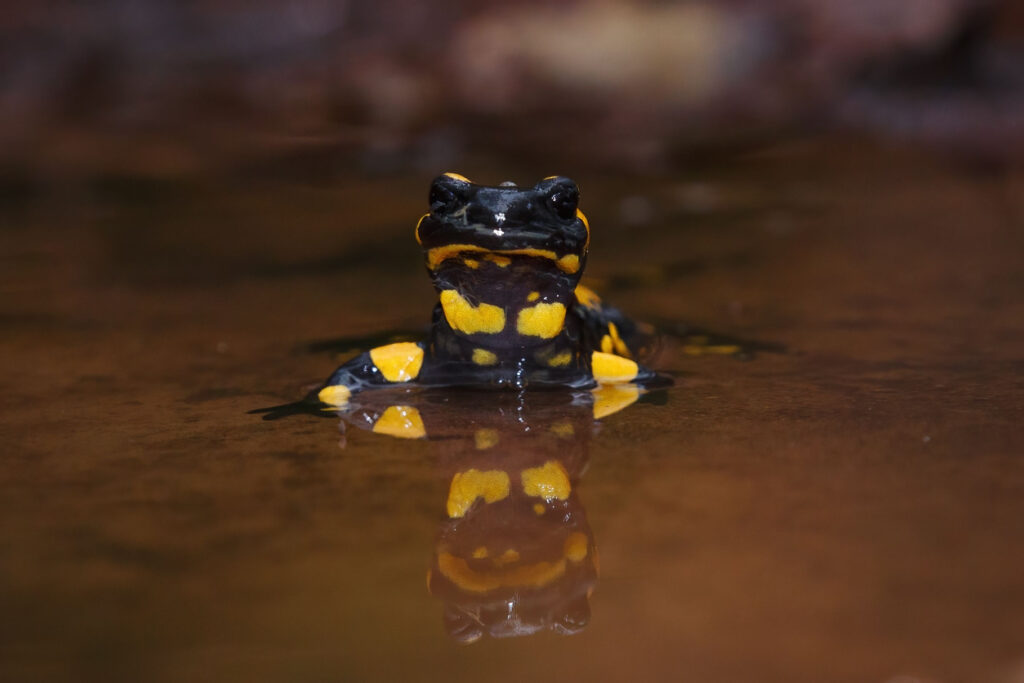
If the toxin gets into the eyes, mouth, or nose of an attacker, it causes immediate irritation. That sharp discomfort is often enough to make an animal back off before serious damage is done. It’s not designed to kill—it’s designed to end the encounter. The idea is simple: make the experience so unpleasant that the predator decides it’s not worth the hassle next time.
The toxins develop with age.
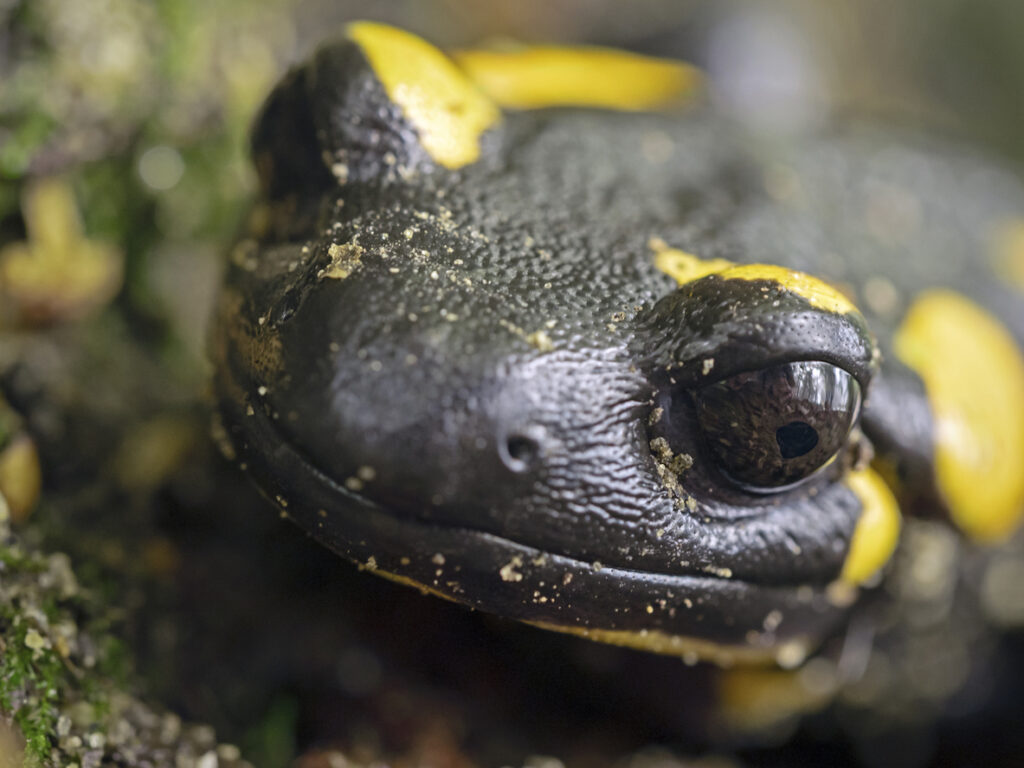
Juvenile fire salamanders don’t pack the same chemical punch as adults. As they grow, their toxin production increases—meaning they become more capable of defending themselves the older they get. This makes the young especially vulnerable and explains why they tend to be more secretive. Once they’ve matured and fully developed their defences, they become bolder and more visible in their habitat.
Stress can trigger a chemical release.
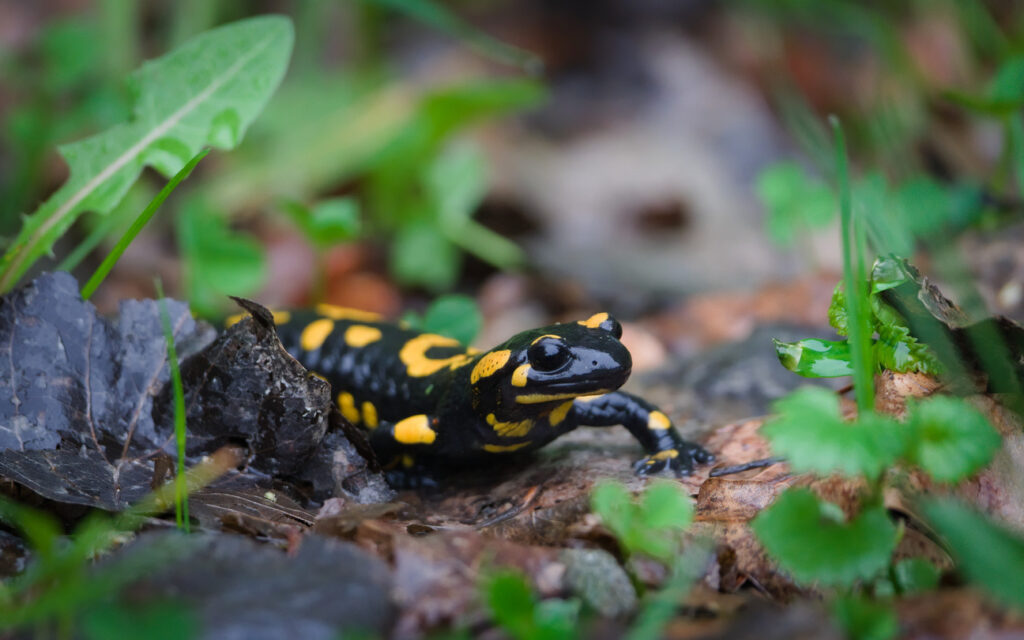
It doesn’t always take a bite or scratch to release the toxin. Just picking up a fire salamander or stressing it out can activate its defensive glands and cause it to secrete a mild amount of the chemical. This is why handling them in the wild (or at all, really) isn’t recommended. Even if it doesn’t harm you, it causes stress for the animal and uses up valuable energy and toxins it needs to stay safe.
They don’t bite, but they don’t need to.
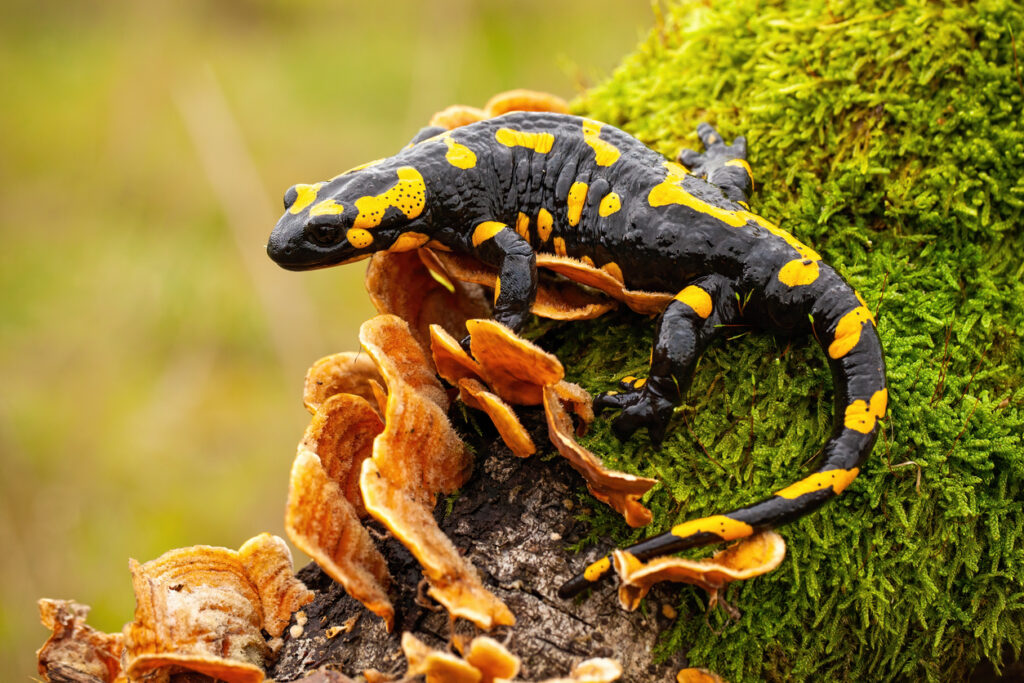
Unlike some reptiles or amphibians that rely on biting or venom injection, fire salamanders have no interest in using their teeth. Their defence is entirely chemical and relies on being unpleasant to eat rather than physically aggressive. This low-effort approach works remarkably well. A single bad experience with one fire salamander is often enough to teach predators to avoid anything with similar markings in the future.
They’re active when predators are too tired to bother.
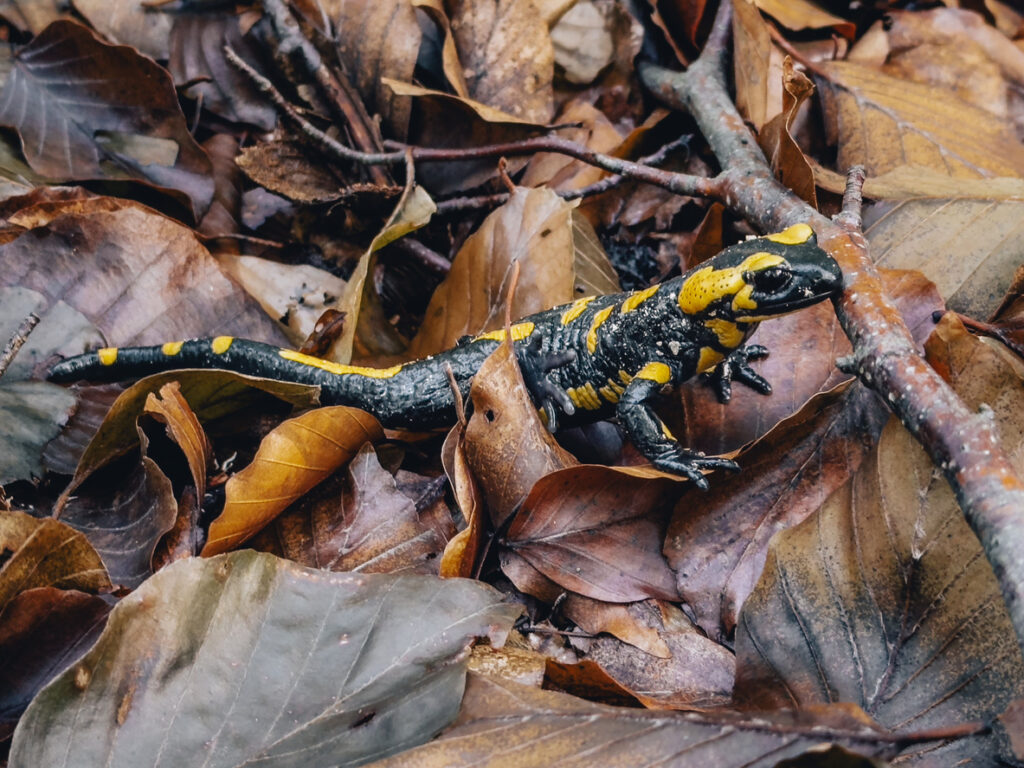
Fire salamanders are mostly nocturnal, which gives them a bit of an edge. Many of their potential predators are less active at night, and the cooler temperatures also help them avoid overheating while being active. Still, if they do cross paths with danger, their colour, toxin, and slow-but-steady movements give them a decent shot at surviving. They don’t run—they just rely on their unappealing chemistry to do the job.
Their toxins vary by region.
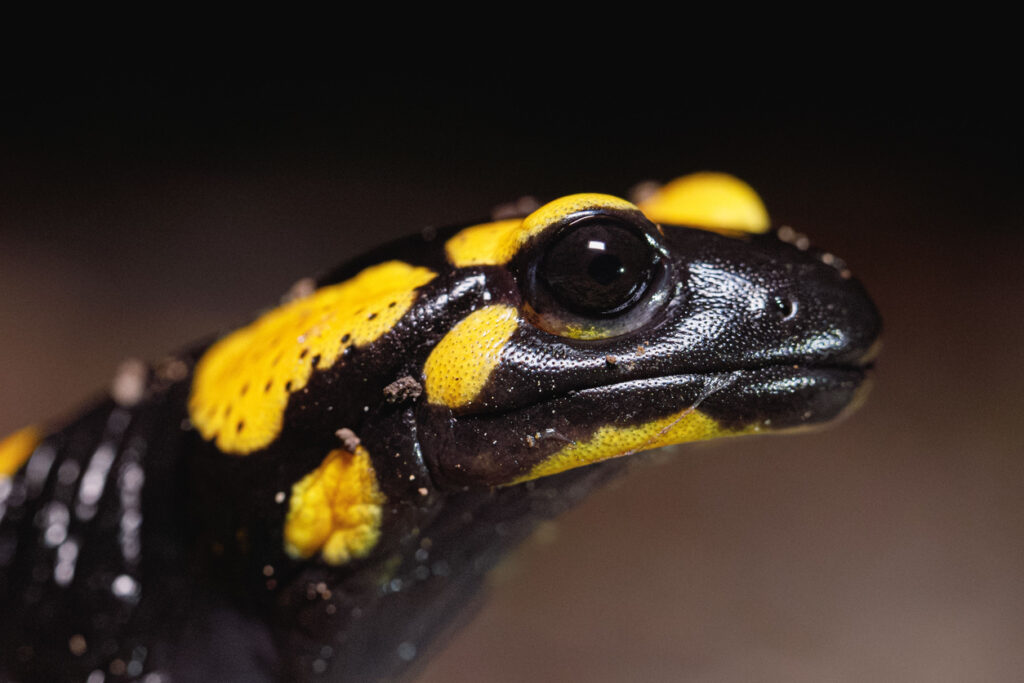
Not all fire salamanders are chemically identical. Different populations across Europe produce slightly different versions of samandarine and other toxins depending on their local environment. This means some salamanders might be more potent than others, especially if their local predator population has been particularly persistent. Evolution arms races, even among amphibians, are very real.
They’re more threatened than they look.
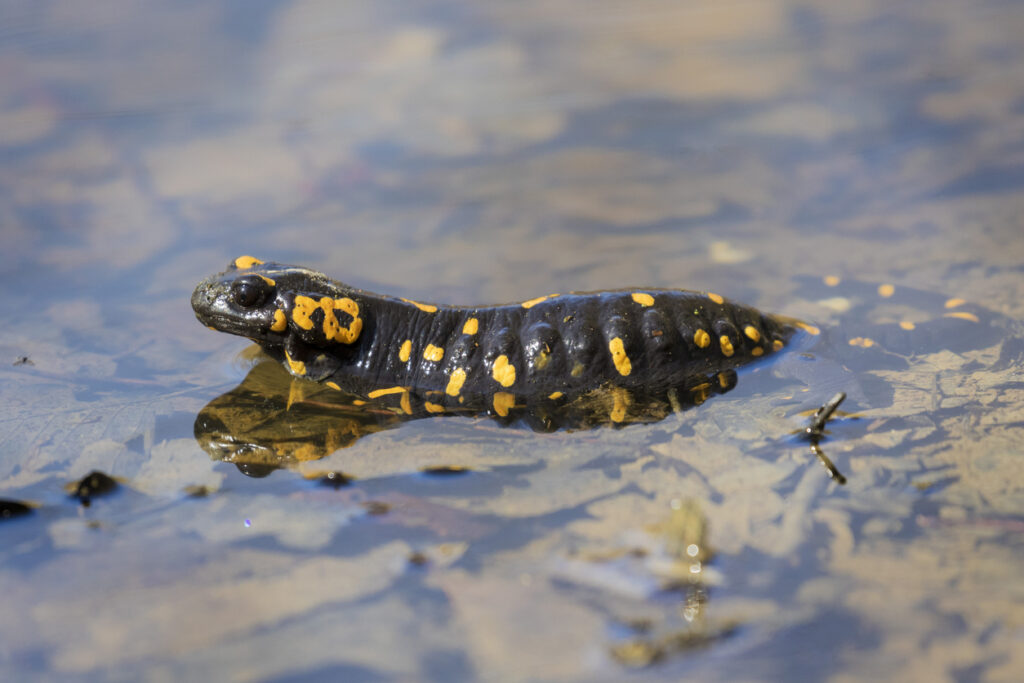
Despite their brilliant defence systems, fire salamanders are facing real risks in the wild. Habitat destruction, climate change, pollution, and a deadly fungal disease called chytridiomycosis have all taken a toll. In some areas, their numbers have dropped drastically. So while they can handle themselves pretty well against a hungry fox, they’re not immune to the bigger environmental threats caused by humans.
They’re proof that nature loves a chemical trick.
From poison dart frogs to toxic newts, nature is full of animals that use chemical defences, but the fire salamander is one of the few in Europe to do it with such flair. It doesn’t need speed or fangs when it’s got a built-in warning label and a natural deterrent system.
Understanding how and why they use these defences helps us appreciate how diverse, and weirdly brilliant, evolution can be. They may look like slow-moving, glossy little reptiles, but behind that stare is a built-in science lab.