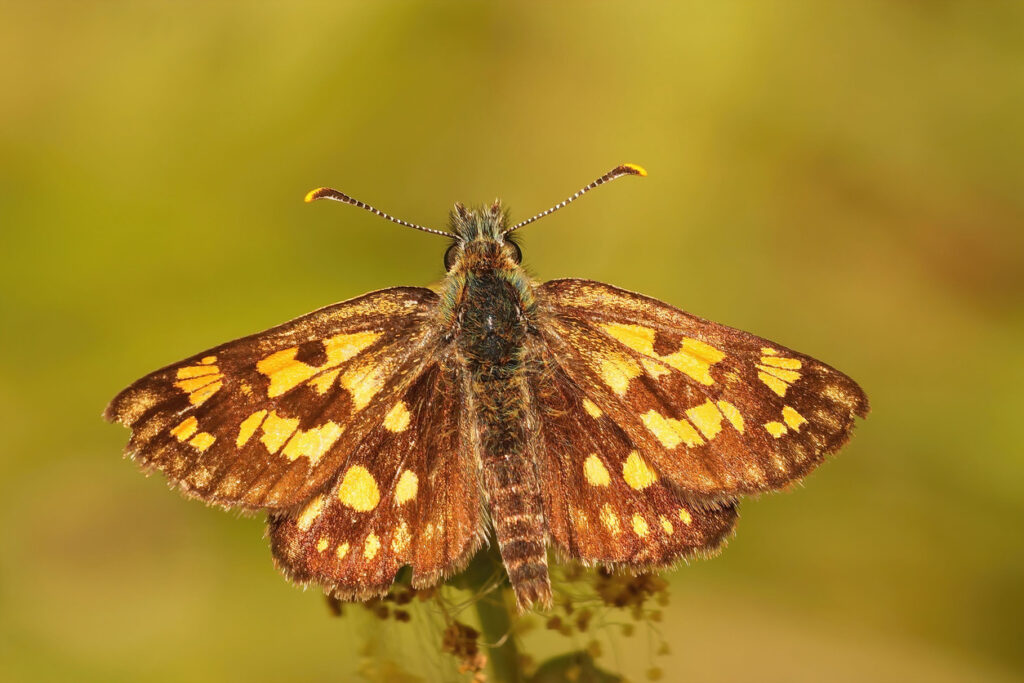
In a small number of quiet, sun-drenched meadows across the UK, something hopeful is fluttering back into view: the chequered skipper butterfly. Once thought extinct in England and clinging on only in parts of western Scotland, this rare little insect is staging a quiet return. But its comeback is fragile—and whether it survives depends entirely on how we care for the habitats it needs to thrive. Here’s what makes the chequered skipper so special, what nearly wiped it out, and how you can help support its return.
The chequered skipper vanished from England in the 1970s.
This butterfly was once a regular sight in woodlands across the Midlands. But by 1976, it had completely disappeared from England—mainly due to changes in woodland management, loss of habitat, and agricultural intensification. It wasn’t that the butterfly gave up—it just had nowhere left to go. Its caterpillars rely on specific grasses, and it needs sunny, sheltered spots to breed. When those vanished, so did the butterfly.
It clung on in parts of western Scotland.
While England lost its population, the chequered skipper survived—just—in parts of western Scotland, where conditions remained just wild and damp enough for them to hold on. These Scottish butterflies became the lifeline for conservationists hoping to bring the species back to England. In many ways, they were the quiet survivors waiting for a second chance.
A reintroduction project began in 2018.
Butterfly Conservation, working with Forestry England and other partners, began a careful plan to reintroduce the chequered skipper to England. They sourced butterflies from Belgium, whose population closely matches the extinct English one, and released them into managed woodland sites in Northamptonshire.
These woodlands had been prepared in advance, with the right mix of grasses, brambles, and sunny rides. It’s been slow, deliberate work—but it’s starting to pay off.
It’s a butterfly that thrives in well-managed, wild spaces
Chequered skippers don’t do well in tidy, overly neat landscapes. They need messy, natural, slightly wild spaces with the right grasses and enough sunlight to warm their wings and fuel their activity. That means conservation isn’t just about planting flowers—it’s about letting certain parts of nature stay rough around the edges, and resisting the urge to mow, prune, or overly ‘manage’ wild spaces.
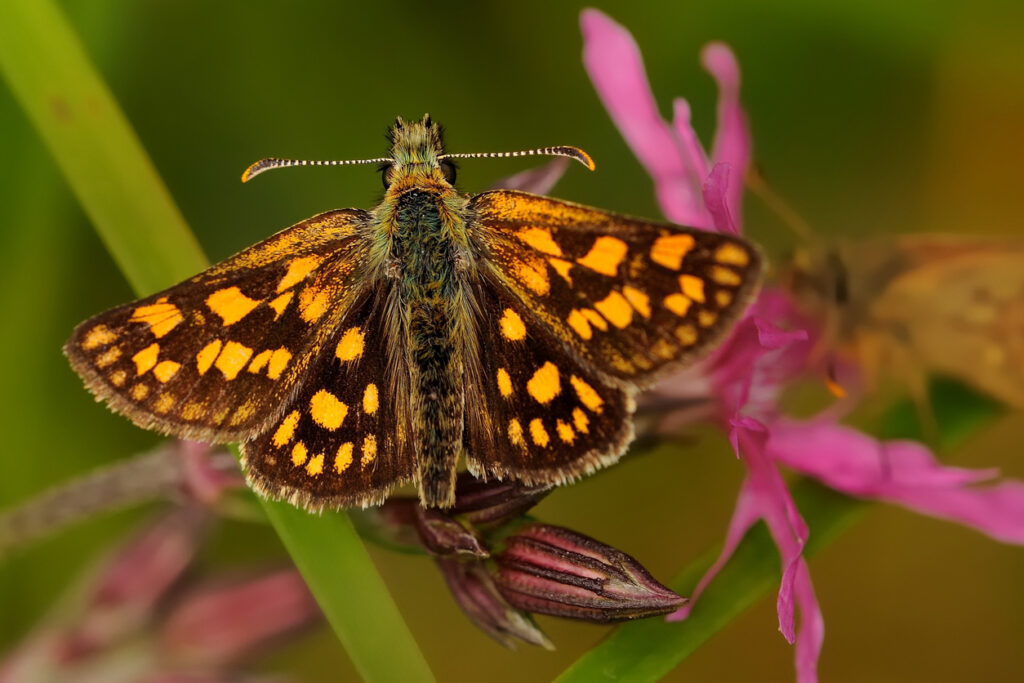
You’ll usually only spot them in May.
These butterflies have a short flight season—typically just a few weeks in late May and early June. You’ll find them fluttering low and fast, feeding on bluebells, bugle, and marsh thistles in woodland clearings. They’re small, quick, and often overlooked. But if you’re lucky enough to see one, that dark brown and gold chequered pattern is impossible to forget.
The comeback is still in early stages.
So far, the reintroduction has shown real promise. There have been signs of breeding, and sightings have increased year on year. However, the population is still very small and vulnerable to changes in weather, habitat, and human disturbance. This isn’t a story of total recovery—not yet. It’s a cautious, hopeful middle chapter that still needs active support to succeed.
You can help, even if you’re not in a reintroduction area.
If you live near woodlands or have access to green space, consider planting butterfly-friendly wildflowers, leaving grassy corners untouched, and avoiding pesticide use. The more fragmented habitats are connected, the better chance this butterfly has of spreading naturally. You can also support organisations like Butterfly Conservation, who fund habitat restoration and long-term monitoring. Even small donations or sharing awareness helps keep the momentum going.
Citizen science plays a big role.
Volunteers have helped track sightings, monitor butterfly numbers, and survey habitats. These data help conservationists adjust their plans and better understand what’s working and what isn’t. If you enjoy walking, photographing nature, or just noticing what’s around you, you can be part of the effort—no science degree required, just curiosity and a pair of eyes.
It’s a symbol of how fragile—and fixable—loss can be.
The chequered skipper’s disappearance wasn’t inevitable. It was the result of changes we made without thinking about what we were displacing. But its return shows that, with care and intention, we can bring some of what we’ve lost back. It’s a reminder that extinction isn’t always final—sometimes, nature just needs a hand and a bit of space to recover.
A single butterfly sends a much bigger message.
Saving the chequered skipper isn’t just about one species. It’s about restoring woodlands, rethinking land use, and remembering that small things matter. These butterflies may be tiny, but they’re powerful indicators of the health of our ecosystems. Every chequered skipper you see fluttering by is more than a pretty insect—it’s proof that restoration is possible, even after decades of loss. All it takes is patience, the right conditions, and people who care enough to try.