
We like to think of animals as living entirely in the moment, but for some species, a grudge is a lifelong commitment. You’re likely used to the idea of a dog being happy to see you, but there are plenty of creatures out there with a memory for faces that’s sharp enough to pick you out of a crowd years after you’ve crossed them.
They’re not just reacting to a threat; they’re actually storing away your features and waiting for the right moment to let you know they’ve not forgotten. From crows that’ll recruit their entire flock to harass you to elephants that can track down a specific person decades later, the animal kingdom is full of characters you really don’t want to get on the wrong side of.
1. Crows remember human faces for years.
Research into corvid memory has produced some of the most compelling evidence of long-term individual recognition in the animal world. Crows that have been trapped, handled, or harassed by a person in a specific mask have been shown to respond with alarm calls, dive-bombing, and sustained hostility to anyone wearing that mask years later, while ignoring people in different masks entirely.
They also recruit other crows to the cause, which means a grudge in a crow community can spread to birds that never had the original negative encounter. The social transmission of grievance is something researchers found genuinely unexpected.
2. Elephants hold grudges across decades.
Elephant memory is well documented, but the specificity of it is still remarkable. Individual elephants have been observed reacting with hostility to particular humans, vehicles, and other elephants years and sometimes decades after a negative encounter, while showing no such response to individuals who haven’t wronged them.
Matriarchs in particular carry detailed social knowledge about who is safe and who isn’t, and that information guides the whole herd’s behaviour. Studies of elephants in areas with historical poaching found that herds maintained elevated stress responses to humans from those regions long after the direct threat had passed.
3. Chimpanzees track favours and debts precisely.

Chimpanzees operate within complex social hierarchies where remembering who helped you, who betrayed you, and who owes you something is essential to survival. They’ve been observed withholding cooperation from individuals who failed to reciprocate previous assistance, and retaliating against those who acted against them in ways that suggest a clear and durable memory of the specific transgression.
The capacity for what researchers call calculated reciprocity, knowing not just that something happened but tracking the specific individual and the specific act over time, is highly developed in chimps.
4. Octopuses recognise and respond differently to individual humans.
Given that octopuses have relatively short lifespans and no social structure to speak of, the discovery that they form and maintain individual preferences toward specific humans was surprising. Aquarium octopuses have been documented consistently directing water jets at particular staff members who handled them in ways they disliked, while behaving entirely differently toward others. The fact that they distinguish between individual people and maintain that distinction over time points to a capacity for personal memory that most people wouldn’t associate with an invertebrate.
5. Horses remember how people made them feel.
Studies into equine memory have found that horses retain detailed memories of emotional experiences connected to specific individuals, and that these memories influence their behaviour in subsequent encounters, sometimes years later. A horse that was handled roughly or frightened by a particular person will show measurable stress responses when that person approaches again, while remaining calm with others.
More interestingly, horses also remember positive interactions with the same durability, which is why the relationship between a horse and a person who has treated them well is often remarkably resilient to gaps in contact.
6. Dolphins track social relationships with considerable precision.
Dolphins live in fluid social groups where alliances shift and the ability to track who has been cooperative, competitive, or hostile over time is genuinely useful. Research has found that dolphins respond differently to individuals based on previous interactions, and that the memory of a specific individual’s behaviour can persist across years of separation.
Studies using playback of signature whistles found that dolphins recognised the calls of individuals they hadn’t encountered in over twenty years and responded in ways consistent with their prior relationship with that animal.
7. Magpies and other corvids grieve and remember their dead.
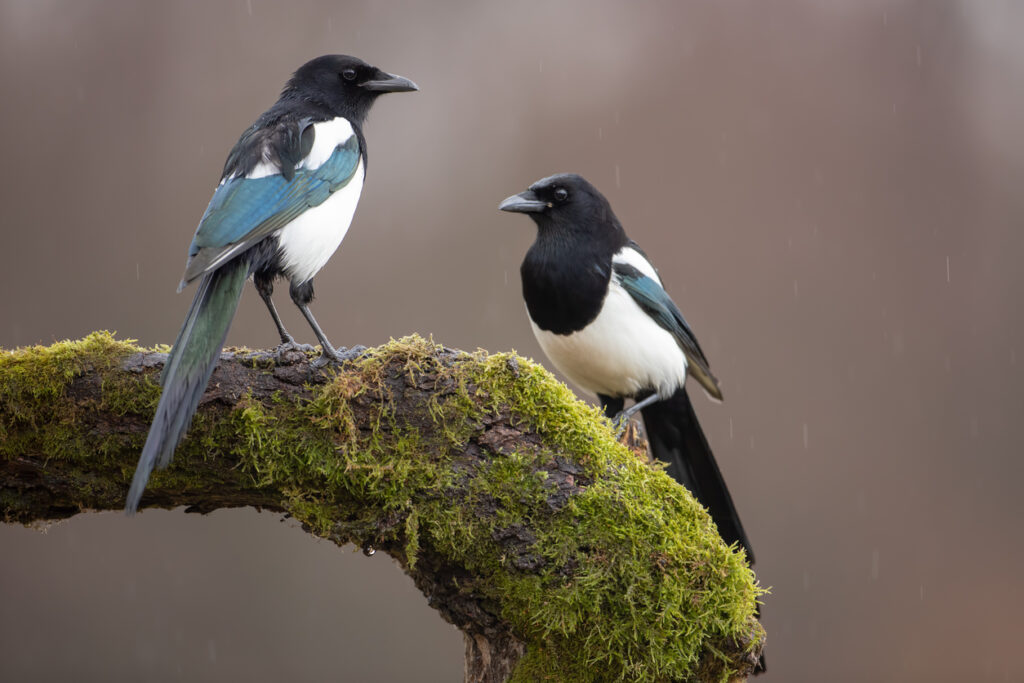
While not a grudge in the traditional sense, the corvid capacity to remember individuals extends to remembering the dead. Magpies have been observed returning to the location where a group member died and engaging in behaviours that researchers have interpreted as mourning, including placing grass and feathers near the body.
More relevant to the question of grievance, corvids in areas where particular humans have killed or harassed members of their group show sustained and targeted hostility toward those individuals specifically, suggesting that the memory of harm done is connected to social identity rather than just aversive association.
8. Pigs remember individuals and adjust their behaviour accordingly.
Pigs are significantly more socially intelligent than most people assume, and their capacity for individual recognition and memory has been demonstrated in multiple studies. They remember which individuals have competed with them for food, which have been cooperative, and which have been aggressive, and they adjust their behaviour in subsequent encounters based on that history.
Pigs that have been consistently treated well by a particular person approach them with relaxed curiosity, while those that have had negative experiences with an individual maintain wariness toward that person specifically rather than toward humans in general.
9. Manta rays and other large fish recognise familiar humans.

The evidence for individual recognition in fish has grown considerably in recent years and manta rays in particular have attracted research attention. Mantas that interact regularly with specific divers or researchers in areas where they’re studied have been shown to respond differently to familiar individuals compared to strangers, approaching known people with apparent comfort and behaving more cautiously with new ones. While the evidence for sustained negative memory is less clear-cut in fish than in mammals or corvids, the capacity for individual recognition that underpins it is well established.
10. Cats absolutely remember, they just decide what to do about it on their own terms.
Cat memory and grudge-holding is something most owners have experienced without necessarily framing it in scientific terms. Research supports what living with cats tends to confirm: they form clear and durable associations between specific people and specific experiences, and they act on those associations with a consistency that makes it impossible to attribute to coincidence.
The cat that disappears every time a particular visitor arrives, that refuses to sit with the person who once accidentally stepped on them, or that maintains a pointed coldness after a vet trip is demonstrating individual memory that’s as functional and specific as anything observed in more traditionally impressive species. The difference is largely in what they choose to do with it.