Most of us don’t necessarily see baboons on a daily basis, but if you did, you’d notice something sort of bizarre: they walk in line.
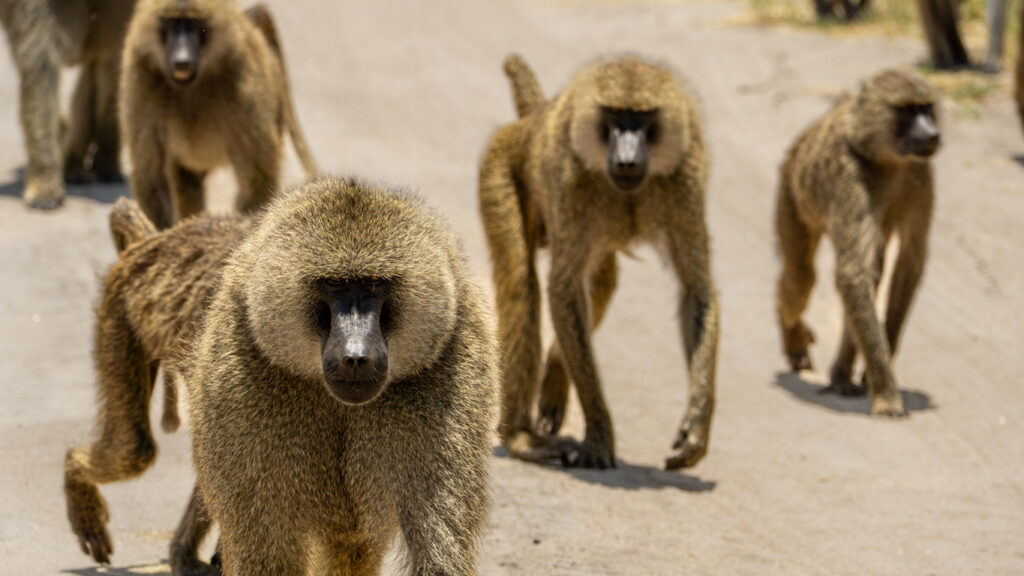
It seems like a bit of a strange quirk, but there’s actually a rhyme and reason to their behaviour. When you see a group of baboons moving across the savannah, they’re not just randomly wandering around. Really, they’re following surprisingly smart strategies.
The weakest members get the safest spots.
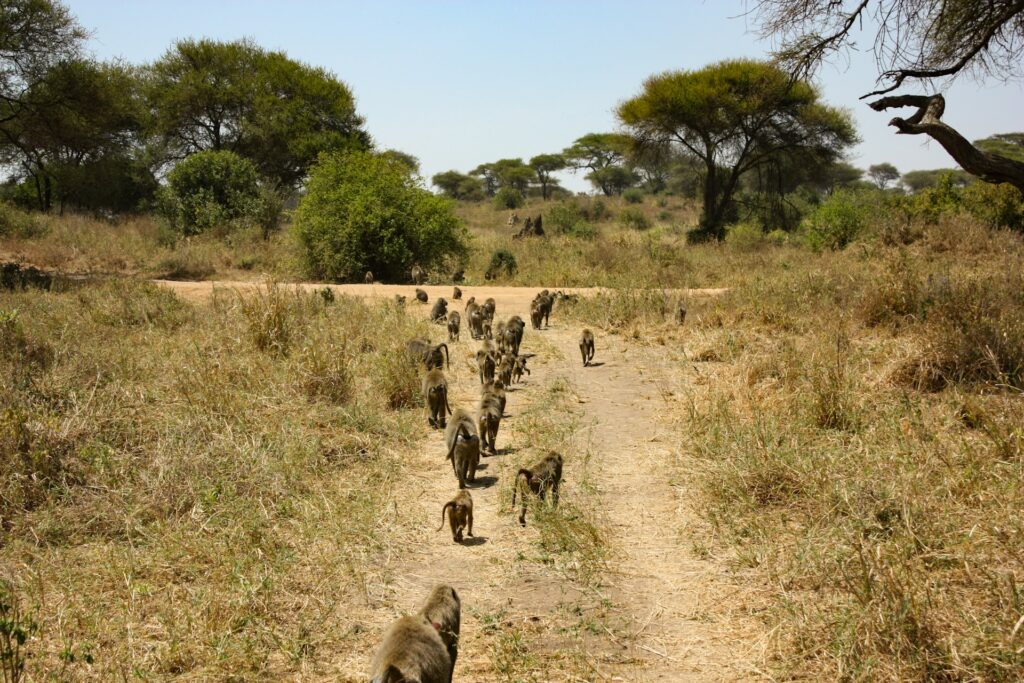
You’d think the strongest baboons would claim the middle positions for themselves, but it’s actually the opposite. The youngest, oldest, and most vulnerable baboons get to travel in the centre where they’re protected from predators on all sides.
The big, tough males and females take the risky outer positions because they can handle threats better. It’s like having bodyguards walk on the outside, while the people who need protection stay safely in the middle of the group.
They’re basically playing a massive game of follow the leader.
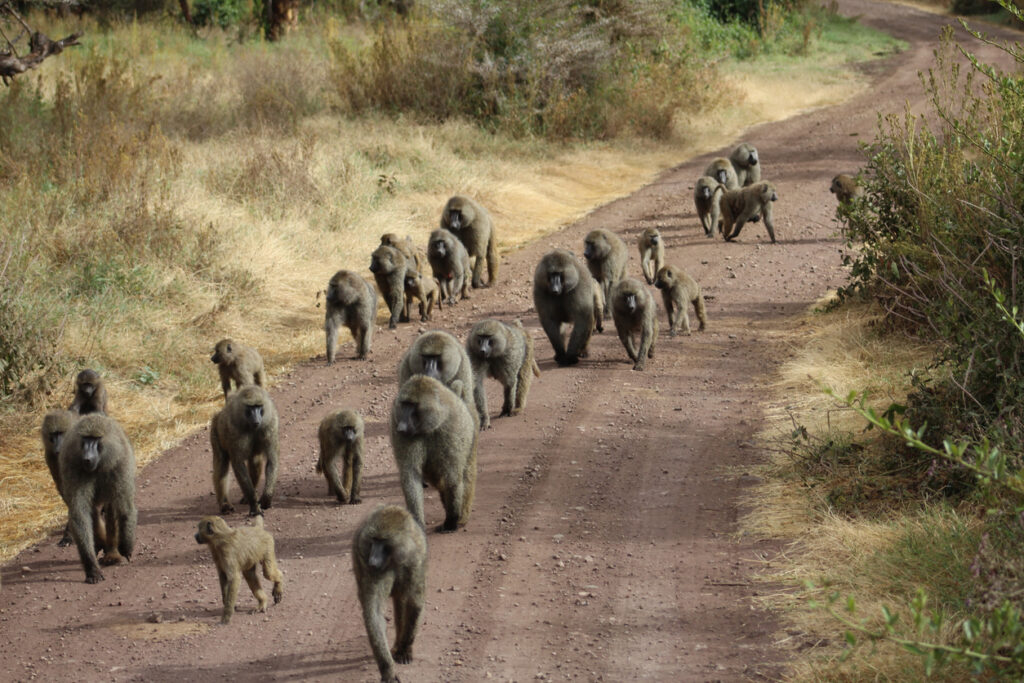
The baboons at the front aren’t necessarily the leaders of the whole group, they’re just the ones who know where they’re going that day. Different baboons take turns being the guide, depending on who knows the best route to food or water.
It’s pretty democratic, actually, because any baboon who knows a good feeding spot can start walking in that direction and others will follow. The “leader” changes based on who’s got the best intel about where to find the good stuff.
They’re constantly checking in with each other.

Baboons don’t just march silently like soldiers, they’re chattering, grunting, and making eye contact to stay coordinated. If someone spots danger or finds something interesting, the whole group knows about it within seconds.
That constant communication means they can change direction quickly if needed, whether that’s avoiding a predator, investigating a new food source, or just making sure nobody gets left behind. They’re like a walking group chat but with actual useful information.
The formation helps them cover more ground efficiently.
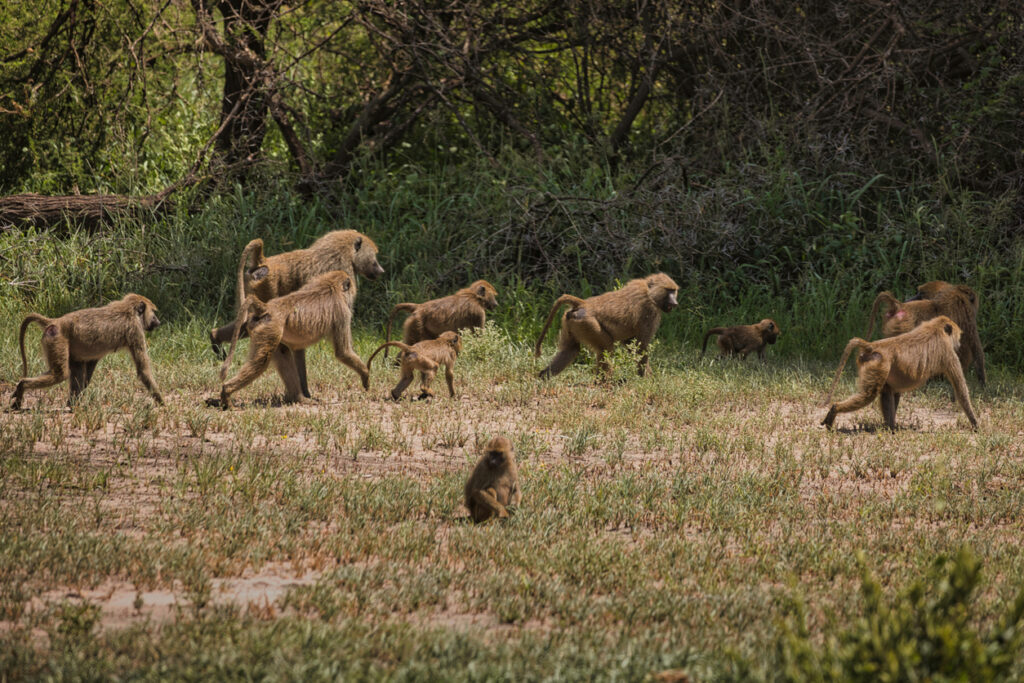
Walking in an organised line means they’re not all trampling the same patch of ground looking for food. The baboons spread out just enough, so each one has their own space to forage, while still staying close enough for protection.
It’s brilliant resource management because they can sweep through an area and make sure every bit of potential food gets checked without wasting energy competing over the same spots. Everyone gets their fair share of foraging territory.
They’re sharing information about what’s edible.
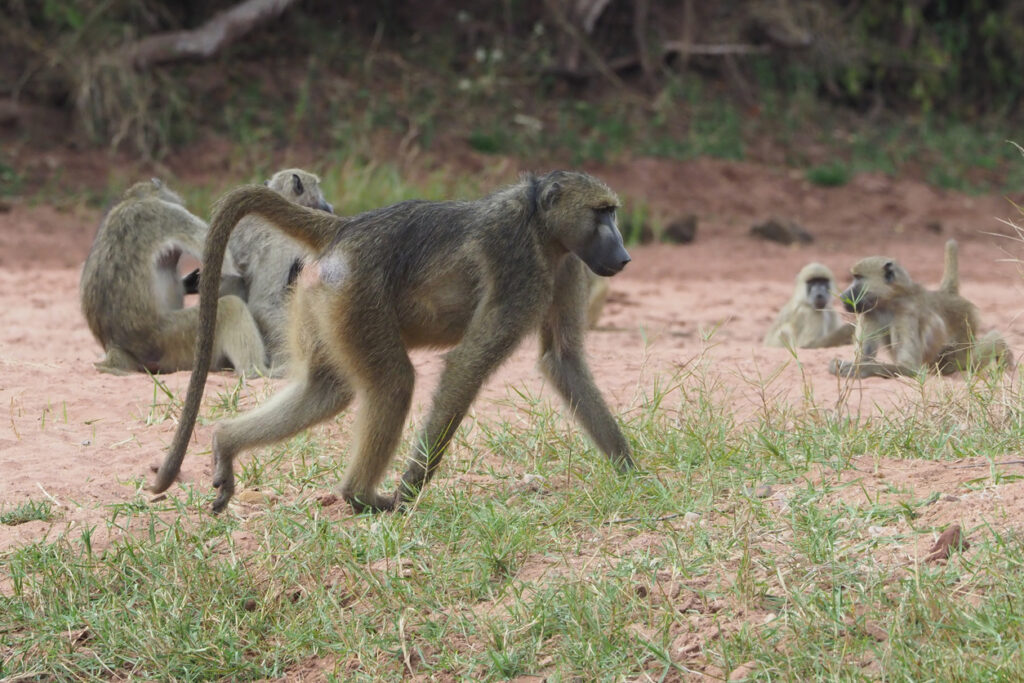
When a baboon finds something good to eat, the others nearby can see what they’re choosing and learn from it. Young baboons especially watch the adults to figure out what’s safe to eat and what to avoid.
This turns their march into a moving classroom where knowledge about food safety gets passed down through the group. Nobody has to risk getting poisoned by trial and error when they can just copy what the experienced baboons are doing.
The formation reduces arguments and fights.
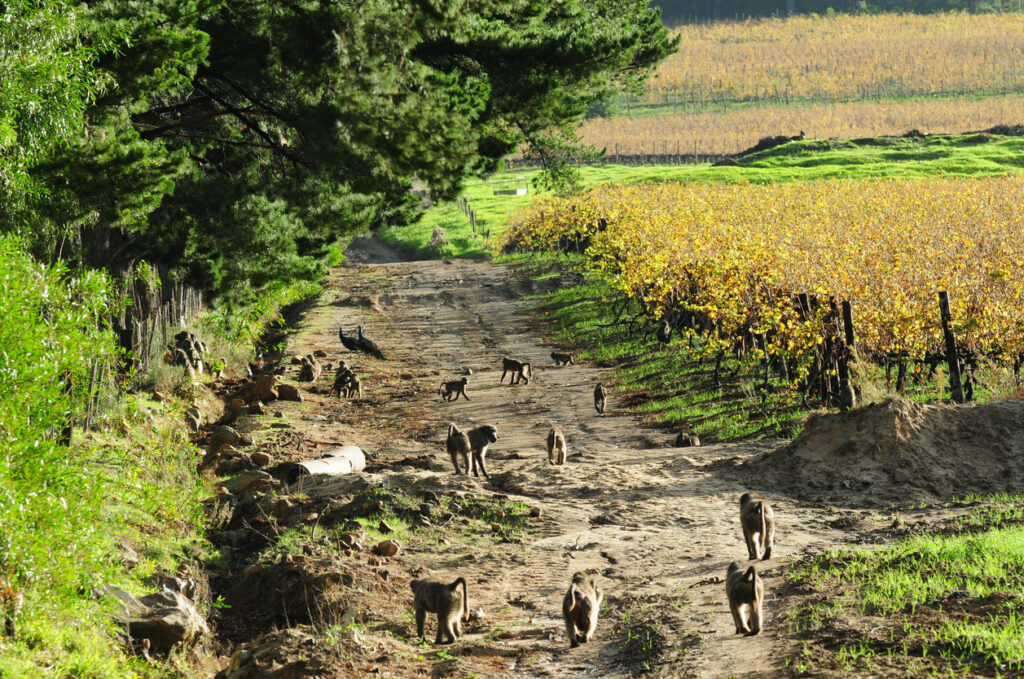
Having a set order means there’s less pushing, shoving, and competing for position. Everyone knows roughly where they should be, which cuts down on the social drama that could slow the group down or attract predators with noise.
When you’ve got dozens of baboons with different personalities and relationships trying to travel together, organisation prevents chaos. It’s like having assigned seats on a school trip, so nobody fights about who gets to sit where.
They can spot threats from multiple angles.
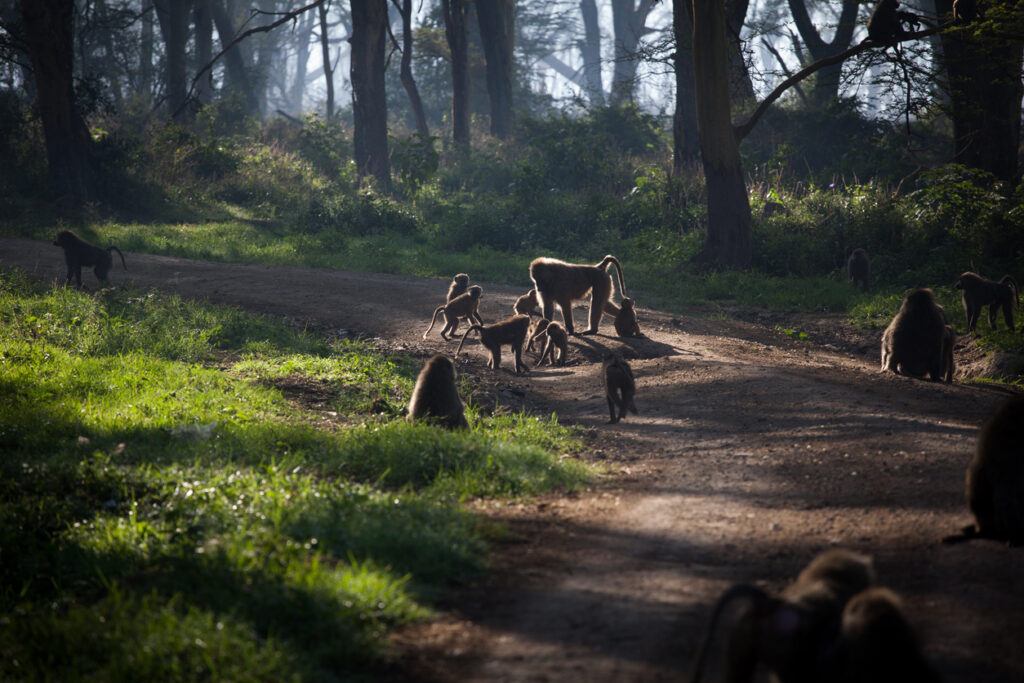
With baboons spread out in formation, they’ve got eyes looking in all directions rather than everyone staring straight ahead. Someone’s always watching for predators approaching from the sides, behind, or even from above.
Their 360-degree awareness system means they rarely get surprised by danger because there’s always someone positioned to see it coming. It’s like having a natural early warning system built into their travel formation.
The order helps them navigate tricky terrain.
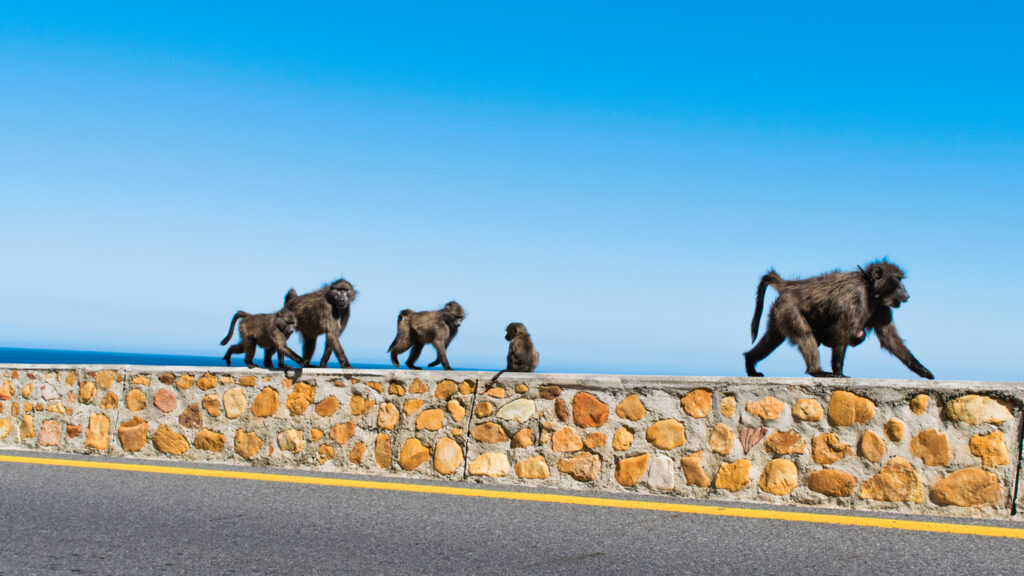
When they need to cross rivers, climb steep areas, or navigate through thorny bushes, having an established order means they don’t all try to use the same route at once. The formation prevents traffic jams in difficult spots.
The experienced baboons who know the area well can test whether a path is safe before the more vulnerable members follow. It’s quality control for route planning, making sure everyone can handle the terrain before committing the whole group.
It’s actually a stress-reduction strategy.
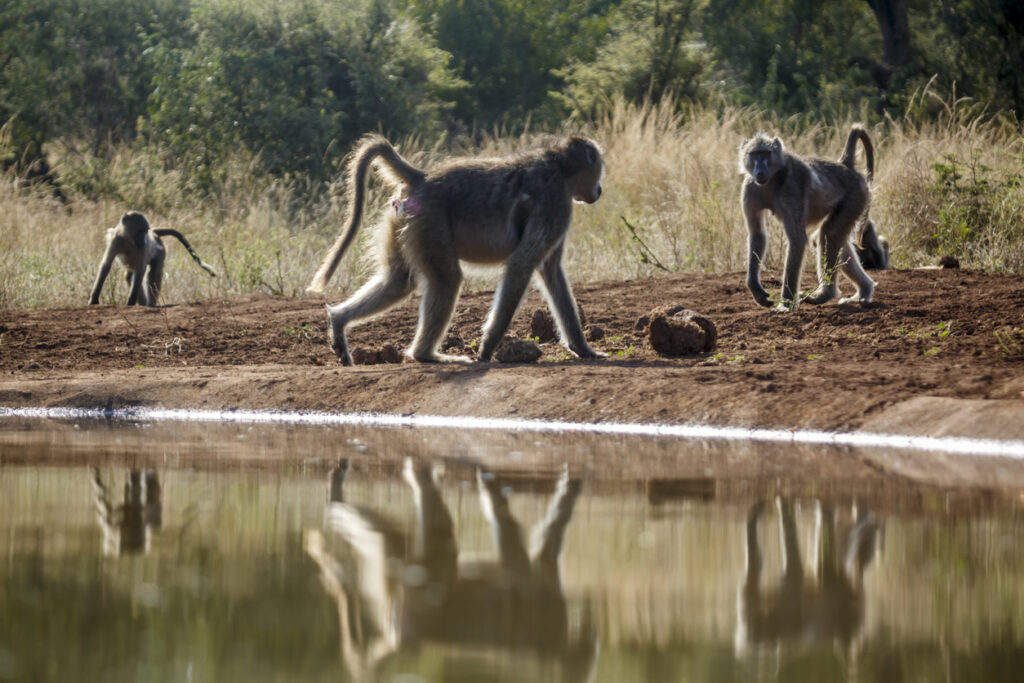
Knowing where you fit in the group and having a predictable routine for travel reduces anxiety for individual baboons. There’s comfort in structure when you’re constantly worrying about predators, food, and social relationships.
Random, chaotic movement would be exhausting and stressful for the whole group. The organised formation means everyone can relax a bit and focus on their job rather than worrying about where they should be or what everyone else is doing.
They’re maximising their collective intelligence.
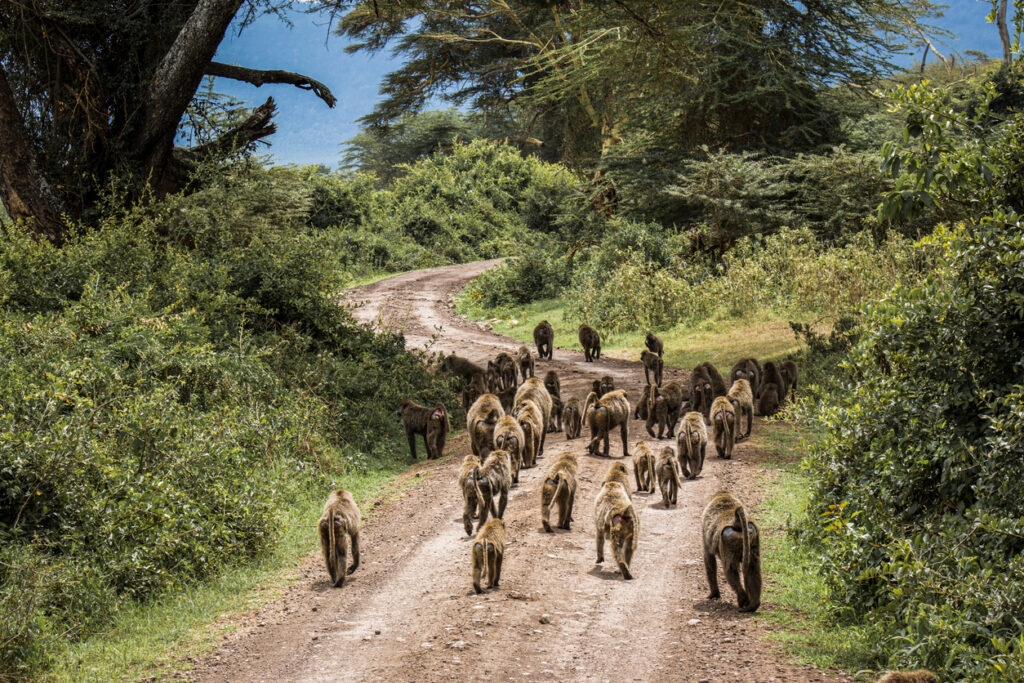
The march formation allows different baboons to contribute their unique knowledge and skills to benefit the whole group. Some are better at spotting predators, others know where the best food is, and some are excellent at reading weather patterns.
By moving together in an organised way, they combine all these individual talents into one super-smart collective that’s way more capable than any single baboon could be on its own. It’s like crowdsourcing survival skills across the entire troop.