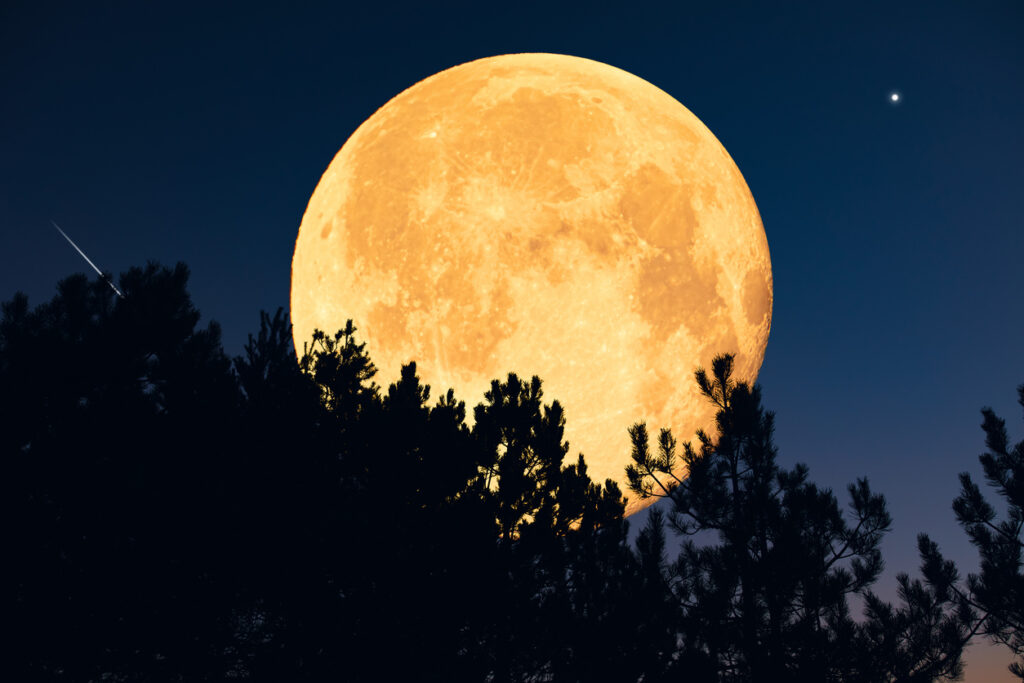
A supermoon always feels like a moment worth stepping outside for, and the final one of the year is on its way. It’ll sit a little closer to Earth than usual, which makes it appear larger and brighter than a standard full moon. You don’t need special equipment or expert knowledge to enjoy it, just a clear view of the sky and the right timing.
These events pass quickly, so knowing when to look makes all the difference. The glow is strongest at specific points in the night, and certain spots offer a far better view than others. Here’s when the last supermoon of the year will appear and the simplest ways to make sure you actually catch it.
The supermoon arrives on December 15th.
Mark December 15th in your calendar because that’s when the final supermoon of 2025 appears. It’s traditionally called the Cold Moon because it occurs during the coldest part of winter. This is your last opportunity this year to see the moon looking noticeably larger and brighter than normal.
The moon will be fully visible throughout the night if weather permits. After this one, there won’t be another supermoon until October 2026, so it’s worth making an effort to see it. Set a reminder on your phone so you don’t miss out on this impressive lunar event.
A supermoon happens when the moon is closest to Earth.
The moon’s orbit isn’t a perfect circle, it’s oval-shaped, which means sometimes it’s closer to us and sometimes further away. When a full moon coincides with the moon being at its nearest point to Earth, that creates a supermoon. The difference in distance is significant enough to notice.
At its closest, the moon is about 360,000 kilometres from Earth compared to 405,000 kilometres at its furthest point. This makes supermoons appear up to 14% larger and 30% brighter than regular full moons. The effect is most dramatic when the moon’s near the horizon.
The best viewing time is just after sunset.
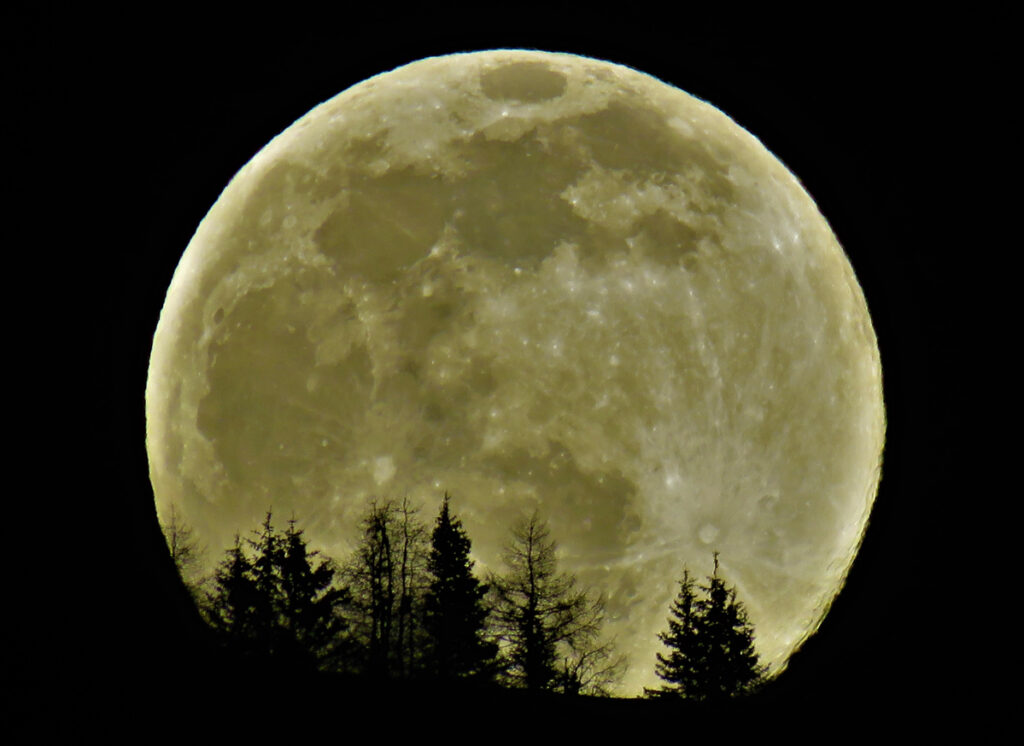
For the most impressive view, catch the supermoon as it rises in the east shortly after sunset on December 15th. The moon always looks more spectacular near the horizon because of an optical illusion that makes it seem absolutely massive. You don’t need to stay up late, the best moment is early evening.
Check sunset times for your specific location in the UK because it varies. The moon will rise within about 30 minutes of sunset. Find a spot with a clear view to the east, away from buildings and trees that might block your sightline.
Winter weather offers some advantages for moon watching.
December nights in the UK are long and the air is often clearer and crisper than in summer, which can make for stunning views. The cold weather means less atmospheric haze and pollution affecting visibility. Winter skies can be brilliantly clear when the weather cooperates.
Obviously, British weather is notoriously unpredictable, so check forecasts in the days leading up to December 15th. If it’s cloudy on the exact night, the moon still looks impressive the day before and after. The difference is tiny, so don’t stress if you miss the peak moment.
You don’t need any special equipment.
One of the brilliant things about supermoons is they’re impressive with just your eyes. You don’t need telescopes, expensive cameras, or any specialist knowledge. Just looking up at the right time is enough to see the moon looking noticeably bigger and brighter than usual.
That said, binoculars or a small telescope let you see incredible detail on the lunar surface. The extra brightness of a supermoon means craters and dark patches show up really clearly. Even a decent smartphone camera can capture surprisingly good photos if you hold it steady.
Get away from light pollution if possible.
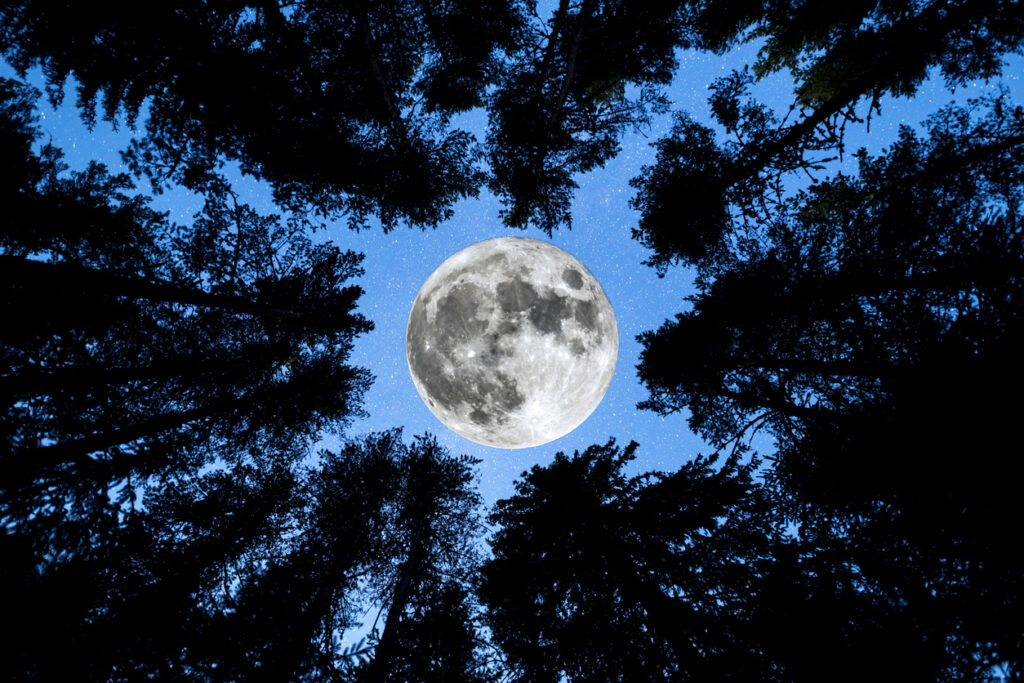
City centres with loads of streetlights wash out the sky and make it harder to appreciate the moon’s full brightness. If you can get to somewhere darker like a park, countryside area, or the coast, the contrast between the bright moon and dark sky is more impressive.
You don’t have to travel miles into the wilderness. Just moving away from direct streetlights helps massively. Find a spot where you’re not standing directly under artificial lighting, and you’ll see a noticeable improvement in how spectacular the supermoon looks.
The moon illusion makes it seem even bigger.
There’s a weird trick your brain plays called the moon illusion that makes the moon look absolutely enormous when it’s near the horizon. It’s not actually any bigger at that moment, but compared to trees, buildings, and the landscape, your brain interprets it as massive.
This illusion is strongest during supermoons because the moon genuinely is larger than normal. Combined with the optical effect near the horizon, it can look properly huge. The moon might also appear orange or reddish when rising, which happens because its light passes through more atmosphere at low angles.
This supermoon affects tides more than normal.
The moon’s gravitational pull controls Earth’s tides, and when it’s closer during a supermoon, that pull is stronger. This creates higher high tides and lower low tides than usual. Coastal areas around the UK might see more dramatic tidal ranges around December 15th.
If you live near the coast, be aware that high tides combined with the supermoon can cause higher water levels than normal. It’s not usually dangerous but can affect beaches and coastal paths. Check local tide times if you’re planning seaside activities during this period.
Cloud cover is the biggest threat to viewing.
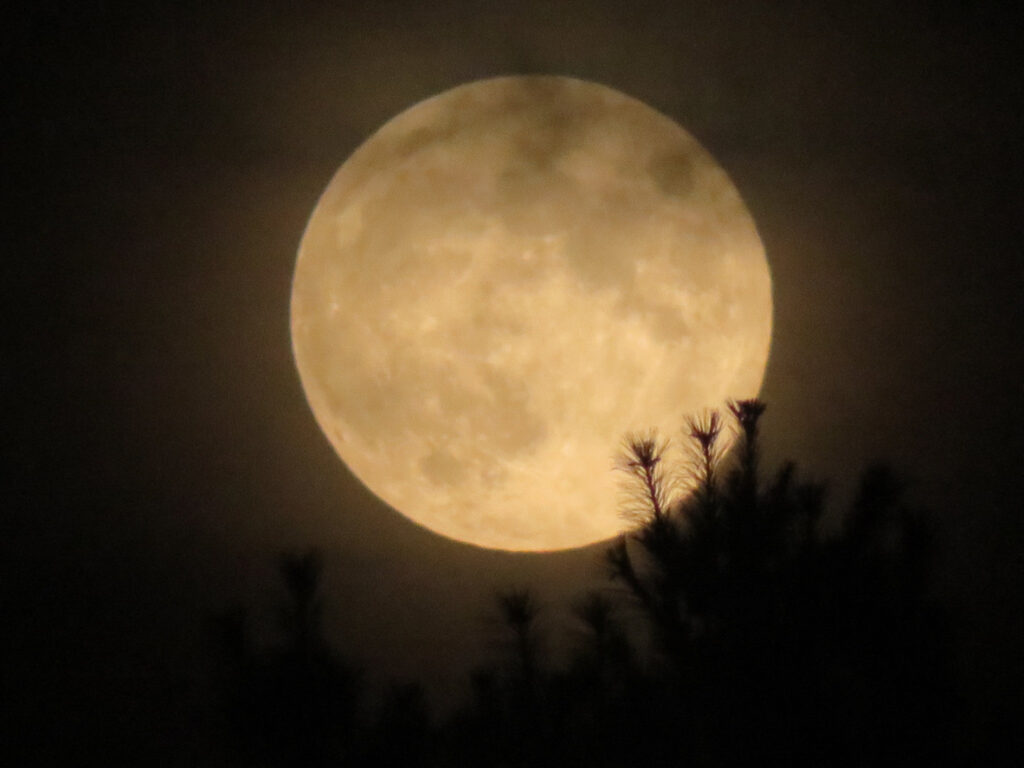
Unfortunately, December weather in the UK means clouds are quite likely to block the view at some point. You might get lucky with clear skies, or you might miss it entirely, depending on what the weather does. Keep an eye on forecasts for clear spells in your area.
If December 15th is completely clouded over, remember the moon looks impressive on the 14th and 16th as well. It won’t be at its absolute closest point, but the difference is tiny to the human eye. Don’t feel like you’ve completely missed out if the exact peak night is cloudy.
It’s the last supermoon until late 2026.
After December’s supermoon, there won’t be another one until October 2026. That’s nearly ten months without any supermoons lighting up the night sky. This is genuinely your last chance for quite a while to see the moon at its biggest and brightest.
Make the most of this opportunity while you can. Even if you’re not usually bothered about astronomy, supermoons are impressive enough that they’re worth seeing. Set a reminder, check the weather forecast, wrap up warm, and look up on December 15th.